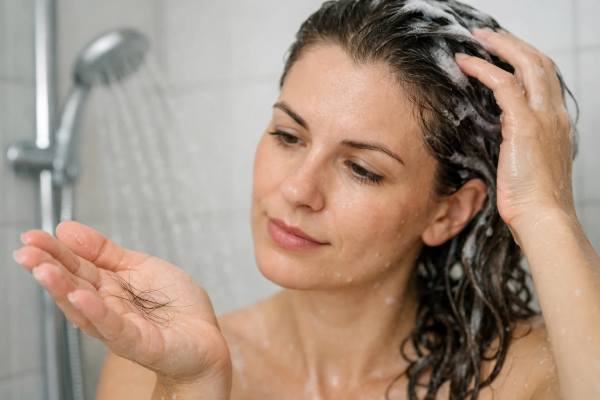
It’s easy to blame the shampoo routine when you see a handful of hair in the drain. Washing is one of the few moments you watch hair move, so it feels like cause and effect—especially if shedding looks worse on wash day. The reality is more nuanced: cleansing frequency rarely makes hair fall out from the root, but it can influence the scalp environment and the hair fiber itself. In other words, you can wash “too often” for your scalp and end up with irritation or breakage that mimics hair loss, yet still not be changing your follicle’s long-term growth pattern.
This guide separates myth from reality with practical detail: what normal shedding looks like, why wash-day shedding can be dramatic but harmless, when frequent washing can worsen breakage, and when washing too little backfires by increasing buildup and inflammation. You’ll also learn how to set a realistic wash schedule by scalp type, styling habits, and lifestyle—without fear-driven rules.
Key Takeaways
- Wash-day shedding often reflects hairs that were already released and simply get dislodged during cleansing.
- Frequent washing does not usually cause true hair loss, but harsh technique and stripping products can increase breakage.
- Infrequent washing can worsen itch, flaking, and scalp inflammation that may amplify shedding in susceptible people.
- A “right” wash schedule is individualized and should be adjusted based on scalp signals over 2–4 weeks.
- Persistent heavy shedding, patchy loss, pain, or scaling needs evaluation rather than repeated routine changes.
Table of Contents
- Why washing gets blamed
- What frequent washing actually does
- What happens when you wash too little
- How to pick your ideal wash schedule
- Technique and products that prevent breakage
- When hair loss is not about washing
Why washing gets blamed
If you’ve ever stared at the shower wall and thought, “I’m going bald,” you’re not alone. Washing is a perfect setup for a scary moment: water loosens hairs, your hands gather what has already shed, and a drain catch turns it into a visible clump. But visibility is not the same thing as causation.
The wash-day math that tricks almost everyone
Most scalps shed hairs every day as part of the normal hair growth cycle. Some hairs are in a resting phase (telogen) and are ready to release. They may sit in the hair for a while—especially if your hair is long, curly, densely styled, or you don’t brush often—until friction dislodges them.
Here’s the simple math that reframes the fear:
- If someone sheds 50–100 hairs per day (a common range), and they wash daily, they might see 50–100 come out in the shower.
- If they wash twice weekly, they may see 150–350 on wash day.
- If they wash once weekly, it can look like 350–700 in one event—yet the average per day is unchanged.
That clump also looks bigger when hair is long because strands wrap into a “nest.” A person with shoulder-length hair can shed the same number as someone with a pixie cut, but the visual impact is completely different.
Shedding versus breakage: different problems, different fixes
Two patterns often get lumped together as “hair loss”:
- Shedding from the root: whole hairs release with a tiny club-shaped bulb. This is tied to the follicle cycle.
- Breakage: shorter pieces snap along the shaft due to damage, dryness, friction, or chemical wear.
Washing rarely makes follicles eject healthy growing hairs. It can, however, increase breakage if technique is rough or the hair fiber is fragile. That matters because breakage can make hair look thinner, especially around the hairline and crown where styling stress concentrates.
If you want a clearer picture of how shedding fits into the growth cycle (and why timing can feel delayed), reviewing the anagen catagen and telogen cycle helps you interpret what you see in the shower with less panic.
The myth and the reality
Myth: “Frequent washing causes hair to fall out.”
Reality: Frequent washing mainly changes what you notice and how your scalp and hair fiber feel. True loss patterns are driven by genetics, hormones, inflammation, autoimmune conditions, nutrient issues, illness, medications, and aging—not by the simple act of cleansing. Washing can still matter, but usually as a secondary factor through irritation, dryness, or buildup.
What frequent washing actually does
Washing “too often” typically does not make hair fall out from the root. When it causes problems, the pathway is usually barrier stress (scalp irritation) or fiber stress (breakage). The goal is to recognize the difference so you fix the right mechanism instead of washing less and accidentally creating a buildup problem.
How frequent washing can backfire
Cleansing removes sebum, sweat, pollution particles, and styling residues. That’s beneficial. But if cleansing is aggressive—strong surfactants, very hot water, long scrubbing, frequent clarifying, or rough towel-drying—it can:
- Increase hair fiber friction (more tangling and snapping)
- Make lengths feel dry, squeaky, or “straw-like”
- Trigger scalp tightness, itch, or reactive flaking
- Encourage over-conditioning at the roots (which can then look greasy quickly)
The important nuance: these effects are mostly about hair quality and comfort, not permanent follicle damage. Still, breakage can mimic thinning, especially along the perimeter and in areas you manipulate daily.
Why “daily washing” is not automatically harmful
Hair and scalps vary dramatically. Some people—especially those with fine hair, high sebum output, heavy exercise routines, or dandruff-prone scalps—actually do better with frequent washing. A mild shampoo used often can be gentler than a harsh shampoo used rarely with intense scrubbing to “catch up.”
Think of it as cleaning a countertop: wiping lightly each day can be easier than scraping hardened buildup once a week. The gentler option depends on the products and technique, not just the calendar.
Signs you may be over-washing for your scalp and hair
These clues point toward adjusting how you wash, not necessarily washing far less:
- Scalp feels tight within an hour after washing
- Itch and fine flakes increase despite “clean” hair
- Hair feels rough, tangles more, or breaks during detangling
- Ends look dull and fray quickly even with trims
- You feel stuck in a cycle of stripping and then heavy conditioning
If you recognize yourself here, consider switching product strategy before changing frequency. Many people benefit from choosing a shampoo designed for regular use rather than “deep clean” formulas. If you are unsure what “gentler” actually means, who benefits from sulfate-free shampoo can help you match cleansing strength to scalp oiliness and hair texture.
What to do instead of fear-based washing cuts
A practical reset looks like this for 2–3 weeks:
- Keep frequency the same, but shorten scrub time and use lukewarm water.
- Focus shampoo on the scalp; let runoff cleanse the lengths.
- Condition mid-lengths to ends every wash to reduce friction.
- Detangle only when hair has slip (conditioner or mask), not when it’s “squeaky clean.”
If breakage decreases, you found the real issue: mechanical stress, not hair loss.
What happens when you wash too little
In response to “washing causes hair loss” anxiety, some people swing to the opposite extreme—stretching wash days for as long as possible. For certain hair types and lifestyles, less frequent washing is perfectly fine. For others, it creates a scalp environment that can worsen itch, inflammation, and shedding.
Buildup is not just an aesthetic issue
The scalp is skin with follicles, oil glands, and microbes that prefer balance. When cleansing is too infrequent for your sebum output and product use, you can accumulate layers of:
- Sebum and oxidized oils (which can feel sticky or waxy)
- Sweat salts (especially after workouts)
- Styling polymers (dry shampoo, hairspray, gels, edge products)
- Pollution particles and airborne allergens
- Flakes from dandruff or irritated skin
This buildup can increase friction at the root, provoke itching, and lead to more scratching—one of the fastest routes to breakage and scalp sensitivity. In people prone to dandruff or seborrheic dermatitis, buildup can also support yeast overgrowth and inflammation that makes shedding feel worse.
The “my scalp is oily so it must be healthy” misconception
Oiliness can be normal, but it is not always a sign of a calm scalp. A scalp can be oily and inflamed at the same time. Signs you may be under-washing for your scalp include:
- Itch that improves right after washing and worsens again by day 2–4
- Greasy flakes (yellowish or clumpy) rather than dry “snow”
- Scalp odor that returns quickly
- Tenderness, bumps, or a tight feeling at the roots
- Hair near the scalp looks limp, separated, or coated despite clean lengths
Why under-washing can make shedding look worse
When you wash infrequently, you collect more released hairs before they leave the scalp. Then wash day becomes dramatic. The same “wash-day math” applies—except now the scalp may also be irritated, which can amplify shedding in susceptible people.
If you suspect buildup is part of the problem, focus on removing it gently rather than scrubbing harder. A structured approach—rotating cleansers, improving rinse technique, and reducing residue-heavy styling—often works better than a single harsh “detox” wash. If you want targeted guidance for stubborn residue and waxy feel, how to fix product buildup in hair can help you correct the problem without over-stripping.
A safe way to increase cleansing without shocking your hair
If you’ve been washing once weekly and want to improve scalp comfort:
- Add one additional wash day for two weeks (for example, every 3–4 days).
- Use a mild shampoo for the added wash and keep conditioner focused on ends.
- Only introduce clarifying if residue persists after technique improves.
Your scalp should feel calmer, not punished. If itch and flakes worsen, the issue may be dandruff, contact irritation, or another scalp condition—not simply “dirt.”
How to pick your ideal wash schedule
There is no universally “healthy” wash frequency. The right schedule is the one that keeps your scalp comfortable and your hair fiber resilient, with minimal breakage and minimal itch. A good plan considers both scalp needs (oil, sweat, flakes, sensitivity) and hair needs (texture, porosity, chemical history, styling).
Start with scalp signals, not social media rules
Use these practical anchors as a starting point, then adjust:
- Very oily scalp or daily workouts: often daily to every other day
- Moderately oily or normal scalp: often 2–4 times per week
- Dry scalp or highly textured hair: often 1–2 times per week, sometimes with rinse-and-condition in between
- Dandruff-prone scalp: frequency depends on treatment strategy, but regular cleansing often helps
These are not strict prescriptions. They’re a way to avoid the most common trap: choosing frequency based on what you wish your scalp did rather than what it actually does.
Factor in hair texture and styling reality
Hair shape changes how oil travels. Straight hair often looks greasy quickly because sebum moves down the shaft easily. Curly and coily hair can look dry even when the scalp is oily because oil doesn’t distribute as readily. That’s why two people can have the same scalp sebum output but need different routines for comfort and appearance.
Also consider manipulation. If you set your hair in a style that lasts several days, the routine should support that style without sacrificing scalp health. In these cases, scalp-focused cleansing (targeting roots and scalp skin) with careful conditioning of lengths can be a better compromise than either extreme.
Use a 2-week adjustment window
A smart way to personalize frequency is to run a brief experiment:
- Keep products consistent for two weeks.
- Change only one variable: frequency (up or down by one wash per week).
- Track three things: scalp comfort, visible flaking, and breakage.
If scalp comfort improves but breakage worsens, you may need gentler technique or stronger conditioning rather than fewer washes. If breakage improves but scalp itch worsens, you may need more cleansing or targeted dandruff management.
Dry scalp and dandruff are not the same
Many people reduce washing because they see flakes and assume “dryness.” But dandruff and seborrheic dermatitis often improve with appropriate cleansing and medicated shampoos, while true dryness may need gentler cleansing and barrier support. If you’re not sure which pattern you have, the difference between dandruff and dry scalp can help you choose a strategy that stops the cycle of over-stripping and under-washing.
A practical “good enough” schedule
If you want a neutral plan that suits many people while you learn your signals:
- Wash every other day for oily scalps, 3 times weekly for most, twice weekly for dry or textured hair.
- Adjust up if itch, odor, greasy flakes, or scalp tenderness increase.
- Adjust down if scalp tightness and length breakage increase despite gentle technique.
Your scalp should feel quietly normal. “Quiet” is a useful goal.
Technique and products that prevent breakage
When people say washing “causes hair loss,” they’re often describing breakage from washing methods. The fix is usually less dramatic than changing your entire routine: small technique upgrades can reduce friction and snapping immediately.
Shampoo like you are washing skin, not fabric
A simple, follicle-friendly approach:
- Fully saturate hair with lukewarm water for 30–60 seconds.
- Emulsify shampoo in your hands first (this spreads it evenly).
- Apply mainly to the scalp and massage with fingertips (not nails) for 45–60 seconds.
- Rinse thoroughly for 60 seconds. Incomplete rinsing can mimic oiliness and trigger extra scrubbing next time.
- Repeat shampoo only if you have heavy buildup, sweating, or lots of styling product.
This reduces the need to rub lengths aggressively, which is where most breakage starts—especially on colored, bleached, or weathered ends.
Conditioning placement matters more than brand hype
Conditioner’s job is to reduce friction. For most hair types:
- Apply conditioner mid-lengths to ends, where hair is older and more fragile.
- Use a wide-tooth comb only when hair is coated and slippery.
- Rinse to your preference: fully for fine hair, partially for very dry or textured hair.
If your roots get greasy quickly, avoid heavy conditioners and oils on the scalp. Greasy roots often lead to over-washing with harsh products, which then worsens breakage—a loop you can break with smarter placement.
Clarifying is a tool, not a lifestyle
Clarifying shampoos can be helpful when you have persistent residue, hard-water film, heavy silicones, or dry shampoo accumulation. Overuse can leave hair rough and increase tangling—two major breakage drivers.
Many people do well with clarifying every 2–4 weeks, but it depends on product use, water quality, and hair texture. If you want a structured way to decide frequency and avoid overdoing it, when and how often to use clarifying shampoo offers a safer framework.
Detangling and drying are where damage often happens
The highest-risk moments for breakage are wet detangling without slip and aggressive drying. Safer habits:
- Squeeze water out with a towel; don’t twist and torque hair.
- Blot or “press” with a microfiber towel or soft cotton shirt.
- Detangle from ends upward, with patience, while conditioner is present.
- If blow-drying, keep airflow moving and avoid holding heat on one area.
If you see lots of short, uneven pieces, prioritize these mechanics before assuming you’re losing hair at the root.
When hair loss is not about washing
A healthy wash routine supports the scalp environment and protects the hair fiber, but it cannot override medical or hormonal drivers of hair loss. Knowing when washing is a distraction—and when you should look deeper—saves time, money, and stress.
Clues that point beyond routine
Consider a broader evaluation if you notice any of the following:
- Sudden, diffuse shedding that starts after a trigger (illness, major stress, childbirth, surgery) and continues for weeks
- Widening part or thinning at the crown that progresses gradually (often a pattern thinning signal)
- Patchy hair loss with smooth skin or broken “exclamation point” hairs
- Scalp pain, burning, thick scale, oozing, or sores
- Loss of eyebrows or eyelashes (can signal systemic or autoimmune involvement)
- Hair shedding plus fatigue, heavy periods, weight change, or cold intolerance (possible iron or thyroid clues)
Washing can change what you see, but it doesn’t create these patterns by itself.
How to do a simple, calm self-check
You don’t need obsessive counting. Try a brief, structured approach for two weeks:
- Take three photos in consistent light: hairline, part, and crown.
- Note whether shed hairs are long “full strands” or mostly short broken pieces.
- Observe scalp comfort: itch, flaking type, tenderness, and bumps.
- Track wash frequency so you can interpret wash-day shedding realistically.
If shedding feels suddenly intense, it may help to review common triggers and timing (often a 6–12 week delay after the triggering event). For a clinician-style triage overview, sudden shedding triggers and when to see a doctor can help you decide whether to self-manage briefly or seek evaluation sooner.
When to seek professional evaluation promptly
Don’t wait months if you have:
- Patchy loss, scalp pain, or signs of infection
- Thick adherent scale with hair loss
- Rapid progression or visible thinning of brows/lashes
- New hair loss after starting a medication
- Significant distress or compulsive checking that is affecting daily life
A clinician can distinguish shedding from breakage, identify inflammatory scalp disease, and decide whether blood tests or targeted treatments are appropriate. The earlier you identify an inflammatory or scarring process, the better the odds of protecting follicles.
The bottom line
Washing frequency is rarely the root cause of hair loss. It can, however, influence breakage, scalp inflammation, and how dramatic shedding appears. The most useful mindset is not “wash less” or “wash more,” but “wash in a way that keeps the scalp quiet and the fiber protected.”
References
- The Impact of Shampoo Wash Frequency on Scalp and Hair Conditions – PMC 2021
- On Hair Care Physicochemistry: From Structure and Degradation to Novel Biobased Conditioning Agents – PMC 2023 (Review)
- Seborrheic Dermatitis Revisited: Pathophysiology, Diagnosis, and Emerging Therapies—A Narrative Review – PMC 2025 (Review)
- High-throughput sequencing to analyze changes in the human scalp microbiome during the use of a shampoo – PMC 2025
- A systematic review on the lipid composition of human hair – PubMed 2023 (Systematic Review)
Disclaimer
This article is for educational purposes only and does not replace medical advice, diagnosis, or treatment. Hair shedding and thinning have many causes, including medical conditions and medication effects that require individualized evaluation. If you have sudden or patchy hair loss, scalp pain, thick scaling, oozing, fever, signs of infection, or rapidly progressive thinning, seek care from a qualified healthcare professional promptly. If you suspect an allergic reaction to a hair product (burning, swelling, hives, or blistering), stop use immediately and seek medical advice.
If this article helped you feel more confident about your routine, consider sharing it on Facebook, X (formerly Twitter), or your preferred platform so others can separate wash-day myths from scalp and hair reality.