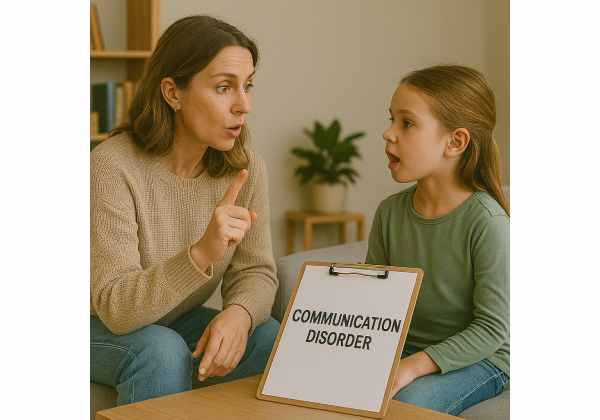
A communication disorder affects how a person understands, produces, uses, or organizes language and speech. It can involve spoken language, speech sounds, fluency, voice, social communication, or several areas at once. Some communication difficulties are noticed in early childhood, while others become clearer when school, work, relationships, or social demands increase.
Communication disorders are not the same as shyness, low intelligence, lack of effort, or simply “talking late.” They can affect learning, friendships, emotional well-being, daily independence, and access to education or health care. The signs can also overlap with hearing loss, autism, ADHD, intellectual disability, anxiety, neurological conditions, and developmental variation, which is why careful diagnostic context matters.
Table of Contents
- What Communication Disorder Means
- Main Types of Communication Disorders
- Communication Disorder Symptoms and Signs
- Causes and Risk Factors
- Conditions That Can Overlap
- Diagnostic Context and Assessment
- Effects and Complications
- When Prompt Evaluation Matters
What Communication Disorder Means
A communication disorder is a persistent difficulty with exchanging information through speech, language, voice, fluency, or social use of communication. The problem is usually significant enough to interfere with everyday functioning, such as learning, social participation, family interaction, school performance, work, or independent living.
Communication depends on several connected abilities. A person has to hear or otherwise receive information, understand words and meaning, organize thoughts, choose words, form sentences, produce sounds, control the timing and rhythm of speech, and use communication in a way that fits the situation. A breakdown in any part of this system can create a communication disorder.
The term can apply to children and adults, but many communication disorders are first recognized in childhood because speech and language develop rapidly during the early years. A child may have trouble understanding directions, using age-expected vocabulary, forming sentences, pronouncing sounds clearly, or taking part in back-and-forth conversation. In adults, communication difficulties may be long-standing from childhood or may appear after a neurological event, brain injury, illness, or progressive condition.
It is important to separate communication disorder from normal developmental variation. Children develop at different speeds, and bilingual or multilingual language development can look different from monolingual development. A child learning more than one language may mix languages or develop vocabulary across languages, but multilingualism itself does not cause a language disorder. A true language disorder affects the child’s ability to learn and use language across the languages they are exposed to, not just in one setting.
Communication disorder is also different from being quiet, introverted, anxious in public, or unfamiliar with a social situation. Some people speak less because of temperament or context, while others want to communicate but cannot do so effectively because of underlying language, speech, fluency, or pragmatic difficulties.
In mental health and developmental contexts, communication disorders are often considered neurodevelopmental when they begin early and reflect differences in brain development. They may occur alone, but they frequently appear alongside other developmental or psychiatric conditions. Understanding that overlap helps prevent mislabeling a person as oppositional, inattentive, careless, or socially uninterested when the underlying issue is communication.
Main Types of Communication Disorders
Communication disorders are not one single condition; they are a group of related disorders that affect different parts of communication. The main categories include language disorder, speech sound disorder, childhood-onset fluency disorder, social communication disorder, and voice-related communication problems.
| Type | Core difficulty | Common examples |
|---|---|---|
| Language disorder | Understanding or using words, sentences, and meaning | Limited vocabulary, short sentences, trouble following directions, difficulty explaining ideas |
| Speech sound disorder | Producing speech sounds clearly and accurately for age | Sound substitutions, omissions, distortions, speech that is hard for others to understand |
| Childhood-onset fluency disorder | Flow, rhythm, and timing of speech | Sound repetitions, blocks, prolongations, tension while speaking |
| Social communication disorder | Using communication appropriately in social contexts | Trouble with turn-taking, tone, context, implied meaning, or adapting speech to the listener |
| Voice disorder | Quality, pitch, loudness, or endurance of voice | Persistent hoarseness, strained voice, unusual pitch, voice fatigue |
Language disorder affects the structure and meaning of language. A person may have receptive difficulties, meaning they struggle to understand what others say. They may have expressive difficulties, meaning they struggle to put thoughts into words. Many people have a mixed pattern. In children, this may show up as delayed first words, difficulty learning new words, trouble with grammar, or problems telling a clear story. In older students and adults, it may appear as difficulty understanding complex instructions, organizing written work, following lectures, or explaining ideas under pressure.
Speech sound disorder affects how clearly a person produces sounds. A young child may say certain sounds incorrectly as part of normal development, but a disorder is considered when errors are beyond what would be expected for age, development, language background, and speech community. The issue may involve articulation, phonological patterns, motor planning, or structural or sensory factors.
Childhood-onset fluency disorder, often called stuttering, affects the smooth flow of speech. It may involve repeated sounds or syllables, stretched sounds, blocks where speech seems stuck, or visible effort and tension. Fluency may change across situations. Some people stutter more when speaking under pressure and less when singing, reading with others, or talking in relaxed settings.
Social communication disorder affects the social use of language, sometimes called pragmatic language. A person may know many words and speak in full sentences but still struggle with conversation rules, implied meaning, humor, nonliteral language, tone, or adjusting communication for different listeners. This can affect friendships and classroom or workplace interactions. Because social communication differences can also occur in autism, careful distinction matters; autism includes restricted or repetitive behaviors and sensory or interest patterns that are not part of social communication disorder alone.
Voice disorders are sometimes discussed separately from psychiatric diagnostic categories, but they are part of the broader communication-disorder landscape. A persistent voice change may affect clarity, participation, and confidence. Voice symptoms can have many causes, including vocal strain, structural changes, neurological conditions, or medical illness.
Communication Disorder Symptoms and Signs
The signs of a communication disorder depend on the affected communication area and the person’s age. The most useful clues are persistent difficulty, mismatch with expected development, and interference with daily life rather than a single isolated behavior.
In infants and toddlers, early concerns may involve limited response to sound, limited babbling, few gestures, delayed first words, or not combining words when expected. Some children understand far more than they can say, while others talk but do not seem to understand directions or questions. A child may appear not to listen, but the underlying issue may be difficulty processing language or hearing speech clearly.
In preschool and early school-age children, possible signs include:
- using fewer words than peers
- relying on gestures instead of words beyond the expected age
- having speech that unfamiliar listeners often cannot understand
- struggling to follow simple or multistep directions
- using short or grammatically immature sentences
- repeating sounds, syllables, or words with visible effort
- avoiding speaking situations because communication feels hard
- having trouble answering questions or telling what happened
- difficulty playing or conversing with other children
For older children and adolescents, communication disorders can become more noticeable when language demands increase. A student may struggle with reading comprehension, written expression, oral presentations, group work, note-taking, abstract vocabulary, or understanding jokes and implied meaning. They may be described as careless, inattentive, rude, immature, or socially awkward, even when the root problem is language or pragmatic communication.
Adults with long-standing communication disorders may report difficulty finding words, explaining complex thoughts, following fast conversations, understanding workplace instructions, speaking in meetings, or navigating social nuance. Some have learned to mask their difficulties by avoiding certain situations, memorizing scripts, letting others speak first, or choosing work and social roles that reduce communication demands.
A communication disorder may also show up through behavior. A child who does not understand directions may look defiant. A student who cannot express frustration may become disruptive. A teenager who misses sarcasm or tone may withdraw after repeated social conflict. An adult who struggles to process complex language may appear disengaged in appointments or meetings.
This is why signs should be interpreted in context. One symptom alone does not prove a disorder. A pattern across time, settings, and communication tasks is more meaningful.
Causes and Risk Factors
Communication disorders can arise from developmental, genetic, neurological, sensory, structural, environmental, or medical factors. In many cases, especially developmental language disorder and some speech sound disorders, there is no single identifiable cause.
Many communication disorders reflect differences in neurodevelopment. This means the brain systems involved in language, speech, attention, memory, auditory processing, motor planning, and social communication develop differently. These differences are not caused by poor parenting, laziness, or lack of intelligence. Family history can matter, especially for language disorder, stuttering, dyslexia, and related neurodevelopmental conditions.
Genetic influences may increase risk, but genes do not act alone. Communication development is shaped by brain development, hearing, social interaction, health, education, and the communication environment. Risk factors do not guarantee that a person will develop a disorder, and some people with clear disorders have no obvious risk factors.
Common risk factors and associated factors include:
- family history of language, speech, reading, or fluency difficulties
- premature birth or low birth weight
- hearing loss, recurrent ear infections, or limited access to sound
- cleft palate or other structural differences affecting speech
- neurological injury or conditions affecting motor speech
- developmental conditions such as autism, ADHD, or intellectual disability
- prenatal exposure to alcohol or other substances that affect development
- limited early language exposure due to severe deprivation or neglect
- genetic syndromes or broader medical conditions
- traumatic brain injury, stroke, tumors, or neurodegenerative disease in acquired cases
Hearing is especially important because children learn speech and language through access to sound, interaction, and feedback. Even mild or fluctuating hearing difficulties can affect how a child hears speech sounds, learns vocabulary, and develops clear speech. Hearing loss can also be missed if a child responds to some sounds but not the full range needed for speech understanding.
Environmental deprivation is different from normal variation in family language style. Children do not need perfect or constant instruction to develop language. However, severe neglect, limited interaction, or lack of access to a usable language during critical developmental periods can interfere with language development. For deaf and hard-of-hearing children, access to a complete language, whether spoken, signed, or both, is central to development.
In adults, new communication problems raise a different set of causes. Sudden trouble speaking, understanding speech, finding words, or producing clear speech may reflect stroke, seizure, brain injury, infection, medication effects, intoxication, migraine, tumor, or another neurological condition. Gradual changes may be linked to neurodegenerative disease, hearing loss, mood disorders, cognitive decline, or other medical causes.
Conditions That Can Overlap
Communication disorders often overlap with other developmental, neurological, learning, and mental health conditions. This overlap can complicate diagnosis because the same outward behavior may have different causes.
Autism spectrum disorder can involve social communication differences, unusual language patterns, sensory differences, restricted interests, and repetitive behaviors. Social communication disorder may resemble part of autism, but autism includes restricted or repetitive patterns that are not required for social communication disorder. When the picture is unclear, autism-specific assessment may be part of the diagnostic process; tools such as the ADOS autism test may be used as one piece of a broader evaluation.
ADHD can also overlap with communication concerns. A person with ADHD may interrupt, miss details, lose track of conversation, or struggle to organize verbal information. A person with language disorder may look inattentive because they cannot process the language quickly enough. Some people have both. Distinguishing attention problems from language-processing problems can be especially important in school-age children, and broader testing may compare ADHD, learning, and communication profiles. The difference between ADHD and learning disability testing can be relevant when academic concerns are part of the picture.
Specific learning disorders, including dyslexia and written expression problems, commonly intersect with language disorders. Oral language is closely related to reading comprehension, vocabulary, phonological awareness, spelling, and writing. A child with a history of language disorder may later struggle with reading or written assignments even if everyday conversation seems improved. In that context, learning disability testing may help clarify whether academic difficulties reflect reading, writing, language, attention, or multiple factors.
Anxiety can both mimic and complicate communication disorders. A socially anxious child may speak very little in class despite age-typical language ability. A child with a communication disorder may become anxious because speaking has repeatedly led to embarrassment or correction. Selective mutism, social anxiety disorder, stuttering-related avoidance, and pragmatic language difficulties can look similar from the outside but have different underlying patterns.
Intellectual disability can include communication delays, but a language disorder can also occur in someone with otherwise typical nonverbal reasoning. This distinction matters because a person may understand visual or practical information well but struggle with spoken or written language. Misreading language difficulty as low ability can lead to underestimating the person’s strengths.
Neurological and medical conditions can also affect communication. Stroke, traumatic brain injury, epilepsy, cerebral palsy, Parkinson’s disease, dementia, hearing loss, and some genetic syndromes may involve speech, language, voice, or swallowing-related communication changes. In older adults, new word-finding problems, comprehension changes, or unclear speech should be interpreted alongside memory, attention, mood, hearing, and neurological signs.
Diagnostic Context and Assessment
Communication disorder diagnosis is based on patterns of ability and impairment, not on one quick observation. A careful evaluation considers development, hearing, language background, speech clarity, social communication, cognition, school or work functioning, and whether another condition better explains the symptoms.
A diagnostic process usually begins with a detailed history. For children, this may include pregnancy and birth history, developmental milestones, hearing history, family history, languages used at home, school concerns, social development, and examples of communication in everyday life. For adults, it may include when symptoms began, whether they are lifelong or new, medical history, neurological symptoms, occupational demands, and changes noticed by family or colleagues.
Assessment often looks at several domains:
- understanding spoken language
- expressive vocabulary and grammar
- speech sound production and intelligibility
- fluency and speech rhythm
- voice quality and vocal effort
- social use of communication
- narrative skills and conversation
- hearing and auditory access
- reading, writing, and academic language when relevant
- cognitive, developmental, or neurological factors when indicated
Screening and diagnosis are not the same thing. A screening tool may identify whether further evaluation is needed, but it does not usually explain the full nature or cause of the difficulty. The distinction between screening and diagnosis is especially important when symptoms overlap with autism, ADHD, anxiety, hearing loss, or learning disorders.
For young children, developmental expectations matter, but age cutoffs should not be used mechanically. Some children talk later and catch up. Others appear to catch up in simple speech but continue to struggle with grammar, comprehension, narrative language, or academic language. Persistent difficulty, family history, limited comprehension, loss of skills, poor intelligibility, or functional interference makes the concern more significant.
For multilingual people, assessment should consider all languages used, length and quality of exposure, cultural communication norms, and whether difficulties appear across languages. A disorder is not diagnosed simply because someone speaks with an accent, uses dialect features, mixes languages, or is still learning the language used at school or work.
The professionals involved depend on the pattern. Speech-language pathologists often assess speech, language, fluency, voice, and social communication. Audiologists assess hearing. Psychologists, neuropsychologists, physicians, developmental specialists, psychiatrists, neurologists, and school teams may be involved when autism, ADHD, learning disability, intellectual disability, mood or anxiety symptoms, brain injury, or neurological disease is part of the question. When roles are unclear, the difference between a psychiatrist, psychologist, and neuropsychologist can help explain who evaluates which part of the picture.
Diagnosis should also consider functional impact. A mild speech difference that does not interfere with communication may not meet the threshold for disorder. A language weakness that disrupts learning, safety, social connection, or daily independence may be clinically important even if the person can speak fluently in casual conversation.
Effects and Complications
Communication disorders can affect more than talking. They may influence learning, emotional well-being, social relationships, behavior, self-advocacy, and long-term participation in school, work, and community life.
In childhood, communication difficulties can affect early learning because so much instruction depends on understanding spoken language. A child who misses directions may fall behind even when they are trying hard. Vocabulary and grammar weaknesses can make reading comprehension, writing, and test performance more difficult. Speech sound difficulties can affect phonological awareness, spelling, and confidence when reading aloud.
Social complications are also common. Children with communication disorders may have trouble joining play, negotiating conflict, explaining what happened, or understanding social rules. Peers may misinterpret them as odd, rude, immature, or uninterested. Over time, repeated misunderstandings can lead to loneliness, withdrawal, frustration, or vulnerability to bullying.
Behavior can be affected when communication needs are not recognized. A child who cannot explain pain, fear, confusion, or embarrassment may cry, refuse tasks, leave the room, become aggressive, or shut down. These behaviors may be mistaken for defiance unless the communication barrier is considered. In adolescents, communication difficulties may contribute to school avoidance, low self-esteem, or conflict with adults.
Mental health effects can develop in both children and adults. Communication disorders can increase stress because ordinary interactions require extra effort. A person may dread phone calls, presentations, interviews, group conversations, or situations where quick verbal responses are expected. Stuttering, word-finding difficulty, or pragmatic misunderstandings can lead to anticipatory anxiety and avoidance.
Adults may experience workplace complications when communication demands are high. They may have trouble following rapid meetings, writing reports, explaining complex information, networking, interviewing, or advocating for themselves. Some adults develop strong compensatory strategies, but those strategies can be exhausting and may hide the extent of the difficulty.
Communication disorders can also affect health care. A person who has trouble understanding questions, describing symptoms, following instructions, or reading forms may be at risk for miscommunication in medical settings. This is especially important when pain, mental health symptoms, medication instructions, consent, or safety concerns are involved.
Not every person with a communication disorder has severe complications. Impact depends on the type and severity of the disorder, co-occurring conditions, social environment, educational demands, access to evaluation, and how others respond. The same communication profile may cause mild difficulty in one setting and major impairment in another if the environment relies heavily on rapid, complex verbal communication.
When Prompt Evaluation Matters
Some communication concerns can be monitored in context, but certain signs deserve prompt professional evaluation because they may reflect hearing loss, neurological illness, developmental regression, or significant functional risk. The more sudden, severe, or broad the change is, the more urgent the concern becomes.
In children, prompt evaluation is important when there is loss of previously acquired language or social communication skills. Regression is different from slow development. A child who stops using words, loses social engagement, no longer responds as before, or shows a clear decline in communication should be assessed quickly.
Other concerning childhood signs include limited response to sound, no clear attempts to communicate, very limited understanding of language, speech that remains very difficult to understand beyond expected ages, frequent choking or feeding-related concerns alongside speech issues, or communication difficulty with broader developmental delays. A child who seems not to hear, startles inconsistently, or relies heavily on visual cues may need hearing-related evaluation as part of the diagnostic picture.
In adolescents and adults, sudden communication changes can be medically urgent. Sudden slurred speech, inability to find words, trouble understanding speech, facial drooping, weakness, confusion, severe headache, seizure, loss of consciousness, or sudden behavior change can signal a neurological emergency. These symptoms should not be attributed to stress, anxiety, or a known communication disorder without urgent medical assessment.
Gradual but progressive communication changes also matter. Worsening word-finding difficulty, increasing trouble understanding language, personality change, memory decline, new voice changes, or loss of speech clarity can point to neurological, cognitive, psychiatric, or medical causes. In these cases, diagnostic evaluation helps clarify whether the issue is developmental, acquired, or part of a broader health condition.
Safety concerns should be taken seriously. A person who cannot communicate basic needs, pain, danger, abuse, suicidal thoughts, or medical symptoms may be at higher risk in emergencies. Communication difficulty can also make it harder for others to recognize distress. If there is immediate danger, suspected stroke, sudden neurological symptoms, severe confusion, or risk of self-harm or harm to others, urgent emergency evaluation is appropriate.
Prompt evaluation does not mean every communication difference is dangerous or severe. It means that certain patterns should not be dismissed. Clearer understanding of the communication profile can prevent mislabeling, reduce missed medical causes, and help explain why a person may be struggling in ways that are not obvious from intelligence, effort, or personality alone.
References
- Screening for Speech and Language Delay and Disorders in Children: US Preventive Services Task Force Recommendation Statement 2024 (Guideline)
- Screening for Speech and Language Delay and Disorders in Children 5 Years or Younger: Evidence Report and Systematic Review for the US Preventive Services Task Force 2024 (Systematic Review)
- Developmental Language Disorder 2023 (Government Health Information)
- Speech and Language Developmental Milestones 2022 (Government Health Information)
- Neurodevelopmental Disorders – Communication Disorders 2025 (Physician-Reviewed Overview)
Disclaimer
This article is for general educational purposes only and is not a substitute for professional medical advice, diagnosis, or treatment. Communication changes can have developmental, hearing-related, psychiatric, or neurological causes, and sudden speech or language changes may require urgent medical evaluation.
Thank you for taking the time to read this resource; sharing it may help others recognize communication difficulties with more accuracy and less stigma.