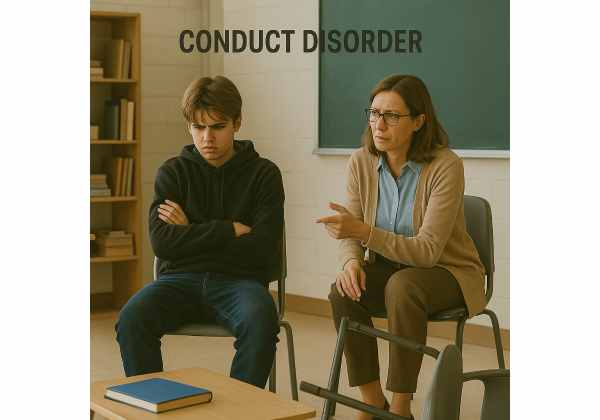
Conduct disorder is a serious childhood or adolescent mental health condition involving a repeated pattern of behavior that violates the rights of others, major rules, or age-appropriate social norms. It is not the same as occasional defiance, lying, anger, or testing limits. The difference is persistence, severity, harm, and impact across real areas of life such as home, school, peers, safety, and legal involvement.
The term can feel harsh, especially when it is applied to a child or teenager. Clinically, though, it is meant to describe a pattern that needs careful assessment, not to label a young person as “bad.” Understanding the symptoms, signs, causes, risk factors, and possible complications can help families, educators, and clinicians distinguish serious conduct problems from ordinary conflict, developmental immaturity, trauma reactions, or other mental health conditions.
Table of Contents
- What Conduct Disorder Means
- Conduct Disorder Symptoms
- Signs Across Home, School, and Peers
- Types and Severity
- Causes and Risk Factors
- Conditions That Can Overlap
- Diagnostic Context
- Complications and Urgent Concerns
What Conduct Disorder Means
Conduct disorder describes a persistent pattern of behavior in which a child or adolescent repeatedly violates others’ rights, important rules, or major social expectations. The key point is pattern: clinicians look for repeated, impairing behavior over time, not a single argument, isolated lie, or brief period of rebellion.
The behaviors may include aggression, cruelty, intimidation, property destruction, theft, serious deceit, running away, or repeated truancy. These actions are more severe than typical limit-testing because they cause meaningful harm or risk. They may affect family safety, school placement, peer relationships, neighborhood safety, or contact with police or juvenile justice systems.
Conduct disorder is usually discussed in childhood and adolescence. In adults, a long-standing pattern of serious antisocial behavior may raise different diagnostic considerations, including antisocial personality disorder, but that diagnosis is not made in children. This distinction matters because a young person’s behavior is still developing, and the meaning of the behavior depends on age, context, cognitive development, trauma exposure, neurodevelopmental history, and the surrounding environment.
A central part of understanding conduct disorder is separating behavior from character. A child with conduct disorder may be angry, impulsive, frightened, emotionally numb, sensation-seeking, influenced by peers, exposed to violence, struggling academically, or reacting to instability. Some children show little apparent remorse; others feel shame afterward but repeat harmful behaviors under stress or pressure. The same outward behavior can have different underlying drivers.
Conduct disorder also exists on a spectrum of severity. Some young people mainly break rules, lie, skip school, or sneak out. Others show aggression, coercion, cruelty, weapon use, or fire-setting. Some patterns begin before age 10, while others emerge in adolescence. Earlier onset, frequent aggression, and signs of limited empathy or remorse generally raise more concern because they are linked with greater impairment and higher risk of later complications.
It is also important not to confuse diagnosis with discipline. A diagnosis does not excuse harmful behavior or erase the need for safety boundaries, school accountability, or legal responsibility. It provides a clinical framework for understanding why the pattern may be occurring, what other conditions might be present, and what risks need immediate attention. A careful mental health evaluation is often needed when the behavior is severe, persistent, or unsafe.
Conduct Disorder Symptoms
The main symptoms of conduct disorder fall into four broad behavior groups: aggression, property destruction, deceitfulness or theft, and serious rule violations. A child or teen does not need to show every symptom, but the behavior pattern must be repetitive, significant, and impairing.
Aggression toward people or animals is often the most urgent symptom group because it can involve direct harm. It may include bullying, threatening, intimidating others, starting physical fights, using a weapon, physical cruelty, forced sexual behavior, or stealing while confronting a victim. In younger children, aggression may look like repeated hitting, biting, kicking, or cruelty that goes beyond ordinary frustration. In adolescents, it may involve fights, coercion, gang involvement, threats, or weapon-related behavior.
Destruction of property includes deliberate damage, vandalism, or fire-setting with the intent to cause serious harm or destruction. Accidental damage during play is not the same as conduct disorder. The concern rises when destruction is intentional, repeated, planned, hidden, or paired with lack of concern for consequences.
Deceitfulness or theft may include frequent lying to obtain goods or avoid obligations, breaking into a house, car, or building, forgery, shoplifting, stealing valuable items, scams, or manipulating others for personal gain. Children lie for many reasons, including fear and immaturity. In conduct disorder, deceit tends to be persistent, instrumental, and linked to broader impairment.
Serious rule violations include repeated running away, staying out at night despite clear limits, or frequent truancy from school. These behaviors are evaluated in relation to developmental age and context. A teenager breaking curfew once is different from a repeated pattern of disappearing overnight, avoiding school for long periods, or placing themselves in unsafe situations.
Common symptom examples include:
- Repeated bullying, intimidation, or threats
- Frequent physical fights or aggression
- Cruelty toward people or animals
- Fire-setting, vandalism, or intentional property damage
- Repeated lying, stealing, or breaking into property
- Serious defiance of age-appropriate rules
- Running away, truancy, or staying out overnight despite limits
- Little apparent concern about harm caused to others in some cases
The emotional tone can vary. Some young people appear angry and reactive. Others seem calm, detached, or unconcerned. Some are impulsive and poorly regulated; others plan harmful behavior. These differences matter because they can change the level of risk and the diagnostic picture.
Clinicians also consider whether behaviors are better explained by another issue, such as trauma, substance use, mania, psychosis, autism-related distress, intellectual disability, or severe environmental instability. Conduct disorder is not diagnosed only because a young person is difficult, oppositional, emotionally intense, or involved in conflict with authority figures.
Signs Across Home, School, and Peers
Conduct disorder usually becomes clearest when behavior patterns appear across settings or cause major impairment in one setting. Parents, teachers, relatives, coaches, peers, and clinicians may each see different parts of the pattern, so context is essential.
At home, signs may include repeated aggression toward siblings or caregivers, intimidation, stealing, lying, destroying property, sneaking out, running away, or violating safety rules. Families may describe feeling as if ordinary consequences no longer work. Some homes become organized around crisis prevention: locking up valuables, hiding car keys, protecting younger siblings, or avoiding topics that trigger escalation.
At school, conduct disorder may show up as fighting, bullying, threats, truancy, vandalism, theft, repeated suspensions, classroom disruption, or disregard for staff authority. Academic failure can both contribute to and result from conduct problems. A student who cannot read at grade level, has untreated ADHD, or feels humiliated in class may avoid school or act out. At the same time, repeated discipline and missed instruction can worsen academic gaps. School-based evaluation may be relevant when behavior problems overlap with learning, attention, or developmental concerns; behavioral health screening in schools can sometimes identify broader patterns that need follow-up.
With peers, signs may include coercive friendships, bullying, cruelty, pressure tactics, stealing from others, group rule-breaking, or association with peers who reinforce aggression or delinquency. Some young people with conduct disorder are socially dominant rather than socially isolated. Others are rejected by prosocial peers and drift toward groups where risky behavior brings status.
The signs can look different by age. Younger children may show severe tantrums, aggression, cruelty to animals, fire interest, stealing, or persistent defiance that escalates beyond typical developmental limits. Adolescents may show more serious rule violations, substance use, theft, weapon carrying, running away, risky sexual situations, or legal involvement.
Gender can also affect recognition. Boys are more often identified because physical aggression and overt rule-breaking are easier to detect. Girls with conduct disorder may also show aggression, but their difficulties may be expressed through running away, exploitation risk, relational aggression, truancy, theft, substance use, or unsafe relationships. Under-recognition can happen when adults assume conduct disorder must look like frequent physical fighting.
A practical warning sign is escalation. Behavior that becomes more frequent, more planned, more harmful, more secretive, or less responsive to normal limits deserves closer assessment. So does behavior that crosses safety lines: cruelty, weapons, sexual coercion, fire-setting, serious threats, or repeated disappearance from supervision.
Types and Severity
Conduct disorder is often described by age of onset, severity, and whether limited prosocial emotions are present. These distinctions help clarify prognosis and risk, but they should be applied carefully and only after a thorough assessment.
Childhood-onset conduct disorder means at least one significant conduct symptom appeared before age 10. This pattern often raises greater concern because it may be linked with earlier neurodevelopmental difficulties, family adversity, aggression, peer rejection, academic struggles, and a longer course of impairment. Childhood onset does not mean a child’s future is fixed, but it does signal the need to understand the pattern early and seriously.
Adolescent-onset conduct disorder means conduct symptoms begin after age 10, with no clear earlier pattern. This form may be more tied to peer influence, adolescent risk-taking, identity struggles, family conflict, community exposure, or school disengagement. Some teens with adolescent-onset patterns have less severe long-term impairment than those with childhood-onset patterns, but serious aggression, exploitation, substance use, or legal involvement can still make the situation high risk.
Unspecified onset is used when there is not enough reliable information to determine when the pattern began. This can happen when records are limited, caregivers disagree, the young person has moved between homes, or early behavior history is unclear.
Severity is usually judged by the number of symptoms and the degree of harm. Mild conduct disorder may involve behaviors such as lying, truancy, or staying out late without major physical harm. Moderate conduct disorder falls between mild and severe. Severe conduct disorder may involve multiple serious behaviors, physical cruelty, forced sexual behavior, weapon use, breaking and entering, major theft, or significant injury to others.
Another important specifier is limited prosocial emotions. This refers to a persistent pattern of traits such as lack of remorse or guilt, lack of empathy, unconcern about performance, or shallow emotional expression. These traits must be seen across relationships and settings, not inferred from one incident. A child who looks unemotional during a confrontation may be afraid, shut down, ashamed, dissociated, or trying to avoid punishment. Clinicians need careful information before concluding that limited prosocial emotions are present.
The purpose of these categories is not to stigmatize. They help describe risk, likely complexity, and the kinds of additional assessment questions that matter. A young person with early-onset aggression, poor empathy, school failure, and trauma exposure has a different profile from a teen who begins skipping school and stealing with a peer group after years of stable functioning.
Causes and Risk Factors
Conduct disorder does not have one single cause. It usually develops through an interaction of biological vulnerability, temperament, family and school context, peer influence, adversity, and broader social conditions.
Genetic and temperament factors can contribute. Some children are more impulsive, sensation-seeking, emotionally reactive, or less sensitive to punishment. Others have difficulty recognizing fear or distress in others, regulating anger, delaying gratification, or learning from consequences. These traits do not cause conduct disorder by themselves, but they can raise risk when combined with stress, poor supervision, harsh discipline, trauma, or peer reinforcement.
Neurodevelopmental factors are also important. ADHD, language delays, executive function weaknesses, learning disorders, and intellectual disability can increase conflict at home and school. A child who cannot plan, pause, read social cues, or keep up academically may experience repeated failure and rejection. When frustration, impulsivity, and negative peer feedback build over time, conduct problems can become more likely. In some children, an ADHD diagnostic process or learning disability testing helps clarify whether disruptive behavior is part of a broader developmental picture.
Family and caregiving factors can raise risk when they are persistent or severe. These may include harsh or inconsistent discipline, low supervision, caregiver substance use, parental mental illness, domestic violence, maltreatment, neglect, family criminality, unstable housing, or repeated caregiver changes. These factors should be discussed without blame. Many caregivers face serious stressors and are trying to manage unsafe behavior with limited resources. Risk is not destiny, and no single family factor explains every case.
Adverse childhood experiences are especially relevant because trauma and chronic stress can shape emotion regulation, threat perception, trust, and aggression. Exposure to violence, abuse, neglect, parental incarceration, household substance problems, or severe instability may increase risk for conduct problems as well as PTSD, depression, anxiety, and substance use. When early adversity is part of the picture, ACEs screening may help organize the history, although it does not diagnose conduct disorder.
Peer, school, and community factors can also matter. Association with delinquent peers, bullying, academic failure, school exclusion, unsafe neighborhoods, community violence, poverty, discrimination, and limited access to supportive services can all add pressure. These influences often interact: school failure can lead to truancy, truancy can increase unsupervised time, and unsupervised time can increase exposure to risky peers.
Protective factors can reduce risk or soften the course. These include warm and consistent caregiving, safe adults outside the home, school connection, positive peer groups, emotional regulation skills, academic support, community safety, and early recognition of coexisting conditions. Protective factors do not erase serious symptoms, but they can change the developmental path.
Conditions That Can Overlap
Conduct disorder often coexists with other mental health, developmental, or substance-related conditions. It can also be mistaken for other problems if the evaluation focuses only on outward behavior.
Oppositional defiant disorder involves angry or irritable mood, argumentative behavior, defiance, and vindictiveness. It may precede conduct disorder in some children, but the two are not the same. Conduct disorder involves more serious violations of others’ rights or major rules, such as aggression, theft, cruelty, or property destruction.
ADHD can contribute to impulsive aggression, interrupting, poor frustration tolerance, and difficulty following rules. A child with ADHD may break rules because they act before thinking, forget instructions, or seek stimulation. Conduct disorder is more likely when behavior includes repeated deceit, cruelty, intimidation, serious theft, or intentional harm.
Trauma-related symptoms can also resemble conduct problems. A young person exposed to violence may appear defiant, emotionally numb, aggressive, hypervigilant, avoidant, or distrustful. Trauma does not rule out conduct disorder, but it changes the interpretation of behavior and the urgency of assessing safety and exposure history. Some youth show both trauma symptoms and conduct disorder symptoms.
Mood disorders can complicate the picture. Depression in children and teens may show up as irritability, anger, school refusal, substance use, or risk-taking. Bipolar disorder can involve episodic periods of decreased need for sleep, elevated or irritable mood, grandiosity, pressured speech, and risky behavior. Conduct disorder is more persistent and behavior-pattern based, while mood disorders are organized around mood episodes or ongoing depressive symptoms.
Autism spectrum disorder, intellectual disability, and language disorders can lead to social misunderstandings, meltdowns, rigid behavior, or rule conflicts. These are not the same as conduct disorder unless there is a persistent pattern of intentional rights violations or serious rule-breaking beyond what is explained by developmental level.
Substance use can trigger or worsen aggression, stealing, truancy, lying, risky sexual behavior, and legal problems. In some cases, substance use is part of the conduct disorder pattern. In others, intoxication, withdrawal, or dependency is the main driver of behavior change. A toxicology screen in a mental health workup may be relevant when behavior changes suddenly, intoxication is suspected, or safety risks are high.
Because overlap is common, a narrow focus on punishment or labels can miss important information. The question is not only “What did the child do?” but also “How long has this been happening, where does it happen, what else is present, what risks are immediate, and what developmental or environmental factors may be contributing?”
Diagnostic Context
Conduct disorder is diagnosed through clinical assessment, not by a single lab test, brain scan, or online questionnaire. The evaluation usually brings together behavior history, caregiver reports, school information, developmental history, mental health symptoms, safety concerns, and evidence of impairment.
Clinicians typically look for a repeated pattern over at least several months, with symptoms that fit the recognized categories of aggression, property destruction, deceitfulness or theft, and serious rule violations. Diagnostic systems commonly require multiple symptoms over the past year, with at least one symptom occurring more recently. The behavior must also cause meaningful impairment in social, academic, family, or other important functioning.
Collateral information is especially important. A young person may minimize behavior because they fear consequences, feel ashamed, distrust adults, or do not see the behavior as a problem. Caregivers may also disagree with each other or see different patterns. Teachers may observe peer aggression, truancy, or classroom disruption that is not visible at home. Juvenile justice, child protection, pediatric, or school records may sometimes clarify timing and severity.
A diagnostic evaluation may explore:
- Age when serious behavior problems first appeared
- Frequency, severity, planning, and triggers of harmful behavior
- Aggression toward people or animals
- Fire-setting, weapon use, coercion, or sexual aggression
- Truancy, running away, or unsafe disappearances
- Substance use, intoxication, or withdrawal
- Trauma exposure, neglect, or safety concerns
- ADHD, learning, language, mood, anxiety, or psychotic symptoms
- Family stressors, supervision, peer group, and school functioning
- Remorse, empathy, emotional expression, and concern about consequences
Screening tools may help organize information, but screening is not the same as diagnosis. A positive screen means more assessment is needed; it does not prove conduct disorder. The difference between screening and diagnosis in mental health matters because serious labels should not be applied from a checklist alone.
Cultural and contextual factors also need care. Rules, family expectations, school discipline practices, community safety, and exposure to discrimination can affect how behavior is interpreted. Clinicians should distinguish true rights violations and serious harm from conflict rooted in misunderstanding, cultural mismatch, disability, fear, or survival behavior in unsafe environments.
The evaluation may involve different professionals depending on the setting and complexity, such as pediatricians, child and adolescent psychiatrists, psychologists, school psychologists, social workers, or neuropsychologists. The roles can differ, and families sometimes benefit from understanding who diagnoses what in mental health before assuming one assessment answers every question.
Complications and Urgent Concerns
The main complications of conduct disorder involve safety, education, relationships, legal consequences, substance use, and later mental health risk. These outcomes are not inevitable, but the risk rises when symptoms are severe, begin early, involve aggression, or occur alongside trauma, ADHD, school failure, or substance use.
Immediate safety complications may include injuries from fights, harm to siblings or peers, animal cruelty, weapon-related incidents, fire-setting, unsafe sexual behavior, exploitation, running away, or retaliation from others. Families may feel frightened, exhausted, ashamed, or unsure how seriously to take threats. Schools may respond with suspensions or expulsions, which may reduce immediate disruption but can also worsen disconnection from learning and supervision.
Academic complications are common. Truancy, suspensions, poor concentration, learning problems, conflict with teachers, and peer disruption can lead to falling behind. Over time, a young person may begin to see school as hostile or pointless. Academic failure can then reinforce association with peers who are also disengaged.
Social complications can be complicated. Some young people with conduct disorder are rejected by peers because of aggression or intimidation. Others become influential in peer groups that reward risk-taking. Relationships may become based on fear, coercion, thrill-seeking, or shared rule-breaking rather than trust.
Mental health complications may include depression, anxiety, trauma-related symptoms, substance use disorders, self-harm, suicidal behavior, and later antisocial behavior. Conduct disorder can also coexist with emotional pain that is not obvious. A teen who appears tough, detached, or hostile may still be depressed, ashamed, frightened, or suicidal. When self-harm, suicidal talk, severe hopelessness, or threats to others are present, suicide risk screening or urgent risk assessment may be necessary.
Professional evaluation is especially urgent when there is:
- Threatened or actual use of weapons
- Fire-setting or fascination with causing fires
- Cruelty to animals or people
- Forced sexual behavior or coercion
- Serious injury, choking, or escalating violence
- Running away with exploitation risk
- Psychosis, mania, severe intoxication, or delirium-like confusion
- Suicidal thoughts, self-harm, or threats of homicide
- A child or vulnerable person in immediate danger
In an immediate emergency, local emergency services or crisis services are appropriate. For non-immediate but serious concerns, prompt evaluation by qualified child or adolescent mental health professionals is important to clarify diagnosis, risk, coexisting conditions, and safety needs. The goal is not to reduce a young person to a label, but to understand a serious pattern before it causes further harm.
References
- Conduct Disorder 2023 (Review)
- Mental disorders 2025 (Fact Sheet)
- Antisocial behaviour and conduct disorders in children and young people: recognition and management 2013, last reviewed 2025 (Guideline)
- Environmental Risk Factors of Conduct Disorder: An Overview of Meta-Analyses 2025 (Review)
- Systematic Review of Environmental and Psychosocial Risk Factors associated with Attention Deficit Hyperactivity Disorder, Oppositional Defiant Disorder, and Conduct Disorder in Children and Adolescents 2023 (Systematic Review)
- Conduct disorder – a comprehensive exploration of comorbidity patterns, genetic and environmental risk factors 2024 (Research Article)
Disclaimer
This article is for general educational purposes only and is not a substitute for professional medical advice, diagnosis, or treatment. Conduct disorder symptoms can involve serious safety risks, so concerns about violence, self-harm, coercion, weapon use, fire-setting, or exploitation should be assessed by qualified professionals or emergency services when immediate danger is present.
Thank you for taking the time to read about this sensitive topic; sharing it may help others recognize when serious behavior patterns deserve careful, compassionate evaluation.