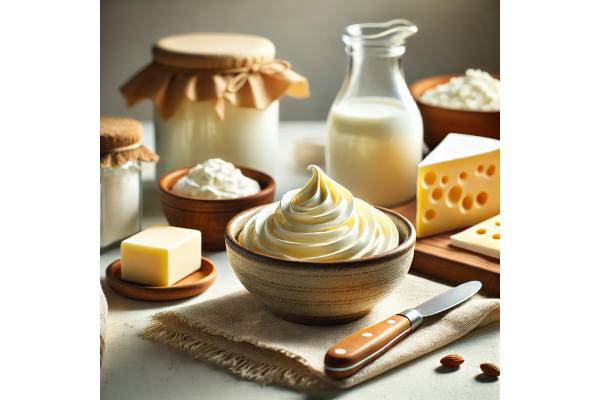
Cream cheese is a fresh, spreadable cheese made by blending milk and cream, lightly acidifying the mixture, and setting it to a smooth, mild body. In the kitchen, that silky texture makes it a natural for bagels and toast, but it also shines in cheesecakes, frostings, dips, and savory sauces where it lends body without stringiness. Nutritionally, cream cheese is energy-dense, modest in protein, and richer in saturated fat than many cultured dairy foods; it contributes vitamin A, riboflavin, and small amounts of selenium and vitamin B12. Because it is a fresh cheese with high moisture, storage and food safety matter more than with hard, aged varieties. The practical takeaway: cream cheese can fit into balanced eating when portions are measured, cooking fats are diversified, and pasteurized products are handled cold and clean. This guide translates the science into everyday decisions—how to choose among styles, what the label numbers mean, safe handling rules, and smart ways to use cream cheese so you get maximum flavor with minimal downsides.
Nutrition Snapshot
- Per 100 g: ~350 kcal with 34.4 g fat (20.2 g saturated), 6.2 g protein, 5.5 g carbs, and 308 µg vitamin A RAE.
- Safety first: choose pasteurized cream cheese and keep refrigerated; discard if left out over 2 hours.
- Typical portion: 1–2 tablespoons (15–30 g) at a time; use more sparingly if you are budgeting saturated fat.
- People who should limit or avoid: those with cow’s-milk allergy; pregnant or immunocompromised individuals should avoid unpasteurized soft cheeses.
Table of Contents
- Cream Cheese: Detailed Overview
- Cream Cheese Nutrition Profile (Per 100 g)
- Evidence-Based Health Benefits
- Risks, Allergies and Interactions
- Selecting, Quality, Sustainability and Storage
- Preparation, Cooking and Nutrient Retention
- Portions, Comparisons and FAQs
Cream Cheese: Detailed Overview
Cream cheese is classified as a “fresh” (unripened) cheese. It is produced by adding lactic acid bacteria—or an acidifier—to a standardized mix of milk and cream. As acidity rises, casein proteins coagulate, forming a soft curd. The curd is then drained, blended smooth, and typically stabilized so it stays spreadable in the package and on the plate. Unlike aged cheeses, cream cheese is consumed soon after production, which preserves its clean dairy flavor and soft body.
What gives cream cheese its unique texture?
Compared with cheddar or parmesan, cream cheese retains far more moisture and has a higher fat-to-protein ratio. That composition limits the protein network’s firmness, so the cheese spreads rather than shreds. Minute differences in fat content, moisture, stabilizers, and pH explain why one brand spreads effortlessly while another feels slightly pasty or breaks under a knife. Many products include small amounts of stabilizers—often locust bean gum, guar gum, or xanthan—to keep the emulsion stable, prevent weeping, and resist graininess after mixing or heating.
Styles and variants you’ll see:
- Full-fat cream cheese (standard): classic mild flavor and richest mouthfeel; about 34 g fat per 100 g.
- Neufchâtel or reduced-fat cream cheese: typically ~20–24 g fat per 100 g; softer set and more moisture; useful where lighter texture is welcome.
- Whipped cream cheese: aerated for easier spreading; lighter by volume but nutritionally similar by weight.
- Flavored or mixed: includes herbs, smoked fish, or sweet additions; check sodium and added sugars.
- Lactose-free: treated with lactase enzyme; lactose is hydrolyzed into simple sugars, which can taste slightly sweeter.
- Organic or pasture-based: reflects farm and feed practices more than dramatic nutrient shifts; buy for taste and sourcing preferences.
Culinary behavior at a glance
Cream cheese melts and loosens readily in the presence of moisture and gentle heat, but it can “break” or curdle if boiled hard or mixed with strong acids at high heat. It’s excellent for body in frostings, smoothness in dips, and stability in cheesecakes where its water and fat help set a creamy gel. In savory cooking, it enriches sauces without the stringiness of aged cheeses because its protein matrix is less cross-linked.
Nutrition in context
Per tablespoon (15 g), cream cheese delivers roughly 51 kcal, ~5 g fat (~3 g saturated), ~0.9 g protein, and ~0.8 g carbohydrate. That serving size makes it easy to keep portions modest while still capturing cream cheese’s culinary value—especially if the rest of the meal leans on fiber-rich vegetables, whole grains, legumes, and unsaturated fats from oils, nuts, and seeds.
Cream Cheese Nutrition Profile (Per 100 g)
The values below summarize typical unsalted, full-fat cream cheese per 100 g with % Daily Values (%DV) based on U.S. labeling standards. Actual labels vary by brand; always check packaging for specifics.
Macros & Electrolytes
| Nutrient | Amount (per 100 g) | %DV |
|---|---|---|
| Energy | 350 kcal | — |
| Total Fat | 34.4 g | 44% |
| Saturated Fat | 20.2 g | 101% |
| Monounsaturated Fat | 8.9 g | — |
| Polyunsaturated Fat | 1.5 g | — |
| Trans Fat (naturally occurring) | 1.2 g | — |
| Cholesterol | 101 mg | 34% |
| Protein | 6.2 g | 12% |
| Total Carbohydrate | 5.5 g | 2% |
| Total Sugars | 3.8 g | — |
| Dietary Fiber | 0 g | 0% |
| Sodium | 314 mg | 13% |
| Potassium | 132 mg | 3% |
| Water | 52.6 g | — |
Carbohydrates
| Component | Amount |
|---|---|
| Total Carbohydrate | 5.5 g |
| Lactose | 3.8 g |
| Starch | 0.35 g |
| Added Sugars | 0 g |
Fats & Fatty Acids (selected)
| Component | Amount |
|---|---|
| Saturated Fat (total) | 20.2 g |
| — Palmitic Acid (16:0) | 9.41 g |
| — Stearic Acid (18:0) | 3.37 g |
| — Myristic Acid (14:0) | 3.28 g |
| Monounsaturated Fat (total) | 8.91 g |
| — Oleic Acid (18:1) | 7.78 g |
| Polyunsaturated Fat (total) | 1.48 g |
| — Linoleic Acid (Omega-6) | 0.81 g |
| — Alpha-linolenic Acid (Omega-3) | 0.13 g |
| Conjugated Linoleic Acid (CLA) | ~0.18 g |
Protein & Amino Acids (selected)
| Protein Component | Amount |
|---|---|
| Protein (total) | 6.2 g |
| Leucine | 0.657 g |
| Lysine | 0.567 g |
| Valine | 0.395 g |
| Methionine | 0.191 g |
| Tryptophan | 0.069 g |
Vitamins
| Vitamin | Amount | %DV |
|---|---|---|
| Vitamin A (RAE) | 308 µg | 34% |
| Riboflavin (Vitamin B2) | 0.23 mg | 18% |
| Vitamin B12 | 0.22 µg | 9% |
| Vitamin E (alpha-tocopherol) | 0.86 mg | 6% |
| Vitamin K (total) | 2.1 µg | 2% |
| Vitamin D | 0 µg | 0% |
| Folate (DFE) | 9 µg | 2% |
| Choline | 26.8 mg | 5% |
Minerals
| Mineral | Amount | %DV |
|---|---|---|
| Calcium | 97 mg | 7% |
| Phosphorus | 107 mg | 9% |
| Selenium | 8.6 µg | 16% |
| Iodine | 36 µg | 24% |
| Zinc | 0.5 mg | 5% |
| Potassium | 132 mg | 3% |
| Sodium | 314 mg | 13% |
Allergens & Intolerance Markers
- Contains milk proteins (casein and whey).
- Lactose: ~3.8 g per 100 g (≈0.57 g per tablespoon/15 g). Many people with lactose intolerance tolerate small portions, especially with meals.
Additives & Fortification
- Common stabilizers include locust bean gum, guar gum, and/or xanthan gum to improve texture and reduce syneresis.
- Fortification with vitamins is uncommon; check labels for variations and for lactase in lactose-free versions.
Contaminants/Residues
- As a high-moisture, ready-to-eat soft cheese, cream cheese must be made from pasteurized milk and kept cold to minimize microbial risk.
Glycemic & Acid–Base Metrics
| Metric | Value |
|---|---|
| Glycemic Load (per 100 g) | Very low (minimal digestible carbohydrate) |
| PRAL (potential renal acid load) | +2.69 |
All nutrient amounts reflect typical unsalted, full-fat cream cheese; values vary by brand and recipe.
Evidence-Based Health Benefits
1) A neutral, creamy base that improves meal enjoyment—without overpowering
Cream cheese’s mild flavor and smooth mouthfeel help bind and mellow both sweet and savory recipes. That “carrier” effect can make whole-grain breads, raw vegetables, and higher-fiber crackers more appealing. Because adherence is the backbone of any healthy eating pattern, using a small amount of cream cheese to make nutrient-dense foods enjoyable can be a practical strategy. The key is portion control and the quality of the foods it accompanies.
2) Contributions to vitamins and trace nutrients
Per 100 g, cream cheese provides ~34% DV of vitamin A (retinol), ~18% DV of riboflavin (B2), ~9% DV of vitamin B12, and ~16% DV of selenium. Per tablespoon, the contribution is smaller but still tangible (for vitamin A, about 5% DV). These micronutrients support vision, epithelial maintenance, energy metabolism, and antioxidant defenses. While cream cheese is not a nutrient “powerhouse” compared with yogurt or aged cheeses, it reliably adds small amounts of these vitamins and minerals when used regularly in modest portions.
3) Lower sodium than many aged cheeses
Fresh cheeses like cream cheese typically have moderate sodium compared with aged cheeses that require more salt for ripening and preservation. If you’re balancing blood pressure goals with flavor, a thin spread of cream cheese paired with otherwise low-sodium foods (cucumber slices, whole-grain toast with tomato) can be friendlier to your daily sodium budget than heavily salted, aged slices. As always, flavored spreads can vary—check the label.
4) Culinary performance that reduces reliance on heavy cream
In hot or cold applications, cream cheese can deliver body and richness without large volumes of liquid cream. For example, blending a few tablespoons into a tomato sauce or soup adds silkiness and mild tang with less overall fat than adding a cup of heavy cream. In baking, it adds tenderness and moisture to quick breads and cakes, allowing modest reductions in butter or oil in some recipes.
5) Practical option for many with lactose intolerance
Cream cheese contains little lactose per tablespoon (≈0.6 g). Many people with lactose intolerance tolerate up to ~12 g lactose at a time, especially when eaten with meals; cream cheese portions are far below that threshold for most. Lactose-free versions further expand options. Note the distinction between lactose intolerance and cow’s-milk allergy: allergy involves immune reactions to milk proteins present in cream cheese and requires medical guidance.
What cream cheese does not do
It is not a high-protein or calcium-rich dairy food, and it is not a meaningful source of omega-3 fats. Its saturated fat content is substantial by weight. That means cream cheese fits best as a flavoring or structural ingredient, not a primary fat source. Day to day, pair it with foods rich in unsaturated fats (olive oil, nuts, seeds, fatty fish) and fiber to keep your overall pattern cardioprotective.
Practical ways to capture benefits while staying balanced
- Spread thinly on whole-grain toast and top with sliced vegetables and herbs.
- Swirl 1–2 tablespoons into soups or sauces off heat to add body without boiling.
- Whip with Greek yogurt and lemon for a tangy, lighter dip that stretches flavor further per calorie.
Risks, Allergies and Interactions
Saturated fat and LDL cholesterol
Per 100 g, cream cheese contains ~20 g of saturated fat; per tablespoon (15 g), that’s ~3 g or about 15% of the daily value. Diets that reduce saturated fat—especially when replacing it with polyunsaturated fats from oils, nuts, seeds, and fish—support lower LDL cholesterol and reduced cardiovascular risk. You don’t have to exclude cream cheese entirely, but it’s wise to measure portions and let unsaturated fats do most of the heavy lifting in your cooking.
Lactose intolerance vs milk allergy
- Lactose intolerance is a digestive problem, not an immune response. Small portions of cream cheese are usually well tolerated, and lactose-free versions exist.
- Cow’s-milk allergy involves immune reactions to milk proteins (casein, whey). Because cream cheese contains these proteins, individuals with confirmed allergy should avoid it unless advised otherwise by their clinician. Lactose-free cream cheese is not safe for milk allergy.
Food safety and Listeria
Soft cheeses carry a higher risk of contamination than hard cheeses if unpasteurized or manufactured without strict hygiene. Choose pasteurized cream cheese, keep it refrigerated at or below 4°C (40°F), and follow the 2-hour rule for room temperature exposure (1 hour if above 32°C/90°F). Pregnant individuals, older adults, and people with weakened immunity should be especially careful: avoid unpasteurized soft cheeses, and discard any cream cheese that has been left unrefrigerated too long or shows off-odors, mold, or weeping liquid.
Sodium and flavor additions
Plain cream cheese is moderate in sodium per weight, but flavored spreads (smoked fish, vegetable blends, or “everything bagel” styles) can add salt. If you’re managing blood pressure, compare labels and season recipes with herbs, citrus, or spices rather than extra salt.
Medication and condition considerations
- MAOIs and tyramine: cream cheese is fresh and low in tyramine, unlike aged cheeses; it is typically permitted in low-tyramine eating plans—confirm with your clinician.
- Fat malabsorption or gallbladder disease: high-fat foods may provoke symptoms; tailor portions with medical guidance.
- Weight management: cream cheese is energy-dense; use small amounts strategically (see Portions and Comparisons).
Storage-related risk
Because cream cheese is high in moisture and protein, bacteria can grow rapidly if temperatures rise. Use clean utensils, close packages tightly, and avoid double-dipping. Freezing is possible for longer storage, but texture becomes crumbly; thaw in the refrigerator and plan to use thawed cream cheese in cooked applications.
Selecting, Quality, Sustainability and Storage
How to choose at the store
- Style & fat level:
- Full-fat: richest mouthfeel; reliable in baking and frosting.
- Neufchâtel/reduced-fat: softer set, fewer calories and saturated fat per spoonful; great for spreads and dips.
- Whipped: easier spreading; lighter by volume but similar per gram.
- Pasteurization: For safety, especially during pregnancy or if immunocompromised, choose products labeled pasteurized.
- Ingredients: Short labels typically read “pasteurized milk and cream, salt, cultures.” Stabilizers such as locust bean gum, guar gum, or xanthan gum are common and help maintain smoothness.
- Lactose-free options: Look for lactase on the ingredient list; expect a subtly sweeter taste.
- Sodium & flavorings: Herb, smoked, or “everything” varieties can be salty—review the nutrition facts if you track sodium.
Quality cues
- Appearance: smooth, uniform white to cream color; no watery pooling in the tub.
- Aroma: clean, slightly tangy; avoid sour, yeasty, or “old butter” smells.
- Texture: supple and spreadable when chilled; gritty, curdled, or weepy textures indicate age or temperature abuse.
Sustainability and reducing waste
- Choose package sizes you can finish within 1–2 weeks after opening.
- Plan recipes to use the remainder: fold into mashed potatoes, enrich soups, or make a batch of savory stuffed mushrooms.
- If you buy in bulk, portion and freeze (texture changes, but it’s fine for baked dishes and hot dips).
- Prefer recyclable cartons/foils where available and store in the coldest part of the refrigerator, not the door.
Storage and food safety
- Refrigeration: keep at ≤4°C (40°F); reseal immediately after use.
- Room temperature: limit exposure to ≤2 hours (≤1 hour in hot conditions). To soften quickly without warming the whole block, cut into small cubes and let stand 10–15 minutes or place the sealed foil pack in cool—not hot—water for a few minutes.
- Freezing: acceptable for quality up to a couple of months; expect a crumbly texture upon thawing. Thaw in the refrigerator and stir vigorously or blend into cooked recipes.
Buying smart
- Compare unit prices (per 100 g) across blocks, tubs, and whipped tubs: whipped products seem lighter but can cost more for the same grams.
- For baking, choose blocks over tubs; blocks contain fewer stabilizers and yield smoother cheesecakes.
- If sodium is a concern, plain varieties typically have less than flavored spreads; adjust seasoning at the table.
Preparation, Cooking and Nutrient Retention
Softening and mixing without food safety trade-offs
- For smooth batters and frostings, bring cream cheese to a cool room temperature quickly and safely: cut into 1–2 cm cubes and rest for 10–15 minutes; or warm the sealed package briefly in cool water. Avoid leaving cream cheese out for hours.
- Beat with a paddle, not a whisk, to limit air bubbles in cheesecakes. Scrape the bowl frequently to prevent lumps.
Sauces and soups that stay smooth
- Add cream cheese off heat or at low simmer, whisking in small pieces with a bit of cooking liquid to form an emulsion.
- Stabilize with starch (flour, cornstarch, or a spoonful of pasta water) if the sauce risks splitting.
- Acidic ingredients (lemon, wine, tomatoes) are best added after the cheese is fully dispersed.
Baking with precision
- Cheesecake basics:
- Use block cream cheese; tubs can be softer and incorporate excess air.
- Mix at low speed to minimize bubbles (which cause cracks).
- Bake in a water bath or at lower temperature for gentle, even set.
- Cool slowly in an off oven with the door cracked to reduce contraction and cracking.
- Lighter bakes: Replace part of the cream cheese with strained yogurt, ricotta, or silken tofu for tang or protein while trimming saturated fat. Test small batches first to calibrate texture and moisture.
Savory uses that scale flavor, not saturated fat
- For pasta or grains, emulsify 1–2 tablespoons of cream cheese with hot cooking water and herbs to coat a full pot—big flavor, controlled calories.
- Blend into vegetable soups to add body; finish with olive oil rather than more dairy fat to shift the fatty-acid mix toward unsaturated.
- Make compound spreads with roasted peppers, chives, capers, citrus zest, or smoked paprika to amplify taste so smaller portions satisfy.
Retaining nutrients and quality
- Vitamin A is light-sensitive; store cream cheese wrapped and away from light to minimize gradual losses.
- Prolonged high heat degrades texture more than vitamins in cream cheese; the practical nutrient saver is gentle cooking and shorter hold times, which also protect flavor.
Food safety checkpoints
- Use clean utensils every time (no double-dipping).
- Discard if the product smells sour, looks moldy, or has pooled whey and curdled texture.
- For high-risk individuals, reheat dishes containing cream cheese to 165°F (74°C) before eating.
Portions, Comparisons and FAQs
How much is reasonable?
A typical schmear on a bagel ranges widely, but measuring 1 tablespoon (15 g) adds ~51 kcal, ~5 g fat (≈3 g saturated), ~0.9 g protein, and ~0.8 g carbs. For most adults, 1–2 tablespoons at a time fits comfortably when the rest of the meal leans on vegetables, whole grains or fruit, and unsaturated fats. If you’re managing LDL cholesterol, aim toward the lower end of that range and prioritize polyunsaturated-rich oils elsewhere in the day.
Cream cheese vs common alternatives (per tablespoon, typical values)
- Cream cheese (full-fat): ~51 kcal; ~5 g fat; ~3 g saturated fat; mild tang; spreads when cold.
- Butter: ~102 kcal; ~11 g fat; ~7 g saturated fat; great for browning and high-heat sautéing but salt and milk solids vary.
- Olive oil: ~119 kcal; 13.5 g fat; ~2 g saturated fat; fluid and fruity; excels for dressings and cooking where dairy flavor isn’t needed.
- Neufchâtel (reduced-fat cream cheese): generally ~25–35% less fat by weight than full-fat; softer, higher moisture; good in cold spreads.
- Greek yogurt (plain, whole-milk): lower fat, higher protein; mix with a portion of cream cheese for lighter dips and frostings.
When to choose which?
- Choose cream cheese for spreadability and body in cold applications, cheesecakes, and quick sauces.
- Choose olive or canola oil for most sautéing and roasting to tilt your pattern toward unsaturated fats.
- Choose Neufchâtel to trim saturated fat while keeping a similar flavor profile; texture differences are most noticeable in baking.
FAQs
- Is cream cheese lactose-free?
No. Regular cream cheese contains small amounts of lactose (~0.6 g per tablespoon). Many with lactose intolerance tolerate such portions; lactose-free versions are available. - Is cream cheese safe during pregnancy?
Yes, if pasteurized and refrigerated. Avoid unpasteurized soft cheeses and discard any product left out longer than 2 hours. - Can I freeze cream cheese?
Yes, but expect a crumbly texture after thawing. Use thawed cream cheese in cooked dishes rather than as a spread. - Is whipped cream cheese healthier?
By volume, a tablespoon of whipped contains fewer grams (more air) than a tablespoon of block style, so it delivers fewer calories per spoonful. Per 100 g, nutrition is similar. - Does cream cheese contain probiotics?
It is made with starter cultures, but it’s not reliably a source of probiotic strains at meaningful counts; treat it as a culinary product, not a probiotic food.
References
- Nutrition Facts for Cream Cheese 2025.
- Daily Value on the Nutrition and Supplement Facts Labels 2024 (Guidance).
- Eating, Diet, & Nutrition for Lactose Intolerance 2025 (Guidance).
- How Listeria Spread: Soft Cheeses and Raw Milk 2025 (Guidance).
- Reduction in saturated fat intake for cardiovascular disease 2020 (Cochrane Review).
Disclaimer
This guide is for general education and does not replace personalized advice from a qualified health professional. If you are pregnant, immunocompromised, or have high LDL cholesterol, cow’s-milk allergy, lactose intolerance, or fat malabsorption, consult your clinician or a registered dietitian for recommendations tailored to your needs. If you found this article useful, please consider sharing it on Facebook, X, or your preferred platform to help us continue creating clear, evidence-based nutrition resources.