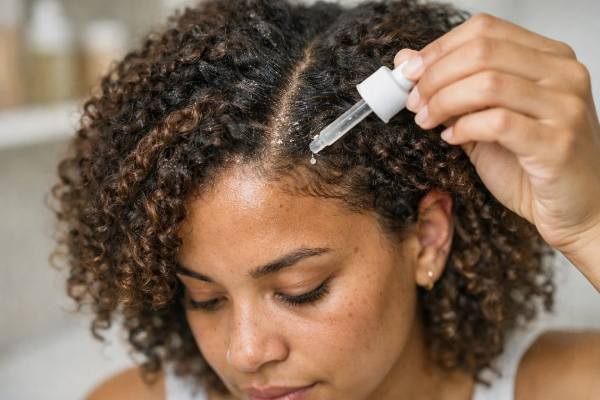
Curly hair routines are often built around moisture and definition, but the scalp can quietly struggle under the weight of that success. Gels, creams, butters, oils, and refresh sprays can create a comfortable curl pattern while also trapping sweat, dead skin, and residue close to the roots—especially when wash days are spaced far apart. Add in the way curls “hold on” to shed hairs, and it becomes easy to misread what you’re seeing: is it buildup, dandruff, dryness, or a reaction to products? The most scalp-friendly curly routine is not the one with the most steps. It is the one with the clearest balance between cleansing and conditioning, plus a predictable plan for reset days when flakes or itch begin to creep in. This guide walks you through why buildup and flakes happen, how to choose the right wash rhythm, and how to keep your curls defined without turning your scalp into an overloaded, irritated surface.
Quick Summary
- Cleanse the scalp often enough to prevent residue compaction, even if you keep wash days gentle and curl-friendly.
- Use targeted clarifying on a schedule that matches your product load, not a fixed calendar rule.
- Treat flakes by pattern: dry, powdery flakes need barrier support, while greasy, stuck-on flakes may need antifungal-style care.
- Apply styling products with intention—keep heavy layers off the scalp when itch, bumps, or odor appear.
- If burning, oozing, pustules, or patchy hair loss shows up, prioritize medical evaluation over product swapping.
Table of Contents
- Why curls get buildup and flakes
- Wash frequency and scalp cleansing strategy
- Clarifying and exfoliation without ruining curls
- Conditioning and styling product balance
- Refresh days, sweat, and protective styling
- When flakes mean dermatitis and when to get checked
Why curls get buildup and flakes
Curly hair is not inherently “dirty” or “high maintenance,” but its shape changes how sebum, water, and product move. Sebum travels more slowly down a curved strand, which can leave the lengths dry while the scalp still produces oil normally. Many curl routines then compensate with richer styling layers—creams, gels, oils, edge products, and refresh sprays. Over time, that combination can create a predictable cycle: the curls look great, the scalp starts to feel coated, and flakes appear.
A key reality is that curly hair often retains shed hairs. Shed strands don’t slide out as easily when the hair is coiled or textured, so they can remain “caught” until wash day. When you finally detangle, it can look like sudden heavy shedding even when the amount is normal. That visual can lead people to wash less often (to avoid seeing shed hair) or to scrub harder (to feel “clean”), both of which can worsen scalp comfort.
Flakes can mean different things, and curly routines can trigger more than one type at once:
- Dry-skin flaking: usually fine, light, and powdery, often paired with tightness after washing.
- Buildup flaking: often looks like product “dust,” small clumps, or grayish residue that rolls off when scratched.
- Dandruff-style flaking: tends to be more persistent, sometimes greasy, and often paired with itch and redness.
- Reaction flaking: may follow a new product, fragrance, essential oils, or aggressive actives, and can come with burning or stinging.
Buildup is not only about product volume. It is also about product stickiness and layering. Film-formers in gels, waxes in edge control, heavy butters, and repeated refresh sprays can create a tight layer over the scalp that holds onto sweat and dead skin. If you suspect residue is the main issue, it helps to approach it systematically rather than escalating to harsh scrubs. How to fix product buildup in hair offers a useful framework for recognizing buildup patterns and resetting without over-stripping.
The goal is to stop treating all flakes as one problem. Once you identify whether you’re looking at dryness, buildup, dandruff-style flaking, or a reaction pattern, the routine becomes much simpler—and your curls usually look better, not worse.
Wash frequency and scalp cleansing strategy
The most scalp-friendly curly routine starts with a clear question: what does your scalp need, not just your curls? Some scalps are happiest with frequent gentle washing; others need more spacing. The right frequency is the one that prevents itch, odor, tenderness, or heavy flakes—without leaving the lengths brittle.
A useful way to choose a wash rhythm is to base it on symptoms rather than tradition. If your scalp feels comfortable for three days and then starts itching on day four, that’s a data point. If you get bumps or a waxy feel by day five, that’s another. When in doubt, the most common “sweet spot” for curl routines is a regular wash day plus a flexible midweek reset when needed.
Practical frequency guidelines many people tolerate well:
- Oily or itch-prone scalp with buildup: often does best with washing every 2–4 days, using a gentle cleanser most washes and a stronger cleanser on a schedule.
- Dry, tight scalp with minimal styling layers: may tolerate washing every 4–7 days, especially with lukewarm water and scalp-focused conditioning habits.
- Heavy styling routine with gels, butters, edge products, and refresh sprays: usually needs at least one true shampoo weekly, even if co-washing is used in between.
If you want a structured way to match wash frequency to scalp type (oily, dry, sensitive, combination), how often to wash hair by scalp type can help you fine-tune without guessing.
Technique matters as much as frequency, especially for curls:
- Section hair before washing (4–8 sections) so you can reach the scalp without aggressive scrubbing.
- Apply shampoo to the scalp first, not the lengths. Let the lather rinse through the curls rather than roughing up the strands.
- Use the pads of your fingers, not nails. Nails create micro-injuries that increase burning and flaking later.
- Rinse longer than you think you need. Many “flake” complaints are actually leftover conditioner or styling residue near the roots.
- If you co-wash, treat it as a gentle cleanse—not as your only cleanse forever. Co-washing can be excellent for slip and curl definition, but it can also allow residue to accumulate if you never reset.
A final note: scalp health improves when cleansing is consistent. Erratic cycles—two weeks without washing, then an aggressive scrub—tend to create the most irritation. A steady, repeatable plan keeps both scalp and curls calmer.
Clarifying and exfoliation without ruining curls
Clarifying is the curly routine step people either avoid entirely or overuse out of frustration. The goal is neither. Clarifying should be predictable and measured: strong enough to remove residue, gentle enough that your curls do not feel punished afterward.
A simple way to decide when to clarify is to watch for “signals” that regular cleansing is no longer keeping up:
- Roots feel waxy or coated even after washing
- Curls look limp at the crown but dry at the ends
- Products stop performing the way they used to (gel flakes more, refresh sprays feel sticky)
- The scalp itches within 24 hours of wash day
- There is a dull film that makes hair feel heavy in the shower
For many curly routines, clarifying every 2 to 4 weeks works well. If you use heavy butters, edge products, frequent dry shampoo, or lots of refresh layers, you may need it more often. If you use minimal styling product and your water is soft, you may need it less often. when and how often to use clarifying shampoo is a helpful guide for adjusting frequency to your product load and symptoms.
Exfoliation is a separate decision. “Scrub” is not the same as “exfoliate,” and aggressive physical scrubs can worsen a sensitive scalp. If you want exfoliation, think gentle and targeted:
- Chemical exfoliation (often salicylic acid at low concentrations) can help lift compacted dead skin and reduce sticky scaling for some scalps.
- Keratolytic support (ingredients that soften and loosen scale) can be useful when flakes are adherent.
- Mechanical tools (silicone scalp brushes) should be used lightly, not as sandpaper.
A curl-safe clarifying and reset wash often looks like this:
- Pre-detangle gently with conditioner or a slip-rich product.
- Apply clarifying shampoo to the scalp only, working in sections.
- Let it sit briefly if the label recommends contact time (often 1–3 minutes).
- Rinse thoroughly.
- Follow with conditioner focused on lengths and ends, then style as usual.
If your scalp stings with exfoliants or you have a history of dermatitis, keep the reset simpler: gentle clarifying plus barrier-friendly conditioning. Strong exfoliation is not a badge of honor. The “best” clarifying plan is the one you can repeat without triggering burning, redness, or rebound oiliness.
Conditioning and styling product balance
Curly routines often fail at the scalp because of one well-intended habit: applying moisture everywhere. Your lengths may need richer care, but your scalp may not. The healthiest product balance usually comes from separating “scalp needs” from “curl needs,” then applying each product only where it earns its place.
Start with conditioning. Conditioners and masks are designed for hair fiber, not scalp skin, though some can be tolerated at the roots. A scalp-friendly approach is:
- Condition lengths generously.
- Keep heavy masks and butters off the first 2–5 cm (1–2 inches) from the scalp if you are flake-prone.
- If you do apply conditioner near the roots for slip, rinse thoroughly and avoid leaving a thick layer behind.
Styling products are where buildup usually accelerates. The most common culprits are layered combinations that include heavy oils, thick creams, and strong-hold gels all at once—especially when the same products are reapplied during refresh days. A practical “product hierarchy” can prevent overload:
- Base hydration: leave-in conditioner, applied mainly to mid-lengths and ends
- Definition: gel or mousse, applied with hands that glide over the hair rather than rubbing the scalp
- Seal and shine: a tiny amount of oil or serum on ends only, as needed
If you use the LOC or LCO method (liquid, oil, cream), consider making the “oil” step end-focused rather than scalp-focused, especially if you are prone to flakes or itch. Oils can trap residue and make dandruff-style flaking harder to control.
Dryness flakes can be mistaken for dandruff, and dandruff can be mistaken for dryness. That distinction is crucial because the “fix” is often opposite: more occlusion may soothe dryness but worsen greasy, yeast-driven flaking. If you are unsure which you are dealing with, dandruff versus dry scalp differences and treatments can help you match your product choices to the pattern you actually have.
A simple way to stress-test your routine is the “one change rule.” If your scalp is struggling, change only one variable at a time for 10–14 days:
- reduce scalp-applied oils
- reduce refresh product
- switch one styling layer to a lighter format
- improve rinse time
- add a scheduled clarifying day
Product balance is not about using fewer products forever. It is about using the right amount in the right places, so the scalp stays breathable while curls stay defined.
Refresh days, sweat, and protective styling
Refresh days are where many curly routines quietly accumulate problems. The goal of a refresh is to restore shape and moisture without adding so much residue that wash day becomes a battle. If your scalp gets itchy or flaky between washes, your refresh strategy matters as much as your shampoo choice.
A scalp-friendly refresh starts with a simple principle: add water before you add product. Water reactivates many styling polymers and helps curls spring back without needing a full reapplication. If you immediately layer more cream or gel onto a dry, product-coated base, residue builds fast.
Refresh options that tend to be scalp-friendly:
- Mist curls with water and scrunch lightly to reactivate hold.
- Use a small amount of lightweight leave-in on the lengths only.
- Spot-apply gel to frizzy sections rather than coating the entire head.
Dry shampoo is a common “bridge” on longer wash schedules, but it is also a frequent trigger for gritty buildup and itchy scalp in curly routines. If you use it, treat it as occasional—not daily—and focus on technique:
- Apply to the scalp in small sections, not as a blanket spray.
- Wait 1–2 minutes, then massage lightly and brush or pat away excess.
- Avoid stacking multiple days without a real cleanse.
If dry shampoo consistently leaves your scalp irritated, how to use dry shampoo without itching and buildup can help you adjust the product type and application so it supports your routine instead of derailing it.
Sweat is another overlooked trigger. Curly hair often gets worn up for workouts, and sweat can dry under styling products and create a salty, itchy film. A practical approach is a “post-sweat rinse” day:
- Rinse the scalp with lukewarm water and massage gently.
- Use a very small amount of gentle cleanser if needed, focusing on the hairline and nape.
- Reapply minimal styling product afterward.
Protective styling can help scalp health when it reduces daily manipulation, but it can also worsen scalp issues if it traps sweat or creates too much tension. Use these safeguards:
- Keep styles comfortable within 30 minutes; pain is a warning sign.
- Avoid heavy edge products daily; they often build up along the hairline.
- Clean the scalp on schedule even when hair is in a style—scalp hygiene is not optional.
Refresh days should make curls easier, not heavier. When the scalp begins to itch on refresh days, it is often a signal to reduce layering, shorten the wash interval slightly, or schedule a clarifying reset.
When flakes mean dermatitis and when to get checked
Most curly-hair scalp issues improve with better product balance and predictable cleansing. But some flaking and irritation patterns are not just “routine problems.” They reflect inflammatory scalp conditions that need targeted treatment. The challenge is that curls can hide redness and scale, so it helps to watch for symptom clusters rather than waiting for a dramatic rash.
Signs your flakes may be more than simple dryness or buildup:
- Persistent itch that returns quickly after washing
- Greasy, yellowish scale or thick adherent flakes
- Redness along the scalp, hairline, eyebrows, or sides of the nose
- Burning, soreness, or tender bumps
- Flare-ups that track with stress and season changes
- Flaking that improves with medicated shampoo and worsens when you stop
Seborrheic dermatitis is a common culprit and tends to respond best to targeted anti-yeast shampoos used correctly. The technique matters for curls: apply the medicated shampoo to the scalp only, leave it in contact for the time on the label (often 2–5 minutes), then rinse and follow with a moisturizing shampoo or conditioner on the lengths if needed. If you want a deeper guide to symptoms and trigger patterns, seborrheic dermatitis symptoms, triggers, and shampoos can help you decide when a medicated strategy is appropriate.
When to seek medical evaluation sooner:
- Burning, oozing, crusting, or pus-filled bumps
- Patchy hair loss, broken hairs in localized areas, or widening bald spots
- Severe redness, swelling, or blistering after a product or hair dye
- Symptoms lasting longer than 3–4 weeks despite a simplified routine
- Recurrent flares that disrupt sleep or daily comfort
A clinician may evaluate for seborrheic dermatitis, psoriasis, contact dermatitis, folliculitis, or fungal infection, and may recommend prescription treatments or patch testing when allergies are suspected. This is especially important if hair loss is present, because some inflammatory scalp conditions can affect follicles over time.
While you’re deciding whether to get checked, a brief “scalp log” can make your next steps clearer:
- new products and dates introduced
- wash day schedule and symptoms by day
- where flakes collect (crown, hairline, nape, behind ears)
- whether flakes are dry and light or greasy and stuck-on
- whether burning, odor, or bumps are present
Curly hair thrives when the scalp is stable. If your routine changes are not improving that stability, a diagnosis-focused approach is often the fastest path back to comfortable, predictable wash days.
References
- 6 curly hair care tips from dermatologists 2022
- An Overview of the Diagnosis and Management of Seborrheic Dermatitis – PMC 2022 (Review)
- Safety, Efficacy and Attributes of 2.5% Selenium Sulfide Shampoo in the Treatment of Dandruff: A Single-Center Study – PMC 2024 (Clinical Study)
- Scalp Microbiome and Dandruff—Exploring Novel Biobased Esters 2024 (Review)
Disclaimer
This article is for educational purposes only and does not provide medical advice, diagnosis, or treatment. Scalp flakes, itching, and irritation can result from dryness, product buildup, allergic reactions, seborrheic dermatitis, psoriasis, infection, and other medical conditions. Stop any product that causes burning, swelling, blistering, or worsening rash. Seek urgent care for rapidly spreading redness, fever, pus, facial swelling, or severe pain. If symptoms persist, recur frequently, or are accompanied by patchy hair loss or significant shedding, consult a licensed clinician or dermatologist for individualized evaluation.
If you found this guide useful, please share it on Facebook, X (formerly Twitter), or your preferred platform so others can build curly routines that keep both curls and scalp healthy.