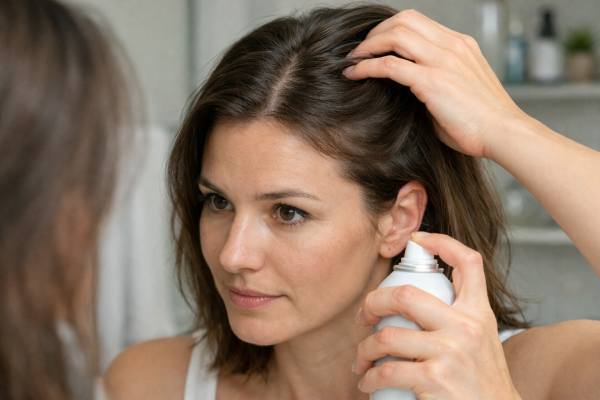
Dry shampoo can be a genuine quality-of-life product: it softens the look of oily roots, adds lift, and helps hair feel presentable on days when a full wash is not practical. The best formulas do this by absorbing sebum and reducing shine at the scalp—without disturbing your natural styling pattern or leaving a chalky film. Used thoughtfully, dry shampoo can extend a style, reduce heat styling, and make fine hair look fuller with minimal effort.
The downsides usually come from two things: over-application and under-cleansing. When powder and polymers sit on the scalp too long, they can trap sweat, irritate sensitive skin, and create buildup that makes hair feel dull and stiff. The good news is that most of these problems are preventable with better technique, the right schedule, and a routine that respects scalp skin as much as hair.
Key Takeaways
- Apply dry shampoo in light layers at the roots and let it sit before you touch your hair.
- Limit dry shampoo to one or two refreshes between washes, then cleanse the scalp thoroughly.
- If your scalp itches, switch formulas and consider irritation or allergy before adding more product.
- Build a “reset” step into your routine to prevent residue from compacting into stubborn buildup.
- Use a gentle brush and low-friction styling to avoid snapping and tangling on dry shampoo days.
Table of Contents
- What dry shampoo actually does
- Choose a formula that suits you
- Apply dry shampoo like a pro
- Stop itching and scalp irritation
- Prevent buildup and dull texture
- Avoid breakage and hidden shedding
- Know when to wash and clarify
What dry shampoo actually does
Dry shampoo is not a cleanser in the way water and shampoo are. It does not remove sweat, dead skin, pollution, or microbes from the scalp. Instead, it changes the look and feel of oil by absorbing sebum and reducing shine, which makes roots look fresher. This distinction matters because many dry shampoo problems begin when it is used as a substitute for washing rather than a bridge between washes.
Most dry shampoos rely on a few functional building blocks:
- Absorbent powders: starches (rice, corn, tapioca), clays, or silica-like powders that bind oil and soften shine.
- Texture agents: ingredients that add grip and lift so hair looks fuller and less “collapsed.”
- Carriers: aerosol propellants and solvents in sprays, or a loose powder base in non-aerosols.
- Optional scent and soothing ingredients: fragrance is common, and some formulas add scalp-feel ingredients that aim to reduce tightness or dryness.
The oil-absorbing effect is strongest at the scalp where sebum is produced. That is why dry shampoo works best when applied to the roots and part line, not the mid-lengths. When it is dragged through the hair shaft, it can make lengths feel dusty, tangly, or stiff.
Dry shampoo also changes how hair behaves mechanically. Powder increases friction between strands, which can be useful for volume and updos. But higher friction also means tangles form more easily, especially if hair is fine, damaged, curly, or already dry.
A simple way to keep expectations realistic is to treat dry shampoo as a cosmetic refresh with a predictable life span. For most people, that span is one day of improved appearance, occasionally two—provided the scalp is cleansed afterward. When you respect that limit, dry shampoo becomes a helpful tool rather than a slow-building scalp problem.
Choose a formula that suits you
Choosing the right dry shampoo is less about hype and more about matching the formula to your scalp behavior, hair texture, and tolerance. Two people can use the same product with very different outcomes: one gets airy volume, the other gets itch and residue. The difference is often the formula’s balance of powder, fragrance, and drying agents.
Aerosol, pump, or loose powder
- Aerosol sprays are convenient and distribute product widely. They can also be easier to overapply because they feel “light” as they land. If you dislike residue, aerosols often feel cleaner when used sparingly and brushed thoroughly.
- Pump sprays lay down more concentrated powder with less air dispersion. They can be great for targeted root application but are more likely to look visible if you do not massage and brush well.
- Loose powders can work beautifully for dark roots and sensitive scalps when applied precisely, but they require technique. Too much can clump and sit on the scalp like a mask.
Color match and finish
If you have dark hair, choose a product designed to minimize “flashback” or white cast. If you have very light hair, be cautious with tinted formulas that can transfer to pillows, hats, or collars. For most people, the best-looking result comes from using less product and taking more time to distribute it.
Consider scalp sensitivity first
If you have a history of scalp itch, eczema, or reactions to hair products, the safest path is to prioritize a simpler formula and reduce potential irritants. Many problems that seem like “dry shampoo intolerance” are actually irritation from fragrance, preservatives, or a drying solvent system. If you suspect sensitivity, this guide to how irritation differs from product allergy can help you interpret the pattern and decide whether switching formulas is enough.
Match the formula to your routine
- If you use dry shampoo after workouts, look for a formula that does not feel heavy when mixed with sweat.
- If you heat style regularly, avoid powders that make hair feel gritty or stiff; they can increase friction during brushing.
- If you wash infrequently, choose a product that performs well in small doses and does not require heavy layering.
A helpful rule: if you need a large amount to see results, it is probably not the right formula for your hair. The best dry shampoos are effective in light layers and disappear after you distribute them.
Apply dry shampoo like a pro
Most dry shampoo frustration comes down to technique. The common mistake is spraying too close to the scalp, using too much, then rubbing aggressively—creating a paste of oil and powder that sits on the skin. A better method produces cleaner roots, less residue, and a calmer scalp.
The cleanest method in six steps
- Start on dry hair. Dry shampoo works by binding oil; damp hair encourages clumping.
- Section the hair. Use a part line, then create one or two additional parts where oil collects most (often crown and hairline).
- Apply from a distance. For sprays, aim roughly 6–10 inches away. For powders, tap lightly and build gradually.
- Use less than you think. One light pass per section is usually enough. You can add more after you see how it settles.
- Wait before touching. Give it 30–120 seconds to absorb oil. This is the step that makes the biggest difference.
- Distribute gently. Massage lightly with fingertips, then brush or comb from roots into the top layer. If you blow-dry, use cool or low heat for 10–20 seconds to lift roots and disperse residue.
Try the “night-before” approach
If your hair is oily by morning, applying dry shampoo at night can reduce the need for heavy product. You apply a small amount to roots before bed, let it work overnight, then brush in the morning. This often leads to a softer, more natural finish with less visible powder.
Use dry shampoo to extend, not replace, washing
A practical schedule for many people is: wash day → day 2 light refresh → day 3 either wash or a second light refresh → wash. If you are regularly pushing beyond that, scalp discomfort and buildup become more likely.
If you want dry shampoo to work better, it helps to anchor it to a consistent wash rhythm. An oily scalp often needs a predictable routine more than it needs stronger and stronger products, and oily scalp wash routine tips can help you set a schedule that reduces the urge to “powder your way out of it.”
Done well, dry shampoo should make roots look fresher and hair feel lighter. If it makes hair feel stiff, dusty, or immediately itchy, treat that as feedback: adjust technique first, then reconsider the formula.
Stop itching and scalp irritation
Itching is the most common reason people quit dry shampoo. It can feel like dryness, prickling, tightness, or a low-grade burn that worsens over hours. The cause is usually one of four patterns, and each has a different fix.
Pattern 1: too much product, too close to the scalp
When powder sits densely on the skin, it can disrupt the scalp barrier and trap sweat. The itch often starts the same day and improves quickly after washing. Fixes:
- Apply less and farther away.
- Avoid heavy rubbing; distribute gently.
- Limit use to one refresh before washing.
Pattern 2: irritation from alcohol, fragrance, or preservatives
Some formulas feel “cooling” at first but leave the scalp tight and itchy later. This often points to irritant load rather than oil itself. Fixes:
- Switch to a fragrance-free or lower-scent formula.
- Avoid layering multiple scented products (dry shampoo plus perfume hair mist plus scented hairspray).
- Patch test a new dry shampoo along the hairline for several uses before applying broadly.
Pattern 3: buildup feeding scalp imbalance
If itching comes with flaking, odor, or tender bumps, the issue may be less about dryness and more about residue that is not being washed away. In this pattern, dry shampoo can become a “cap” that traps oil and dead skin. Fixes:
- Wash sooner and rinse longer.
- Focus shampoo on the scalp, not just the hair.
- Consider a periodic reset step when residue is stubborn.
Pattern 4: an underlying scalp condition
Seborrheic dermatitis, psoriasis, eczema, and allergic contact dermatitis can all cause itch. Dry shampoo may worsen symptoms by leaving product on inflamed skin. Clues include persistent itch despite washing, redness, scale that returns quickly, or itching that spreads to ears and neck.
If you suspect sensitivity or allergy, the smartest move is to stop the product, simplify your routine, and consider evaluation. For self-troubleshooting, dandruff versus dry scalp differences can help you decide whether you need hydration, targeted anti-dandruff treatment, or a full reset away from irritants.
A quick practical rule: if itch improves within a day of washing and returns only when you use dry shampoo, the product or technique is likely the trigger. If itch persists even after washing, think bigger than dry shampoo and focus on scalp diagnosis and barrier repair.
Prevent buildup and dull texture
Buildup from dry shampoo tends to sneak up. At first it looks like “extra volume,” then it turns into dullness, stiffness, and a coated feeling at the roots. This happens because dry shampoo is designed to stay in place. Powders bind oil; texture agents cling to the shaft; and layered applications compact under hats, pillows, and sweat.
What buildup looks like in real life
- Roots look matte but feel heavy or sticky.
- Hair is flat at the scalp but rough through the top layer.
- Scalp feels “stuffy,” with itch that improves after a thorough wash.
- Product stops working; you need more and more to get the same refresh.
How buildup forms
Dry shampoo is most likely to build up when you apply it repeatedly without fully cleansing the scalp, or when you combine it with heavy stylers (texturizing sprays, strong hold hairspray, pomades). Sweat accelerates the process because it adds salt and moisture, which can make powders clump and adhere more strongly.
A buildup-proof routine
- Use a two-step wash when needed. First wash lifts surface oil and powder; second wash cleans the scalp more completely.
- Rinse longer than you think. Many “my scalp still itches” complaints are actually “I did not rinse everything out.”
- Condition away from the scalp. Apply conditioner from mid-lengths to ends so you do not add another layer near the roots.
- Brush the top layer daily. A gentle brush can remove some surface powder and distribute oil more evenly, reducing the need for heavy dry shampoo the next day.
When you need a stronger reset
If hair still feels coated after a good wash, a clarifying shampoo can be useful. Clarifiers are designed to remove stubborn product film and residue more effectively than gentle daily shampoos. They are not meant for constant use, but they can be the difference between “my hair never feels clean” and “my hair resets properly.” If you want guidance on timing and how often is too often, clarifying shampoo frequency and technique can help you choose a schedule that cleans without creating dryness.
The best prevention is not avoiding dry shampoo; it is avoiding the cycle of daily layering. Use it lightly, distribute it well, and build in regular wash days so residue does not become a permanent coating.
Avoid breakage and hidden shedding
Dry shampoo does not typically “cause hair loss” in the follicle sense. But it can contribute to breakage, which feels like loss because hair appears thinner, ends look frayed, and your brush collects more short snapped pieces. The mechanism is straightforward: powders increase friction and tangling, and friction plus force equals snapping—especially on hair that is already fragile.
Why dry shampoo days are higher-risk for snapping
- More friction between strands: Great for volume, not great for detangling.
- More brushing and restyling: People tend to brush more to remove powder and “refresh” shape.
- More concentrated tension at the roots: Overzealous scrubbing can weaken hair near the scalp, where hair is most visible.
How to handle hair on dry shampoo days
- Brush gently and strategically. Start at the ends, then move upward. Avoid ripping through tangles at the crown.
- Detangle before bed. Dry shampoo plus sleep friction can create overnight tangles that snap in the morning.
- Use low-friction ties. Tight elastics and rough hair ties grab powder-coated hair and increase breakage.
- Avoid aggressive scalp scratching. Nails and forceful rubbing can inflame the scalp and create more shedding perception.
Reduce powder stiffness without adding more buildup
If hair feels gritty, resist the urge to pile on oils at the roots. Oils can mix with powder into a paste that increases residue and requires harsher washing later. Instead:
- Brush to remove excess powder from the top layer.
- Use a small amount of lightweight leave-in on mid-lengths and ends only.
- Consider restyling with a gentle blow-dry on cool or low heat rather than adding more product.
Know what you are seeing
Many people confuse breakage with shedding. Shed hairs typically have a small white bulb at one end, while broken hairs are shorter pieces without a bulb. If you are unsure which pattern you have, learning the difference helps you choose the right fix. A helpful overview is how split ends and breakage start and how to prevent them, especially if your main complaint is fraying, snapping, or “my hair will not grow past a certain length.”
If you are using dry shampoo to avoid washing because you fear shedding, it may help to reframe the goal. A clean scalp is usually calmer and easier to manage long-term. When shedding is medically driven, skipping washing does not solve it—and buildup can make the scalp feel worse.
Know when to wash and clarify
Dry shampoo works best when it lives inside a routine that includes regular washing. The right question is not “How long can I go?” but “How can I extend my style without stressing my scalp?” Your scalp is skin, and skin does best when it is cleansed often enough to remove sweat, microbes, and residue—without being stripped.
A practical upper limit
Many people do best washing after one or two dry shampoo uses. Beyond that, the risk of compacted residue rises quickly. If your hair is very oily, you may need to wash more often rather than dry shampoo more often. If your hair is very dry or curly, you may wash less frequently—but still need occasional thorough scalp cleansing.
Signs it is time to wash today
- Scalp itch that does not improve with brushing
- A “sour” or stale odor near the roots
- Tender bumps or pimples on the scalp
- Hair that feels coated and heavy even when it looks matte
- Flakes that worsen after dry shampoo
Clarifying: helpful, not habitual
Clarifying shampoos can remove stubborn residue and help hair feel responsive again. The most useful time to clarify is when you have been using dry shampoo regularly, your hair feels coated, and a normal wash does not fully reset the scalp. If you clarify, follow with conditioner on the lengths and keep the scalp routine simple that day.
Special cases: extra caution
- Extensions and dense styles: Dry shampoo can build up at the base and make cleansing harder, and vigorous rubbing can stress attachment points. If you wear extensions, be cautious about heavy powder buildup and watch for traction signs. For context on what to monitor, extension-related hair loss warning signs can help you distinguish cosmetic breakage from traction risk.
- Scalp acne or folliculitis: Product residue can trap sweat and oil. Wash sooner and avoid heavy layering.
- Sensitive scalp: Choose simpler formulas, patch test, and reduce frequency.
When to seek help
Stop dry shampoo and consider evaluation if you have persistent burning, rash, open skin, worsening scale, or patchy hair loss. These signs suggest something beyond routine buildup and deserve targeted care.
Dry shampoo should make your life easier, not create a scalp problem you then have to solve. If you use it lightly, cleanse regularly, and respect your scalp’s signals, it can stay a helpful tool for years.
References
- Dry shampoo: Dermatologists’ tips for getting your best results 2024 (Clinical Guidance)
- The Impact of Shampoo Wash Frequency on Scalp and Hair Conditions 2021
- Hair Product Allergy: A Review of Epidemiology and Management 2024 (Review)
- Allergic contact dermatitis of the scalp: a review of an underdiagnosed entity 2024 (Review)
- The biomechanics of splitting hairs 2024
Disclaimer
This article is for educational purposes only and does not provide medical advice, diagnosis, or treatment. Scalp itching, flaking, bumps, and hair breakage can have many causes, including allergic contact dermatitis, seborrheic dermatitis, psoriasis, eczema, infections, and hair care practices that increase friction or traction. Dry shampoo can worsen irritation or buildup in some people, and reactions may require stopping the product and simplifying your routine. If you have persistent burning, rash, scalp pain, patchy hair loss, open skin, signs of infection, or heavy shedding that does not improve, seek evaluation from a qualified healthcare professional. Patch test new products if you have a history of sensitivity, and use caution when combining multiple scalp actives.
If this guide helped you, consider sharing it on Facebook, X (formerly Twitter), or your preferred platforms so others can use dry shampoo more comfortably and safely.