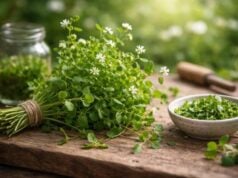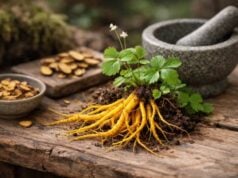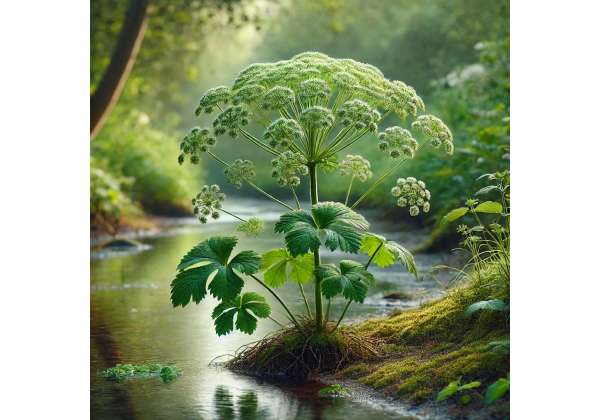
Cutleaf waterparsnip (Berula erecta) is a wetland plant in the carrot family that grows along streams, springs, and shallow water. You may see it described as “lesser water-parsnip,” with finely divided underwater leaves and small white flower clusters typical of many Apiaceae species. Although it has a modest history of traditional use in a few regions, it is not a mainstream culinary herb or modern supplement.
What makes this plant important to discuss is less about a long list of proven benefits and more about thoughtful decision-making. Its chemistry includes aromatic volatile compounds and plant polyphenols that are being explored for antioxidant potential. Yet the human evidence is minimal, and the biggest real-world concern is safety: aquatic carrot-family plants can be dangerously easy to misidentify, and some lookalikes are among the most toxic wild plants.
This guide focuses on what cutleaf waterparsnip is, what it contains, what early research suggests, and how to approach use (if at all) with clear, practical guardrails.
Essential Insights
- Early lab and animal research suggests antioxidant potential, but human outcomes are not established.
- Do not self-forage or self-dose because toxic lookalikes in the same family can be fatal.
- If a professionally sourced topical infusion is used, a common range is 5–10 g dried aerial parts steeped in 250 mL water for external use only.
- Pregnant or breastfeeding people, children, and anyone without expert plant identification skills should avoid use.
Table of Contents
- What is cutleaf waterparsnip?
- Key compounds and constituents
- Potential health benefits
- How is it used?
- How much cutleaf waterparsnip per day?
- Safety, side effects, and interactions
- What the evidence says
What is cutleaf waterparsnip?
Cutleaf waterparsnip (Berula erecta) is a perennial, water-associated plant in the Apiaceae family (the carrot or parsley family). It commonly grows in shallow, moving or well-oxygenated water—think spring-fed ditches, stream edges, and seepage areas—where its roots and creeping stems anchor into saturated soil. Above the waterline, it produces upright stems and compound leaves; below the waterline, the leaves tend to be more threadlike and finely divided, an adaptation that reduces drag in flowing water.
The plant’s flower structure is also typical for the family: clusters of tiny white flowers arranged in umbrella-like “umbels.” That detail matters because it’s one of the reasons Berula gets confused with other umbel-bearing plants—some harmless, some medicinal, and some extremely poisonous. If you are not already trained in identifying wetland Apiaceae, the safest posture is not “try a little,” but “do not experiment.”
One way to frame Berula is as a distant cousin of familiar edible members of the family—such as celery—while remembering that shared family traits do not guarantee shared safety. If you are curious about how broad the carrot family can be (from food to allergens to strong aromatics), compare it with a familiar reference point like celery health and uses.
Because common names vary by region, it’s also helpful to confirm you are reading about the right plant. “Water parsnip” can refer to multiple species in casual conversation, and “cow parsnip” is an entirely different genus. In practice, this means that sourcing matters: a dried herb bought from a reputable supplier is a different situation than a fresh plant collected near a stream.
Bottom line: cutleaf waterparsnip is a niche plant with limited modern herbal use, and its most important feature for most readers is the identification and safety context—especially the risk of confusing it with toxic lookalikes.
Key compounds and constituents
Cutleaf waterparsnip is being studied primarily for two categories of constituents: volatile aromatic compounds (often discussed as “essential oil” components) and non-volatile polyphenols (such as phenolic acids and flavonoids). These categories matter because they tend to map to different practical uses and different safety considerations.
Volatile compounds
A published essential-oil profile of Berula erecta’s aerial parts highlights a mixture of terpenoid-type constituents and related aromatics. In practical terms, this suggests Berula has a meaningful scent and a chemistry typical of many aromatic plants—though the exact profile can vary by geography, season, harvest timing, and extraction method. Volatile compounds are often explored for antimicrobial activity (for example, against surface microbes) and for sensory effects (aroma, flavor), but they are also among the more irritating plant fractions for sensitive people.
Polyphenols and antioxidant-related compounds
Recent lab work has reported measurable phenolic content in extracts of Berula erecta, including compounds commonly associated with antioxidant activity in vitro. In tissue-culture research, chlorogenic acid has been quantified under specific growth conditions, and other analyses of extracts have identified a range of flavonoid-type and phenolic markers. It is important to interpret this correctly: antioxidant activity in a test tube does not automatically translate to meaningful clinical outcomes in humans. Still, these findings help explain why researchers are even interested in the plant.
To understand the broader pattern, it helps to look at more commonly used Apiaceae culinary herbs. Many are prized for aroma and digestion-support traditions, such as dill and fennel. If you want a safer, well-known reference point for how aromatic plant chemistry shows up in everyday use, see dill’s traditional uses and modern applications.
What is not known
For Berula erecta, there is no widely accepted “standardized” constituent profile used in commercial supplements, and there is no established marker compound that guarantees efficacy or safety. That means variability is the rule, not the exception. If a product does not specify plant part, extraction method, and quality testing (including contamination screening), you are essentially guessing—and with wetland plants, contamination (microbes, heavy metals, agricultural runoff) is a real-world concern.
Overall, Berula’s chemistry is interesting, but not yet mature enough to support confident health claims or self-directed internal dosing.
Potential health benefits
When people search for “cutleaf waterparsnip benefits,” they’re often hoping it behaves like a familiar culinary herb: gentle digestive support, anti-inflammatory effects, or an antioxidant “boost.” The honest answer is that Berula erecta has signals that researchers find promising, but it does not have the kind of human clinical evidence that supports confident, practical promises.
1) Antioxidant and oxidative-stress support
Plant extracts rich in phenolics often show free-radical scavenging activity in laboratory assays. Berula erecta extracts have demonstrated this kind of antioxidant behavior in early research settings. If future work confirms that these compounds are absorbed and biologically active in humans, the most realistic benefit would likely be “supportive,” not dramatic—more like helping the body manage oxidative load than acting as a treatment.
2) Neuroprotective interest (early-stage)
Some preclinical studies have explored Berula erecta extracts in animal models where oxidative stress and inflammation are part of the disease process. This is often described as “neuroprotective potential,” but it is crucial to translate that into plain language: animal models are not the same as human disease, doses are not directly comparable, and results may not replicate. At best, these studies suggest that the plant deserves further investigation—not that it should be used for Parkinson’s disease or any neurological condition.
3) Topical and hygiene-related possibilities
Traditional use reports for Berula erecta include external applications (washes for irritated skin or minor fungal issues). That kind of use is plausible because topical exposure can benefit from mild antimicrobial or astringent effects without relying on digestion and systemic absorption. Even here, the evidence is not strong enough to call it a proven remedy, but it is one of the more reasonable directions compared with internal supplementation.
4) Nutritional and “greens” framing
Because it grows in water and has leafy growth, people sometimes assume it is similar to edible aquatic greens. A safer comparison is to well-known, commonly eaten aquatic plants like watercress and its health profile, which have clearer culinary traditions and supply-chain options. With Berula, the main risk is not “it has no nutrients,” but “it is easy to make a dangerous mistake.”
A practical takeaway: Berula’s potential benefits are mostly theoretical or preclinical. If you want predictable health outcomes, you will usually do better with better-studied herbs or foods—especially when safety margins matter.
How is it used?
Cutleaf waterparsnip is not a common over-the-counter herb, so “how it’s used” typically falls into three buckets: traditional external use, limited ethnobotanical food use in specific communities, and modern research or horticultural contexts.
Traditional external use
Historical and ethnobotanical notes describe Berula erecta being prepared as a wash or compress for minor skin issues. In modern terms, this would resemble a mild herbal infusion used externally—similar to how people use other plant infusions for rinses. External use is also where you can enforce better safety controls: you can avoid ingestion, do a patch test, and stop immediately if irritation occurs.
Common external-use formats include:
- Infusion rinse: Dried aerial parts steeped in hot water, cooled, then used to rinse skin.
- Compress: Clean cloth soaked in cooled infusion and applied briefly to intact skin.
- Foot soak: A diluted infusion used for short soaks, followed by thorough drying.
Ethnobotanical food use (context matters)
Some communities have documented culinary use of Berula erecta in specific preparations. This does not mean it is generally safe to forage. In fact, the existence of a traditional food use can create a false sense of confidence in new users who lack identification training. The same habitat that supports Berula can also support highly toxic Apiaceae, and the cost of a mistake can be severe.
If you are considering any “wild food” use, the most responsible approach is:
- Do not rely on photos alone. Field identification should be learned with an expert.
- Avoid wetland Apiaceae unless trained. This family contains deadly lookalikes.
- Do not taste-test. Taste is not a safety test.
- Prefer cultivated or professionally sourced material if you are exploring traditional uses.
Modern research and ecological use
Researchers have explored Berula erecta for its phytochemistry and for its behavior in controlled growing systems (including tissue culture). In ecological settings, wetland plants like Berula can also be part of habitat restoration and water-edge stabilization. That is a “use,” but not a medicinal one.
If your goal is soothing skin support, it is usually smarter to choose a widely used topical botanical with clearer safety expectations, such as aloe vera for topical use, rather than experimenting with a niche wetland plant.
In short: Berula is used mainly as a cautiously prepared external infusion in traditional contexts, while internal use remains uncommon and difficult to justify without expert guidance and reliable sourcing.
How much cutleaf waterparsnip per day?
For most herbs, this section would offer a confident oral dosing range. For cutleaf waterparsnip, the responsible answer is different: there is no established safe oral dosage for self-care, and the risk profile (especially misidentification with toxic lookalikes) makes casual internal use a poor choice.
Oral use: why guidance is limited
Three issues block a standard oral dose recommendation:
- Lack of clinical trials: Without human studies, “safe and effective” dosing is unknown.
- High variability: Wild-harvested plant chemistry can shift with location and season.
- Practical safety risk: If the material is self-foraged, the biggest danger may be that it is not Berula erecta at all.
Because of this, if you see supplement-like dosing advice online, treat it as speculation unless it comes from a qualified clinician with product-specific quality documentation.
External use: a conservative, practical range
If a trained practitioner recommends external use only, and the herb is professionally sourced and correctly identified, a common infusion strength used for gentle topical rinses is:
- 5–10 g of dried aerial parts steeped in 250 mL hot water for 10–15 minutes, then cooled and strained.
How to use it safely:
- Patch test first: Apply a small amount to a limited area of intact skin and wait 24 hours.
- Use short contact time: Start with a brief rinse or compress (5–10 minutes).
- Limit frequency: Once daily for a few days, then reassess.
- Stop if irritation occurs: Burning, itching, redness, or swelling are stop signals.
Timing and duration
- Best timing: After cleansing, when skin is dry and you can observe any reaction.
- Typical duration: 2–7 days for a short trial, not open-ended daily use.
- When to escalate care: If symptoms worsen, spread, or include fever, drainage, or significant pain, seek medical advice rather than increasing frequency.
If you are looking for internal benefits like digestion or inflammation support, choose a better-studied herb with established dosing norms. With Berula erecta, topical-only, short-term, and conservative use is the most defensible approach—if you use it at all.
Safety, side effects, and interactions
Safety is the central issue with cutleaf waterparsnip. Even if the plant itself is not among the most poisonous members of its family, the real danger is confusion with toxic lookalikes, especially in wet habitats where multiple Apiaceae species can grow side by side.
1) Misidentification risk
Wetland “umbrella-flower” plants include species that can cause severe poisoning. Water hemlock and poison hemlock are the most commonly cited dangers, and both have caused serious illness and death after mistaken ingestion. If you are not trained to identify wetland Apiaceae in the field, do not forage this plant. Drying, cooking, or “trying a small bite” is not a safety strategy.
2) Skin reactions and allergy
People sensitive to Apiaceae plants (for example, those with celery or carrot family allergies) may react to related species. Possible reactions include:
- Local redness, itching, or rash after topical contact
- Worsening irritation if used on compromised skin
- Rarely, more significant allergic reactions in highly sensitive individuals
Patch testing is not optional if you are using any Berula-based topical preparation.
3) Contamination concerns for aquatic plants
Plants growing in ditches or streams can carry microbes or absorb contaminants from runoff. Even if identification is correct, the collection site may be unsafe. This is another reason that internal use is hard to justify and why sourcing from a reputable supplier matters if you are using the plant at all.
4) Medication interactions
There is no well-established interaction list specific to Berula erecta, but practical cautions include:
- Blood thinners and antiplatelet drugs: Many plant compounds can have theoretical effects on bleeding risk; without data, avoid combining for “just in case.”
- Photosensitizing medications: Some carrot-family plants contain compounds that can increase sun sensitivity; if you are prone to rashes, be cautious and monitor.
- Multiple-herb blends: Blends make it harder to identify what caused a reaction.
Who should avoid it
Avoid use (especially any internal use) if you are:
- Pregnant or breastfeeding
- A child or older adult with higher vulnerability to adverse effects
- Managing liver or kidney disease
- Allergic to carrot-family plants
- Unable to verify identity and quality of the plant material
If accidental ingestion of any suspected hemlock-like plant occurs, treat it as a medical emergency. Do not wait for symptoms to “see what happens.”
What the evidence says
The scientific story for cutleaf waterparsnip is early and uneven: there are intriguing signals, but not the kind of layered evidence (human trials, dosing studies, safety surveillance) that turns a plant into a reliable self-care herb.
What we have
Current research clusters into:
- Phytochemical profiling: Studies that identify what is in the essential oil or in solvent extracts. These help define the plant’s “chemical fingerprint” and guide hypotheses.
- In vitro testing: Antioxidant assays and other lab tests that show how extracts behave in controlled environments. These are useful for screening, but they often overpredict real-world benefit.
- Animal models: Preclinical experiments that explore potential protective effects under specific induced conditions. These can be valuable, but they do not answer the practical questions consumers ask: “Will it help me?” and “What dose is safe for me?”
What we do not have
For Berula erecta, important gaps include:
- Human efficacy trials for any condition
- Human safety studies establishing tolerability and adverse event patterns
- Standardized products with validated markers and consistent dosing
- Clear clinical indications (for example, a condition where benefits outweigh risks)
How to interpret early findings responsibly
If a study reports “antioxidant” or “neuroprotective” effects, translate it into careful language:
- It suggests the plant contains biologically active compounds.
- It supports future research, not self-treatment.
- It does not establish a safe, effective oral dose.
A sensible decision framework
If you are deciding whether to use this plant, ask:
- Is there a safer, better-studied alternative for the same goal? Often, yes.
- Can I guarantee correct identification and clean sourcing? If not, stop here.
- Is topical-only use sufficient? If you still want to explore traditional use, topical, short-term, and conservative preparation is the lower-risk path.
- Do I have a reason to accept uncertainty? For most people, the answer is no.
In practical wellness terms, cutleaf waterparsnip is best viewed as a plant of research and ethnobotanical interest rather than a go-to remedy. The safety costs of getting it wrong are simply too high to justify casual experimentation.
References
- Phytochemical screening, antioxidant and anti-Parkinson activities of Berula erecta: A novel medicinal plant 2024 (Animal Study)
- The Effect of Combined Elicitation with Light and Temperature on the Chlorogenic Acid Content, Total Phenolic Content and Antioxidant Activity of Berula erecta in Tissue Culture 2024 (Experimental Study)
- A monotypic species from Turkey: Characterization of the essential oil of Berula erecta (Apiaceae) 2021 (Analytical Study)
- Deadly Poison Hemlock and Spotted Water Hemlock Found in Delaware 2021 (Public Health Notice)
Disclaimer
This article is for educational purposes only and does not provide medical advice, diagnosis, or treatment. Cutleaf waterparsnip can be confused with highly toxic plants, and mistakes may cause severe injury or death. Do not forage or ingest wild carrot-family plants unless you have expert identification training. If you are pregnant, breastfeeding, have a medical condition, or take prescription medicines, consult a qualified healthcare professional before using any herbal product. In case of suspected poisoning or severe reaction, seek emergency medical care immediately.
If this guide was helpful, consider sharing it on Facebook, X (formerly Twitter), or your preferred platform so others can make safer, better-informed decisions.