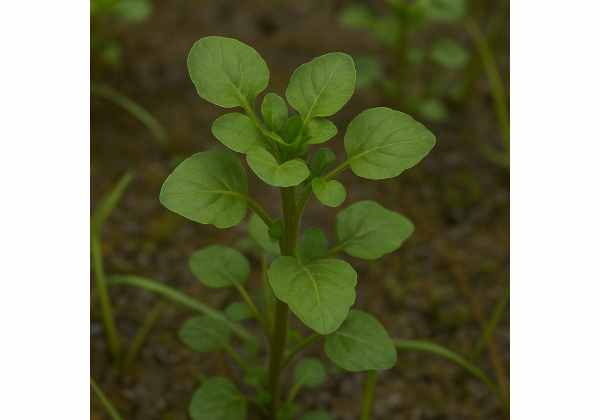
Watercress is one of those greens that feels both humble and surprisingly powerful. It grows in and around clean flowing water, has a peppery bite, and belongs to the same broad plant family as mustard, cabbage, and broccoli. For many people, it is simply a salad leaf. Yet from a nutrition and herbal perspective, it deserves a closer look. Watercress is rich in vitamin K, vitamin C, carotenoids, glucosinolates, and other plant compounds that help explain its long-standing reputation as a strengthening food.
What makes watercress especially interesting is that it sits at the meeting point of food and medicine. It is not a drug, and it should not be treated like one, but it is more than an ordinary garnish. Research suggests it may support antioxidant defenses, inflammatory balance, and overall cardiometabolic health, while traditional use also links it with respiratory and digestive support. At the same time, dosage, preparation, and sourcing matter. Raw wild watercress from untreated freshwater carries special safety concerns, and concentrated extracts are not the same as eating the fresh leaves.
Quick Overview
- Watercress provides glucosinolates, carotenoids, vitamin C, and vitamin K in a very low-calorie leafy green.
- Regular food-level intake may support antioxidant defenses and help strengthen overall diet quality.
- A practical food amount is about 1 to 2 cups fresh daily, roughly 34 to 68 g.
- People taking warfarin should keep intake consistent, and raw wild watercress from untreated freshwater should be avoided.
Table of Contents
- What watercress is and why it stands out
- Key ingredients and bioactive compounds
- Watercress health benefits and medicinal properties
- How to use watercress in food and wellness routines
- Dosage serving size and best timing
- Safety side effects and who should avoid it
- What the research really shows
What watercress is and why it stands out
Watercress, botanically known as Nasturtium officinale, is a semi-aquatic leafy plant with a crisp texture and a distinctly peppery taste. It has been eaten for centuries in parts of Europe, the Middle East, and Asia, both as a fresh green and as a simple restorative food. Unlike lettuce or spinach, watercress has a sharper, mustard-like flavor because it belongs to the Brassicaceae family, the same broad botanical group that includes broccoli, radish, cabbage, and mustard.
What makes it stand out is the combination of three traits that rarely come together so neatly. First, it is genuinely nutrient-dense. Second, it contains sulfur-rich plant compounds that are widely studied in cruciferous vegetables. Third, it is easy to use in everyday meals. Those three qualities make watercress more practical than many so-called superfoods that sound impressive but are hard to buy, prepare, or tolerate.
Its nutritional profile is especially impressive for such a light food. A modest handful adds very few calories while contributing vitamin K, vitamin C, provitamin A carotenoids, folate, and smaller amounts of minerals such as calcium and iron. That is one reason watercress has often been described as a strengthening or cleansing green rather than merely a garnish.
Its culinary identity also matters. Watercress is not neutral. It brings freshness, bitterness, and pungency. That flavor profile hints at the plant chemistry behind it. Like other peppery cruciferous greens, it contains glucosinolates that can be converted into biologically active breakdown products when the plant is chopped, chewed, or lightly crushed.
It is also worth noting that watercress is not the same thing as garden cress, although the two are often confused because both are peppery greens called “cress.” Garden cress is a different plant with different culinary uses and a more seed-focused tradition. Watercress is more distinctly aquatic, more leaf-centered, and more closely associated with fresh salads, soups, and sandwiches.
One more point sets watercress apart, and it is important: sourcing matters more here than with many common vegetables. Because the plant grows in freshwater environments, raw wild-harvested watercress is not automatically safe just because it looks clean. Commercially grown, properly handled watercress is very different from wild water plants picked from streams or ditches. That difference shapes both the benefits and the safety advice that follow.
Key ingredients and bioactive compounds
Watercress earns its reputation from more than vitamins alone. Its appeal comes from the way classic nutrients and specialized plant compounds overlap. That blend is what makes it both a strong food and a plausible medicinal plant, even though the food evidence remains stronger than the supplement evidence.
The best-known compounds in watercress are its glucosinolates, especially gluconasturtiin. When the leaves are chopped or chewed, plant enzymes help convert these sulfur compounds into isothiocyanates, including phenethyl isothiocyanate, often shortened to PEITC. These compounds are a major reason researchers pay attention to watercress. They are linked to detoxification-related pathways, antioxidant signaling, and cellular defense mechanisms that are also studied in other cruciferous plants.
Beyond glucosinolates, watercress contains a useful range of carotenoids. These include beta-carotene, lutein, and zeaxanthin, compounds that support the plant’s bright green color and are relevant to eye and tissue protection. Watercress also supplies vitamin C, which helps maintain antioxidant balance and supports collagen formation, immune function, and iron absorption from mixed meals.
The mineral and vitamin content matters too. Watercress is especially notable for vitamin K, a nutrient involved in blood clotting and bone-related proteins. It also provides folate and smaller amounts of calcium, potassium, and iron. No single serving turns it into a miracle food, but repeated inclusion can contribute meaningfully to nutrient intake over time.
Its polyphenol profile adds another layer. Watercress contains flavonoids and phenolic compounds, including quercetin- and kaempferol-related molecules. These compounds are not unique to watercress, but they strengthen the case that its effects are broader than “just vitamin C” or “just vitamin K.” They help explain why watercress fits into discussions of oxidative stress, inflammation, and long-term dietary quality.
A practical way to understand the plant is to group its key ingredients by job:
- Glucosinolates and isothiocyanates support detoxification-related and cellular defense pathways.
- Carotenoids help explain the interest in eye, skin, and antioxidant support.
- Vitamin C and polyphenols contribute to redox balance and tissue protection.
- Vitamin K and folate strengthen its value as a daily leafy green.
- Minerals and fiber support its role as a nutritious food, even if not in huge amounts per serving.
This chemistry also explains why preparation matters. Aggressive boiling can reduce some delicate compounds, while light chopping, chewing, and minimal cooking may help preserve or activate more of the plant’s useful chemistry. In that sense, watercress behaves more like other pungent cruciferous foods than like soft salad greens. Readers familiar with the antioxidant reputation of kale will recognize a similar pattern: strong nutrient density, meaningful phytochemicals, and the greatest benefit when the plant is used regularly rather than occasionally.
Watercress health benefits and medicinal properties
The strongest case for watercress is not that it cures disease. It is that it combines nutrient density with several biologically active compounds that may support protective processes in the body. In other words, watercress is best understood as a health-promoting food with plausible medicinal properties, not as a stand-alone treatment.
One of its most credible benefits is antioxidant support. Human and laboratory research suggests watercress can improve antioxidant status and reduce some markers of oxidative stress. That does not mean one salad transforms health overnight, but it does support the idea that regular intake contributes to a more protective dietary pattern.
A second likely benefit is inflammatory balance. Watercress compounds appear to influence pathways involved in oxidative and inflammatory signaling. Short-term human trials and reviews suggest improvement in selected inflammatory and oxidative biomarkers, although these studies are still relatively small and use different preparations. That makes the signal encouraging, but not final.
A third area is cardiometabolic support. Watercress is low in calories and rich in beneficial plant compounds, so it fits well into eating patterns aimed at vascular health. Some studies suggest possible support for lipid balance and oxidative stress in people with cardiometabolic risk, but these findings are still preliminary. It is safer to say that watercress supports heart-healthy eating than to say it directly treats high cholesterol or hypertension.
Cancer-related interest is often what brings attention to watercress, mainly because of PEITC and related compounds. Here, language matters. Watercress should not be sold as an anticancer cure. The more accurate statement is that its glucosinolate-derived compounds have been studied for chemoprotective and detoxification-related effects, and some human work has found favorable changes in biomarkers linked to cellular protection. That is promising, but it is not the same as proving cancer prevention in everyday life.
There is also emerging interest in respiratory support. Traditional systems have used watercress for chest complaints, and modern extract studies suggest there may be some relevance to oxidative stress and inflammatory balance in respiratory conditions. Still, this is early-stage evidence, and fresh leaves in a salad are not equivalent to a trial-specific extract.
From a practical point of view, the most sensible benefits to emphasize are these:
- It improves nutrient density without adding many calories.
- It contributes antioxidant and anti-inflammatory plant compounds.
- It may support protective detoxification pathways tied to cruciferous vegetables.
- It fits naturally into eating patterns linked with better long-term metabolic health.
What should be avoided are exaggerated promises. Watercress is not a replacement for medication, and it is not a reliable shortcut to “detox.” Its medicinal value is real enough to be interesting, but still modest enough to require honesty. That is particularly important in the cruciferous family, where people often borrow strong claims from supplement-level research. Watercress shares some chemistry with mustard-family sulfur compounds, but whole-food use remains the most realistic and evidence-grounded way to benefit from it.
How to use watercress in food and wellness routines
Watercress works best when it is treated first as food. That may sound simple, but it is one of the smartest ways to use the plant. A daily or near-daily serving in meals is easier to maintain, safer than unsupervised extract use, and more consistent with the strongest evidence around leafy cruciferous vegetables.
Fresh watercress is most often used in salads, sandwiches, wraps, soups, egg dishes, and blended sauces. Because its taste is peppery and slightly bitter, it pairs especially well with creamy, starchy, or protein-rich foods that soften its edge. Think potatoes, beans, eggs, yogurt dressings, avocado, citrus, or olive oil. It also works well stirred into soups at the end of cooking, where it wilts quickly but keeps more character than if it is boiled for a long time.
A few practical uses stand out:
- Fold fresh leaves into salads with cucumber, radish, and lemon.
- Add to sandwiches instead of lettuce for more bite and nutrient density.
- Stir into omelets or scrambled eggs right before serving.
- Blend into a bright sauce with olive oil, nuts, and lemon.
- Scatter over soups after cooking rather than boiling it for several minutes.
Preparation matters because chopping and chewing help release the compounds that make watercress chemically interesting. Very long cooking can blunt flavor and reduce some fragile nutrients, especially vitamin C. That does not mean cooked watercress is useless. It simply means lightly wilted or raw forms often preserve more of what makes the plant special.
For general wellness, watercress is easiest to think of as a recurring green rather than a “course of treatment.” People often get more value from putting it into three or four meals each week than from treating it as a special herb taken once in a while. Repetition matters. So does variety. Watercress becomes even more useful when it appears alongside other vegetables, legumes, whole grains, and healthy fats.
There is also a sensible middle ground between culinary use and medicinal curiosity. Some people enjoy juicing or blending watercress with other vegetables. This can be fine when the leaves come from a trusted food source and are washed well. Still, fresh leaves are usually enough. There is no need to force oversized servings or harsh raw preparations just because the plant has health appeal.
Two cautions improve real-world use. First, flavor intensity is a sign to start modestly if you are new to it. Second, sourcing comes before enthusiasm. Commercially sold, food-grade watercress is the right lane for most people. Wild watercress from untreated freshwater is not a wellness shortcut. If you enjoy assertive greens, watercress can fill the same everyday role that some people give to bitter salad greens, but with a distinctly fresher, more peppery profile.
Dosage serving size and best timing
Because watercress is both a food and a researched plant, dosage needs to be discussed in two different ways: everyday food use and study-style supplementation. Mixing those two can create confusion, so it helps to separate them clearly.
For ordinary dietary use, a practical serving is about 1 cup fresh chopped watercress, roughly 34 g. Many people can comfortably use 1 to 2 cups fresh daily, or around 34 to 68 g, as part of meals. That is a food-level range, not a medicinal prescription. It is enough to add meaningful flavor and nutrients without turning the plant into an extract-by-stealth.
In human research, whole-food protocols have used about 85 g per day of fresh raw watercress for several weeks. That is a larger serving than most casual users eat, but it is still realistic as food. It translates to a generous salad portion or a couple of packed handfuls.
Extract studies are a different matter. Short clinical trials have used watercress extract in capsule form, with some protocols using about 500 mg daily and one recent asthma study using 500 mg twice daily for four weeks. These numbers are useful for understanding the research, but they are not universal recommendations for self-care. Extracts vary by manufacturing method, active compound content, and intended use.
A sensible approach looks like this:
- Start with food, not extracts. Use watercress several times a week before considering concentrated products.
- Aim for consistency rather than excess. A modest daily intake is more useful than occasional very large servings.
- Use raw or lightly wilted forms when possible. This better preserves flavor and delicate compounds.
- Treat extract doses as study examples, not a default routine. Research protocols are not the same as home guidance.
Timing is flexible. Watercress can be eaten at lunch or dinner, and many people find it especially easy to tolerate in mixed meals rather than on its own. If you are using a larger amount, pairing it with fat-containing foods such as olive oil, yogurt, nuts, or eggs may also improve the meal’s nutritional value and help with carotenoid absorption.
There is no strong reason to cycle ordinary food use. Fresh watercress can be part of a regular diet in the same way that other leafy greens are. Extracts are different. Because the evidence remains limited and formulations vary widely, long-term self-prescribed extract use is harder to justify.
The most practical dosage message is simple: use fresh watercress often enough to matter, but not so aggressively that it stops being food. For most adults, the sweet spot is steady culinary use with occasional larger salad portions, not chasing supplement-style dosing. That is also the point where watercress remains easiest to enjoy and easiest to fit into a sustainable routine.
Safety side effects and who should avoid it
Watercress is generally safe as a food when it comes from a reputable source and is handled like any other leafy vegetable. Most healthy adults tolerate it well. The main safety issues are not dramatic herb-toxicology problems. They are sourcing, medication context, and the difference between ordinary food use and concentrated extracts.
The most important caution is unique to watercress: raw wild watercress from untreated freshwater can carry parasites. That is not a minor detail. Because watercress grows in aquatic environments, wild-harvested plants can become contaminated in ways that ordinary garden greens usually do not. This is why commercially grown, food-grade watercress is much safer than plants gathered from streams, ditches, or livestock areas.
The second major caution is vitamin K. Watercress is a leafy green with a meaningful vitamin K content, which is nutritionally beneficial for most people. But anyone taking warfarin or a similar vitamin K-sensitive anticoagulant should keep intake steady rather than making sudden large changes. The goal is not necessarily to avoid watercress completely. It is to keep the pattern consistent and discuss major dietary shifts with a clinician.
Possible side effects are usually mild and dose-related:
- stomach discomfort if very large raw servings are eaten suddenly,
- gas or digestive sensitivity in people unaccustomed to pungent cruciferous greens,
- and, less commonly, dislike-driven nausea because the peppery taste is stronger than expected.
Concentrated extracts deserve more caution than the fresh leaves. They may deliver plant compounds in a way that is less predictable than food use, and they have been studied far less extensively than the vegetable itself. Pregnancy and breastfeeding are good examples of where that distinction matters. Ordinary food amounts are one thing; self-directed extract use is another.
People who should be more careful include:
- Anyone taking warfarin or similar anticoagulants
- Anyone planning to eat raw wild-harvested watercress
- People with known sensitivity to cruciferous vegetables
- Pregnant or breastfeeding adults considering concentrated extracts
- People with chronic illness who want to use watercress medicinally rather than as food
There is also a common misunderstanding worth clearing up. Because watercress is healthy, some people assume “more is always better.” In practice, safety and usefulness both improve when the plant stays in the food lane. A sandwich, soup garnish, or salad portion is very different from a large homemade tonic made from an uncertain source.
For readers interested in the nutrient side, the clearest interaction concern is vitamin K consistency, not fear of the plant itself. The safest message is this: buy it as food, wash it well, use it regularly if you enjoy it, and do not treat wild aquatic plants as casual health products.
What the research really shows
The research on watercress is promising, but it is important to understand what kind of promise it offers. The evidence is strongest for watercress as a nutrient-dense cruciferous food and for short-term changes in biomarkers related to oxidative stress, inflammation, and detoxification pathways. It is weaker when the question becomes, “Does watercress treat a disease in a clearly proven way?”
That difference matters because health writing often skips it. A plant can have impressive chemistry, positive laboratory findings, and encouraging early human trials without yet earning strong clinical claims. Watercress fits that pattern well. The compound story is convincing. The food value is beyond doubt. The clinical outcome story is still developing.
The most solid evidence supports several conclusions:
- Watercress is rich in glucosinolates, carotenoids, vitamins, and polyphenols.
- Human trials suggest it can improve certain antioxidant and inflammatory markers.
- Some studies suggest favorable effects on selected lipid or oxidative stress measures.
- Traditional respiratory and cardiometabolic uses are plausible, but not fully established.
The biggest limits are equally important. Many studies are small. Some use extracts rather than the fresh vegetable. Follow-up periods are often short. Outcomes often focus on biomarkers rather than on hard clinical endpoints such as disease incidence, hospitalizations, or symptom resolution over long periods.
That means the most evidence-based way to use watercress is still the simplest one: as a regular food in a high-quality diet. Whole-food intake is easier to translate into real life, easier to sustain, and less likely to distort expectations. Extracts may remain useful research tools, and they may eventually find more specific roles, but that is not the same as having a clear, everyday recommendation for the general public.
It is also worth remembering that watercress is part of a much larger family of sulfur-rich greens and vegetables. Some of the enthusiasm around it comes from general cruciferous research, not from watercress alone. That is helpful, but it also means people should be careful not to borrow certainty from better-studied products such as broccoli seed extracts and paste it directly onto a fresh leafy vegetable.
So the balanced conclusion is a good one. Watercress deserves its reputation as a health-supportive green. It has real nutritional strength, plausible medicinal value, and growing human evidence. But it should still be approached as a food with meaningful plant chemistry, not as a miracle herb. That mindset protects both accuracy and usefulness, which is exactly what a strong evidence-aware article should do.
References
- Evaluating the Anti‐Oxidant and Anti‐Inflammatory Properties of Watercress Supplementation at Short‐Term Follow‐Up: A Systematic Review of Randomized Controlled Trials 2025 (Systematic Review)
- Watercress (Nasturtium officinale) as a Functional Food for Non-Communicable Diseases Prevention and Management: A Narrative Review 2025 (Review)
- The hydroalcoholic extract of Nasturtium officinale reduces oxidative stress markers and increases total antioxidant capacity in patients with asthma 2024 (RCT)
- Vitamin K – Health Professional Fact Sheet 2021 (Guideline Resource)
- About Fasciola 2024 (CDC Safety Resource)
Disclaimer
This article is for educational purposes only and is not medical advice. Watercress can be a valuable part of a healthy diet, but it is not a substitute for diagnosis, treatment, or individualized nutrition counseling. Speak with a qualified healthcare professional before using concentrated watercress extracts, especially if you are pregnant, breastfeeding, taking anticoagulants, or managing a chronic medical condition. Never rely on wild freshwater plants as a casual source of food or herbal medicine.
If you found this article useful, please share it on Facebook, X, or another platform you prefer.