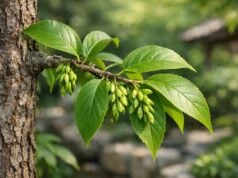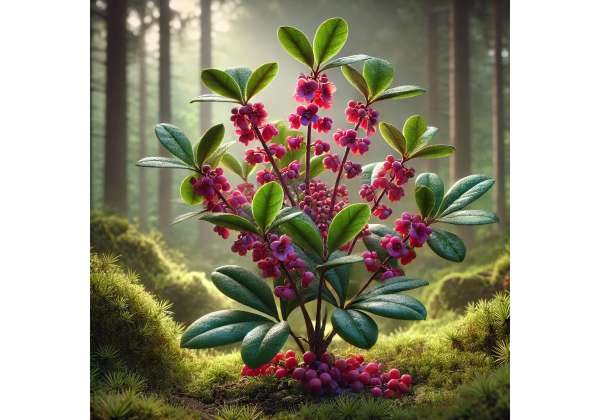
Daphne-berry, most often referring to Daphne mezereum (also called mezereon or February daphne), is a fragrant ornamental shrub known for its early flowers and striking red berries. It has a long history in European folk medicine, where the bark and berries were sometimes used as strong “counterirritants” for pain and swelling. Today, it is far more important to understand why it is risky than to chase old remedies: daphne-berry is highly toxic if ingested, and even handling the sap or bark can irritate skin in sensitive people.
You may still see Daphne mezereum discussed in the context of “medicinal properties” because its plant chemicals have shown interesting lab activity—such as effects on inflammation pathways and immune signaling. However, these findings do not translate into safe home use. In practical terms, this guide focuses on what the plant is, what compounds it contains, what research suggests (and does not suggest), and how to make safe, informed decisions—especially if the plant is in a garden where children or pets could be exposed.
Essential Safety Snapshot
- Lab studies suggest certain compounds may affect inflammation and immune signaling, but this does not make the plant safe to use at home
- Berries and bark are highly toxic; ingestion can cause severe mouth and gut burning, vomiting, diarrhea, and dangerous systemic symptoms
- No established safe oral dosage; avoid ingestion (0 mg) and do not self-treat with bark or berries
- Children, pregnant or breastfeeding people, and pets should avoid exposure entirely, including access to fallen berries
Table of Contents
- What is daphne-berry?
- Key ingredients and toxins
- Is it used medicinally?
- Medicinal properties in research
- How people use it today
- How much is safe?
- What the evidence says
What is daphne-berry?
Daphne-berry is a common name used in different ways, but in health and safety contexts it often points to Daphne mezereum, a shrub in the Thymelaeaceae family. It is best known as an ornamental plant: it blooms early (sometimes in late winter), has a strong perfume, and produces bright berries that stand out against branches. That visual appeal is part of the hazard—those berries can look tempting to children, and they may attract curiosity even in adults who assume “garden berries” are harmless.
The plant has several names that appear in older herbals and modern gardening books, including mezereon and February daphne. “Daphne” can also refer to other species in the same genus, some of which are evergreen and may have different berry colors. For everyday safety, it is wise to treat all Daphne species as potentially poisonous, because the genus is widely recognized for toxic sap and irritant bark.
People usually encounter Daphne mezereum in one of three scenarios:
- A garden or landscape shrub that someone inherited with a home, or planted for fragrance
- A curiosity search after noticing berries and wondering if they are edible or medicinal
- A safety concern after a child, pet, or adult may have tasted a berry, chewed a twig, or handled sap
If your question is “What does it help with?” the most responsible answer is: modern use is not about benefits—it is about risk management. Unlike culinary herbs, Daphne mezereum is not a food plant, not a routine supplement, and not a do-it-yourself medicinal. Historically, it was used precisely because it is harsh and biologically active—qualities that also make it dangerous outside controlled settings.
A final point that matters in real life: the most serious exposures are often accidental, not intentional. Fallen berries, pruned twigs, or plant debris can be the source. Treating the plant with the same caution you would use for household chemicals—especially around children and animals—is the safest mindset.
Key ingredients and toxins
When people search for “key ingredients” in daphne-berry, they often expect a list of helpful nutrients. With Daphne mezereum, the key ingredients are better understood as toxic and irritant compounds that can injure tissues and trigger severe symptoms. The exact chemical profile varies by plant part (berries vs bark vs leaves) and by season, but several groups show up repeatedly in discussions of Daphne toxicity and pharmacology.
Diterpene esters (major irritants)
One of the most important hazard categories in Daphne mezereum is diterpene esters, a class of compounds known for strong biological effects. They are often described as “vesicant” or blistering agents in traditional contexts because they can inflame skin and mucous membranes. These compounds are part of why chewing a berry or bark can cause intense burning in the mouth and throat. They can also contribute to more systemic toxicity after ingestion.
In practical terms, diterpene esters help explain why daphne exposure is not “mild stomach upset” for many people. Instead, it can be severe irritation, swelling, drooling, vomiting, and diarrhea—sometimes progressing to dangerous dehydration or other complications.
Coumarin-related compounds and glycosides
Daphne species are also associated with coumarin-type compounds and related glycosides. In some plants, coumarins are discussed for potential pharmacologic effects, but in Daphne mezereum the priority is that these chemicals can add to the plant’s overall irritant and bioactive profile. They may help explain why symptoms can extend beyond a simple “hot pepper” sensation into more prolonged inflammation or discomfort.
Why berries are a high-risk exposure
The berries are visually appealing, and the plant’s fragrance can make it seem “friendly.” Unfortunately, berries concentrate risk in a form that is easy to taste. Even small amounts can cause significant symptoms in children due to their smaller body size and more sensitive airways and digestion.
If a berry is chewed, the exposure is not just to the pulp but to compounds in the seed and juice that can coat the mouth. That local contact time matters. Many plant poisonings worsen when the material is chewed and held in the mouth rather than swallowed quickly.
Handling risk: sap, bark, and pruning debris
Not everyone reacts to touch, but some people develop skin irritation after handling twigs, bark, or sap. Risk tends to rise with:
- Pruning without gloves
- Getting sap on broken skin
- Rubbing the eyes after handling the plant
- Allowing plant debris to dry and crumble into dust that can contact skin
This is why “key ingredients” in this plant must be treated as a caution sign. The chemistry that makes Daphne interesting to researchers is the same chemistry that makes it unsuitable for casual use.
Is it used medicinally?
Historically, yes—Daphne mezereum was used in folk and early medical traditions. Practically, in modern self-care, it should be treated as not appropriate for home medicinal use. Both statements can be true at the same time.
Traditional uses (and why they happened)
Older herbals sometimes describe mezereon bark preparations as strong agents used for:
- “Drawing” inflammation to the surface (counterirritant use)
- Pain conditions such as joint aches or neuralgic pain
- Severe constipation or “purging” (now recognized as dangerous)
- Certain stubborn skin conditions (often with blistering side effects)
These uses reflect a historical pattern: before modern analgesics and safer anti-inflammatory options, some therapies relied on harsh irritants to create a strong sensation or local inflammatory response. People sometimes interpreted that response as therapeutic “action,” even when the harm outweighed benefit.
Why modern herbal practice avoids it
The main reason is simple: the safety margin is poor. Modern herbalism generally favors plants with a wider therapeutic window—meaning there is a meaningful difference between a helpful dose and a harmful dose. Mezereon does not offer that comfort. The same compounds that might show interesting activity in a lab can cause severe symptoms in a person.
Another reason is quality and control. Even if someone attempted a “tiny dose,” there is no reliable household way to standardize the active toxin content of bark or berries. Two plants can vary, and two preparations can vary even more.
Safer alternatives for common goals
Many of the reasons people once used mezereon—pain, swelling, “stagnation,” stubborn discomfort—can be approached with safer options that have clearer modern evidence and better dosing guidance. For example, for mild pain relief strategies some people explore willow bark for pain relief support, which is not risk-free but is far more studied and standardized than Daphne bark.
If your interest is skin discomfort, digestive complaints, or “detox” style claims, it is worth pausing. Those are exactly the areas where older mezereon use caused harm, because the plant’s irritant effects can mimic “cleansing” while actually damaging tissues.
Bottom line for readers
- Mezereon has a medicinal history, but that history is not a recommendation.
- Modern self-treatment with Daphne mezereum bark or berries is unsafe.
- If you are seeing “mezereon” suggested online as a supplement or a DIY remedy, treat that as a red flag.
For most readers, the most valuable “use” of this plant today is understanding how to prevent accidental exposure and how to respond appropriately if exposure occurs.
Medicinal properties in research
Despite its toxicity, Daphne mezereum and related Daphne species appear in scientific literature because their compounds are biologically powerful. In research settings, “powerful” can mean “worth studying,” especially when investigators are looking for new chemical scaffolds or mechanisms. For everyday readers, the key is learning how to interpret these findings without turning them into unsafe experimentation.
Anti-inflammatory and immune signaling activity
Some Daphne-derived compounds have been studied for how they influence inflammatory pathways and immune signaling in lab models. This can show up as changes in cytokines (chemical messengers), shifts in oxidative stress markers, or altered activity in cellular pathways that regulate inflammation.
This type of research can be valuable for drug discovery, because it identifies chemical structures that might be refined into safer medicines. But it does not mean that chewing a berry or making a homemade bark preparation will produce a controlled anti-inflammatory effect. The uncontrolled exposure is far more likely to harm tissues than to “calm inflammation.”
Antimicrobial and cytotoxic effects in vitro
Daphne chemistry has also been explored for antimicrobial and cytotoxic activity in cell studies. In this context, “cytotoxic” means toxic to cells—a feature that can be useful when exploring anticancer mechanisms, but also a reminder that the same compounds can injure healthy cells and tissues.
A common misunderstanding is to treat cytotoxic activity as automatically desirable. In medicine, cytotoxic agents must be precisely dosed and targeted. In plants like mezereon, the toxicity is not targeted; it is broad and can affect multiple organ systems.
Why “promising compounds” are not the same as “promising herbs”
Research often isolates a single compound or fraction and tests it under controlled conditions. Herbal use, by contrast, exposes the body to a mixture of chemicals, including irritants and toxins, with variable concentration.
A useful way to frame it:
- A compound can be promising even if the plant is unsafe.
- A plant can be unsafe even if it contains a promising compound.
What research does not currently provide
For mezereon specifically, robust human clinical evidence supporting safe, effective use as an herbal treatment is lacking. You may find mentions of traditional use or experimental findings, but the practical gap remains: there is no widely accepted, evidence-based, safe home dosing approach for bark or berries.
If your goal is gentle relaxation, digestive comfort, or skin support, focus on herbs that are commonly used with established preparation methods. For example, readers looking for calm and comfort often consider chamomile’s active compounds and uses, which has a vastly different safety profile than Daphne.
The most responsible takeaway from research is not “try it,” but “this is why researchers study it—and why you should not self-administer it.”
How people use it today
In modern life, most “use” of Daphne mezereum is not as a remedy—it is as an ornamental plant, a subject in homeopathy, or an accidental exposure risk. This section focuses on realistic scenarios and the safest ways to navigate them.
Ornamental use and garden decision-making
Many people keep mezereon because the flowers are unusually early and intensely fragrant. If the shrub is in your garden, the safest “use” is to manage it thoughtfully:
- Plant it out of reach of toddlers and away from play areas
- Remove fallen berries promptly in fruiting season
- Prune with gloves and long sleeves if you are sensitive
- Bag clippings and avoid burning them where smoke could irritate eyes or lungs
- Teach older children that “garden berries are not snacks”
If you have recurring worries—or if there are pets that roam freely—removal may be the simplest risk-reduction strategy.
Handling and contact precautions
Not everyone reacts to touch, but because reactions can occur, treat the plant as you would a strong irritant:
- Wear gloves for pruning or cleanup.
- Avoid touching your face while gardening.
- Wash hands and tools afterward.
- If sap contacts skin, rinse thoroughly with soap and water.
Eye exposure is especially uncomfortable. If sap contacts the eye, rinse with clean water and seek medical advice promptly if pain, redness, or vision changes persist.
Homeopathy: an important distinction
You may see “Mezereum” used as a homeopathic remedy name. Homeopathic preparations are typically diluted to levels that do not resemble herbal dosing of bark or berries. This is not an endorsement, but it is a clarification: homeopathy is not the same as ingesting plant material. If someone is considering any product labeled mezereon, they should confirm whether it is a regulated homeopathic dilution or a botanical extract—those are radically different risk categories.
Topical “folk” experiments: why they are risky
Some old texts describe applying mezereon bark to the skin to produce blistering as a form of counterirritation. This is unsafe and can cause chemical burns, infection risk, and scarring. If someone is seeking topical support for aches, they should use products designed for skin with known dosing and safety guidance—never a blistering plant.
A safer example many people explore for topical aches is arnica for topical use guidance, which still requires care but is not comparable to mezereon’s vesicant risk.
In summary, modern “use” is best framed as safe handling, informed avoidance, and clear separation between research interest and home practice.
How much is safe?
For most herbs, this section would provide a dosage range. For daphne-berry (Daphne mezereum), the most accurate guidance is: there is no established safe oral dosage for self-use, and ingestion of berries or bark should be avoided entirely. The plant’s toxicity is not a minor footnote; it is the central fact.
Why “a small dose” is not a safe plan
Even well-intentioned people can fall into a common trap: assuming that anything natural can be made safe by using less. With mezereon, that assumption is unreliable because:
- Active toxin levels can vary by plant part and preparation
- “Small” is not standardized (a berry, a pinch of bark, a sip of strong infusion)
- Irritant toxins can cause harm through direct contact with mouth and gut
- Children and pets face higher risk from the same amount
So while it may feel unsatisfying, “0 mg” is the safest and most honest oral dose recommendation for unsupervised use.
Accidental exposure: practical response steps
If someone may have tasted a berry or chewed a twig, treat it as a potential poisoning. Practical first steps are generally:
- Remove any remaining plant material from the mouth
- Rinse the mouth gently and wipe lips/skin to reduce contact time
- Do not induce vomiting unless directed by a medical professional
- Contact local poison control or urgent medical services for guidance, especially for children and pets
If severe symptoms appear—trouble breathing, repeated vomiting, severe abdominal pain, marked drowsiness, confusion, seizures, or signs of dehydration—seek emergency care immediately.
Some people ask about activated charcoal because it is used in certain poisoning protocols. The key detail is that timing, dose, and suitability depend on the situation and the person’s condition. If you want background context, see activated charcoal uses and safety considerations, but do not self-administer it for suspected mezereon ingestion without professional direction.
Exposure duration and “watch windows”
Symptoms from irritant plants can begin relatively quickly, but progression depends on what was consumed, how much was chewed, and individual vulnerability. A cautious approach is to assume that symptoms can evolve over hours, not minutes. Monitoring should include hydration, ability to swallow, and alertness.
Pregnancy, breastfeeding, and vulnerable groups
Because mezereon is toxic and has historically been associated with strong physiological effects, it should be treated as strictly avoidable during pregnancy and breastfeeding. The same is true for people with swallowing difficulties, gastrointestinal disease, or reduced ability to recognize and respond to early symptoms.
If you take nothing else from this section, take this: mezereon is not a supplement and not a home remedy. Safety here is mostly about prevention and rapid professional guidance if exposure occurs.
What the evidence says
A clear evidence summary for Daphne mezereum has two layers that point in different directions: strong evidence of harm from ingestion, and limited, indirect evidence of therapeutic benefit in humans. Both matter, but one matters far more for the average reader.
What is well supported
- Toxicity is real and clinically important. The plant is widely recognized as poisonous, particularly the berries and bark. Reports and toxicology references consistently describe severe mucous membrane irritation and gastrointestinal distress as common outcomes of ingestion.
- Contact irritation can occur. While not everyone reacts to handling, sap and bark exposure can irritate skin or eyes, especially with prolonged contact or sensitive individuals.
- Risk is higher in children and pets. Bright berries are an attractant, and smaller bodies have less margin for dehydration and systemic stress.
These points are consistent across gardening safety references and toxicology discussions, and they align with the known chemical nature of Daphne diterpene esters.
What is suggestive but not actionable for self-care
- Bioactive compounds exist. Research on daphnane-type and tigliane-type diterpenoids in the Thymelaeaceae family shows a range of biological activities in laboratory settings, including immune and inflammation-related effects.
- “Promising” does not mean “usable as an herb.” The gap between identifying an active compound and having a safe therapy is enormous. Drug discovery often begins with toxic molecules; safety comes later through modification, dosing control, and clinical testing.
What is missing
For a plant to be a reasonable candidate for home herbal use, you generally want:
- Human evidence for a defined benefit
- A preparation method that is reliably reproducible
- A known dosage range with a meaningful safety margin
- Clear interaction and contraindication guidance based on real-world use
Mezereon does not meet these criteria for general consumption or home treatment. The most evidence-aligned “use” of mezereon for the public is as a plant to handle carefully, keep away from children and pets, and treat seriously in the event of ingestion.
A practical, evidence-informed conclusion
If you came to this topic hoping for a new herbal remedy, mezereon is not a safe choice. If you came because you found the plant in a garden or you’re worried about berries, the evidence strongly supports caution, prevention, and prompt professional advice if exposure occurs. The science is interesting—but the safety reality is decisive.
References
- Phytochemistry and Pharmacological Activities of the Diterpenoids from the Genus Daphne 2021 (Review)
- Tigliane and daphnane diterpenoids from Thymelaeaceae family: chemistry, biological activity, and potential in drug discovery 2023 (Review)
- Natural promising daphnane diterpenoids: An integrated review of their sources, structural classification, biological activities, and synthesis 2025 (Review)
- Daphne mezereum – Plant Finder 2026 (Botanical Safety Reference)
- Daphne mezereum (Daphne, February Daphne, Mezereon, Spurge Laurel) | North Carolina Extension Gardener Plant Toolbox 2026 (Extension Safety Reference)
Disclaimer
This article is for educational purposes only and does not provide medical advice, diagnosis, or treatment. Daphne mezereum (mezereon) is a toxic plant and should not be ingested or used for self-treatment. If you suspect someone has eaten daphne berries or bark, or if a pet has been exposed, contact local poison control or emergency medical services immediately. If you are pregnant, breastfeeding, managing a medical condition, or taking prescription medicines, consult a qualified healthcare professional before using any botanical product.
If this guide helped you make safer decisions, consider sharing it on Facebook, X (formerly Twitter), or your preferred platform so others can better recognize and avoid toxic garden plants.