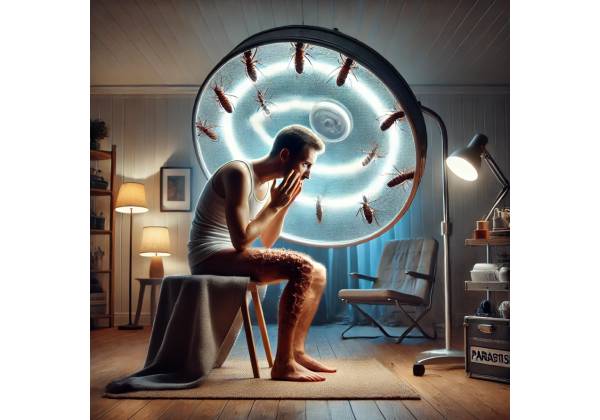
Delusional parasitosis can be one of the most difficult conditions to treat because the problem sits at the intersection of skin symptoms, fixed beliefs, anxiety, and loss of trust in medical care. The person is often completely convinced that bugs, worms, mites, fibers, or other material are living in or on the body, even after repeated exams find no infestation. By the time treatment begins, there may already be skin damage, sleep loss, social withdrawal, repeated disinfecting or cleaning rituals, and deep frustration with clinicians who seemed dismissive.
The practical question is not only which medication might help. It is also how to rule out real infestation and medical causes, how to avoid making the delusion stronger, how to protect the skin and daily functioning, and how to build enough trust for treatment to continue. In many cases, good outcomes depend as much on careful communication and steady follow-up as on the prescription itself.
Table of Contents
- When delusional parasitosis needs urgent care
- How treatment starts with a careful workup
- Building rapport without reinforcing the belief
- Medication options and how they are used
- When secondary causes change the plan
- Therapy, skin care, and behavioral support
- Family support and long-term recovery
When delusional parasitosis needs urgent care
Many people with delusional parasitosis are not medically unstable, but some situations make urgent assessment important. The main risks are not only psychiatric. They also include self-inflicted skin injury, toxic self-treatment, dehydration, sleep deprivation, infections from picking or scraping, and severe functional decline. A person may apply bleach, pesticides, veterinary products, harsh solvents, or repeated antiparasitic treatments in an attempt to “kill” the infestation. Others cut, dig, or burn the skin to remove perceived organisms.
Urgent care is more likely to be needed when the person has:
- suicidal thoughts, hopelessness, or major depression
- severe insomnia, agitation, or rapidly worsening paranoia
- spreading skin wounds, drainage, fever, or signs of infection
- confusion, hallucinations beyond the infestation belief, or disorganized thinking
- intoxication, stimulant use, or abrupt medication changes
- new symptoms in later life, especially with memory problems or neurological signs
- refusal to eat, drink, bathe, or leave the home because of the infestation belief
These cases overlap with broader evaluations for emergency mental health or neurological symptoms and sometimes a formal psychosis evaluation. The same is true when the patient reports hearing insects, seeing impossible evidence everywhere, or believing family members, furniture, or rooms are contaminated in ways that are no longer reality-based.
One practical distinction matters here: distress alone does not always require hospitalization, but loss of judgment can. A person who still functions, attends appointments, and accepts care may be managed as an outpatient. A person who is scraping the skin raw every night, missing work, sleeping only a few hours, or ingesting unsafe chemicals may need a much faster and more structured intervention.
Clinicians also take urgent risk more seriously when there is a long trail of repeated negative tests, many prior consultations, or heavy “doctor shopping,” because that pattern often means the condition is becoming more fixed. In severe cases, the problem is no longer just a false belief about parasites. It is a disorder that has taken over daily life.
How treatment starts with a careful workup
Treatment should begin by ruling out what actually needs to be ruled out. Delusional parasitosis, also called delusional infestation, is a diagnosis of exclusion. That does not mean endless testing. It means a focused, credible workup that looks for real infestation, skin disease, substance-related causes, neurological illness, medication effects, and psychiatric contributors before settling on a treatment plan.
This is one reason patients often first present to dermatology, primary care, infectious disease, or emergency services rather than psychiatry. They may bring samples in containers, tape, bags, or paper. They may show photos, lint, scabs, hair, or dust as “proof.” A good workup does not dismiss this material with a shrug, but it also does not allow repetitive sample review to become the entire clinical encounter.
| Area to assess | Why it matters | Common next step |
|---|---|---|
| True infestation or skin disease | Scabies, lice, dermatitis, neuropathic itch, and contact reactions can mimic the complaint | Skin exam, dermoscopy, microscopy, or targeted dermatology review |
| Medication or substance effects | Stimulants, cocaine, amphetamines, withdrawal states, and some prescribed drugs can trigger crawling sensations or psychosis | Medication review and, when appropriate, substance screening |
| Medical and neurological causes | Vitamin deficiencies, endocrine disease, neuropathy, dementia, stroke, and other conditions can contribute | Focused labs and neurological assessment |
| Psychiatric comorbidity | Depression, anxiety, trauma, OCD-spectrum symptoms, and psychotic disorders can shape the treatment plan | Mental health evaluation and risk assessment |
A thoughtful workup may include a skin exam, medication reconciliation, basic labs, and sometimes screening for substance use. When the history or exam suggests it, clinicians may also consider tests such as substance-use screening, blood tests that help rule out medical causes, or in selected cases brain MRI when there are neurological symptoms, cognitive changes, or an atypical late-life onset.
The goal is to be thorough enough that the patient feels taken seriously, but disciplined enough that the medical system does not accidentally reinforce the belief by repeating negative investigations without a clear reason.
Building rapport without reinforcing the belief
One of the hardest parts of treatment is that many patients do not believe they have a psychiatric condition. They believe they have been overlooked, misunderstood, or abandoned by medicine. If the first treatment conversation becomes a blunt argument about whether the infestation is “real,” the relationship may end before treatment even begins.
That is why successful management often starts with language. The clinician does not need to confirm the infestation, but it helps to confirm the suffering. A statement such as, “I can see these sensations and skin symptoms are very real and distressing, and I want to help reduce them,” is usually more productive than, “There is nothing there.” The first response preserves dignity. The second often triggers anger, shame, and dropout.
A careful therapeutic stance usually includes several elements:
- acknowledging the itch, crawling, biting, or stinging sensations as real experiences
- explaining that several conditions can produce these sensations, including disorders of skin, nerves, sleep, stress, medications, and brain signaling
- offering treatment for symptoms and skin damage without forcing immediate agreement on the label
- avoiding repeated reassurance rituals, home inspections, or speculative statements that strengthen the infestation narrative
- keeping follow-up consistent, because trust often builds slowly rather than in one visit
This is also where delusional parasitosis differs from a simple information gap. The problem is not fixed by more facts alone. Many patients have already read extensively online, consulted exterminators, cleaned the home repeatedly, or visited multiple doctors. What changes outcomes is a clinician who remains calm, specific, and steady enough to redirect the encounter toward treatment.
In practical terms, that may mean examining the skin carefully once, deciding whether one limited specimen review is reasonable, and then moving the discussion toward symptom control, sleep, wound care, and the next follow-up. It may also mean explaining that the medicines being offered can reduce the crawling or biting sensation and help the brain stop misfiring, rather than presenting them only as “antipsychotics for delusions” in the first conversation.
For some patients, especially those whose presentation fits a broader delusional disorder pattern or overlaps with acute psychosis, rapport is the difference between repeated failed consultations and a treatment plan that finally gets started.
Medication options and how they are used
Medication is usually the backbone of treatment for primary delusional parasitosis, but the evidence base is limited. Most data come from case reports, case series, retrospective reviews, and systematic reviews of small studies rather than large randomized trials. That means the question is not which drug has been proven best in a head-to-head way. It is which medication fits the patient’s symptom profile, physical health, comorbidities, and ability to stay with treatment.
In modern practice, second-generation antipsychotics are generally favored over older agents because they tend to be easier to use and better tolerated in many patients. Clinicians commonly consider medications such as risperidone, olanzapine, or aripiprazole, though the specific choice depends on the person’s age, weight, cardiometabolic risk, sedation tolerance, and other diagnoses. Older drugs such as pimozide were used more often in the past, but they are less favored now because of side-effect and cardiac-monitoring concerns.
Several principles guide treatment:
- Start low and titrate carefully. Many patients are medically stressed, sleep-deprived, or mistrustful of medication.
- Match the drug to the person. Sedation may help one patient with severe nighttime distress but be poorly tolerated in another.
- Explain the target symptoms clearly. Improvement in crawling sensations, skin-focused preoccupation, distress, and sleep often helps the person stay engaged.
- Monitor adverse effects. Weight gain, stiffness, restlessness, metabolic changes, dizziness, and QT-related concerns may all matter.
- Give the medication time. Response is often gradual over weeks rather than immediate.
The medication plan also depends on who is leading care. Some patients start treatment in dermatology or primary care, but most benefit from psychiatric involvement, especially when dosing, side-effect management, or diagnostic complexity becomes harder to manage. That is where understanding the roles of a psychiatrist and other mental health specialists can help frame expectations.
Adjunctive medication may sometimes be used too. If depression, panic, insomnia, or obsessive features are prominent, clinicians may address those symptoms directly. But in a patient with a fixed infestation delusion, antidepressants or sleep aids alone usually do not resolve the core problem. When the belief itself remains rigid, antipsychotic treatment is usually the more central intervention.
When secondary causes change the plan
Not every case is primary delusional parasitosis. Sometimes the infestation belief is secondary to something else, and that changes treatment in a major way. A person may develop these symptoms in the setting of stimulant use, alcohol withdrawal, medication reactions, depression with psychotic features, bipolar disorder, schizophrenia-spectrum illness, dementia, neuropathy, vitamin deficiency, endocrine disease, or neurological injury.
This distinction matters because a patient with secondary delusional parasitosis may improve only partly, or not at all, if clinicians focus on the delusion while missing the driver underneath it. For example, if cocaine or amphetamine use is producing tactile symptoms and paranoia, treating the substance problem is part of treating the delusion. If the patient has significant depression, the plan may need to address mood disorder as directly as the infestation belief. If late-life onset appears alongside cognitive change, clinicians may need to look closely for neurocognitive disease.
A practical way to think about this is:
- Primary delusional parasitosis: antipsychotic treatment and alliance-building are usually central
- Secondary to substance use or medication: remove or treat the trigger, then reassess residual psychosis
- Secondary to psychiatric illness: treat the broader disorder, not just the skin-focused belief
- Secondary to medical or neurological disease: manage the underlying condition and use psychiatric treatment as needed for symptoms
This is also one reason the workup should not stop once infestation is ruled out. Delusional parasitosis may be the visible tip of a more complicated clinical picture. In practice, treatment is often most successful when clinicians keep asking not only “How do we reduce this belief?” but also “Why did this belief start now?”
Some secondary cases improve quickly once the cause is addressed. Others still need sustained psychiatric treatment because the brain has settled into a fixed explanatory model around infestation. Either way, the management plan becomes more accurate when the team is willing to revise the formulation rather than locking too early into a single label.
Therapy, skin care, and behavioral support
Therapy can help, but it is usually supportive rather than curative on its own in the early phase. A person with a fixed delusion often does not benefit from direct confrontation or insight-based work before the distress and conviction begin to soften. That said, psychotherapy and behavioral support become much more useful once treatment has started and the person can reflect at least a little on the cycle of sensation, fear, checking, picking, cleaning, and withdrawal.
Useful therapy goals often include:
- lowering distress around skin sensations
- reducing repetitive checking, collecting, or mirror inspection
- addressing shame, anger, and medical mistrust after repeated failed encounters
- improving sleep and daily structure
- helping the person test alternative explanations without humiliation
- preventing relapse after medication begins to work
CBT-informed approaches may help some patients question automatic conclusions, tolerate uncertainty, and interrupt behaviors that keep the syndrome going. Supportive psychotherapy can be especially valuable when the patient is not ready to discuss the condition in psychiatric terms. In many cases, treatment resembles a broader conversation about available therapy approaches rather than one specialized technique.
Skin care matters just as much as talk therapy. Many patients create a second illness through the methods they use to remove the imagined infestation. Practical care often includes wound assessment, treatment of secondary bacterial infection when present, barrier repair with bland emollients, nail trimming, and a specific plan to stop harsh self-treatment. If picking has become repetitive and compulsive, the overlap with conditions such as excoriation disorder can be clinically useful, even though the belief structure is different.
One subtle but important point is that symptom treatment can build trust. If the clinician helps reduce itch, cleans up the skin, improves sleep, and lessens the need to scratch or cleanse, the patient is often more willing to continue psychiatric treatment. That is why integrated dermatology-psychiatry care tends to work well: it addresses the whole syndrome, not just the belief.
Family support and long-term recovery
Family members often feel trapped between two bad options: agree with the infestation story and make it worse, or argue about it and trigger conflict. Neither works well. The most helpful approach is usually calm, empathic, and practical. Loved ones do not need to validate the infestation, but they should validate the distress and support the treatment plan.
Helpful family responses include:
- saying, “I can see this is upsetting, and I want to help you follow the medical plan,” instead of debating whether organisms are present
- discouraging unsafe cleaning, caustic topical products, or repeated pesticide use
- supporting medication adherence and follow-up appointments
- watching for missed sleep, isolation, increased specimen collecting, renewed skin injury, or sudden anger at clinicians
- helping simplify routines so the day does not revolve around checking the skin or the home
What families should avoid is just as important. Endless inspection of bedding, repeated vacuuming rituals, and frequent discussions about “evidence” usually strengthen the condition. So does agreeing to constantly photograph the skin, compare fibers, or visit more and more clinics in search of confirmation after a reasonable evaluation has been completed.
Recovery tends to be gradual. Some patients improve enough within several weeks that the conviction becomes less rigid and daily life starts to return. Others need months of treatment, especially if they have longstanding symptoms, significant skin damage, comorbid depression, or repeated breaks in care. Relapse is more likely when medication is stopped abruptly, when stimulant or substance use recurs, or when the original diagnostic picture was more complex than it first appeared.
The overall outlook is better when treatment starts early, the alliance stays intact, and the person remains engaged long enough for medication and follow-up to work. Delusional parasitosis can become chronic, but it is not untreatable. The most realistic goal is not simply to “convince” the person they were wrong. It is to reduce the fixed belief, protect the skin and functioning, rebuild trust, and restore enough stability that life is no longer organized around infestation.
References
- British Association of Dermatologists guidelines for the management of adults with delusional infestation 2022 2022 (Guideline)
- Evaluation and Management of Delusional Infestation 2024 (Review)
- The Diagnostic Workup, Screening, and Treatment Approaches for Patients with Delusional Infestation 2023 (Review)
- Psychological interventions in the treatment of delusional parasitosis: a brief review 2024 (Review)
- A systematic review of antipsychotic agents for primary delusional infestation 2022 (Systematic Review)
Disclaimer
This article is for general educational purposes only and is not a substitute for professional medical advice, diagnosis, or treatment. Delusional parasitosis can involve self-injury, toxic self-treatment, severe distress, or underlying medical or psychiatric illness, so persistent or worsening symptoms should be evaluated by a qualified clinician.
If this article was useful, please consider sharing it on Facebook, X, or another platform you prefer.