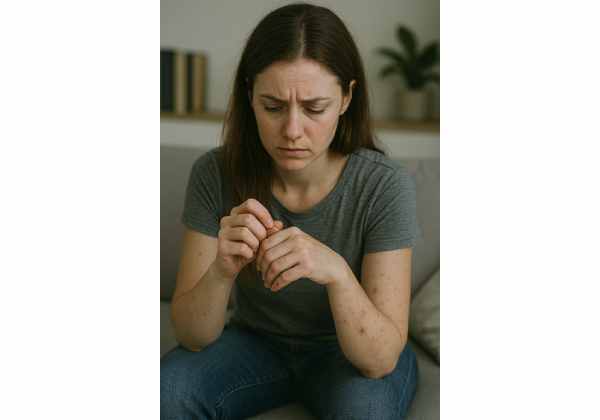
Dermatillomania, clinically called excoriation disorder or skin-picking disorder, is more than occasionally squeezing a pimple, picking at a scab, or biting at dry skin. It involves repeated picking that causes skin damage, feels difficult to stop, and leads to distress, shame, avoidance, or problems in daily life.
The behavior can be conscious and deliberate, automatic and barely noticed, or a mix of both. Some people pick when they feel anxious or tense; others pick when bored, overstimulated, tired, focused on a mirror, or unaware while reading, scrolling, studying, or watching television. Understanding the condition starts with recognizing that it is a mental health disorder with visible physical effects, not a character flaw or a simple “bad habit.”
Table of Contents
- What Dermatillomania Is
- Symptoms and Visible Signs
- How Skin-Picking Patterns Develop
- Causes and Brain-Behavior Factors
- Risk Factors and Common Coexisting Conditions
- Diagnosis and Conditions That Can Look Similar
- Complications and When Evaluation Is Urgent
What Dermatillomania Is
Dermatillomania is a body-focused repetitive behavior in which recurrent picking damages the skin and continues despite efforts to reduce or stop it. It is classified with obsessive-compulsive and related disorders, but it is not identical to obsessive-compulsive disorder.
People may pick normal skin, blemishes, acne, calluses, scabs, ingrown hairs, dry patches, mosquito bites, or tiny irregularities that others would barely notice. The most commonly affected areas include the face, arms, hands, fingers, scalp, shoulders, chest, legs, lips, and cuticles, although any reachable part of the body can be involved. Some people focus on one area for months; others move from site to site as skin heals or new irregularities appear.
The disorder is defined less by the exact body part and more by the pattern: repeated picking, tissue damage, difficulty stopping, and distress or impairment. For example, a person who occasionally removes a loose scab without ongoing harm would not necessarily meet the pattern. A person who repeatedly scans their skin, loses track of time while picking, creates wounds, hides the marks, and feels unable to stop may be dealing with excoriation disorder.
Dermatillomania can feel confusing because the act itself may bring temporary relief, satisfaction, or a sense of completion. That short-term relief can coexist with regret, pain, shame, or fear afterward. This push-pull quality is one reason the behavior can become persistent: the picking may briefly reduce tension or fixate attention, while the consequences increase distress and make the cycle more likely to repeat.
Although dermatillomania is sometimes described as “compulsive,” the inner experience varies. Some episodes are driven by a strong urge or a sense that the skin must be made smooth. Others are more automatic, almost like the hand has started before the person notices. Many people describe both focused picking and automatic picking, depending on mood, setting, fatigue, and skin condition.
It is also important to distinguish dermatillomania from intentional self-harm. In excoriation disorder, the usual goal is not to cause injury for emotional release or punishment. The behavior is more often tied to urges, grooming, perceived imperfections, sensory discomfort, tension relief, or automatic repetition. That said, the distinction can be complex, and some people may have both skin picking and other forms of self-injury. When that possibility exists, a careful mental health evaluation is especially important.
Symptoms and Visible Signs
The core symptoms are repeated skin picking, visible skin damage, difficulty cutting back, and emotional or functional distress. The signs may be obvious to others, carefully hidden, or visible only during a skin exam.
A person with dermatillomania may pick with fingernails, teeth, tweezers, pins, needles, nail tools, or other objects. Some pick only with their hands, while others use tools to remove flakes, hairs, bumps, clogged pores, scabs, or perceived imperfections. The picking may last seconds, but it can also continue for long periods, especially when the person is alone, near a mirror, under stress, or absorbed in another activity.
Common symptoms and signs include:
- Repeated picking, squeezing, scratching, rubbing, digging, biting, or scraping at the skin
- Scabs, open sores, raw areas, bleeding, bruising, or crusted lesions
- Scars, dark spots, light spots, thickened skin, or uneven texture
- Attempts to hide marks with clothing, makeup, bandages, hairstyles, or avoiding certain lighting
- Strong urges to pick, especially when noticing bumps, roughness, dryness, acne, or scabs
- A sense of tension, discomfort, boredom, or “not right” feeling before picking
- Temporary relief, pleasure, satisfaction, numbness, or focus during or after picking
- Shame, guilt, frustration, sadness, or anxiety afterward
- Repeated efforts to stop, reduce, cover, or control the behavior without lasting success
- Avoidance of social events, intimacy, photos, swimming, medical visits, or grooming appointments
The visible pattern can vary widely. Some people have many small lesions around the fingers, cuticles, lips, or face. Others have deeper wounds on the arms, legs, chest, or scalp. In some cases, the skin findings are scattered and in different stages of healing: fresh wounds, scabs, healing patches, scars, and darker or lighter marks from prior inflammation.
Symptoms can fluctuate. A person may have weeks of lower picking followed by a flare during exams, work stress, relationship strain, hormonal changes, acne outbreaks, sleep loss, or emotional overwhelm. The condition may also worsen when the person spends more time alone, has extended mirror time, or engages in long periods of sedentary concentration.
Dermatillomania often carries a hidden burden. People may spend significant time checking skin, planning how to cover marks, cleaning wounds, changing clothes, avoiding questions, or feeling preoccupied with damage from earlier episodes. For some, the emotional impact is more disabling than the wounds themselves. The person may believe they are the only one doing this, even though skin-picking disorder is a recognized condition.
The signs should not be dismissed just because the lesions are small. A person can have clinically significant dermatillomania with limited visible damage if the behavior causes major distress, consumes time, interferes with work or relationships, or leads to repeated unsuccessful efforts to stop.
How Skin-Picking Patterns Develop
Skin picking often becomes a cycle: a trigger creates an urge or opportunity, the picking brings short-term relief or focus, and the aftermath creates distress that can feed the next episode. Recognizing this pattern helps explain why the behavior can feel both unwanted and hard to interrupt.
The cycle often begins with attention to the skin. A person may notice a bump, dry edge, clogged pore, scab, rough cuticle, ingrown hair, or slight asymmetry. The sensation or sight can become hard to ignore. Some describe a strong need to remove it, smooth it, even it out, or make it “feel right.” The skin may then become more irritated, which creates more texture, more scabbing, and more material to pick.
Dermatillomania can include several patterns:
| Pattern | What it may involve | Common context |
|---|---|---|
| Focused picking | Deliberate scanning, squeezing, digging, or trying to remove a perceived flaw | Mirrors, grooming, acne checks, stress, strong urges |
| Automatic picking | Picking with little awareness until pain, bleeding, or visible damage is noticed | Reading, driving, studying, scrolling, watching television |
| Sensory-driven picking | Responding to roughness, bumps, itching, tightness, scabs, or uneven texture | Dry skin, healing wounds, acne, calluses, cuticles |
| Emotion-linked picking | Picking that rises with anxiety, boredom, anger, shame, sadness, or tension | Conflict, fatigue, deadlines, loneliness, overstimulation |
Many people experience more than one pattern. For instance, someone may automatically pick at cuticles during work calls, then later engage in focused face picking in front of a mirror. Another person may pick during anxious periods but also when bored or understimulated.
The condition can be reinforced by several immediate effects. Picking may reduce an urge, create a feeling of control, provide sensory satisfaction, or narrow attention during emotional discomfort. The relief is usually temporary. The skin damage that follows can create pain, embarrassment, infection risk, or more visible irregularities, which can increase future picking.
This is why dermatillomania can be so frustrating. The behavior may appear irrational from the outside, but internally it often follows a powerful urge-relief-consequence loop. The person may sincerely want to stop and still find that the behavior returns when stress, texture, scanning, or automatic habits line up.
Dermatillomania is also different from ordinary grooming because of loss of control and consequences. Many people remove dry skin or squeeze occasional blemishes. The clinical concern rises when the behavior becomes repetitive, damaging, time-consuming, difficult to resist, and tied to distress or impairment.
Causes and Brain-Behavior Factors
There is no single known cause of dermatillomania. Current evidence points to a mix of biological vulnerability, emotional regulation, reinforcement, sensory sensitivity, habit learning, and environmental triggers.
The disorder sits at the intersection of body-focused behavior, impulse control, compulsivity, reward, and emotion. Some people experience urges that resemble compulsions; others describe a more impulsive or automatic habit. This mixed profile helps explain why dermatillomania can share features with OCD, anxiety disorders, tic-like behaviors, and other body-focused repetitive behaviors, while still remaining its own diagnosis.
Several mechanisms may contribute:
- Urge and reward circuits. Picking may activate reward or relief pathways, especially when removing a perceived imperfection produces a brief sense of satisfaction.
- Inhibitory control. Some people have difficulty stopping the behavior once the urge starts, even when they know damage may follow.
- Emotion regulation. Picking may serve as a short-term way to manage anxiety, tension, boredom, anger, shame, numbness, or overstimulation.
- Sensory processing. Rough, itchy, uneven, or tight skin sensations can become hard to ignore and may trigger repeated checking or picking.
- Habit learning. Repetition in the same settings, such as mirrors, beds, desks, bathrooms, or cars, can make the behavior more automatic over time.
- Skin-related triggers. Acne, eczema, dry skin, healing wounds, ingrown hairs, keratosis pilaris, insect bites, or scabs may create physical targets for picking.
Genetics may also play a role. Body-focused repetitive behaviors can run in families, and some people report relatives with skin picking, hair pulling, nail biting, cheek biting, or similar repetitive grooming behaviors. Family patterns do not mean the condition is inevitable; they suggest vulnerability may combine with stress, learning, temperament, and environment.
Stress does not “cause” dermatillomania by itself, but it can intensify symptoms. During high-stress periods, the brain may seek quick forms of relief, stimulation, control, or self-soothing. For a person already prone to skin picking, that can increase the frequency or intensity of episodes. Chronic stress may also worsen sleep, attention, mood, and skin inflammation, which can indirectly add more triggers.
Dermatillomania can also begin around adolescence, a time when acne, body awareness, social comparison, emotional intensity, and grooming routines often increase. However, it can start in childhood or adulthood as well. In adults, symptoms may become more noticeable during major life stress, changes in routine, illness, relationship strain, work pressure, or periods of isolation.
It is not accurate to say that dermatillomania is simply vanity. Appearance concerns can become part of the distress, especially when marks are visible, but the disorder is not usually driven by ordinary appearance preference. In some people, intense preoccupation with perceived defects may suggest body dysmorphic disorder or another overlapping concern, which requires careful diagnostic evaluation.
Risk Factors and Common Coexisting Conditions
Risk is higher when biological vulnerability, skin triggers, emotional distress, and repetitive grooming habits combine. Dermatillomania can occur in any gender, age group, or background, though many studies find higher reported rates among females.
Risk factors may include a personal or family history of body-focused repetitive behaviors, obsessive-compulsive symptoms, anxiety, mood symptoms, trauma exposure, high stress, perfectionistic grooming routines, acne or chronic skin irritation, and difficulty tolerating certain skin sensations. Some people describe a long-standing tendency to scan for imperfections, while others trace the behavior to a specific period when picking first brought relief or control.
Commonly associated conditions include anxiety disorders, depression, OCD, body dysmorphic disorder, substance use disorders, tic disorders, ADHD, eating disorders, and other body-focused repetitive behaviors such as trichotillomania. These overlaps do not mean that everyone with dermatillomania has another psychiatric condition, but they are common enough to matter during assessment.
Anxiety may appear before, during, or after skin picking. Some people pick in response to anxious tension; others become anxious because of the wounds, scarring, secrecy, or fear of being judged. When anxiety symptoms are prominent, structured anxiety screening may help clarify whether a separate anxiety disorder is also present.
Depression can develop alongside dermatillomania when shame, isolation, low self-esteem, or repeated unsuccessful attempts to stop lead to hopelessness. Depression may also reduce motivation and increase time spent alone, both of which can worsen picking opportunities. If low mood, loss of interest, sleep changes, appetite changes, or thoughts of worthlessness are present, depression screening may be part of a broader evaluation.
OCD is an important comparison because dermatillomania is grouped with obsessive-compulsive and related disorders. However, skin picking is not the same as classic OCD. OCD usually involves intrusive obsessions and compulsions performed to reduce feared outcomes, such as contamination, harm, or uncertainty. Dermatillomania more often involves urges, sensory triggers, perceived skin irregularities, relief, gratification, or automatic repetition. When obsessions and compulsions are also present, OCD screening can help separate overlapping patterns.
Trauma and chronic stress may be relevant for some people, but they should not be assumed. Skin picking can function as self-soothing or dissociation-like focus for certain individuals, yet many people with dermatillomania do not identify trauma as a clear cause. A careful history matters more than a one-size-fits-all explanation.
Skin disease can also increase risk by creating sensations and visible targets. Acne, eczema, psoriasis, folliculitis, insect bites, or delayed wound healing may provide repeated prompts to inspect and pick. In those cases, the psychiatric pattern and the dermatologic condition can reinforce each other: irritation creates picking opportunities, and picking worsens irritation.
Diagnosis and Conditions That Can Look Similar
Diagnosis is based on the pattern of behavior, skin damage, distress or impairment, unsuccessful attempts to stop, and exclusion of better explanations. No blood test or brain scan can diagnose dermatillomania on its own.
A clinician may ask where the picking occurs, how often it happens, how long episodes last, what triggers them, what the person feels before and after, what tools are used, whether the behavior feels automatic or focused, and how much it affects daily life. The assessment may also include a skin exam, review of medications or substances, and questions about anxiety, depression, OCD symptoms, body image concerns, trauma, ADHD, tic-like behaviors, and self-harm.
Validated questionnaires and interviews can support assessment, but they do not replace clinical judgment. Tools such as the Skin Picking Scale, Skin Picking Scale-Revised, Skin Picking Impact Scale, Skin Picking Symptom Assessment Scale, and structured interviews may help measure severity, impairment, urges, time spent picking, and psychosocial impact. In broader mental health settings, it can also help to understand the difference between screening and diagnosis, because a questionnaire score is only one part of the clinical picture.
Several conditions can resemble or overlap with dermatillomania:
- Acne excoriée: acne lesions that are repeatedly picked, often causing more visible damage than the acne itself.
- Eczema, psoriasis, or chronic itch disorders: scratching may be driven primarily by itch, inflammation, or skin disease.
- Body dysmorphic disorder: picking may be tied to intense preoccupation with perceived appearance defects.
- OCD: skin-related compulsions may occur in the context of contamination fears, symmetry concerns, or intrusive thoughts.
- Tic disorders or stereotypic movement disorder: repetitive movements may have a different developmental pattern and urge quality.
- Substance-related picking: stimulant use or withdrawal can cause tactile sensations, paranoia, or compulsive picking.
- Medical causes of itching or abnormal sensations: neuropathy, liver disease, kidney disease, thyroid disease, medication effects, or allergic reactions may contribute to scratching or skin injury.
- Factitious disorder or dermatitis artefacta: skin lesions may be intentionally produced in a different psychological context and often require careful specialist assessment.
- Nonsuicidal self-injury: skin injury may be used deliberately to manage emotional pain, self-punishment, or dissociation.
The distinction matters because the same visible lesions can come from different causes. For example, a person who picks acne because a bump feels unbearable may fit dermatillomania. A person scratching because of severe eczema may primarily need evaluation for inflammatory skin disease. A person injuring skin during suicidal distress needs urgent mental health assessment. A person using stimulants and feeling bugs under the skin needs a different medical and psychiatric workup.
Dermatillomania is sometimes missed because people feel embarrassed and do not volunteer the behavior. A clinician may see scabs, scars, or infections but not immediately know the pattern behind them. Honest discussion is important, but shame can make that difficult. Neutral language helps: “I pick at my skin and can’t seem to stop” is enough to open the door to proper evaluation.
Complications and When Evaluation Is Urgent
Dermatillomania can cause both skin complications and emotional complications. The condition deserves attention when picking causes wounds, repeated distress, avoidance, infection risk, scarring, or impairment in school, work, relationships, or self-care.
Physical complications may include bleeding, pain, swelling, delayed healing, scarring, skin discoloration, thickened skin, nerve irritation, and bacterial infection. Some people develop cellulitis, abscesses, or worsening of acne or eczema. Picking around the eyes, lips, genitals, or deep wounds can be especially risky because these areas may be more vulnerable to infection, pain, or lasting tissue damage.
Scarring and pigmentation changes can be long-lasting. Darker or lighter marks may remain after wounds heal, particularly when the skin is repeatedly inflamed or injured. Visible scars can then become new sources of distress and checking, which may keep the cycle going.
Psychological and social complications can be just as significant. Many people with dermatillomania avoid short sleeves, swimming, dating, sex, photos, handshakes, nail appointments, haircuts, dermatology visits, or bright lighting. They may spend time covering wounds or explaining marks. Shame can lead to secrecy, and secrecy can make the condition feel more isolating.
The condition may also affect concentration and time. Episodes can last longer than intended, causing lateness, missed sleep, unfinished work, or difficulty transitioning away from mirrors or bathrooms. Some people lose hours without realizing it. Others avoid starting tasks because they fear becoming stuck in a picking episode.
Professional evaluation is especially important when:
- Wounds are deep, spreading, painful, warm, swollen, draining pus, or accompanied by fever
- Picking occurs near the eyes or causes significant bleeding
- Skin damage is worsening or not healing
- The person is using sharp tools or unsafe objects
- Picking is causing major avoidance, missed work or school, or relationship strain
- There are signs of depression, severe anxiety, substance use, psychosis, or body dysmorphic concerns
- The person feels unable to control the behavior and is increasingly hopeless or ashamed
- Skin injury is connected to self-punishment, emotional crisis, suicidal thoughts, or urges to die
Urgent evaluation is needed if skin picking occurs with suicidal thoughts, intent to self-harm, severe infection symptoms, rapidly spreading redness, confusion, fever, or injuries that may require immediate medical care. If there is concern that the behavior is part of a broader self-harm or suicide-risk picture, suicide risk screening may be part of the assessment.
Dermatillomania can be painful to talk about because it is visible, personal, and often misunderstood. Still, the condition is recognized, describable, and assessable. Naming it accurately can reduce shame and help separate the person from the behavior: the problem is not a lack of willpower, but a repetitive disorder involving urges, habits, emotions, sensory triggers, and skin injury.
References
- Clinical descriptions and diagnostic requirements for ICD-11 mental, behavioural and neurodevelopmental disorders (CDDR) 2024 (Guideline)
- Prevalence and gender distribution of excoriation (skin-picking) disorder: A systematic review and meta-analysis 2023 (Systematic Review and Meta-analysis)
- Assessment tools for clinical excoriation (skin picking) disorder: a mini review for diagnosing and monitoring symptoms severity 2024 (Review)
- Exploring skin picking disorder: aetiology, treatment, and future directions 2024 (Review)
- Body-Focused Repetitive Behavior Disorder 2025 (Medical Reference)
Disclaimer
This article is for general educational purposes only and is not a substitute for professional medical advice, diagnosis, or treatment. Skin picking that causes wounds, infection symptoms, severe distress, or any concern about self-harm should be evaluated by a qualified health professional.
Thank you for taking the time to read this sensitive topic with care; sharing it may help someone recognize a difficult pattern with less shame.