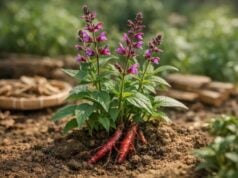
Devil’s bit (Succisa pratensis), often called devil’s-bit scabious, is a wild meadow plant native to much of Europe and parts of western Asia. It is better known today as a pollinator-friendly wildflower than as a modern supplement, yet older European herbal traditions used the aerial parts and sometimes the root in teas and washes for coughs, feverish colds, and irritated skin. Its traditional “medicinal properties” are usually described in simple, practical terms—mildly soothing, gently drying (astringent), and supportive during seasonal discomfort—rather than dramatic or fast-acting.
What makes devil’s bit especially interesting is the gap between tradition and modern evidence. Laboratory work suggests the plant contains flavonoids, phenylpropanoids, and iridoid-type compounds that can influence oxidative stress and inflammation signaling in controlled settings. However, there are very few human studies, so it is best approached as a conservative, low-intensity herb—useful for minor, short-term needs, and inappropriate as a substitute for medical evaluation when symptoms are persistent, severe, or worsening.
Key Insights
- Traditionally used for mild coughs and feverish colds, and as an external wash for irritated skin
- Contains flavonoids and iridoid-type compounds that may support antioxidant and inflammation pathways in lab models
- Typical traditional tea range is 1.5–4 g dried herb per day (short-term), but dosing is not clinically standardized
- Avoid during pregnancy and breastfeeding, and use extra caution if you have significant allergies to flowering plants
Table of Contents
- What is devil’s bit?
- Devil’s bit key ingredients
- What does it help with?
- How to use devil’s bit
- How much devil’s bit per day?
- Devil’s bit safety and interactions
- What the evidence shows
What is devil’s bit?
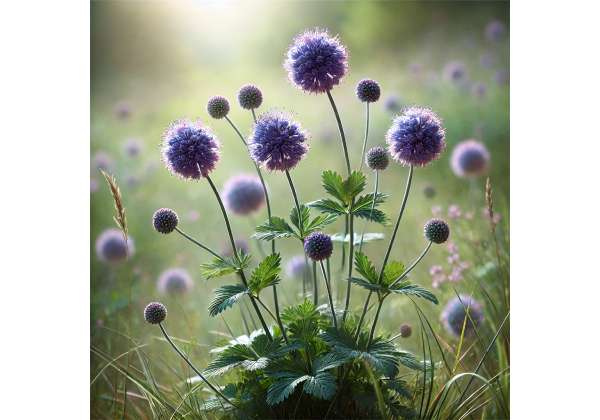
Devil’s bit (Succisa pratensis) is a perennial herb in the honeysuckle family (Caprifoliaceae), historically placed in the teasel or scabious group. It grows in nutrient-poor grasslands and damp meadows, sending up slender stems topped with rounded, violet-blue flower heads. The flowers appear later in the season than many meadow plants, which is one reason it is valued ecologically: it offers nectar when other blooms fade.
The name “devil’s bit” comes from old folklore. The plant’s rootstock can look abruptly truncated, as if something “bit off” the lower portion. Traditional stories blamed the devil, who supposedly tried to destroy the plant’s healing power. While the story is colorful, it also hints at how the herb was viewed historically: a modest but respected “village remedy,” used most often for everyday respiratory complaints and for external skin care.
It is also a plant that benefits from careful identification. Several flowers are called “scabious” in common language, and “devil’s bit scabious” can be confused with other scabious species. It can also be confused by name with unrelated “devil” herbs used for very different purposes. For example, devil’s bit is not devil’s claw (a joint herb), and it should not be assumed to have similar effects simply because the names sound alike.
In traditional practice, the aerial parts (flowering tops and leaves) are the most common starting point. The root appears in some older sources, often as a stronger decoction, but modern home herbalists tend to stay with gentler preparations unless guided by an experienced practitioner.
Finally, devil’s bit is not widely commercialized as a standardized supplement. That matters because the “what should I buy?” question is harder here than with mainstream herbs. If you do use it, treat it as a seasonal, short-term herb where freshness, correct species identification, and simple preparation matter more than chasing high-potency extracts.
Devil’s bit key ingredients
Devil’s bit is not prized for a single headline compound. Its “key ingredients” are best understood as a cluster of plant metabolites that may work together gently—supporting barrier tissues, calming irritation, and moderating inflammatory signaling in ways that are plausible but not clinically proven.
Flavonoids and flavone glycosides
The plant’s chemical profile includes flavonoids, including apigenin- and luteolin-type flavones in glycosylated forms. In general, flavones are studied for antioxidant activity and their ability to influence cellular pathways involved in inflammation responses. Practically, this aligns with traditional uses for “hot” or irritated states—sore throats, inflamed-feeling coughs, and reactive skin—where gentle support can be useful even if effects are subtle.
Phenylpropanoids and caffeic-acid derivatives
Phenylpropanoid compounds (often discussed alongside caffeic-acid derivatives) appear in analyses of Succisa pratensis extracts. This family of compounds is frequently associated with antioxidant behavior and tissue-protective effects in lab settings. For an herb used externally as a wash, this is an important point: many “skin herbs” are valued not because they are strongly antimicrobial, but because they support the skin’s comfort and resilience while the body does the real repair work.
Iridoids and related bitter principles
The scabious group is known for iridoid-type compounds and other bitter constituents. Bitter principles can stimulate saliva and digestive secretions, which may explain why older traditions sometimes used devil’s bit for sluggish digestion or “internal cleansing” during illness. This does not mean it is a detox cure; it simply means bitter herbs can nudge digestive physiology in a direction some people find supportive.
Saponins and gentle surfactant-like effects
Some analyses of Succisa pratensis extracts also report saponins. Saponins can influence mucous membranes and may contribute to the classic herbal pairing of “soothing plus clearing” during coughs—supporting a more comfortable, productive respiratory response rather than forcibly suppressing symptoms.
What these ingredients suggest in real life
Taken together, devil’s bit looks like a mild, multi-constituent herb that may be most appropriate when you want gentle support rather than a strong pharmacologic push. That is also a reminder to keep claims proportional: interesting chemistry does not automatically translate into meaningful clinical outcomes, especially when dosing is not standardized and human studies are limited.
What does it help with?
Devil’s bit is best framed as a traditional supportive herb for minor, self-limited issues—especially when your goal is comfort and steadier recovery, not rapid symptom shutdown. Historically, it shows up most often in two categories: seasonal respiratory discomfort and external skin care.
Seasonal coughs, sore throats, and feverish colds
Older European sources describe devil’s bit as gently diaphoretic (supporting perspiration) and demulcent-leaning (soothing to irritated tissues), often prepared as a warm tea. In practical terms, it may be useful when you have:
- A scratchy throat and dry, irritated cough
- A lingering, “stuck” cough where you want gentle support rather than strong expectorants
- A mild feverish feeling where warm fluids and rest are the main therapy
It is not a substitute for medical care if you have shortness of breath, chest pain, high fever that persists, blood in mucus, or symptoms that worsen after initial improvement.
If you want a clearer, more commonly used herbal option for cough support, many people start with mullein for respiratory comfort and reserve devil’s bit as a secondary, tradition-informed choice.
Skin irritation, weeping spots, and minor wounds
External use is often more realistic than internal use because it avoids the uncertainty of systemic dosing. Traditional preparations include cooled tea used as:
- A gentle wash for itchy or irritated skin
- A compress for minor weeping patches
- A supportive rinse after outdoor exposures that leave skin reactive
This is not the same as treating an infection. If an area is spreading, hot, painful, producing pus, or accompanied by fever, medical evaluation matters.
Mild digestive sluggishness during illness
Because devil’s bit contains bitter principles, it may support appetite and digestion when illness or stress makes the gut feel slow. The effect is usually modest—more like “helping you feel ready to eat again” than correcting a major digestive disorder.
What to expect realistically
For most people, devil’s bit is not dramatic. A reasonable goal is a small improvement in comfort: slightly less throat irritation, a calmer skin feel, or a gentle “warming” effect from tea. If you need strong symptom control, a better plan is to use well-studied interventions and view devil’s bit as optional, not central.
How to use devil’s bit
Because devil’s bit is not a mainstream supplement, the most helpful guidance is practical: choose a form that matches your goal, keep preparations simple, and use it for short periods.
1) Tea (infusion) for internal use
Tea is the most common and conservative approach. It fits best for mild coughs, throat irritation, or general “under the weather” support.
A simple method:
- Use 1–1.5 teaspoons dried herb (about 1.5–3 g).
- Pour hot water over it (not aggressively boiling if you want a gentler taste).
- Cover and steep 10–15 minutes.
- Strain and drink warm.
If the taste is too earthy or bitter, blend with a small amount of mild aromatic herbs, or sweeten lightly with honey when appropriate.
2) Decoction for traditional root use
Some older sources mention rootstock decoctions, typically stronger and more astringent. If you are not trained in using root-based preparations, it is reasonable to skip this and stick with aerial parts. Root decoctions can be more intense on the stomach and are easier to overdo.
3) Tincture for convenience
A tincture can be practical if you want consistent dosing without making tea. Because commercial products vary widely, follow the label directions and start low. Tincture use makes most sense when you want a short-term trial and prefer a measured dose.
4) External wash or compress
For skin comfort, make a strong tea, let it cool completely, then use it as a wash or compress. This is often the best entry point because the goal is local comfort.
A common pairing approach is to combine devil’s bit with gentle, skin-friendly botanicals. If you want a more established topical herb to anchor a skin wash, consider calendula for topical skin support, using devil’s bit as a secondary addition rather than the main ingredient.
5) Common mistakes to avoid
- Using it for serious infections or chronic disease without evaluation
- Taking high doses for long periods “just in case”
- Assuming all “scabious” plants are interchangeable
- Foraging without confident identification and clean sourcing
Done well, devil’s bit is a simple herb: short-term, low-intensity, supportive. The more complicated your goal, the less suitable it becomes.
How much devil’s bit per day?
There is no widely accepted clinical dosing standard for devil’s bit. Most guidance comes from traditional preparations and from the general dosing logic used for mild, non-toxic aerial-part herbs: start low, use short-term, and let comfort and tolerance guide you.
Typical ranges by form
These ranges are conservative and intended for healthy adults:
- Dried herb tea: 1.5–3 g per cup, 1–2 cups daily (about 1.5–6 g/day)
- Tincture (if available): often 2–4 mL up to 2 times daily, depending on strength
- External wash: strong tea made with 3–6 g per cup, cooled, applied 1–3 times daily as needed
If you are sensitive to bitter herbs or have a reactive stomach, aim for the lower end and take it with food.
Timing and duration
- For coughs and sore throats: use for 3–10 days, reassessing daily
- For skin washes: use for 3–14 days, stopping if irritation worsens
- For “general support”: avoid long, continuous use; consider short courses with breaks
If symptoms persist beyond a typical self-limited window, the safest move is not “increase the dose,” but reassess the diagnosis.
How to choose your starting dose
A practical step-up plan:
- Day 1–2: 1 cup daily (1.5–2 g per cup) to assess tolerance.
- Day 3–5: increase to 2 cups daily if needed and well tolerated.
- After day 7: if there is no meaningful benefit, stop rather than escalating.
This approach protects you from the common herbal mistake of “more is more,” which often increases side effects without improving results.
Blending and practical combinations
Devil’s bit is often more pleasant and realistic in blends. If you are building a traditional-style tea for throat comfort, pairing with gentle aromatic flowers can improve compliance and hydration. One mild, commonly used option is elderflower for seasonal comfort, used primarily for taste and tradition rather than as a guarantee of stronger effects.
When dosing becomes the wrong question
If you are pregnant, breastfeeding, using multiple medications, or managing complex chronic illness, the most appropriate “dose” may be to skip devil’s bit entirely unless a clinician or qualified herbal professional guides you. Lack of evidence is not evidence of safety in every population.
Devil’s bit safety and interactions
Devil’s bit is generally discussed as a mild traditional herb, but the reality is that safety data in humans is limited. A smart safety approach is to treat it as low-intensity but not fully characterized—especially when used internally.
Common side effects
Most issues, when they occur, are mild and dose-related:
- Stomach upset, nausea, or increased bowel activity (more likely with strong tea)
- Headache or lightheadedness in sensitive individuals
- Skin irritation if used externally on very reactive skin or broken skin
If you notice stomach discomfort, lower the dose, shorten steeping time, or switch to external use only.
Who should avoid it
Avoid internal use (and use extra caution even with external application) if you are:
- Pregnant or breastfeeding
- Under 18
- Managing significant liver or kidney disease
- Highly allergy-prone, especially with strong reactions to flowering plants
Medication interactions
No interaction profile is firmly established, but caution is reasonable in these contexts:
- Immunosuppressive therapies: avoid “immune-modulating” herbs without clinician guidance
- Anticoagulants and antiplatelet drugs: caution is sensible with herbs rich in polyphenols, even when risk is theoretical
- Multi-herb formulas: the interaction risk often comes from the blend rather than devil’s bit itself
Quality and identification risks
Safety is not only about chemistry; it is also about what you actually have in the jar. Foraged plants can be contaminated by roadside pollutants, and misidentification can introduce entirely different risk profiles. If you cannot verify sourcing, skip internal use.
A note on “safer does not mean safe”
It can help to remember that herbal safety is a spectrum. Some herbs are restricted because of clear toxicity concerns. Others are gentle but still require dose discipline and context. If you want an example of an herb where topical tradition clashes with internal safety concerns, see comfrey and skin repair uses, which highlights why form and route of use matter.
If devil’s bit causes worsening symptoms, rash, wheezing, swelling, or persistent gastrointestinal distress, stop and seek medical advice.
What the evidence shows
The most honest evidence summary for devil’s bit is mixed: tradition is fairly clear, lab research is suggestive, and human clinical data is sparse. That does not make the herb useless—it simply defines the role it can reasonably play.
Traditional evidence: consistent themes, limited precision
Historical and ethnobotanical records from parts of Europe repeatedly mention Succisa pratensis (also recorded under older names such as Scabiosa succisa) in the context of everyday ailments. The recurring themes are respiratory comfort, “internal inflammation,” and external use for skin issues. This kind of evidence is valuable for understanding how a plant was used and what people expected from it, but it rarely provides dosing precision, safety screening, or clarity about which symptoms were actually helped.
Modern studies: chemistry and bioactivity, not clinical outcomes
Modern papers that include Succisa pratensis typically focus on extract profiling and lab outcomes—antioxidant assays, antimicrobial screens, metabolomics, or cell-based models. These studies can confirm that the plant contains plausible bioactive compounds (such as flavones, phenylpropanoid derivatives, iridoid-type compounds, and saponins) and that certain extracts show measurable activity in controlled settings.
However, translating that into “it will help your cough” is a leap. Extracts used in research are often concentrated, standardized by lab methods, and not equivalent to home tea. In other words, research supports potential, not a guarantee.
What is missing: strong human trials
For most popular “medicinal herbs,” you can find at least a small set of human studies on specific outcomes. With devil’s bit, that body of evidence is limited. That means:
- Benefits should be framed as traditional and supportive, not proven treatments
- Short-term, conservative use is more defensible than long-term daily use
- External use for comfort may be more reasonable than internal claims
How to make an evidence-informed decision
If you want to use devil’s bit responsibly:
- Use it for minor, short-term needs with clear stop points
- Track whether it changes comfort in a meaningful way within 7–10 days
- Do not escalate doses chasing an effect that may not be there
- Choose better-studied options when the situation is higher stakes
If your goal is inflammation support with stronger clinical backing, it may be more efficient to start with a better-evidenced herb such as boswellia for joint and inflammation research and treat devil’s bit as a tradition-informed adjunct rather than the foundation of your plan.
References
- Screening of Mediterranean Plant-Derived Extracts for Antioxidant Effect in Cell-Free and Human Cell Line Models 2025 (Systematic Screen)
- A Novel Strategy for Glioblastoma Treatment by Natural Bioactive Molecules Showed a Highly Effective Anti-Cancer Potential 2024
- Diverse in Local, Overlapping in Official Medical Botany: Critical Analysis of Medicinal Plant Records from the Historic Regions of Livonia and Courland in Northeast Europe, 1829–1895 2022 (Ethnobotany)
- Essential oils and hydrophilic extracts from the leaves and flowers of Succisa pratensis Moench. and their biological activity 2017
- Potter’s cyclopaedia of botanical drugs and preparations / by R.C. Wren. 1915
Disclaimer
This article is for educational purposes only and does not provide medical advice, diagnosis, or treatment. Herbal products can affect people differently and may interact with medications or medical conditions. If you are pregnant, breastfeeding, have a chronic health condition, take prescription medicines, or your symptoms are severe, persistent, or worsening, consult a qualified healthcare professional before using devil’s bit or any other herbal remedy. Seek urgent care for breathing difficulty, chest pain, high or persistent fever, rapidly spreading skin changes, or signs of serious infection.
If you found this guide helpful, consider sharing it on Facebook, X (formerly Twitter), or your preferred platform to help others use herbs more safely and thoughtfully.