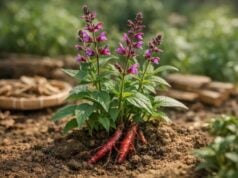
Didymocarpus (Didymocarpus pedicellatus) is a Himalayan medicinal herb best known in traditional systems for supporting urinary comfort and helping manage kidney and bladder stones. In Ayurveda it is often associated with names such as shilapushpa and pattharphori—terms that point to its long-standing reputation as a “stone-support” plant. Today, you may encounter it as a dried herb, a powdered preparation, or more commonly as part of multi-herb urinary formulas.
Its modern interest centers on a practical question: can it meaningfully influence stone formation or stone passage without harsh side effects? Early research suggests the plant contains flavonoids and related phenolic compounds that may support antioxidant defenses and influence crystal–cell interactions in the urinary tract. At the same time, human evidence is still limited, product quality varies, and “stone care” always needs safety boundaries because obstruction and infection can become emergencies.
If you are considering Didymocarpus, the most helpful approach is to understand what it is, what it may realistically help with, how people use it, and when it should be avoided.
Core Points to Know First
- May support urinary comfort and kidney stone management as an adjunct, not a replacement for medical care.
- Typical traditional oral use ranges from 1–3 g/day of dried powder or equivalent, starting low and adjusting cautiously.
- Stop use and seek care if fever, worsening flank pain, vomiting, or reduced urination occur.
- Avoid if pregnant, breastfeeding, under 18, or if you have significant kidney disease or complex medication use without clinician guidance.
Table of Contents
- What is Didymocarpus pedicellatus?
- Key ingredients and medicinal properties
- Potential health benefits
- How to use Didymocarpus
- How much Didymocarpus per day?
- Side effects, interactions, and who should avoid
- What the evidence says
What is Didymocarpus pedicellatus?
Didymocarpus pedicellatus is a flowering plant in the Gesneriaceae family, native to parts of the Himalayas. It tends to grow in cool-to-temperate mountain environments and is traditionally harvested for medicinal use—often as the whole plant or aerial parts—then dried and prepared as powders or decoctions.
One of the most important practical issues with Didymocarpus is naming confusion. In traditional contexts, it is sometimes linked with terms like shilapushpa or pattharphori, but these names are also used for other plants in “stone” traditions. In everyday markets, “stone flower” can even refer to unrelated ingredients (including a culinary lichen used as a spice in some regions). For a consumer, this means the label matters more than the common name. If you want Didymocarpus pedicellatus, look for the full botanical name and the plant part used.
In traditional urinary practice, Didymocarpus is usually positioned as supportive rather than dramatic. People use it during periods of urinary discomfort, when they have a history of stones, or when they are trying to reduce recurrence risk. That said, stone symptoms vary widely: a tiny ureteral stone can cause extreme pain, while a larger kidney stone may be silent for a long time. Because stones can obstruct urine flow and set the stage for infection, a “herb-first” mindset is risky if warning signs are present.
A helpful way to place this herb in your decision-making is:
- If you have mild urinary discomfort and no red flags, Didymocarpus may be considered as a cautious adjunct alongside hydration, dietary strategy, and clinician-guided evaluation.
- If you have severe flank pain, fever, chills, vomiting, faintness, or reduced urination, treat it as urgent and prioritize medical evaluation.
Finally, it helps to set expectations. Didymocarpus is not a guaranteed “stone dissolver.” In the best case, its role is more like supportive maintenance: influencing urinary environment, inflammation, or oxidative stress that can affect how crystals form and irritate tissues. The rest of this article explains what that could mean in real-world use.
Key ingredients and medicinal properties
Didymocarpus is valued largely for its phytochemical profile—especially phenolic compounds that may affect oxidative stress and inflammatory signaling in urinary tissues. It does not rely on a single “hero molecule” in the way a pharmaceutical drug does. Instead, its effects (if they occur) are more likely to come from combined actions across multiple compound families.
Key phytochemical families
- Flavonoids and flavanones: These are common protective plant compounds that often function as antioxidants. In practical terms, they may help reduce oxidative stress in tissues exposed to irritation, including renal epithelial cells that can be injured by crystal contact.
- Chalcones and related phenolics: Chalcones are a subgroup of polyphenols studied for anti-inflammatory and antioxidant activity in many plants. They are also relevant to “crystal biology” because oxidative stress and inflammation can make urinary tract surfaces more vulnerable to crystal adhesion.
- Terpenoids and volatile constituents (in smaller amounts): These may contribute subtle antimicrobial or smooth-muscle effects in some herbs, although they are not the primary focus in most Didymocarpus discussions.
- Sterols and fatty-acid derivatives: These appear in many medicinal plants and may contribute to membrane-stabilizing or anti-inflammatory patterns, but they are usually not the main reason the herb is used.
Medicinal properties associated with these compounds
When people describe Didymocarpus as “antilithiatic” (anti-stone) or “nephroprotective,” they are usually referring to a cluster of plausible biological actions:
- Antioxidant support: Oxidative stress can amplify tissue injury and inflammation in the kidneys. Lower oxidative stress can theoretically reduce the “sticky, inflamed surface” that encourages crystals to adhere and grow.
- Anti-inflammatory signaling modulation: Inflammation and cellular injury can create conditions that favor ongoing crystal deposition.
- Effects on crystal formation dynamics: Some plant extracts are studied for whether they influence crystallization, aggregation, or adhesion—steps that matter for calcium oxalate stones in particular.
- Diuretic-like support (mild): Some traditional “stone herbs” aim to increase urinary flow. Increased urine volume is one of the most consistent non-drug strategies to reduce stone risk, though a plant’s diuretic effect may be modest and highly individual.
The most useful takeaway is that Didymocarpus is best understood as a supportive herb for the urinary environment—more like a tool that may shift conditions around stones rather than a direct, predictable stone-removal method. If you decide to use it, product identity, conservative dosing, and safety boundaries are the factors that make the biggest difference.
Potential health benefits
Most interest in Didymocarpus (Didymocarpus pedicellatus) falls into one core question—kidney stones—and two supporting questions: urinary comfort and recurrence prevention. The most responsible way to discuss benefits is to describe what is plausible, what is realistic, and what is not supported.
1) Kidney stone support (adjunctive)
Didymocarpus is traditionally used for kidney and bladder stones, and modern research directions often explore calcium oxalate stone models. In practical terms, “stone support” can mean several different goals:
- Reducing irritation during stone passage: Some people use urinary herbs to support comfort when a small stone is moving.
- Influencing urinary conditions that favor stones: This may include supporting urine volume (hydration), balancing oxidative stress, or gently shifting the environment that supports crystallization.
- Reducing recurrence risk in stone-prone individuals: This is the most realistic long-term goal, but it depends heavily on diet, fluids, and metabolic factors.
It is important to keep the “stone size reality” in mind. Herbs are not a safe substitute for evaluation when stones are large, recurrent, or associated with infection. If the stone is obstructing urine flow, delaying care can worsen kidney injury risk.
If you are comparing plant approaches for stones, you may see Didymocarpus discussed alongside other traditional stone herbs. One commonly searched comparison is quebra pedra for kidney stone support. Even if you prefer one plant over another, the same safety rule applies: no herb replaces imaging, urine testing, and clinician guidance when symptoms are significant.
2) Urinary comfort and bladder support
Some users report reduced burning, less “gritty” discomfort, or a more settled urinary pattern when using stone-focused herbs. This may relate to hydration routines, mild diuretic effects, and reduced inflammatory tone. The benefit is more likely to be noticeable when discomfort is mild or intermittent rather than severe.
3) Kidney tissue resilience (protective positioning)
Because oxidative stress and inflammation are common themes in stone research, Didymocarpus is sometimes framed as “kidney protective.” A realistic interpretation is supportive: it may help the body handle cellular stress signals associated with crystallization and irritation. This is not the same as treating kidney disease, reversing kidney injury, or replacing medical management.
What benefits should not be assumed
- Guaranteed stone dissolution
- Rapid elimination of large stones
- Treatment of urinary tract infection (UTI)
- Safety for indefinite daily use without reassessment
A useful mindset is to treat Didymocarpus as a short-course adjunct with a specific goal, not as a permanent supplement. If you do not see a meaningful difference within a reasonable trial period, it is better to change strategy than to keep escalating dose.
How to use Didymocarpus
Didymocarpus (Didymocarpus pedicellatus) is used in a few common forms, and the “best” form depends on your goal, sensitivity, and need for consistency. Because plant identity confusion is a real risk, the first step is always to choose a product that clearly states the botanical name and plant part.
Common forms
- Dried whole herb or aerial parts: Often used for decoctions or powders. This is closer to traditional practice but varies the most in taste, strength, and consistency.
- Powder (churna-style): Easier to dose than loose herb. Many people mix it with warm water, honey, or a small amount of food.
- Capsules or standardized extracts: More convenient and often more consistent, but quality varies widely and labels may not reflect true potency.
- Polyherbal urinary formulas: This is one of the most common modern ways people encounter Didymocarpus. These blends may target urine flow, discomfort, and stone recurrence risk, but they also make it harder to know which ingredient is responsible for effects or side effects.
Preparation approaches
If using dried herb as a tea/decoction, many people prefer a gentle method that minimizes stomach irritation:
- Use a modest amount of dried herb in water.
- Simmer rather than hard-boil.
- Strain well and drink warm.
- Pair with adequate plain water intake throughout the day.
If using powder, the simplest approach is to take it with food or after meals, especially if you have a sensitive stomach. Taking urinary herbs on an empty stomach is one of the most common reasons people experience nausea or stop early.
Practical use cases
- Short course during a “stone-prone” period: for example, after a recent stone episode, during travel (when dehydration risk rises), or when dietary patterns are temporarily less stable.
- Adjunct support alongside clinician-guided stone prevention: hydration targets, dietary oxalate strategy (when relevant), and evaluation of urine chemistries.
- Gentle urinary comfort routine: especially when discomfort is mild and you are not experiencing fever or severe pain.
Some people prefer combining stone-focused herbs with soothing “urinary comfort” botanicals. If you are exploring blends, corn silk for urinary comfort is a commonly discussed option, and it illustrates a safer, gentler style of urinary support than aggressive diuretics.
Quality and sourcing checklist
- Botanical name present: Didymocarpus pedicellatus (and not only a common name)
- Plant part listed (whole herb vs aerial parts)
- Batch testing or basic quality assurances when possible
- Avoid products with unclear labeling, strong claims of “guaranteed stone dissolution,” or missing ingredient amounts
Used responsibly, Didymocarpus is best framed as an adjunct to hydration and stone-prevention fundamentals—not a stand-alone cure.
How much Didymocarpus per day?
There is no universally established clinical dosage for Didymocarpus (Didymocarpus pedicellatus), and products differ substantially in strength. The safest dosing strategy is conservative: start low, use a short trial, and reassess—especially because stone symptoms can change quickly.
Conservative adult dosing ranges
Powder (dried herb):
- Typical traditional-style range: 1–3 g per day, taken in 1–2 doses
- Beginner approach: start at 1 g/day for 3–4 days, then increase only if well tolerated
Decoction/tea from dried herb:
- Common practical range: 2–5 g dried herb simmered in water, taken as 1–2 cups/day
- If the tea feels harsh, reduce herb amount or simmer time rather than forcing the dose upward
Capsules/extracts:
- Follow the label because extract ratios vary.
- Start with the lowest labeled serving, or half a serving for the first few days if you are sensitive.
Timing and duration
- With food vs empty stomach: Most people tolerate Didymocarpus better after meals, especially when using powder or stronger teas.
- Duration: A practical trial is 10–21 days, then pause and reassess. Longer use should be goal-driven and ideally clinician-informed.
- Hydration pairing: If your aim is stone prevention, the most reliable strategy is increasing urine volume. An herb cannot compensate for chronic dehydration.
Adjustments that matter
- Stone history and symptom pattern: If you are actively passing a stone, severe pain or fever should move you toward urgent evaluation rather than dose escalation.
- Dietary stone factors: Many calcium oxalate stone prevention strategies involve citrate, magnesium, and fluid intake. If that is relevant to you, reviewing basics like daily magnesium intake guidance can help you build a stronger prevention foundation than herbs alone.
- Other urinary herbs or supplements: If you are stacking multiple products, reduce the dose of each to lower side-effect risk and make it easier to identify what is helping.
A simple, safety-first trial plan
- Choose one form (powder or tea) and keep everything else stable.
- Start low for 3–4 days.
- Increase modestly only if tolerated.
- Track: pain pattern, urinary frequency, burning, urine color, hydration, and any stomach symptoms.
- Stop and seek care if red flags appear (fever, chills, vomiting, faintness, or reduced urination).
The most important rule is not “how much,” but “how safe.” Kidney stones can shift from manageable to urgent quickly when obstruction or infection is involved.
Side effects, interactions, and who should avoid
Didymocarpus is generally discussed as a urinary-support herb, but “natural” does not mean risk-free. Side effects are most likely when products are misidentified, doses are high, or a person is taking multiple medications that affect blood pressure, fluid balance, or kidney function.
Possible side effects
- Stomach upset: nausea, cramping, or loose stool—often dose-related and more common with strong decoctions
- Increased urination: can be desired, but may also contribute to dehydration if fluid intake does not keep up
- Lightheadedness: sometimes related to lowered blood pressure, dehydration, or taking multiple diuretic-like products
- Allergic reactions: rash, itching, swelling, or wheezing are reasons to stop immediately and seek medical care
Potential interactions
Because stone herbs may influence urine volume and electrolyte handling indirectly, use caution with:
- Diuretics and blood pressure medications: additive effects can increase dizziness or dehydration risk
- Lithium: dehydration and changes in sodium balance can raise lithium toxicity risk
- Diabetes medications: any change in hydration, appetite, or illness pattern can alter glucose management
- Other urinary supplements: stacking multiple products increases unpredictability and side-effect risk
Who should avoid Didymocarpus (or use only with clinician guidance)
- Pregnant or breastfeeding people (insufficient safety clarity for supplement-style use)
- Children and teens
- People with significant kidney disease, kidney transplant history, or unstable renal function
- Those with complex medication regimens, especially involving blood pressure, diuretics, lithium, or multiple prescriptions
- Anyone with recurrent UTIs or suspected infection during a stone episode
Red flags that are not “herb problems”
Some symptoms should be treated as medical issues rather than something to manage with herbs:
- Fever or chills
- Severe flank pain that is worsening
- Vomiting or inability to keep fluids down
- Confusion, faintness, or signs of dehydration
- Reduced urination or inability to urinate
Also note that UTIs and stones can overlap, and infection with obstruction can become an emergency. If urinary symptoms are your main concern and you are looking at botanicals, compare the safety profile of gentler urinary herbs such as uva ursi for urinary support, but do not use any herb as a substitute for evaluation when infection is suspected.
The safest way to use Didymocarpus is with clear product identity, conservative dosing, adequate fluids, and a low threshold for medical evaluation when symptoms escalate.
What the evidence says
Evidence for Didymocarpus (Didymocarpus pedicellatus) is best described as promising but incomplete. Most of what we know comes from phytochemical research and preclinical studies that explore oxidative stress, inflammation, and calcium oxalate crystal behavior. These studies matter because they help explain why the herb is traditionally associated with stones, but they do not automatically translate into predictable outcomes for real people.
Where research looks strongest
- Crystal and tissue models: Research often focuses on how plant extracts influence crystal formation, crystal adhesion to renal epithelial cells, and oxidative stress signals that worsen injury. This supports a plausible “anti-stone environment” mechanism rather than a simple stone-dissolving story.
- Inflammation and oxidative stress pathways: In kidney stone biology, oxidative stress can amplify injury and encourage ongoing crystal deposition. Studies that show reduced oxidative stress markers or inflammatory signals provide a coherent rationale for supportive use.
What is still uncertain
- Human effectiveness and dosing: Human trials of single-herb Didymocarpus are limited. Many products are polyherbal, which makes it hard to attribute results to one ingredient and hard to standardize dose.
- Which preparation is best: Whole herb powder, decoction, and extracts may behave differently. Without standardization, “dose” can mean very different exposures across brands.
- Which stone types respond: Calcium oxalate is the most commonly studied, but real-world stone disease includes multiple types (uric acid, struvite, cystine, mixed stones), each with different management needs.
- Long-term safety: Short-term use is more defensible than indefinite daily supplementation, especially for people on medications or with kidney concerns.
How to interpret claims responsibly
If a product promises guaranteed stone dissolution, fast expulsion, or “no need for doctors,” treat that as a warning sign. The strongest evidence-based prevention strategies remain hydration, appropriate dietary adjustments based on stone type, and clinician-guided evaluation of urine chemistry. Didymocarpus may fit as an adjunct—particularly for people who tolerate it well and use it as part of a broader plan—but it should not replace evaluation when symptoms are significant.
A practical, evidence-respecting stance is this: Didymocarpus has credible biological rationale and encouraging early research signals, but modern clinical certainty is not yet strong. Use it conservatively, track outcomes, and prioritize medical safety when red flags appear.
References
- Reno-protection by Didymocarpus pedicellata against oxalate-induced damage: mechanistic insights into mitigation of oxidative stress induced signaling pathways in renal cell line and rat model – PubMed 2025
- A review on ethnobotany, phytochemistry, and pharmacology of the genus Didymocarpus wall. (Gesneriaceae) – PubMed 2022 (Review)
- Plant-based therapies for urolithiasis: a systematic review of clinical and preclinical studies – PubMed 2024 (Systematic Review)
- EAU Guidelines on Urolithiasis – GUIDELINES 2025 (Guideline)
Disclaimer
This article is for educational purposes only and does not provide medical advice, diagnosis, or treatment. Herbal products can vary widely in identity, potency, and purity, and they may interact with medications or medical conditions. Kidney stones and urinary symptoms can become urgent when obstruction or infection is present. If you have fever, chills, severe or worsening flank pain, vomiting, faintness, reduced urination, blood in urine, are pregnant or breastfeeding, have kidney disease, or take prescription medications (especially diuretics, blood pressure drugs, or lithium), consult a qualified healthcare professional before using Didymocarpus or any urinary herb. Stop use and seek medical care promptly if you develop signs of an allergic reaction or worsening symptoms.
If this guide helped, please share it on Facebook, X (formerly Twitter), or your preferred platform so others can make safer, more informed choices about herbs and urinary health.