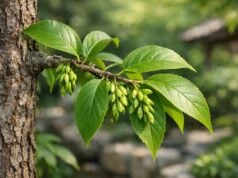
Drimys (Drimys winteri), often called canelo or Winter’s bark, is an evergreen tree native to the cool, wet forests of southern Chile and Argentina. It has a distinctive aromatic character: the bark and leaves taste pungent and peppery, and the plant produces fragrant oils that help defend it in a damp, microbe-rich environment. In traditional Mapuche medicine and other South American folk practices, drimys has been used as an infusion or decoction for digestive discomfort, inflammatory complaints, and respiratory irritation, and as an external wash for minor skin concerns. Historically, its bark was also carried on long sea voyages and used as a warming, spice-like botanical.
Modern research on D. winteri focuses less on vitamins and more on chemistry: drimane-type sesquiterpenes (including polygodial and related molecules) and complex essential-oil profiles rich in terpenes. These constituents help explain why drimys is studied for antimicrobial, anti-inflammatory, and pain-modulating potential—mostly in laboratory settings rather than large human trials. This guide translates that evidence into practical, safety-first decisions: when drimys may be useful, how to prepare it conservatively, and when it should be avoided.
Essential Insights for Drimys
- Short-term use may support digestion comfort and irritated airways, mainly through pungent drimane sesquiterpenes and aromatic oils.
- Use conservative amounts: 0.5–1 g dried bark per cup (250 mL), up to 1–2 cups daily for 5–10 days.
- Avoid essential oil ingestion and keep preparations away from eyes; drimys can be strongly irritating.
- Avoid medicinal use if pregnant or breastfeeding, if you have active ulcers or reflux that flares with spices, or if you have significant liver disease.
Table of Contents
- What is Drimys winteri?
- Key ingredients in drimys
- Drimys benefits for digestion
- Anti-inflammatory and pain support
- Antimicrobial and respiratory uses
- How to use drimys safely
- Dosage, side effects, and evidence
What is Drimys winteri?
Drimys winteri is an evergreen tree in the Winteraceae family, a botanical line sometimes described as “ancient” because of its early evolutionary features and aromatic chemistry. In the wild, it grows in cool, humid environments—rainy coastal forests, temperate woodland margins, and marshy ground—where fungal and bacterial pressure is high. That ecological reality matters: plants that live in damp habitats often develop strong antimicrobial and insect-deterring compounds, and drimys is a classic example.
You may encounter drimys under several names:
- Canelo (common in Chile)
- Winter’s bark (a European name tied to historic seafaring use)
- Foye (regional usage)
Culturally, canelo has deep significance in Mapuche traditions, where it has been regarded as a sacred tree and used in ceremonial and healing contexts. In folk medicine, the leaves and bark are the most commonly discussed parts, used in hot-water preparations for stomach complaints and inflammatory discomforts. External use also appears in traditional descriptions, typically as washes, baths, or poultices for minor skin issues.
From a modern wellness perspective, drimys often gets grouped with “spice-like” botanicals because of its pungent taste and warming sensation. However, it is not a casual culinary spice for everyone. Its pungency comes from bioactive molecules that can be irritating at higher concentrations, especially for sensitive stomachs.
A practical way to think about drimys is to separate three roles it can play:
- Aromatic botanical: used in small quantities for flavor and warming sensation.
- Traditional infusion/decoction herb: used short-term for specific discomforts (digestive, respiratory, inflammatory).
- Research plant: studied for potent drimane sesquiterpenes and essential oils with antimicrobial and signaling effects.
Because the evidence base is still emerging, drimys is best approached as a targeted, time-limited herb rather than a daily tonic. If your goal is long-term wellness, use it like a seasoning—sparingly, with attention to tolerance—rather than like a high-dose supplement.
Key ingredients in drimys
Drimys is chemically interesting because it combines two powerful plant “defense toolkits”: drimane-type sesquiterpenes (especially pungent dialdehydes) and volatile essential oils (terpenes and aromatic phenylpropanoids). The mix varies by plant part, geography, and harvest timing, which is one reason dosing is difficult to standardize.
Drimane sesquiterpenes
The best-known compound associated with Drimys winteri is polygodial, a drimane-type sesquiterpene dialdehyde. In plain language, polygodial is one of the reasons drimys tastes sharp and peppery. It is studied for multiple actions that match traditional use patterns:
- Pungent sensory activity: it can stimulate “hot” or burning receptors involved in pain perception.
- Antimicrobial effects: especially against fungi and some bacteria in laboratory testing.
- Inflammation signaling modulation: research explores pathways tied to inflammatory mediators.
Related drimane-type molecules may include:
- isopolygodial and isotadeonal (sometimes described as epimeric forms)
- drimenol
- isodrimenin and other drimanoid derivatives
- drimanial (reported in older phytochemical literature)
These names matter because different drimanes can have different potency and irritation profiles. For example, a preparation richer in dialdehydes may feel sharper and be more irritating than one dominated by other terpenes.
Essential oils and aromatic terpenes
Drimys leaves and bark can yield essential oils with complex composition. Commonly reported components across studies include:
- monoterpenes such as α-pinene, β-pinene, limonene, and linalool
- sesquiterpenes such as β-caryophyllene and related alcohols (eudesmols, elemol, depending on sample)
- aromatic phenylpropanoids that contribute to scent and biological activity
This essential-oil fraction helps explain why drimys is studied for antimicrobial effects and why some people experience it as “clearing” or “warming” when used as a diluted aromatic preparation.
Polyphenols and supporting compounds
Like many evergreen medicinal trees, drimys also contains non-volatile phenolic compounds (including flavonoid-like molecules) that may contribute antioxidant activity in laboratory assays. These are supportive rather than defining; drimys is not primarily a “polyphenol berry” herb. Its standout identity is pungency plus volatile chemistry.
If you want a familiar comparison for how a bark-based botanical can act both as spice and medicine, consider cinnamon’s warming digestive spice profile. The key difference is that drimys tends to be more sharply pungent and less widely standardized in supplements.
Drimys benefits for digestion
Digestive use is one of the most consistent themes in traditional drimys practice: leaf infusions and bark preparations are described for stomach discomfort, sluggish digestion, and “cold” digestive patterns where warming, aromatic herbs are preferred. Modern research does not yet provide large clinical trials confirming these effects in humans, but the plant’s sensory and antimicrobial chemistry offers a plausible explanation for why it has been used this way.
How drimys may support digestive comfort
Drimys can influence digestion through several overlapping mechanisms:
- Aromatic stimulation: Bitter-pungent herbs can increase salivation and support digestive readiness by engaging taste and smell pathways. Many people experience this as reduced heaviness after meals when used in small amounts.
- Antimicrobial balancing (short-term): In vitro studies suggest drimys compounds can inhibit certain microbes. While this does not prove it “treats infections,” it may help explain why traditional practice used it during bouts of digestive upset.
- Inflammation and irritation modulation: Pungent compounds interact with sensory receptors that also participate in inflammation signaling. In small doses, some people experience a “settling” effect; in larger doses, irritation can increase.
A useful way to frame drimys is as a precision herb: the dose window between “helpful warming” and “too irritating” can be narrow, especially if you are prone to reflux or gastritis.
When drimys is more likely to help
Drimys may be a better fit when:
- digestion feels sluggish after rich meals
- nausea is mild and tied to heaviness rather than infection
- you want a warming herbal tea in cold, damp weather
- you are using it in culinary-style amounts (for example, as a bark infusion in food)
It is less likely to be a good choice when:
- heartburn is frequent or easily triggered
- there is an active ulcer history
- diarrhea is severe, persistent, bloody, or accompanied by fever
- abdominal pain is sharp or worsening
Practical digestive use examples
- After-meal “settler” tea: a very mild bark decoction taken after the largest meal of the day for 2–5 days.
- Short course during mild stomach upset: small, time-limited use while emphasizing hydration and gentle foods.
If you prefer a more classic “bitter digestion” strategy with clearer dosing traditions, gentian root digestive bitter guidance can provide a helpful framework. Drimys overlaps in intent, but its pungent chemistry tends to be more intense for sensitive users.
Anti-inflammatory and pain support
Drimys is frequently discussed for inflammatory discomfort in traditional contexts, and modern studies often focus on how drimys compounds interact with pain and inflammation signaling. Here, “support” is the right word: most evidence is preclinical, and drimys should not be positioned as a replacement for medical evaluation of persistent pain, autoimmune disease, or severe inflammation.
Why drimys feels “warming” and sometimes intense
Compounds such as polygodial are pungent and can stimulate sensory receptors involved in pain perception. These receptors are part of the body’s warning system: they detect irritants, heat, and tissue stress. When a plant strongly activates this system, people may describe it as:
- warming
- penetrating
- stimulating
- sometimes burning or irritating if too concentrated
This duality matters. A small, well-diluted amount might feel soothing for stiffness, while an overly strong preparation can aggravate sensitive tissues.
Potential anti-inflammatory pathways
Research on drimane sesquiterpenes explores inflammation-related pathways such as:
- regulation of inflammatory mediator production in immune cells
- modulation of transcription factors involved in inflammatory gene expression
- changes in signaling cascades that affect cytokine balance
In practical terms, these findings support a cautious, traditional-style use case: short-term use for mild inflammatory discomfort, not chronic high-dose intake.
How drimys may fit into a pain-support routine
If drimys is used, the safest approach is to pair it with the basics that reliably reduce inflammatory load:
- consistent sleep
- regular movement (especially low-impact mobility work)
- dietary pattern with adequate protein and colorful plants
- stress management that lowers muscle guarding
Then, drimys can be used as an occasional, symptom-matched tool:
- a mild tea during cold-weather stiffness
- a diluted topical rinse for localized discomfort on intact skin, followed by thorough washing
If your goal is plant-based anti-inflammatory support with broader familiarity, ginger’s active compounds for inflammation is often a more predictable option. Drimys is more specialized: useful for some people, but easier to overdo.
What to watch for
Stop drimys if you notice:
- increased burning in the stomach or throat
- headache or flushing that feels like overstimulation
- skin irritation where it was applied
- worsening pain that suggests a condition needing clinical care
Drimys can be an intriguing herb for pain and inflammation support, but it rewards restraint. With pungent plants, “stronger” is rarely “better.”
Antimicrobial and respiratory uses
Drimys is widely studied for antimicrobial activity because its bark and leaf chemistry is well suited to defending a tree in wet forests. Traditional practice also includes respiratory use—often as a warm infusion for coughy irritation, bronchitis-like discomfort, or damp-weather congestion. The key is to interpret these uses realistically: antimicrobial activity in a lab does not mean a tea “treats infections” in humans, and respiratory symptoms can have many causes that require different responses.
Antimicrobial potential: what it may and may not mean
Laboratory studies suggest drimys-derived drimanes and essential oils can inhibit growth of certain fungi and bacteria. This supports three grounded takeaways:
- Drimys compounds are biologically active and can influence microbial membranes and signaling.
- This may explain why drimys has been used in washes and topical traditions.
- It does not justify replacing medical treatment for confirmed infections, especially systemic infections.
The most appropriate “antimicrobial” use case for most readers is external hygiene support:
- a diluted wash on intact skin
- a short-term rinse for minor irritation (spit out, do not swallow large amounts)
- environmental uses such as aroma or cleaning traditions, approached cautiously
Respiratory use: soothing, warming, and time-limited
For respiratory discomfort, drimys is usually used as a warm drink. Benefits are often indirect:
- warm liquid supports hydration and mucus clearance
- pungent aromatics may create a sensation of openness
- short-term use may reduce the “raw” feeling of irritated tissues for some people
A practical approach is to treat drimys as a comfort herb during early, mild symptoms, not as an infection cure. If you have fever, shortness of breath, chest pain, or symptoms lasting beyond 7–10 days, escalation matters.
When drimys is a poor choice for respiratory symptoms
Avoid drimys if:
- cough is primarily reflux-driven (pungent herbs can worsen it)
- asthma is unstable or severe (irritants can provoke symptoms)
- throat tissues feel already burned or very dry
In those cases, a soothing demulcent or a gentler respiratory herb may be a better fit.
Supportive combinations
If you want a more classic immune-support strategy with broader modern usage, echinacea immune support uses is a common comparison point. Drimys is different: it is more aromatic, more pungent, and typically used in shorter, more conservative bursts.
How to use drimys safely
Drimys can be prepared in several ways, but safety and tolerability improve when you choose dilute, food-like preparations and avoid concentrated products unless supervised. The goal is to capture the plant’s aromatic and pungent character without crossing into irritation.
1) Bark decoction (traditional, strongest hot-water form)
A decoction is usually the best choice for bark because simmering extracts certain constituents more reliably than steeping alone.
Steps:
- Add a small amount of dried bark to water (start low).
- Simmer gently for 10–15 minutes with a lid slightly ajar.
- Strain and let cool slightly before sipping.
Taste guidance:
- If it tastes sharply burning, reduce the dose or dilute with more water.
- Consider taking it after food if it feels intense on an empty stomach.
2) Leaf infusion (often milder, still pungent)
Steps:
- Pour hot water over dried leaves.
- Cover and steep 10–12 minutes.
- Strain and sip warm.
Leaf tea is often used for digestive discomfort and inflammatory complaints in folk traditions. It can still be irritating if made too strong.
3) Culinary-style use
If you are sensitive or new to drimys, culinary use is the most conservative entry point:
- use a small piece of bark to flavor broths or stews
- remove it after simmering, similar to how one might use a spice bark
This method naturally limits dose and reduces the chance of overstimulation.
4) External wash (intact skin only)
A cooled tea can be used as a brief wash on intact skin when the goal is freshness and comfort. Practical guardrails:
- use freshly prepared tea and discard leftovers
- avoid eyes, lips, and genitals
- do not apply to open wounds or infected lesions
5) Essential oil: high caution
Drimys essential oil is concentrated and more likely to irritate. Safety-first guidance:
- do not ingest
- avoid near eyes and mucous membranes
- if used topically, keep dilution low (commonly 0.5–1% in a carrier) and patch test first
- avoid use around children, during pregnancy, and in asthma that flares with strong aromas
For most people, the best “safe use” of drimys is a mild bark or leaf tea used briefly, with clear stop rules.
Dosage, side effects, and evidence
Drimys dosing is not standardized in the way many supplements are. Most published work focuses on isolated compounds, extracts, or essential oils rather than on consistent human dosing protocols. Because of that, the safest approach is to use conservative ranges, treat drimys as a short-term herb, and prioritize tolerance over intensity.
Conservative adult dosage ranges
Bark decoction (dried bark)
- Typical range: 0.5–1 g per 250 mL water
- Frequency: 1 cup daily, up to 2 cups if well tolerated
- Duration: 5–10 days, then pause and reassess
Leaf infusion (dried leaf)
- Typical range: 1–2 g per 250 mL water
- Frequency: 1–2 cups daily
- Duration: 5–10 days, then pause
Culinary use
- Use as a flavoring agent in small, intermittent amounts rather than daily “medicinal” dosing.
Avoid internal use of essential oil.
Side effects to watch for
The most common issues are irritation-related:
- heartburn, throat burn, nausea, or stomach tightness
- loose stool if a pungent preparation is too strong
- headache or flushing in people sensitive to stimulating botanicals
- skin irritation or rash with topical exposure
- eye irritation if vapors or oils are used carelessly
If you experience burning, sharp discomfort, or worsening symptoms, stop and switch to a gentler approach.
Who should avoid drimys medicinally
Avoid medicinal dosing (beyond incidental culinary exposure) if you are:
- pregnant or breastfeeding
- managing active ulcers, severe reflux, or inflammatory bowel flares
- highly sensitive to pungent spices that trigger symptoms
- living with significant liver disease, or taking multiple medications with narrow safety margins (consult a clinician)
Use extra caution in asthma that reacts to strong aromas, and avoid essential oil use in that context.
Interaction considerations
Confirmed clinical interactions are not well mapped, but prudent spacing is wise:
- Take drimys tea at least 2 hours away from medications if you are sensitive to GI irritation.
- Avoid combining drimys with multiple other pungent stimulants in the same day if you are prone to reflux.
- If you use anticoagulants or complex cardiovascular medications, discuss new herbs with a clinician even when evidence is limited.
What the evidence actually says
- Stronger evidence (preclinical): drimys extracts, essential oils, and drimane sesquiterpenes show antimicrobial activity in vitro, and some studies explore anti-inflammatory signaling effects in cells.
- Emerging mechanistic evidence: specific compounds such as polygodial are studied for interactions with sensory and pain-related pathways, which may explain traditional use for discomfort.
- Limited human evidence: there is not yet a robust body of human clinical trials establishing efficacy, dosing, or long-term safety for most claimed benefits.
A balanced conclusion is that drimys is a legitimate traditional medicinal plant with compelling chemistry, but modern best practice favors short, conservative use and avoids overclaiming. If your symptoms are persistent, severe, or recurring, drimys should be a complement to evaluation—not a substitute for it.
References
- Frontiers | Biological activity of the essential oil of Drimys winteri 2024 (Review)
- Assessment of Phytochemical Composition and Antifungal Activity of Micropropagated Drymis winteri Plants 2025 (Original Research)
- Antimicrobial Activity of Drimanic Sesquiterpene Compounds from Drimys winteri against Multiresistant Microorganisms | MDPI 2024 (Original Research)
- Inhibitory Potential of the Drimane Sesquiterpenoids Isotadeonal and Polygodial in the NF-kB Pathway 2025 (Original Research)
- Polygodial, a drimane sesquiterpenoid dialdehyde purified from Drimys winteri, inhibits voltage-gated sodium channels – PubMed 2022 (Original Research)
Disclaimer
This article is for educational purposes only and does not provide medical advice, diagnosis, or treatment. Herbal products can cause side effects, allergic reactions, and interactions with medications or health conditions. Drimys (Drimys winteri) contains pungent bioactive compounds that may irritate the stomach, throat, skin, or eyes, especially in concentrated preparations or essential oils. Avoid medicinal use if you are pregnant or breastfeeding, have significant reflux or ulcer disease, or have symptoms that are severe, persistent, or worsening. Consult a qualified healthcare professional before using drimys if you take prescription medications or manage complex medical conditions. Seek urgent care for breathing difficulty, facial swelling, severe rash, chest pain, black or bloody stools, or rapidly worsening illness.
If this guide helped you, please share it on Facebook, X (formerly Twitter), or your preferred platform so others can make safer, more informed herbal choices.