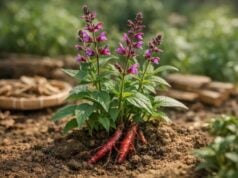
Duck potato—also called broadleaf arrowhead or wapato—is a wetland plant best known for its small, starchy tubers. While it is often discussed like an “herb,” most people use it as a traditional food: a naturally gluten-free carbohydrate that cooks up with a mild, earthy sweetness similar to potato and water chestnut. Its practical appeal is simple: the tubers can be boiled, roasted, or added to soups, offering steady energy and a satisfying texture. Historically, it has also been used in folk traditions for basic comfort care, especially when food and medicine overlapped.
From a wellness perspective, duck potato’s strengths are tied to its starch and fiber, plus modest minerals and plant compounds that may support digestion and metabolic balance when it replaces more refined carbohydrates. The biggest caveat is that it is a wetland plant—where you harvest matters—because water and sediment quality can influence safety. Used thoughtfully, it can be a nourishing seasonal staple with a surprisingly modern role in whole-food cooking.
Essential Highlights
- Cooked tubers provide filling, gluten-free carbohydrates that can support steady energy and satiety.
- Replacing refined starches with duck potato may gently support digestion and post-meal fullness.
- Start with 1/2 cup cooked (about 75–100 g) and increase gradually based on tolerance.
- Avoid harvesting from polluted waterways; wetland plants may accumulate contaminants depending on the site.
- Avoid if you must strictly limit potassium (advanced kidney disease) or cannot confirm safe foraging conditions.
Table of Contents
- What is duck potato?
- Key ingredients and nutrients
- Duck potato health benefits
- How to use duck potato
- How much duck potato per day
- Side effects and who should avoid
- What the evidence says
What is duck potato?
Duck potato (Sagittaria latifolia) is an aquatic, perennial plant that grows in shallow freshwater—pond edges, marshes, slow streams, ditches, and seasonally flooded flats. Above the waterline it’s recognized by its arrow-shaped leaves and small white flowers, but the part most people care about is below the surface: the tubers, which form on underground runners. These tubers are dense with starch, which is why the plant earned names like “duck potato” (a favored food for waterfowl) and “Indian potato” (a long-standing staple for many Indigenous communities).
It helps to think of duck potato as a wild root vegetable rather than a typical medicinal herb. In practice, people use it the way they use potatoes, taro, or water chestnuts—cooked and served as a carbohydrate base, side dish, or soup ingredient. The tubers can be harvested in late summer through fall in many regions, when plants have stored energy underground. Fresh tubers often float if loosened from the mud, which historically made collection easier in shallow water.
Duck potato also shows up in habitat and restoration conversations because it stabilizes shorelines, supports wetland ecology, and provides food for wildlife. That ecological role matters for human use, too: when a plant is part of a living wetland, the growing environment influences quality. Clean water and uncontaminated sediment tend to mean a safer harvest; polluted sites raise concerns.
In traditional settings, duck potato sometimes crossed from “food” to “medicine” simply because staple foods were used for comfort, strength, and recovery. Modern wellness framing follows the same logic: if a tuber is nutrient-dense, easy to digest when cooked, and replaces refined starches, it can support health indirectly—through better diet quality and steadier energy.
The key takeaway is that duck potato is best approached as a whole food with traditional roots, not a concentrated supplement. That makes the “dosage” question more like serving size and frequency, and the “safety” question heavily dependent on sourcing and preparation.
Key ingredients and nutrients
Duck potato tubers are primarily a starchy carbohydrate, with smaller amounts of fiber, protein, and micronutrients. Because it’s a wild or semi-wild food in most places, exact nutrition can vary by species strain, growing conditions, and harvest timing. Still, its “key ingridients” (in functional nutrition terms) are fairly consistent across starchy tubers.
1) Starch (including resistant starch potential)
The dominant component is starch, which provides calories and quick-to-moderate energy depending on preparation. Like many tubers, duck potato’s starch can behave differently based on cooking and cooling:
- Boiling or roasting gelatinizes starch, making it easier to digest.
- Cooling cooked tubers (and reheating later) can increase starch retrogradation, which may raise resistant starch slightly for some foods, potentially supporting better post-meal blood sugar response and gut fermentation.
Because arrowhead-type tubers are often compared to other starch sources, it can help to look at how starchy roots are used broadly—like in arrowroot digestion and culinary uses—to understand why preparation changes texture and tolerance.
2) Dietary fiber
Duck potato isn’t a high-fiber food like legumes, but it contributes modest fiber, especially if you eat it with the skin (when appropriate) and pair it with vegetables. Fiber slows gastric emptying, supports stool bulk, and can make a starchy meal feel more satisfying.
3) Minerals (especially potassium and phosphorus)
Starchy tubers often contribute potassium, which supports normal nerve signaling and muscle function, and can be helpful for people whose diets are low in produce. The flip side is that high-potassium foods may not be appropriate for those with advanced kidney disease or potassium-restricted diets.
4) Plant compounds (phenolics and related antioxidants)
Like many edible plants, duck potato contains small amounts of phenolic compounds. In whole-food amounts, these are best viewed as background support rather than targeted “medicinal” dosing. They may contribute to antioxidant capacity, but they are not equivalent to standardized extracts.
5) Low allergen and gluten-free profile
Duck potato is naturally gluten-free. For many people, that makes it a useful alternative carbohydrate when wheat-based sides (bread, pasta) cause symptoms or don’t fit dietary goals.
Overall, duck potato’s nutrition story is less about a single magic compound and more about being a minimally processed starch that can fit into balanced meals—especially when cooked properly and paired with protein, fats, and fiber-rich plants.
Duck potato health benefits
Duck potato’s potential benefits come mainly from what it replaces and how it behaves in meals. It is not a high-dose medicinal herb; it is a whole-food tuber. With that framing, the most realistic benefits are dietary and metabolic.
Supports steady energy and satiety
Cooked tubers provide carbohydrate energy that is often perceived as “steadier” than refined flour products, especially when eaten with protein and fats. A serving of duck potato can be a practical option for:
- People who do better with warm, cooked carbohydrates
- Active individuals needing glycogen support
- Anyone trying to reduce ultra-processed sides
Satiety is also a texture effect. Tubers are dense and chewable, which can reduce “mindless eating” compared with snack foods.
May be gentler on digestion than some grains
Many people tolerate cooked tubers well, particularly when they are fully cooked and eaten in moderate portions. While duck potato is not a fiber supplement, its combination of starch and modest fiber can be comfortable for those who struggle with very fibrous foods. If constipation is a concern, it helps to pair tubers with vegetables and adequate fluids rather than relying on tubers alone.
For readers specifically focused on fiber strategies, compare tubers to more concentrated approaches like psyllium for digestive support, which works differently (and often more powerfully) than food-based fiber.
Supports balanced meals for blood sugar management
Duck potato can fit into blood sugar–conscious eating when portion size and meal composition are considered. Helpful tactics include:
- Keep portions moderate (start around 75–100 g cooked).
- Combine with protein (fish, poultry, tofu, beans) and healthy fats (olive oil, avocado).
- Add non-starchy vegetables to increase volume and fiber.
- Consider cooking, cooling, and reheating if you personally notice better post-meal steadiness.
It is still a carbohydrate, so people with diabetes should count it as such rather than assuming “wild” means “free.”
Micronutrient support in a whole-food form
Tubers can provide potassium and other minerals that support normal muscle and nerve function. While duck potato is unlikely to correct deficiencies on its own, it can contribute to overall dietary adequacy—especially in diets that rely heavily on refined grains.
Traditional comfort use and “medicinal properties” in context
Historically, foods like duck potato were often used to support strength during illness and recovery. That tradition is better interpreted as nourishment plus practicality rather than a direct pharmacologic effect. The most evidence-aligned “medicinal” role today is as a nutrient-dense staple that supports consistent eating patterns.
The strongest benefits, in short, are likely to be: more satisfying meals, fewer refined carbs, and better overall diet structure—with safety depending heavily on sourcing.
How to use duck potato
Duck potato is versatile, but it rewards careful preparation. Think of it as a cross between potato (for cooking methods) and water chestnut (for mild sweetness and a slight crispness in some preparations).
Common forms and preparation styles
Most people use the tubers, cooked. Typical approaches include:
- Boiled: Peel if needed, boil until tender, then mash or slice into salads (warm or chilled).
- Roasted: Roast whole or halved tubers with oil and salt; the outside browns while the inside turns creamy.
- Pan-cooked: Parboil first, then sauté to develop a crust.
- Soups and stews: Add like potato; it thickens broths slightly as starch disperses.
- Dried and ground: Some traditions slice and dry tubers for storage and to make a flour-like ingredient for thickening.
If you enjoy starchy roots and want comparable meal ideas, exploring another tuber guide like taro nutrition and practical uses can help you build recipes that treat duck potato as part of a broader “root vegetable” toolkit.
Practical tips for cooking quality
- Cook thoroughly: Fully cooked tubers are typically easier to digest and taste better.
- Salt the water or season early: Tubers can taste bland without seasoning.
- Add acidity at the end: A splash of lemon or vinegar after cooking brightens flavor without toughening the tuber during cooking.
- Use fat for satisfaction: Olive oil, butter, or sesame oil improves mouthfeel and helps the dish feel complete.
Foraging and sourcing considerations
If you harvest duck potato yourself, safety and flavor depend on the site and handling:
- Choose waterways that are not downstream from industry, heavy traffic, or agricultural runoff.
- Rinse thoroughly and scrub to remove sediment.
- Discard tubers with off odors, unusual discoloration, or signs of rot.
- Store like other fresh roots: cool, dark, and slightly humid if possible.
Using duck potato as a “swap”
Duck potato shines as a substitute for refined starches:
- Replace fries or chips with roasted tubers and herbs.
- Use mashed duck potato as a base for bowls with greens and protein.
- Add to soups to replace noodles or to stretch stews without flour thickeners.
Used this way, it becomes less about “superfood” claims and more about building meals that are hearty, seasonal, and simple.
How much duck potato per day
Because duck potato is a food, not a standardized extract, the most helpful “dosage” guidance is about serving size, frequency, and digestion. Your ideal amount depends on your carbohydrate needs, activity level, blood sugar goals, and how your gut responds to starchy foods.
A practical serving range
For most adults, a reasonable starting point is:
- 1/2 cup cooked (about 75–100 g) once per day or a few times per week
From there, you can adjust:
- Active people may do well with 1 cup cooked (about 150–200 g) as part of a post-training meal.
- People aiming for weight management or steadier blood sugar often do better staying near 75–150 g cooked and building volume with vegetables.
How to time it
- With a balanced meal: Duck potato is easiest to fit into metabolic goals when eaten with protein and fiber-rich vegetables.
- Earlier in the day: Some people feel better eating larger starch portions earlier rather than late at night, but this is individual.
- After activity: If you train, tubers can be a convenient recovery carbohydrate.
How long can you use it?
Duck potato can be a seasonal staple for weeks at a time, but dietary variety still matters. Rotating carbohydrate sources helps diversify micronutrients and lowers the chance you overexpose yourself to any one food’s potential contaminants (especially relevant for wild-harvested plants).
Potassium and mineral considerations
Tubers can be meaningful potassium sources. For most healthy people, this is a positive. For those with kidney disease or potassium restrictions, it can be a limitation. If you are trying to understand potassium targets and food sources more broadly, see potassium sources and supplement considerations and then apply those principles to tubers with your clinician’s guidance.
Tolerance cues: how to adjust
Increase slowly if you notice any of the following:
- Bloating or gas (especially if you also increased other fibers)
- Sleepiness after meals (often a sign the portion is too large for your current needs)
- Blood sugar spikes (if you monitor glucose)
Simple fixes include reducing the portion, pairing with more protein, and choosing preparations that slow eating (whole roasted tubers instead of mashed).
The goal is not to “max out” duck potato intake, but to use a repeatable portion that supports energy and digestion without crowding out vegetables and proteins.
Side effects and who should avoid
Duck potato is generally treated as a food, but it still has meaningful safety considerations—especially when foraged. Most problems come from where it grows, how it’s handled, and how much is eaten at once.
Potential side effects
- Digestive upset: Large servings of starchy foods can cause bloating, gas, or heaviness, particularly if your diet is usually low in starch or if you eat it quickly.
- Post-meal sleepiness: This can happen after any high-carbohydrate meal, especially if portion size is large or the meal is low in protein.
- Rare allergy or sensitivity: Any plant food can cause reactions in sensitive individuals. If you have a history of food allergy, start with a very small amount.
Environmental and foraging risks
This is the most important safety topic. Wetland plants can be exposed to:
- Heavy metals from mining, industry, or urban runoff
- Agricultural chemicals and fertilizer runoff
- Microbial contamination in stagnant or polluted water
Even if tubers look healthy, contaminants are not always visible. The safest approach is to harvest only from waterways you trust and to avoid sites near obvious pollution sources.
Who should avoid duck potato or use extra caution
- People with advanced kidney disease or anyone on a potassium-restricted diet, unless a clinician approves the portion.
- Pregnant people should be cautious with wild-foraged foods due to contamination risk and should favor reputable, cultivated sources when possible.
- Immunocompromised individuals should avoid questionable foraging sites and prioritize well-cooked, cleanly handled foods.
- People on glucose-lowering medications (including insulin) should treat duck potato as a carbohydrate portion and monitor for low blood sugar if meal composition changes significantly.
Interactions
Duck potato is not known for classic “herb-drug interactions” the way concentrated botanicals can be. The more realistic interaction is dietary:
- If you increase starchy tubers while also taking diabetes medications, your glucose patterns may change.
- If you are managing blood pressure with potassium-sensitive conditions or medications, total potassium intake may matter.
Preparation as safety
Cooking does not remove all environmental contaminants, but it does reduce many food safety risks related to microbes and improves digestibility. Best practice includes thorough washing, peeling when appropriate, and cooking until fully tender.
In short, duck potato can be a wholesome food, but it is not “automatically safe” just because it is natural. Safety is a combination of site selection, handling, cooking, and portion size.
What the evidence says
Duck potato sits at an interesting intersection: it is a culturally important traditional food, a wetland plant used in restoration ecology, and a starchy tuber with obvious culinary value. But when people search for “health benefits” and “medicinal properties,” they often expect modern clinical studies. For Sagittaria latifolia specifically, the evidence base is uneven.
What we have stronger evidence for
- Food and ecology documentation: Botanical references consistently describe duck potato’s edible tubers and traditional use as a staple carbohydrate.
- Contaminant considerations for aquatic foods: Research on aquatic plants used as food (and reviews of heavy metals in aquatic plant foods) supports the common-sense caution that environment matters. This is highly relevant for wild-harvested duck potato.
Where evidence is limited
- Human clinical trials: There is not a robust body of human trials testing duck potato for specific outcomes like cholesterol reduction, glucose control, or inflammation. Any claims in that direction should be treated as hypotheses, not guarantees.
- Standardized medicinal dosing: Duck potato is not commonly used as a standardized supplement, so “extract dose” guidance is not well established.
How researchers often fill the gaps
Much of the “health benefits” discussion comes from broader research on:
- Starchy tubers and dietary patterns
- Fiber and resistant starch effects on glycemic response
- Studies of related arrowhead species (for example, Sagittaria trifolia is more studied as a cultivated aquatic vegetable in some regions)
This matters because it can lead to exaggerated marketing: a benefit observed in a related species or in a concentrated extract is not automatically transferable to duck potato tubers eaten as food.
A realistic evidence-based takeaway
Duck potato is best supported as a nutritionally reasonable carbohydrate choice when it:
- Replaces refined grains or ultra-processed starches
- Is eaten in appropriate portions
- Is prepared in ways that improve digestibility
- Comes from a safe, clean source
If your goal is general wellness, the most likely “benefit” is improved dietary quality and steadier energy from whole-food meals. If your goal is treating a medical condition, duck potato should be considered supportive nutrition at best, not a stand-alone therapy.
What to do with this information
- Use duck potato because it is a whole food you enjoy and tolerate well.
- Keep claims grounded: focus on satiety, dietary variety, and practical meal-building.
- Take safety seriously if foraging: environmental quality is the biggest variable.
That combination—practical use plus careful sourcing—is the most honest way to align traditional respect with modern evidence standards.
References
- Contaminant metal concentrations in three species of aquatic macrophytes from the Coeur d’Alene Lake basin, USA – PubMed 2021
- Heavy Metal Accumulation in Rice and Aquatic Plants Used as Human Food: A General Review – PMC 2021 (Systematic Review)
- Sagittaria trifolia tuber: bioconstituents, processing, products, and health benefits – PubMed 2021 (Review)
- Plant Guide BROADLEAF ARROWHEAD Sagittaria latifolia Willd. 2000
Disclaimer
This article is for educational purposes only and does not replace medical advice, diagnosis, or treatment. Duck potato is typically consumed as a food; individual needs vary based on health conditions, medications, and dietary goals. Wild-harvested wetland plants can pose safety risks if collected from contaminated waterways. If you are pregnant, immunocompromised, managing diabetes, or have kidney disease or potassium restrictions, speak with a qualified healthcare professional before adding duck potato as a regular dietary staple.
If you found this guide useful, consider sharing it with friends or family on Facebook, X (formerly Twitter), or your favorite platform to help others make safer, more informed choices.