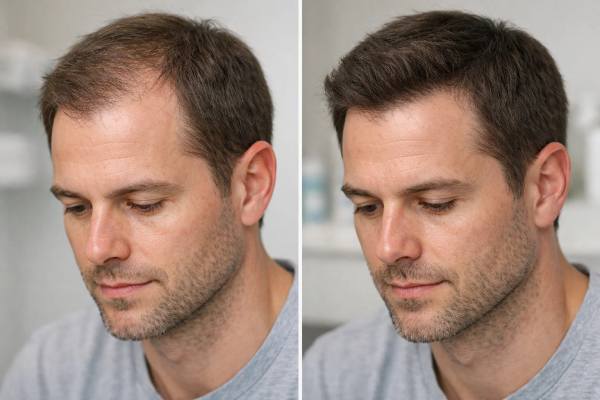
When people compare dutasteride and finasteride for hair loss, they are usually asking a practical question: “Which one is more likely to slow thinning and help regrowth, and what is the trade-off?” Both medications belong to the same family—5-alpha reductase inhibitors—and both work by lowering dihydrotestosterone (DHT), the hormone most closely tied to androgenetic alopecia (male pattern hair loss). Where they differ is in strength, duration, and how often they are used in standard hair-loss care.
Dutasteride tends to suppress DHT more profoundly and for much longer than finasteride, which can translate to stronger results for some people—especially those with advanced or fast-progressing thinning. That same potency also raises the stakes for side effects, monitoring, and informed consent, particularly around sexual function, mood changes, and pregnancy-related precautions. This guide breaks down what the evidence suggests, how to choose between options, and how to use either medication in a measured, trackable way.
Top Highlights
- Dutasteride generally suppresses DHT more strongly than finasteride, which may benefit some people who plateau on finasteride.
- Both medications usually require 3–6 months to see early change and 9–12 months for a fair assessment.
- Side effects are typically uncommon but meaningful, and dutasteride’s long half-life can make stopping effects slower.
- PSA interpretation changes on either medication, and baseline monitoring matters for appropriate screening.
- A practical approach is a time-boxed trial with photos, symptom tracking, and a clear plan for follow-up.
Table of Contents
- How each medication blocks DHT
- How results compare in real-world use
- Who might benefit from dutasteride
- Dosing, timelines, and what to expect
- Side effects, monitoring, and safety
- Combining therapies and when to switch
How each medication blocks DHT
Dutasteride and finasteride treat androgenetic alopecia by lowering DHT. DHT is created when the enzyme 5-alpha reductase converts testosterone into a more potent androgen. In hair follicles that are genetically sensitive, DHT gradually shortens the hair growth phase and miniaturizes the follicle. Over time, thick terminal hairs become finer, shorter, and less pigmented—until density visibly declines.
Finasteride: targeted inhibition
Finasteride primarily inhibits the type II form of 5-alpha reductase, which is strongly expressed in hair follicles and the prostate. In many people, this leads to a substantial drop in circulating DHT (often described in the 60–70% range) and a meaningful reduction in follicle miniaturization over time. The clinical “feel” of finasteride is that it is effective for many men with a relatively predictable dosing pattern, and it is often used as a first-line systemic option when DHT is clearly driving the pattern.
Dutasteride: broader and stronger inhibition
Dutasteride inhibits both type I and type II 5-alpha reductase. Because it blocks more enzymatic activity, it typically produces a deeper reduction in DHT (commonly described as above 90% for circulating DHT in standard dosing). That broader suppression is the main reason dutasteride is often viewed as “stronger” for hair—particularly in people whose hair loss continues on finasteride or in those who present with more advanced thinning and want to maximize DHT reduction.
The half-life difference changes the whole experience
A key difference is how long each medication stays active in the body:
- Finasteride clears relatively quickly (hours), even though its DHT-lowering effect lasts longer than a single dose might suggest.
- Dutasteride has a long half-life (measured in weeks), which means it accumulates over time and can take months to fully clear after stopping.
This matters for convenience and adherence, but it also matters if side effects appear. With dutasteride, stopping does not necessarily mean “back to baseline next week,” and any decisions around fertility planning or medication changes should be made with that longer timeline in mind.
What this means for hair follicles
Both drugs aim to reduce the hormonal signal that drives miniaturization. Neither creates new follicles. The best-case outcome is a combination of slowed loss, thicker miniaturized hairs returning toward terminal thickness, and improved density in regions where follicles are still viable. If you want broader context on what patterns count as androgenetic alopecia and what else can mimic it, common causes of hair loss in men can help you confirm you are treating the right process before choosing a DHT blocker.
How results compare in real-world use
Comparing dutasteride and finasteride is not just about which lowers DHT more. It is also about what that hormonal change translates to in visible outcomes: slowed recession, improved crown density, thicker shafts, and a more stable “baseline” year over year.
What “better results” usually looks like
In clinical settings, improvement is often seen in one of three ways:
- Stabilization: hair loss slows dramatically, shedding feels less alarming, and photos show no further recession.
- Thickening: miniaturized hairs become darker and thicker, especially at the crown and mid-scalp.
- Regrowth: new visible coverage appears in areas that were thinning, usually more at the crown than the hairline.
Most people who succeed on a DHT blocker do not experience a sudden transformation. They experience a gradual shift: slower loss first, then cosmetic thickening, then incremental regrowth if follicles are still responsive.
Where dutasteride may have an edge
Because dutasteride suppresses DHT more strongly, it is often associated with greater average increases in measured hair counts and shaft thickness in comparative research. In practice, that “edge” tends to matter most for people who:
- have significant crown thinning or diffuse thinning across the top
- are progressing quickly despite consistent finasteride use
- started treatment later, when more follicles are already miniaturized
- want the highest likelihood of stabilization and are comfortable with closer monitoring
That said, stronger average outcomes do not guarantee a better personal outcome. Response depends on genetics, baseline miniaturization, age, adherence, and whether other contributors—like inflammation, iron deficiency, or medication-triggered shedding—are present.
Where finasteride still shines
Finasteride remains a common first systemic option because it is effective for many men with androgenetic alopecia and has a long history of use in hair loss care. If you respond well to finasteride, there is no universal reason to “upgrade.” Many people maintain stable results for years, especially when finasteride is started early and paired with supportive therapies.
Finasteride also has a shorter pharmacologic “tail,” which can be reassuring for people who are cautious about side effects or who want the ability to stop and reassess without a prolonged washout period.
Hairline vs crown expectations
Both medications tend to show more visible improvement at the crown and mid-scalp than at a significantly recessed hairline. The frontal hairline is often the hardest region to reverse once miniaturization is advanced. A realistic expectation is that DHT blockers often preserve the hairline more reliably than they rebuild it.
For a broader menu of evidence-based options (and how they fit together), male pattern baldness treatment options can help you understand where a DHT blocker sits relative to minoxidil, procedures, and surgical approaches.
Who might benefit from dutasteride
Choosing between finasteride and dutasteride is often less about “which is best” and more about “which fits your risk tolerance, pattern, and treatment goals.” A useful way to decide is to consider where you are on the hair-loss timeline and how you feel about long-acting medication exposure.
Situations where dutasteride is commonly considered
Dutasteride may be discussed when one or more of these are true:
- Incomplete response to finasteride: you have used finasteride consistently for 9–12 months with minimal stabilization or continued visible progression.
- More advanced thinning at baseline: the crown is clearly thin, the mid-scalp is losing density, or diffuse thinning across the top suggests extensive miniaturization.
- Rapid progression: photos show meaningful change over 6–12 months, especially with family history of aggressive androgenetic alopecia.
- High “preservation priority”: you strongly prefer a maximal DHT suppression strategy and are comfortable with monitoring and informed risk.
In these cases, dutasteride can be used as a switch (finasteride to dutasteride) rather than a combined approach. Combination regimens exist in practice, but they are not the most conservative place to start, and they can complicate side effect attribution.
Situations where finasteride may be the better first move
Finasteride may fit best when:
- you are early in the process and mainly want to slow progression
- you prefer a widely used hair-loss dosing standard
- you want a shorter washout timeline if side effects occur
- you are still deciding whether you are willing to commit to long-term medical therapy
Finasteride is also a common choice when someone is pairing treatment with hair transplant planning. Stabilization matters before transplant decisions, and a consistent medication baseline helps surgeons estimate long-term needs.
What about women and dutasteride?
Systemic 5-alpha reductase inhibitors require special caution in women, particularly those who could become pregnant, because of fetal risk. In some specialty settings, finasteride or dutasteride may be used off-label in select women (often postmenopausal) under strict medical guidance. This is not a DIY category. If you are a woman evaluating thinning, the first step is usually diagnosis and a treatment plan tailored to the pattern and hormone context rather than starting a DHT blocker independently.
A decision frame that prevents regret
Before choosing, define what outcome would make the medication “worth it” for you:
- Is your main goal stopping shedding?
- Stabilizing photos over 12 months?
- Improving crown density by a visible amount?
- Buying time before transplant?
Clear goals make it easier to evaluate effectiveness and to avoid escalating therapy prematurely.
Dosing, timelines, and what to expect
Both finasteride and dutasteride are long-game treatments. The biggest avoidable mistake is judging them too early or changing multiple variables at once, which makes it impossible to know what helped.
Typical dosing in hair-loss care
Common oral dosing patterns in practice include:
- Finasteride: 1 mg once daily is the most recognized regimen for androgenetic alopecia.
- Dutasteride: 0.5 mg once daily is the best-known standard dose used in studies and clinical settings when dutasteride is chosen for hair.
Because dutasteride has a long half-life, some clinicians use intermittent schedules in select cases (for example, a few times per week). This approach is often discussed to balance results and tolerability, but it is best viewed as an individualized strategy rather than a universal rule.
Timeline: what changes when
A practical timeline that matches hair biology:
- Weeks 0–8: you may notice little, or you may notice a transient change in shedding. Some people interpret this as “worsening,” but early shedding can reflect hairs cycling out to make room for a healthier growth phase.
- Months 3–6: early stabilization is often the first meaningful sign. Shedding may calm and hair may feel a bit fuller at the crown.
- Months 9–12: this is the fairest window to judge whether the medication is delivering visible density change or meaningful thickening.
- Beyond 12 months: many people maintain gains with ongoing use, while others need combination therapy to optimize results.
How to track without overthinking
A simple tracking system is better than constant mirror checking:
- Take baseline photos: crown (top-down), front hairline, and both temples in consistent light.
- Repeat photos every 8–12 weeks.
- Use one consistent hairstyle and camera angle.
- Track side effects weekly during the first 2–3 months, then monthly.
If you want a grounding framework for why hair changes take so long—and why “no change at month two” is not a verdict—the hair growth cycle stages makes timelines feel less mysterious.
What to do about shedding anxiety
If shedding increases early, avoid rapid-fire changes. Instead:
- confirm adherence (missed doses create noise)
- avoid new harsh shampoos or scalp irritants that can add inflammation
- look for other triggers (recent illness, major stress, dietary change, new medications)
- give the regimen enough time to stabilize unless shedding is extreme or you have red-flag symptoms
Stopping and restarting is not neutral
Both medications generally require ongoing use to maintain benefits. If you stop, DHT levels gradually rise and miniaturization resumes over months. With dutasteride, the “fade” may be slower because the medication clears slowly, but the long-term direction is similar: discontinuation tends to surrender the hormonal advantage that preserved follicles.
Side effects, monitoring, and safety
Safety discussions about finasteride and dutasteride can feel polarized. Some people have no issues at all. Others experience side effects that feel significant. A balanced approach is to understand what is most common, what is rare but important, and what monitoring helps you use these medications responsibly.
Sexual side effects: what to know without panic
In controlled trials, reported sexual side effects such as decreased libido, erectile dysfunction, and ejaculation changes are typically in the low single digits and are often reversible after discontinuation. That said, “low percentage” is not comforting if you are the one affected. The best risk-reduction strategy is to:
- start only when you feel informed and comfortable with the trade-off
- track changes deliberately rather than guessing
- address contributing factors like sleep loss, alcohol intake, depression, and relationship stress, which can amplify symptoms
Because dutasteride suppresses DHT more strongly and persists longer, some people prefer starting with finasteride first, then escalating only if needed.
Mood, anxiety, and mental health signals
Mood changes have been reported with 5-alpha reductase inhibitors, and clinicians increasingly take these reports seriously. If you have a history of depression, anxiety, or suicidal thoughts, disclose that before starting. If you notice new or worsening mood symptoms after starting, treat it as a medical signal—not something to “push through.”
Pregnancy precautions and handling
These medications can cause fetal harm if exposure occurs during pregnancy. Practical safety points:
- They are generally contraindicated in pregnancy.
- Tablets should not be handled if crushed or broken by someone who is pregnant or could become pregnant.
- Men taking these medications who are trying to conceive should discuss timing and risk considerations with a clinician, especially with dutasteride because of its long half-life.
PSA and prostate screening implications
Both medications can lower PSA levels, which affects how PSA results are interpreted. If you are in an age group where PSA testing is relevant—or you have a family history of prostate cancer—baseline PSA and informed follow-up matter. A common clinical practice is to account for PSA suppression when interpreting results, but the correct approach should be individualized.
A practical monitoring checklist
Consider discussing:
- baseline sexual function concerns and what changes would be unacceptable
- mood history and a plan for mental health monitoring
- baseline PSA if appropriate for your age and risk profile
- medication list review to reduce interaction and attribution confusion
If your hair loss evaluation is incomplete, it may also be useful to rule out common contributors that can sit on top of androgenetic alopecia, especially if shedding is prominent. blood tests commonly used in hair loss workups can help you understand what clinicians often check and why.
Combining therapies and when to switch
Many people get the best cosmetic results from a combination approach: one therapy that reduces miniaturization pressure (a DHT blocker) and one therapy that supports growth signals (often minoxidil). The key is to build a plan that is effective without becoming unmanageable.
Common combination strategies
A clinician may consider combining a DHT blocker with:
- Topical or oral minoxidil to support density and hair caliber
- Microneedling as an adjunct in selected patients, especially for crown response
- Low-level laser therapy for additional support in some people
- Procedural options like PRP in appropriate settings
The most important principle is sequencing: add one variable at a time, give it enough time to work, and track outcomes so you can identify what is actually helping.
If minoxidil is part of your plan or you are considering switching formulations, topical vs oral minoxidil differences can help you compare practicality and side effect considerations without guessing.
When switching from finasteride to dutasteride makes sense
A switch is most reasonable when:
- adherence has been consistent
- you have given finasteride a fair trial (often 9–12 months)
- photos show progression or minimal stabilization
- side effects on finasteride are absent or manageable, and you are comfortable with a stronger DHT suppression strategy
If side effects were the problem on finasteride, switching to dutasteride is not automatically safer. It may be better to reassess diagnosis, consider topical approaches, or focus on non-hormonal adjuncts.
Topical options and why they are not interchangeable
Topical finasteride and topical dutasteride are used in some settings to reduce systemic exposure. They can be appealing, but they are not standardized like oral tablets. Concentration, vehicle, application volume, and absorption vary widely. If you go topical, it helps to treat it like a prescription therapy: consistent dosing, careful monitoring, and realistic expectations.
How to know if your plan is working
A plan is working if, over 12 months:
- photos stabilize or improve
- hair caliber improves (especially at the crown)
- shedding becomes less dramatic over time
- you feel you can maintain the routine long-term
A plan is not working if you are still losing visible ground despite consistent adherence—or if side effects make the trade-off unacceptable. In either case, the next step is not necessarily “more medication.” It is often better measurement, better diagnosis, and a more targeted strategy.
The goal is not to win a comparison between dutasteride and finasteride. The goal is to choose the lowest-risk plan that gives you a meaningful chance of stabilizing hair over years, not just weeks.
References
- Relative Efficacy of Minoxidil and the 5-α Reductase Inhibitors in Androgenetic Alopecia Treatment of Male Patients: A Network Meta-analysis – PubMed 2022 (Systematic Review and Network Meta-analysis)
- A randomized, active- and placebo-controlled study of the efficacy and safety of different doses of dutasteride versus placebo and finasteride in the treatment of male subjects with androgenetic alopecia – PubMed 2014 (RCT)
- A Randomized, Double-Blind, Placebo and Active Controlled Phase II Study to Evaluate the Safety and Efficacy of Novel Dutasteride Topical Solution (0.01%, 0.02%, and 0.05% w/v) in Male Subjects With Androgenetic Alopecia – PMC 2025 (RCT)
- Sexual, physical, and overall adverse effects in patients treated with 5α-reductase inhibitors: a systematic review and meta-analysis – PMC 2021 (Systematic Review and Meta-analysis)
- Finasteride-dutasteride Art 31 PhV – PRAC assessment report 2025 (Regulatory Safety Review)
Disclaimer
This article is for educational purposes only and does not provide medical advice, diagnosis, or treatment. Dutasteride and finasteride are prescription medications that may not be appropriate for everyone and can cause side effects, including sexual symptoms and mood changes. They can affect pregnancy safety and may change how PSA lab results are interpreted. Do not start, stop, or change these medications without guidance from a qualified clinician. Seek medical care promptly for severe or persistent side effects, new or worsening depression or anxiety, suicidal thoughts, allergic reactions, or any rapid or unusual pattern of hair loss (such as patchy loss, scalp pain, pustules, or heavy scaling).
If this comparison helped you make sense of the options, consider sharing it on Facebook, X (formerly Twitter), or another platform you use so others can approach hair-loss treatment decisions with clearer expectations and safer planning.