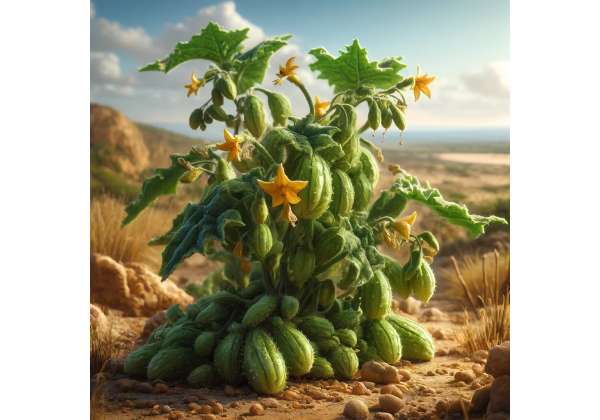
Ecballium, better known as Ecballium elaterium or squirting cucumber, is a striking Mediterranean plant with an unusually forceful medicinal history. Unlike gentler herbs used for daily wellness, this one sits in a more difficult category: it has real pharmacologic activity, but also a narrow margin between traditional use and harm. Historically, its fruit juice and the dried sediment called elaterium were used for sinus complaints, constipation, swelling, and inflammatory conditions. Modern interest centers on its cucurbitacins, especially cucurbitacin B and related triterpenes, which help explain the plant’s anti-inflammatory, antimicrobial, and strongly irritant effects.
That dual nature is the key to understanding Ecballium well. It is not an herb for casual self-experimentation, home nasal drops, or unsupervised oral dosing. Some laboratory and animal studies are promising, and older human reports suggest possible sinus benefit in diluted form. Still, much of the modern conversation around this plant is really a safety conversation. The most useful way to approach Ecballium is with precision, skepticism, and respect for its toxicity.
Quick Safety Snapshot
- Ecballium shows anti-inflammatory and antimicrobial activity, especially in sinus-related and laboratory models.
- Its main active compounds are cucurbitacins, which likely drive both the plant’s medicinal effects and much of its toxicity.
- Historically described intranasal use has been as 1 diluted drop per nostril once daily, but home treatment is not considered safe.
- Undiluted juice can cause severe swelling of the throat and nasal tissues, eye injury, vomiting, and dangerous systemic reactions.
- Avoid medicinal use during pregnancy, breastfeeding, childhood, or if you have reactive airways, plant allergies, kidney disease, or heart disease.
Table of Contents
- What is Ecballium
- Key compounds and medicinal properties
- Does Ecballium help sinusitis
- Other claimed benefits
- How Ecballium has been used
- How much should you take
- Side effects, interactions, and who should avoid it
- What the evidence actually says
What is Ecballium
Ecballium is a perennial member of the cucumber family, native to the Mediterranean region and known for one memorable feature: when ripe, its fruit ejects seeds and juice under pressure. That dramatic habit explains the common name “squirting cucumber,” but the real herbal interest lies in the plant’s juice and fruit sediment, which were used in traditional medicine long before modern pharmacology tried to explain them.
Older medical and folk sources describe Ecballium as a drastic remedy. That word matters. It was not valued as a mild tonic or a kitchen herb. It was used because it acted quickly and aggressively. Traditional applications included:
- Diluted intranasal use for sinus blockage and chronic rhinosinusitis
- Oral use as a strong purgative for constipation
- Use in inflammatory complaints such as rheumatic pain
- Occasional historical use for jaundice, edema, and liver disorders
The dried sediment from the fruit juice is known as elaterium. In older texts, elaterium appears almost like a separate medicinal substance, but it comes from the same plant and reflects the same basic problem: potency without much safety cushion. Modern readers often encounter Ecballium through sinus-related discussions, especially in Mediterranean and Middle Eastern traditional practice, where diluted fruit juice has been used as nasal drops.
What makes this herb unusual is that the fruit juice is both the most discussed medicinal part and the part most closely tied to toxic reactions. That means the very feature that gave the plant a therapeutic reputation is also the one that creates the greatest danger.
Botanically, Ecballium is not the same as the wild cucumbers used in North American folk language, and it should not be confused with harmless culinary cucurbits. Its activity is stronger, more specialized, and much less forgiving. In practical herbal terms, it belongs in the category of “historically important but not casually safe.”
A useful modern framing is this: Ecballium is less a wellness herb and more a pharmacologically active traditional drug. That distinction changes how every other question should be answered. Benefits must be judged against toxicity. Traditional use does not automatically imply modern safety. And with Ecballium, the most important part of understanding the plant is knowing when not to use it.
Key compounds and medicinal properties
Ecballium’s medicinal reputation comes mainly from a group of highly active triterpenes called cucurbitacins. These compounds are found in several plants in the cucumber family, but Ecballium has been studied as a particularly rich and pharmacologically interesting source. The compounds most often discussed include cucurbitacin B, D, E, I, and related glycosides, especially in fruits and fruit-derived preparations.
These are not gentle plant constituents. Cucurbitacins are biologically forceful molecules with documented effects in cell and animal research. They are often studied for anti-inflammatory, cytotoxic, antimicrobial, and signaling-pathway effects. That helps explain why Ecballium has attracted modern lab interest, especially in cancer research, inflammatory models, and infection-related testing. It also helps explain why the plant can be harmful.
Beyond cucurbitacins, Ecballium contains other potentially relevant constituents, including:
- Phenolic compounds
- Flavonoids
- Sterols
- Volatile components in aerial parts and essential oil fractions
- Resin-like and bitter principles historically grouped under elaterium-related terminology
From a medicinal-property standpoint, the most realistic descriptions are these:
- Anti-inflammatory activity, especially in experimental models
- Antimicrobial or antifungal activity in laboratory studies
- Strong cathartic or purgative action in historical oral use
- Local irritant action on mucosal tissue
- Cytotoxic activity in test-tube cancer models
That last point needs care. “Cytotoxic” sounds impressive, but it often means a substance can injure cells under lab conditions. That is not the same as being a safe or effective anti-cancer therapy in humans. In fact, with Ecballium, the cytotoxicity is part of the safety problem.
One of the best ways to understand this plant is to see benefit and risk as two expressions of the same chemistry. The compounds that may reduce inflammatory signaling in one setting can also inflame, damage, or dangerously swell tissues in another. The chemistry is not selectively kind.
This is why dosage and form matter so much. A diluted preparation historically used in the nose is very different from undiluted fresh juice. A purified compound tested in a laboratory is different again. Readers sometimes assume that if a plant contains promising molecules, the raw plant must be useful in roughly the same way. Ecballium is a good example of why that shortcut fails.
In simple terms, Ecballium’s key ingredients give it genuine medicinal interest, but they also make it one of the clearest examples of an herb where “active” does not mean “suitable for self-care.”
Does Ecballium help sinusitis
Sinusitis is the condition most strongly associated with Ecballium in traditional and modern discussions. Historically, diluted fruit juice was used as nasal drops for blocked sinuses and chronic rhinosinusitis, especially in parts of Greece, Turkey, and neighboring regions. That tradition has persisted because some people do report quick drainage, reduced congestion, or a sensation of “opening” in the nose after use.
There are a few reasons the idea is plausible. Ecballium contains cucurbitacins with anti-inflammatory activity, and experimental work suggests the plant may reduce inflammatory change in sinus-related animal models. Older clinical observations also suggest that some intranasal use may relieve symptoms. However, the evidence base is much weaker than many folk claims make it sound.
The main limitations are important:
- The clinical literature is small and dated
- Methods are often poorly described
- Preparations are not standardized
- Sinusitis types are mixed together
- Safety problems appear repeatedly in case reports
A recent systematic review of herbal medicine in acute and chronic rhinosinusitis treated Ecballium cautiously. That is the right tone. The plant may have anti-inflammatory and antimicrobial potential in sinus care, but the supporting evidence is thin and the adverse-event history is hard to ignore. In other words, the question is not only whether it works. It is whether it works well enough to justify the risk. Right now, that answer is uncertain at best.
That matters because people often approach Ecballium when they are miserable, congested, and impatient. In that state, a herb with a reputation for dramatic effect can sound appealing. But nasal tissues are delicate. A remedy that provokes severe irritation, uvular swelling, or airway compromise is not a trivial experiment.
A more honest summary is this:
- Ecballium may reduce sinus inflammation in some settings
- Diluted intranasal use has historical and limited clinical support
- The safety margin appears narrow
- It is not a first-line self-care option for sinus complaints
For most people with sinus pressure, congestion, or recurrent rhinosinusitis, better-supported and safer approaches come first. Ecballium belongs, if anywhere, in specialist discussion rather than home herbal routine. That is especially true when symptoms are recurrent, severe, or complicated by asthma, allergy, nasal polyps, fever, or facial swelling. In those settings, the cost of getting it wrong is simply too high.
Other claimed benefits
Once readers move beyond sinusitis, they often find Ecballium described as a remedy for a long list of problems: constipation, rheumatism, infections, edema, liver disease, cancer, and even neurologic inflammation. The plant does have a broad traditional and laboratory profile, but the gap between “claimed” and “proven” is wide.
Historically, one of its best-known actions was as a powerful cathartic. That means it was used to purge the bowels, not to gently support digestion. In earlier medicine, drastic purgation was sometimes considered therapeutic in itself. Today, that is not a benefit most people should chase. A herb that works mainly by violently irritating the digestive system is not an attractive modern laxative. Even when it does produce an effect, the cost can include cramping, dehydration, vomiting, and systemic toxicity.
Laboratory and animal studies have also suggested:
- Antimicrobial activity against some bacteria and fungi
- Anti-inflammatory effects in different tissue models
- Cytotoxic or antiproliferative effects in cancer cell lines
- Possible modulation of inflammatory pathways in brain tissue
- Effects on fibrosis and inflammatory markers in nasal models
These findings are interesting, but they do not automatically create practical human uses. In herbal medicine, early mechanistic promise is common. What matters is whether a preparation can produce a useful effect in real people at a dose that remains safe. That step has not been well established for Ecballium.
This is especially important in cancer discussions. The presence of cytotoxic cucurbitacins has led to research interest, but there is no basis for treating Ecballium as a self-directed anti-cancer herb. The same compounds that damage abnormal cells in a dish can also damage healthy tissue or create dangerous side effects in a person.
The same caution applies to neurologic and inflammatory claims. A rodent study suggesting reduced neuroinflammation is a starting point for research, not a treatment recommendation for dementia, memory decline, or chronic inflammatory disease.
So what benefits are realistic to mention at all? The most defensible wording is modest:
- It may have anti-inflammatory potential
- It may have local antimicrobial activity in some preparations
- It has historical use in sinus complaints and purgation
- It remains far from proven for most of its more ambitious claims
That may sound restrained, but restraint is part of accuracy here. Ecballium is a plant with intriguing chemistry and a long history, yet modern practical benefit remains narrower and less secure than many herbal summaries suggest.
How Ecballium has been used
Ecballium has been used in several forms, but the form matters as much as the plant itself. Most of the traditional and modern discussion centers on the fruit and fruit juice, because that is where the best-known activity and the greatest risk sit. Leaves, flowers, seeds, and aerial parts have also been studied chemically, but they are much less important in actual medicinal practice.
Historically described forms include:
- Fresh fruit juice
- Diluted fruit juice for intranasal use
- Dried fruit sediment known as elaterium
- Extracts prepared in water, ethanol, or other solvents
- Experimental purified compounds such as isolated cucurbitacins
For sinus-related use, the traditional method has generally involved diluted nasal drops rather than inhaling the raw fruit or applying the undiluted juice directly. That distinction is essential. Undiluted juice is the form most often linked to dramatic reactions, including severe throat or airway swelling. Home handling also carries an obvious risk to the eyes and skin if the fruit bursts and sprays.
In older oral use, elaterium was taken as a purgative. That is largely a historical practice now, and for good reason. Modern herbal care has much safer ways to address constipation or sluggish digestion. Ecballium’s place in oral self-treatment is extremely weak.
In practical terms, this leads to a simple but important rule: the riskiest preparations are the least suitable for casual use. Fresh juice, homemade extracts, and unmeasured preparations are exactly the forms people should avoid.
If someone were to encounter Ecballium in modern practice, the least problematic context would be a clearly standardized, professionally supervised preparation rather than a home remedy. Even then, the plant is not a casual choice. It is the sort of herb that should be selected only after asking several hard questions:
- What exact condition is being treated?
- What preparation is being used?
- Is the dose standardized?
- What is the plan if irritation or swelling develops?
- Why use this herb instead of a safer alternative?
That fifth question is often the most important one. In many real-world situations, the answer is weak. Traditional use alone is not enough reason to pick a botanically harsh remedy when gentler options or standard medical care are available.
A good modern reading of Ecballium use is not “here is how to make it.” It is “here is why form, dilution, and supervision matter more than tradition alone.”
How much should you take
This is the section where many herb profiles try to sound definitive. Ecballium does not allow that. There is no well-established, clinically accepted oral dose for general wellness or routine medicinal use, and that absence is itself a safety signal.
For sinus-related use, older reports describe a diluted intranasal approach rather than a broad dosing range. In one frequently cited clinical discussion, the diluted intranasal use was described as 1 drop in each nostril. That is the sort of quantity associated with historical practice, but it should not be turned into a do-it-yourself instruction. The problem is not just dose size. It is also concentration, dilution method, fruit maturity, extract strength, and the enormous variability of home preparation.
That means several things at once:
- There is no dependable fresh-juice-to-safe-dose conversion
- There is no accepted oral mg-per-day standard for self-care
- There is no reliable way to estimate potency from the raw fruit at home
- There is no evidence base strong enough to justify routine daily use
For oral use, the safest modern guidance is straightforward: do not self-dose Ecballium. Historical cathartic use does not translate into a sensible modern supplement schedule. If a reader is looking for daily digestive support, this is the wrong plant. If they are looking for a laxative, this is still the wrong plant.
For intranasal use, the cautious answer is similar. Even though diluted drops have been described historically, unsupervised use is hard to justify because severe reactions can happen quickly. One of the clearest lessons from the safety literature is that even single-use exposure can be enough to cause trouble when concentration is high or tissue sensitivity is underestimated.
Timing and duration are also uncertain. The old literature suggests short-term, symptom-targeted use rather than chronic daily dosing, but the data are too inconsistent to support a modern protocol. That leaves readers with an honest conclusion: the best dosing advice is not a number but a boundary.
That boundary is this: Ecballium is not a routine supplement, not a kitchen herb for experimentation, and not a plant where more careful “microdosing” reliably solves the safety problem. With some botanicals, low dosing creates a reasonable self-care path. With Ecballium, the lack of standardization keeps that path unstable.
If a product does not name the exact preparation, concentration, and professional context, it is not something to use casually.
Side effects, interactions, and who should avoid it
Safety is the central issue with Ecballium. Its risks are not theoretical and not limited to rare laboratory findings. Case reports and toxicology discussions repeatedly describe clinically important reactions, especially when the juice is undiluted or used on delicate tissues such as the nose, throat, or eyes.
The most important side effects include:
- Burning and severe irritation of nasal or throat tissue
- Swelling of the uvula and upper airway
- Shortness of breath or hypoxemia in severe reactions
- Eye injury, including conjunctival and corneal irritation
- Vomiting, diarrhea, abdominal pain, and dehydration after oral exposure
- More serious systemic toxicity in older reports, including cardiac and renal failure
One reason Ecballium is risky is that the same fruit juice can behave as a local irritant, an inflammatory trigger, and a strong systemic agent depending on route and concentration. The plant is not merely “strong.” It is unpredictably strong in the hands of nonstandard preparation.
Interaction data are limited, but some practical cautions are still reasonable. Ecballium should be used very carefully, if at all, with:
- Other nasal agents that already irritate the mucosa
- Oral laxatives or purgatives
- Diuretics, if fluid loss is a concern
- Any regimen where dehydration or electrolyte imbalance would be dangerous
People who should avoid medicinal use include:
- Pregnant or breastfeeding adults
- Children
- Anyone with asthma or reactive airway disease
- People with a history of plant allergy or severe mucosal sensitivity
- People with kidney disease, heart disease, or fragile fluid balance
- Anyone with chronic sinus disease complicated by polyps, bleeding, or repeated infections
- Anyone considering oral self-treatment for constipation or detox claims
There is also a simple exposure warning: never handle ripe fruit casually around the face or eyes. Because the fruit ejects juice under pressure, even accidental exposure can cause harm.
The most practical safety insight is this: with Ecballium, dilution reduces risk but does not erase it, and tradition does not guarantee tolerability. Many herbal adverse effects build slowly over time. Ecballium can cause trouble fast. That makes it a poor candidate for unsupervised experimentation and a good example of why “natural” is not a safety category.
What the evidence actually says
Ecballium has enough research to be taken seriously, but not enough to be recommended broadly. That middle position is the most accurate one.
The evidence is strongest in three areas:
- Phytochemistry, especially the identification of cucurbitacins and related compounds
- Experimental pharmacology, including anti-inflammatory, antimicrobial, and cytotoxic effects in cell and animal models
- Safety literature, especially case reports involving nasal, oral, and ocular exposure
The evidence is much weaker in the areas readers usually care about most:
- Well-designed human trials
- Standardized dosing
- Long-term safety
- Clear comparisons against safer conventional or herbal options
- Reliable product-level guidance
That imbalance creates a familiar problem in herbal medicine. The plant looks impressive on paper because its active molecules are potent and its lab profile is broad. But when the question shifts from “Does this plant do something biologically?” to “Should a real person use it at home?” the answer becomes much less favorable.
Sinusitis is the best example. Ecballium has traditional credibility, some older clinical observations, and experimental anti-inflammatory support. Yet a recent systematic review still leaves it in a low-confidence space, largely because the data are sparse and the harms are memorable. That is not what strong evidence looks like.
The same pattern holds for other claims. Anti-cancer findings are mostly preclinical. Neuroinflammatory findings are preliminary animal data. Cathartic action is historically real, but not a modern advantage because it comes with too much downside.
A balanced conclusion would be:
- Ecballium is pharmacologically active
- Its main compounds are scientifically interesting
- Its traditional use is historically meaningful
- Its clinical evidence is limited
- Its safety concerns are significant enough to shape every practical recommendation
So is Ecballium useful? Possibly, in narrow and supervised contexts. Is it a good self-care herb? No. That is the clearest answer the evidence supports today.
Readers often expect an herb profile to end with a simple yes or no. Ecballium deserves a more mature conclusion than that. It is a plant with genuine medicinal potential, but also one of the clearer reminders that potency without standardization is not the same as dependable therapy.
References
- Squirting Cucumber, Ecballium elaterium (L.) A. Ritch: An Update of Its Chemical and Pharmacological Profile 2024 (Review)
- Traditional herbal medicine in the treatment of acute and chronic rhinosinusitis: a systematic review 2025 (Systematic Review)
- Ecballium elaterium attenuates neuroinflammation in an animal model of Alzheimer’s disease through modulation of nuclear factor κB pathway 2022 (Animal Study)
- The safety and efficacy of the fruit juice of Ecballium elaterium in the treatment of acute rhinosinusitis 2009 (Clinical Trial)
- Severe uvular edema and resulting hypoxemia due to single use of Ecballium elaterium extract 2012 (Case Report)
Disclaimer
This article is for educational purposes only and is not medical advice. Ecballium is a high-risk traditional herb with documented toxic reactions, especially when used as fresh juice or on nasal and eye tissues. Do not use it to self-treat sinusitis, constipation, or inflammatory conditions without qualified medical guidance. Seek urgent care after exposure if swelling, breathing difficulty, severe burning, vomiting, or eye symptoms occur.
If you found this article useful, please share it on Facebook, X, or any platform your audience prefers.