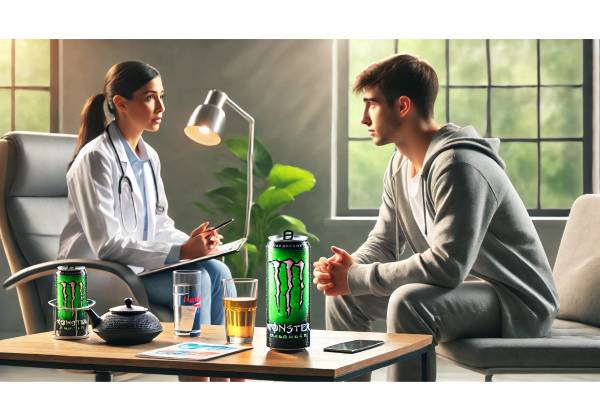
Energy drink addiction can be easy to miss because it often hides inside routines that look productive. A can before work, another during study, one more for the gym, a late drink for driving home. What begins as a quick boost can turn into a pattern of reliance marked by cravings, rising tolerance, rebound fatigue, sleep disruption, and continued use despite obvious harm. For some people, the problem is not just the caffeine. It is the whole cycle: using stimulation to push past exhaustion, then needing more stimulation because rest, mood, and focus are getting worse. Energy drinks also bring risks that differ from ordinary coffee because they can deliver large caffeine doses quickly and are often used with alcohol, workouts, gaming, or long hours without sleep. Understanding how this pattern develops helps clarify when a familiar habit has become something more serious.
Table of Contents
- What Energy Drink Addiction Means
- How Dependence Builds
- Signs, Symptoms, and Daily Clues
- Cravings, Tolerance, and Rebound Use
- Withdrawal After Cutting Back
- Causes, Triggers, and High-Risk Groups
- When It Becomes Dangerous
What Energy Drink Addiction Means
Energy drink addiction is a common phrase, but it is not usually a formal diagnosis written in medical records. In clinical terms, the pattern is most often understood through caffeine dependence, caffeine withdrawal, or proposed caffeine use disorder. That distinction matters because the dependence usually centers on caffeine and stimulant-seeking behavior, even though the person may feel attached to a specific brand, flavor, routine, or identity built around energy drinks. The can itself is not the disorder. The problem is the repeated, hard-to-control pattern of using these drinks for alertness, mood, performance, or relief, even when the costs are already obvious.
Energy drinks deserve separate attention from coffee or tea because they often package stimulation in a more concentrated and behaviorally risky form. Many are marketed for performance, endurance, studying, gaming, driving, partying, or intense workouts. Some contain caffeine amounts that are high for a single serving, and many also include taurine, guarana, sugars or sweeteners, and other added ingredients. The rapid, portable nature of the product can make large amounts easy to consume without much reflection. A person may drink one in a few minutes on an empty stomach, then follow with another later in the day because the first one has worn off.
This means dependence may develop in a pattern that feels more intense and less ritualized than coffee dependence. A coffee habit often grows around mornings and breaks. Energy drink dependence may grow around pressure, fatigue, performance demands, nightlife, driving, or attempts to override sleep loss. That gives it a different emotional tone. The person may not just be seeking comfort or habit. They may be seeking activation, speed, focus, or the sense that they can push their body further than it wants to go.
Another important point is that not everyone who drinks energy drinks heavily has the same clinical picture. Some mainly show caffeine dependence. Others have a broader pattern of risky behavior, including poor sleep, nicotine use, alcohol use, crash-and-recover cycles, or repeated self-medication for stress and exhaustion. In adolescents and young adults, frequent use can also be a red flag for a wider cluster of risk behaviors. That is one reason the issue is broader than a simple preference for caffeinated drinks.
A practical way to recognize the condition is this: energy drink use becomes addiction-like when it stops feeling optional. When a person needs it to feel normal, keeps escalating intake, struggles to cut back, or continues despite anxiety, insomnia, palpitations, or functional decline, the pattern is no longer just a habit. It is moving toward the kind of stimulant dependence more fully captured in discussions of caffeine dependence.
How Dependence Builds
Energy drink dependence usually grows through reinforcement, not through one dramatic turning point. At first, the person feels a clear benefit: less drowsiness, sharper focus, more confidence, or the ability to keep going when tired. That short-term payoff is powerful. If the drink helps someone finish work, survive night shifts, study longer, drive farther, or perform harder in training, the brain begins to treat it as useful and even necessary. The relief is especially reinforcing when the person is already depleted.
Over time, this pattern can become self-sustaining. A person uses energy drinks to overcome fatigue, but the stimulant may worsen sleep, increase nervous system activation, or delay proper rest. The next day they feel more depleted, so they use the drink again. What began as a performance aid slowly becomes part of the problem it seems to solve. This is one reason dependence often develops faster in people under sustained pressure. The drink is not just providing energy. It is helping them outrun the consequences of stress, poor sleep, overwork, or burnout.
Several features of energy drinks can strengthen this cycle:
- they are portable and easy to consume quickly
- marketing links them with performance, gaming, sport, and stamina
- they are often used in settings where fatigue is already high
- some products deliver a high stimulant load in a single serving
- sweetness and flavor can make repeated use easier than with plain coffee
- the “crash” after the effect fades may encourage another dose
The social meaning of energy drinks also matters. They are often framed as tools for ambition, discipline, productivity, and stamina. That can make escalating use feel responsible rather than risky. Someone may feel proud of using them to work longer or stay mentally sharp, even as anxiety, sleep disruption, and dependence start to mount. The behavior can be reinforced by peers too. In some environments, frequent energy drink use signals dedication, hustle, or toughness rather than strain.
Dependence can also become tied to mood regulation. A person may start reaching for an energy drink not only when tired, but when dull, flat, stressed, irritable, or mentally scattered. The can becomes a fast reset button. Once this shift happens, the drink is no longer only about physical alertness. It becomes part of how the person regulates emotion, attention, and self-confidence.
What makes the pattern especially deceptive is that it often looks functional right until it stops being so. People may feel more productive for a while and assume the drinks are working. But when rising use is needed just to maintain baseline performance, dependence is already taking hold. At that stage, the product is not simply boosting function. It is propping up a system that is increasingly strained.
Signs, Symptoms, and Daily Clues
Energy drink addiction often shows itself through repetition and interference rather than one extreme event. The person may look productive, social, and capable on the outside while living inside a daily cycle of overstimulation, fatigue, irritability, and dependence. Because energy drinks are legal and common, the warning signs are easy to dismiss as normal stress or modern life.
A common early sign is loss of flexibility. The person feels unable to begin the day, concentrate, work out, drive, study, or stay pleasant without an energy drink. Another clear sign is escalation. One can becomes two, then a larger size, then a stronger product, then a second caffeine source layered on top. Some people start timing their day around when the effect will wear off. Others begin stockpiling cans, keeping them in the car, office, gym bag, or nightstand to avoid being without them.
Common symptoms and daily clues include:
- persistent fatigue without the drink
- headaches, irritability, or low mood when intake is delayed
- shakiness, jitteriness, or tremor after use
- trouble falling asleep or lighter sleep
- racing heart or a strong awareness of heartbeat
- stomach upset, nausea, reflux, or poor appetite
- anxiety, inner agitation, or feeling “wired but tired”
- repeated promises to cut back that do not last
Some people also experience rebound effects that are easy to misunderstand. They feel briefly more focused after the drink, then later become more distractible, tense, or exhausted than before. That rebound can make them assume they need another can, when in reality the cycle itself is worsening their baseline. Over time, this can produce a daily rhythm of stimulation followed by crash, then re-stimulation followed by another crash.
Behavioral signs matter too. The person may keep drinking despite obvious consequences, such as insomnia before an exam, panic-like symptoms during work, or repeated stomach pain. They may also minimize the pattern by counting cans instead of actual caffeine load. One person’s “just one drink” may contain far more caffeine than another person realizes. This is part of why casual comparisons can be misleading.
Another important clue is the effect on mood and cognition. Some users become more irritable or emotionally brittle between drinks. Others feel mentally foggy without stimulation and then overstimulated once it kicks in. Focus may seem improved for a short period, then worsen as the day goes on. That cycle often overlaps with broader problems involving sleep, attention, and anxiety, especially when the person is using the drink to fight fatigue rather than addressing its cause. The pattern can begin to resemble the wider problems described in caffeine, anxiety, focus, and sleep rather than a simple beverage preference.
Cravings, Tolerance, and Rebound Use
Cravings in energy drink addiction are often more psychological than people expect. They may not feel like a dramatic compulsion at first. Instead, they often show up as constant mental bargaining: I need one to get started, I need another to finish, I need it because I slept badly, I need it because I have to perform. Over time, these thoughts become automatic. The person stops asking whether they want the drink and starts assuming they cannot function without it.
Tolerance is a major reason this happens. With repeated caffeine exposure, the same amount of stimulation stops feeling as strong. A drink that once caused a noticeable lift becomes the new normal. The person compensates by choosing larger servings, stronger brands, or more frequent doses. They may also start drinking earlier in the day or later into the evening. This escalation often feels rational because the previous amount no longer works the way it used to. But that change is itself a sign that the nervous system has adapted.
Rebound use is what locks the cycle in place. Many people are no longer drinking only to gain energy. They are drinking to reverse the slump caused by the previous dose wearing off. That slump may include sleepiness, low mood, headache, poor concentration, and irritability. When the next energy drink relieves those symptoms, it can feel like proof that the body truly needs it. In reality, much of the relief is the reversal of dependence-related discomfort.
The craving-tolerance cycle often includes:
- stronger urge to drink when tired, stressed, bored, or under pressure
- need for increasing amounts to get the same effect
- faster return of fatigue or mood drop between doses
- repeated use to reverse a crash rather than to gain fresh energy
- persistent thoughts about the next can
- difficulty imagining demanding tasks without stimulant support
This cycle is especially strong when energy drinks are linked to identity or performance. A person may come to believe that they are sharper, more social, more athletic, or more resilient only when stimulated. The drink becomes less like a product and more like a tool for being the person they think they need to be. That belief can make cutting back feel emotionally threatening, not just physically uncomfortable.
It is also important to note that cravings can be cue-driven. The sight of a can, a study desk, a pre-workout routine, a long highway drive, or a late-night gaming session can all trigger urge and expectation. The brain starts predicting stimulation before the drink is even opened. This conditioned response makes the behavior harder to break than a simple decision to “drink less caffeine.”
When cravings, tolerance, and rebound use begin reinforcing each other, the pattern shifts from convenience to dependence. At that point, the person is no longer using energy drinks occasionally for a boost. They are living inside a cycle that increasingly dictates energy, mood, attention, and behavior.
Withdrawal After Cutting Back
Withdrawal is one of the clearest reasons energy drink addiction should be taken seriously. The withdrawal is usually caffeine withdrawal, which is a recognized clinical condition. When someone who regularly uses energy drinks cuts back sharply or stops, symptoms often appear within hours to a day, usually intensify over the next one to two days, and may last several days. In some people the symptoms are mild. In others they are strong enough to disrupt work, mood, driving, concentration, and ordinary functioning.
The best-known symptom is headache, but withdrawal is broader than that. Many people also experience profound tiredness, low alertness, irritability, depressed mood, and trouble concentrating. The body is not simply “asking for flavor” or “missing the routine.” It is reacting to the sudden reduction of a stimulant it has adapted to expecting. Because energy drinks are often used in people already under sleep strain, the withdrawal can feel even heavier than expected.
Common withdrawal symptoms include:
- headache
- fatigue or drowsiness
- low motivation
- irritability
- depressed mood
- difficulty concentrating
- slowed thinking
- flu-like heaviness or body discomfort
One reason withdrawal can be confusing is that it often mimics the very problems that drove the person to use energy drinks in the first place. Someone who started using them for brain fog, stress, or long hours may cut back and feel worse, which seems to confirm that they need the drink to function. But much of that worsening can be the withdrawal process itself. The first days after reduction are therefore an unreliable guide to how the person will feel once the nervous system settles.
The emotional side of withdrawal is especially important. Some users expect just a headache and instead find themselves discouraged, short-tempered, flat, or unable to tolerate ordinary demands. That experience can drive rapid relapse. One can quickly removes the discomfort, so the person concludes cutting back was unrealistic. In this way, withdrawal becomes one of the main engines keeping the pattern alive.
Energy drink withdrawal also has a behavioral dimension. The person may not just miss caffeine. They may miss the ritual, the identity, the sharp sweet taste, the can in hand, the sense of activation before work or training, and the brief feeling of being switched on. This is why energy drink dependence is not always identical to ordinary coffee dependence, even when caffeine is the main pharmacologic driver.
Although withdrawal can be miserable, it is different from the life-threatening withdrawal seen with alcohol or certain sedatives. Severe confusion, chest pain, fainting, seizures, or repeated vomiting should not be blamed on ordinary caffeine withdrawal alone. Still, repeated return to energy drinks mainly to avoid headache, fatigue, and mental slowing is a meaningful sign that dependence is already established.
Causes, Triggers, and High-Risk Groups
Energy drink addiction rarely develops in isolation. It usually grows where personal vulnerability meets a product designed for speed, stimulation, and repeat use. The causes are therefore partly biological, partly psychological, and partly environmental. Some people are especially sensitive to the short-term reward of caffeine and stimulation. Others are drawn to energy drinks because they solve a problem quickly, at least for a few hours.
Common triggers include sleep loss, academic pressure, night shifts, burnout, long drives, intensive gaming, heavy exercise culture, and social environments where fatigue is treated like weakness. In these settings, energy drinks can feel like tools for survival rather than optional beverages. The more the person relies on them to override the body’s signals, the more the cycle can deepen.
High-risk patterns often involve:
- chronic sleep deprivation
- high-pressure work or study demands
- stimulant-seeking for sports, gaming, or nightlife
- use on an empty stomach
- combining energy drinks with other caffeinated products
- regular use with nicotine, alcohol, or workout supplements
- pre-existing anxiety, panic symptoms, or insomnia
- adolescence and young adulthood
Young people deserve special attention. Medical experts advise against energy drinks for children and teens, partly because of their sugar and caffeine content and partly because younger users may be more vulnerable to sleep disruption, nervous system effects, and risk-taking patterns built around the drinks. Frequent use in teens can also be a marker of a wider cluster of unhealthy behaviors rather than a standalone beverage habit.
Psychological factors matter as well. Some people use energy drinks to regulate stress, numb emotional flatness, or create a sense of control when overwhelmed. Others are trying to maintain a demanding lifestyle that already exceeds what their body can support. In those cases, the drink is less the original cause than a fast-acting amplifier of a deeper problem. Stress, burnout, and poor recovery can make the habit feel necessary, which is why stimulant reliance often thrives in the same conditions described in stress and burnout patterns.
Marketing also plays a role. Energy drinks are often framed as symbols of toughness, focus, edge, and performance. That messaging can shape behavior more than people realize, especially in younger users and in communities centered on sport, gaming, hustling, or extreme productivity. What looks like a private habit may be strongly shaped by culture and branding.
In many people, risk does not come from one feature alone. It comes from stacking: too little sleep, too much pressure, easy access, a sensitive nervous system, poor stress recovery, and repeated use in contexts that reward pushing harder. Once those pieces line up, dependence can develop faster than the person expects.
When It Becomes Dangerous
Energy drink addiction becomes dangerous when the drive for stimulation starts overriding safety, physiology, and judgment. Some harms develop slowly, such as chronic sleep disruption, anxiety, daytime crashes, and worsening reliance. Others can emerge quickly, especially with high doses, rapid consumption, sensitive individuals, or risky combinations. Because these products are sold openly, people often underestimate how serious the consequences can become.
Cardiovascular effects are one major concern. Heavy or concentrated use may contribute to palpitations, increased heart rate, elevated blood pressure, chest discomfort, and, in some cases, changes in cardiac electrical activity that matter more for people already vulnerable to arrhythmia. Anxiety can intensify these sensations, but that does not mean they should be dismissed. Recurrent chest pain, pounding heartbeat, or near-fainting after energy drink use deserves medical attention.
Sleep and mental health risks are also substantial. Repeated stimulation can produce a pattern of insomnia, hyperarousal, irritability, and mental exhaustion that becomes self-perpetuating. People may feel exhausted yet unable to settle, then reach for another energy drink the next day to function. Over time, that cycle can worsen mood, concentration, and stress tolerance.
Particularly risky situations include:
- drinking multiple cans in a short time
- combining energy drinks with pre-workout products or caffeine pills
- mixing them with alcohol
- using them during prolonged sleep deprivation
- consuming them before intense exercise when already dehydrated
- using them despite panic symptoms or heart concerns
- continuing after tremor, vomiting, chest pain, or severe agitation
Mixing energy drinks with alcohol deserves special mention. The stimulant effect can reduce the feeling of sedation without removing alcohol impairment. This can make people feel more capable than they are, drink more than they intended, or take greater risks. That pattern can overlap with broader concerns around heavy drinking and the kinds of problems described in alcohol misuse patterns.
The pattern also becomes clinically serious when a person can no longer maintain ordinary functioning without repeated energy drink use. If work, study, driving, training, or mood stability depend on the next can, the problem is no longer only about preference. It has become a condition that affects daily regulation.
Urgent warning signs include chest pain, fainting, severe palpitations, confusion, seizures, repeated vomiting, extreme agitation, or collapse after heavy use. These symptoms should be treated as medical emergencies. Even without acute toxicity, a person who keeps escalating intake despite insomnia, panic, stomach distress, or major daytime crashes needs prompt attention. While detailed treatment is beyond this article’s scope, persistent dependence and risky use patterns are reasonable moments to seek evaluation and support for energy drink–related problems.
References
- The Review on Adverse Effects of Energy Drinks and Their Potential Drug Interactions – PMC 2025 (Review)
- The Effects of Energy Drinks on the Cardiovascular System: A Systematic Review – PMC 2025 (Systematic Review)
- Spilling the Beans: How Much Caffeine is Too Much? | FDA 2024
- Caffeine Withdrawal – StatPearls – NCBI Bookshelf – NIH 2023
- A Cluster of Risks: Correlates of Energy Drink Consumption with Smoking, Diet, and Burnout in the Polish Adult Population – PMC 2025
Disclaimer
This article is for educational purposes only and is not a diagnosis or a substitute for medical or mental health care. Energy drink dependence can overlap with anxiety disorders, sleep problems, substance use, heart rhythm concerns, and other health conditions. Seek medical help promptly if energy drink use is linked to chest pain, fainting, severe palpitations, seizures, confusion, repeated vomiting, or a sudden worsening of panic, sleep, or mood symptoms.
If this article helped, please share it on Facebook, X, or any other platform you prefer so more people can recognize problematic energy drink use earlier.