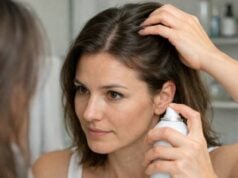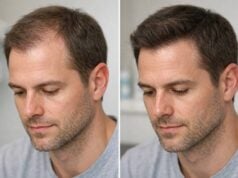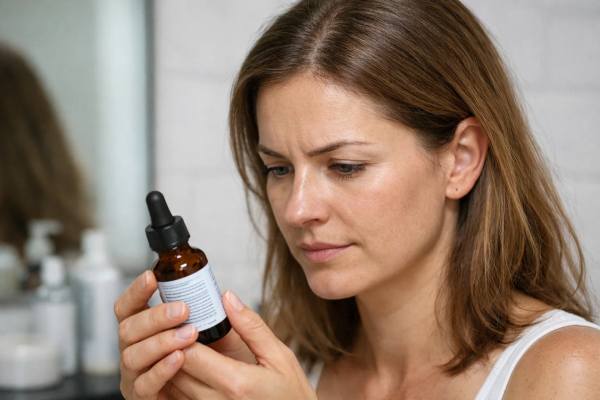
Exosome hair serums sit at the intersection of regenerative medicine language and everyday hair care marketing. They are sold as advanced scalp treatments that may support fuller-looking hair, calm irritation, and improve the environment around the follicle. That promise is appealing, especially for people who want something more sophisticated than a basic cosmetic serum but less intimidating than an in-office procedure.
The catch is that “exosome” on the front of the bottle does not always tell you what is actually inside, how standardized it is, or whether the evidence applies to that exact formula. In hair medicine, the strongest interest in exosomes comes from early clinical and preclinical research, but many consumer products are blends of conditioned media, peptides, humectants, and soothing ingredients marketed under the same umbrella term.
That is why dermatologists do not judge these serums by branding alone. They look at the claim, the ingredient list, the source material, the scalp diagnosis, and the quality of evidence before deciding whether a product is promising, overpriced, irritating, or simply mislabeled.
Essential Insights
- Exosome hair serums may help scalp comfort and support a healthier-looking hair routine, but most retail products do not have strong proof that they regrow hair on their own.
- The most credible benefit is as an adjunct that may improve the scalp environment, not as a stand-alone replacement for established hair-loss treatment.
- “Exosome” on packaging does not guarantee a standardized exosome dose, a verified source, or clinically meaningful delivery to the follicle.
- Fragrance, essential oils, harsh alcohols, and poorly defined biologic ingredients can make a premium serum a poor choice for a reactive scalp.
- Apply to a clean scalp, keep the routine simple, and judge progress with photos over at least 8 to 12 weeks rather than day-to-day shedding.
Table of Contents
- What exosome hair serums are trying to do
- Which claims are plausible and which are overstated
- How to read the ingredient list
- What dermatologists look for before recommending one
- Safety, regulation, and red flags
- How to use one without losing perspective
What exosome hair serums are trying to do
Exosomes are tiny extracellular vesicles that cells release as part of normal cell-to-cell communication. In research settings, they are studied because they can carry signaling molecules such as proteins, lipids, and nucleic acids that may influence inflammation, wound repair, and tissue behavior. In hair biology, that matters because the follicle is not an isolated structure. It depends on the surrounding scalp environment, blood supply, immune balance, and signaling between follicular cells.
That scientific background explains why exosome-based hair products attract so much interest. The theory is not absurd. If a topical formula can support a calmer, better-hydrated, less inflamed scalp, or deliver bioactive signals that favor anagen, it could help create a more supportive setting for hair growth. That is also why marketing language often focuses on terms like follicle renewal, scalp repair, density support, and growth factors.
But a retail serum is not the same thing as a standardized clinical exosome therapy. In the medical literature, the most interesting hair data usually come from tightly controlled preparations used in clinics, sometimes alongside procedures such as microneedling or injection. A bottle sold online may be far looser in definition. It might contain true exosomes, extracellular vesicles, cell-conditioned media, plant vesicles, or a broader secretome blend. Those are not interchangeable, even if they are marketed as if they were.
From a dermatologist’s point of view, the practical goal of a good exosome hair serum is usually modest. It may support the scalp barrier, reduce surface dryness, improve tolerability of an overall hair routine, and possibly complement treatments aimed at thinning. It is less convincing as a stand-alone answer for androgenetic alopecia, sudden shedding, or scarring hair loss.
That distinction matters because many people buy these serums hoping for dramatic regrowth from a cosmetic product. A more realistic frame is that they are part scalp-care product, part regenerative-medicine-inspired formula. They may be most helpful when the scalp is mildly irritated, dehydrated, or recovering from a stressful period, and least helpful when the real issue is a diagnosis that needs targeted treatment.
If you think of hair growth as depending on a healthy local ecosystem, not just a single magic ingredient, these serums make more sense. The best ones try to improve that ecosystem. A useful companion read is follicle environment basics, because that is the lens dermatologists tend to use when evaluating any scalp treatment.
Which claims are plausible and which are overstated
The most believable claims are the ones that stay close to what a topical scalp product can reasonably do. “Supports the scalp barrier,” “helps soothe dryness,” “improves scalp hydration,” and “may help hair look fuller over time” are all within the realm of possibility, especially when a serum also contains humectants, film-formers, anti-inflammatory ingredients, or peptides. If a formula improves scalp comfort and makes breakage less noticeable, users may genuinely feel that their hair looks healthier and denser.
A second tier of claims is biologically plausible but still not well proven in over-the-counter use. That includes statements like “supports the growth phase,” “helps reduce shedding,” or “promotes thicker-looking hair.” Early studies and reviews suggest exosome-based approaches may improve short-term hair measures, and published clinical reports have shown gains in density and thickness. Still, those studies are small, methods vary, and the better-known data often come from in-office protocols rather than a consumer serum used alone at home. One often-cited topical study followed 39 patients over 12 weeks, which is interesting but not enough to treat every serum claim as settled fact.
The weak or overstated claims are easier to spot. Be skeptical of any product that suggests it can reverse long-standing pattern hair loss by itself, replace prescription therapy, regrow hair on shiny bald areas, work equally well for every form of alopecia, or produce permanent results after a short course. Those promises overstep both the evidence and the biology of hair disorders.
This is where comparison helps. Established treatments such as minoxidil have clearer mechanisms, larger evidence bases, and a more predictable place in care. An exosome serum may be a sophisticated adjunct, but it is not automatically a stronger option just because it sounds newer. Readers weighing that tradeoff often benefit from reviewing how minoxidil works so they can compare marketing excitement with proven treatment logic.
There is also a cosmetic illusion effect. If a serum improves shine, reduces frizz at the roots, softens flakes, or makes the scalp less inflamed, hair can appear fuller even before true follicular change occurs. That is not fake benefit, but it is not the same as follicle miniaturization reversing.
A useful rule is this: the more a claim sounds like drug language, the more evidence and transparency it should come with. The closer a claim stays to scalp support and adjunctive use, the more credible it usually is. Dermatologists are rarely impressed by sweeping transformation promises. They are far more interested in whether a product can explain, in plain terms, what it contains, who it is for, and what kind of improvement a user can realistically expect over three to six months.
How to read the ingredient list
The ingredient list is often more revealing than the front label. When dermatologists examine an exosome hair serum, they look for what the formula is actually calling the biologic material. That wording can tell you whether the product appears to contain a defined exosome ingredient, a broader conditioned medium, plant extracellular vesicles, or a more generic culture-derived extract.
If the list names something like human adipose stromal cell exosomes, that suggests the brand is claiming a more specifically characterized exosome ingredient. If it says conditioned media, culture conditioned media, or secretome-related wording, that usually means the formula contains a broader mixture collected from cell culture rather than purified exosomes alone. If it uses plant language, you may see terms closer to extracellular vesicles, vesicles, callus extracellular vesicles, or plant cell culture derivatives. Those are not meaningless, but they are not identical to human-derived exosome preparations.
Then look at the rest of the formula. In many products, the visible performance may come from familiar cosmetic actives rather than the headline ingredient. Common examples include glycerin, sodium hyaluronate, betaine, panthenol, niacinamide, amino acids, caffeine, copper peptides, biomimetic peptides, ceramides, and soothing botanicals. Those ingredients can make a product feel excellent and can absolutely support the scalp. They may also explain a large share of the user’s experience.
That is why dermatologists ask a blunt question: if you removed the word “exosome” from the bottle, would the formula still make sense? Many good serums would. Many hyped ones would look like ordinary hydration blends with a thin layer of regenerative branding.
You should also pay attention to irritants and cosmetic baggage. Fragrance, essential oils, strong cooling agents, and high-denatured-alcohol formulas can sabotage a scalp product aimed at people who already have sensitivity, itching, or shedding. Someone researching scalp serum ingredients should expect the best formulas to balance actives with barrier support, not overload the scalp with sensory extras.
A few practical clues help:
- Ingredients listed earlier usually make up more of the formula than those near the end.
- A vague proprietary complex with no clear source can be hard to assess.
- A long list of peptides, humectants, and soothing agents may be useful, but it means the product’s effect may not depend mainly on exosomes.
- If the company advertises a particle count, exosome marker profile, or purification method, that is more informative than a vague percentage claim.
The ingredient list will not tell you everything, but it will usually tell you whether the product is specific and serious or broad and theatrical. With this category, that difference matters more than the marketing copy.
What dermatologists look for before recommending one
Dermatologists rarely start with the serum. They start with the diagnosis. A person with early androgenetic alopecia, increased shedding after illness, traction damage, seborrheic dermatitis, or a scarring alopecia does not need the same plan. If the scalp diagnosis is wrong, even an elegant formula is solving the wrong problem.
Once the diagnosis is clear, the next question is evidence. Does the brand cite data on hair, or only on skin rejuvenation? Was the product studied as a topical, an injected treatment, or as part of a device procedure? Was it tested on humans, or only in cell culture and animal models? In this field, a lot of marketing takes a mechanistic idea and stretches it far past the actual study design.
Then comes product definition. Dermatologists want to know the source material, the degree of characterization, and how the company distinguishes exosomes from broader secretome fractions. A reliable product should be able to say where its material comes from, how it was isolated, and how batch consistency is addressed. In more technical settings, clinicians may ask about marker panels such as CD9, CD63, CD81, TSG101, or ALIX, along with sterility, storage, and stability details. Many retail brands do not provide that level of transparency, which is one reason cautious dermatologists hesitate.
Formulation quality matters too. A smart scalp serum supports the barrier and limits irritation. That often means humectants, soothing agents, and a restrained preservative and fragrance profile. If a brand leans heavily on buzzwords while the formula itself looks harsh or chaotic, that is a problem. The same goes for products that market biologic sophistication but ignore proven supportive ingredients such as peptides, barrier lipids, and calm, low-irritation bases. For broader context, peptides for scalp care are worth understanding because they are frequently paired with exosome claims and may contribute more practical benefit than consumers realize.
Cost is another major filter. Many exosome serums are expensive enough that dermatologists compare them directly with treatments that have a clearer track record. If a patient has a limited budget, a clinician may prioritize diagnosis, minoxidil, dandruff control, iron or thyroid workup when indicated, or an office treatment with better evidence before recommending a premium topical serum.
The last check is fit. Some patients want a supportive add-on and are comfortable with uncertainty. Others want a treatment with strong outcome data. Dermatologists try to match the product to the person, not just the trend. In that sense, the best recommendation is not “this is the newest thing.” It is “this fits your scalp, your diagnosis, your tolerance, and your expectations.”
Safety, regulation, and red flags
Exosome hair serums are often marketed with a futuristic tone, but safety questions are still central. A topical serum used on intact scalp is generally less concerning than an injected or procedurally delivered biologic product. Even so, lower risk does not mean no risk. The main concerns are irritation, poor product standardization, unclear sourcing, and oversized medical claims.
From a scalp perspective, the simplest problems are often the most common. A person with eczema, seborrheic dermatitis, psoriasis, folliculitis, or a damaged barrier may react not to the headline biologic ingredient, but to the supporting formula. Fragrance, essential oils, menthol, aggressive exfoliating acids, and harsh solvents can all turn a premium serum into an itchy one. That is why dermatologists distinguish product allergy versus irritation before blaming “exosomes” as a category.
The next layer is product definition and source. Human-, animal-, microbial-, and plant-derived materials raise different questions. With biologically complex ingredients, source, purification, and contamination control matter. The problem for consumers is that many brands provide far more storytelling than documentation. If the label sounds advanced but you cannot tell what the ingredient actually is, where it came from, or how it was standardized, caution is reasonable.
Red flags include:
- promises to cure hair loss or replace medical care
- claims that the serum works for every type of alopecia
- before-and-after photos without timing or treatment details
- a vague proprietary complex with no clear ingredient name
- instructions to combine the product with home microneedling without meaningful safety guidance
- language that sounds like injectable biologic therapy pasted onto a cosmetic bottle
Regulation adds another reason for caution. In the United States, products marketed to treat disease fall into a stricter regulatory lane, and official safety notices have warned that exosome products intended to treat conditions in humans are not casually exempt from drug and biologic rules. That does not mean every topical scalp serum is inherently dangerous. It does mean the commercial market has moved faster than standardization, which leaves room for confusion and overclaiming.
One more practical issue is scalp timing. A serum that feels fine on an intact scalp may sting sharply after aggressive exfoliation, recent coloring, dermatitis flares, or same-day needling. Dermatologists usually prefer to stabilize the scalp first, then add advanced products one at a time. When a formula is good, there is no need to force it through an irritated barrier to prove it is potent.
How to use one without losing perspective
If you decide to try an exosome hair serum, use it like a measured experiment, not a leap of faith. Start with a simple question: what job is this product supposed to do in your routine? If the answer is “replace everything,” that is already a warning sign. A better answer is “support my scalp, complement proven treatment, and see whether my hair looks healthier over time.”
Begin with a patch test if you have sensitive skin or a history of reacting to scalp products. Then introduce the serum on a calm scalp, not during an active flare of itching, scaling, or burning. Apply it to a clean scalp so residue, heavy oils, or styling buildup do not compete with it. Most people do best by parting the hair, placing the product directly where thinning or irritation is most noticeable, and resisting the urge to layer five other actives on top.
Keep the routine stable for at least 8 to 12 weeks before you judge it. Hair changes are slow, and daily mirror checks are misleading. Use consistent photos in the same lighting and from the same angles. Pay attention to shedding, scalp comfort, and how the roots look and feel, but do not expect immediate density changes from a topical cosmetic product.
It also helps to decide what counts as success. For some people, less itching and a calmer scalp are meaningful wins. For others, only measurable regrowth matters. If you want a product with stronger treatment intent, a dermatologist may steer you toward medical therapy or office-based options instead. If you are unsure when a cosmetic route stops making sense, when to see a dermatologist for hair loss is the more important guide than any product review.
A few guardrails keep expectations realistic:
- do not assume expensive means standardized
- do not stop proven therapy just because a new serum sounds advanced
- do not use one product to self-treat sudden shedding, patchy loss, or scalp pain without evaluation
- do not judge a serum by the first week of use
The best place for an exosome hair serum is usually as an adjunct in a broader plan: a diagnosed scalp condition, a tolerable cleansing routine, medical treatment when needed, and a product that supports the scalp rather than overwhelms it. That is the dermatologist’s perspective in one line. These serums may have a role, but only when the label, the formula, and the use case all make sense together.
References
- Exosomes and Hair Regeneration: A Systematic Review of Clinical Evidence Across Alopecia Types and Exosome Sources 2025 (Systematic Review)
- Systematic review of exosome treatment in hair restoration: Preliminary evidence, safety, and future directions 2023 (Systematic Review)
- Exosomes: A Comprehensive Review for the Practicing Dermatologist 2025 (Clinical Review)
- Regulation of exosomes as biologic medicines: Regulatory challenges faced in exosome development and manufacturing processes 2024 (Review)
- Public Safety Notification on Exosome Products 2019 (Safety Notice)
Disclaimer
This article is for educational purposes only and does not diagnose, treat, or replace medical care. Hair shedding, thinning, scalp pain, patchy loss, and inflammatory scalp symptoms can have medical causes that need a proper evaluation. Because exosome products vary widely in source, formulation, and evidence quality, a product that is well tolerated for one person may be unhelpful or irritating for another. Seek medical advice promptly if you have sudden hair loss, scarring, signs of infection, or persistent scalp symptoms.
If this article helped, consider sharing it on Facebook, X, or your preferred platform.