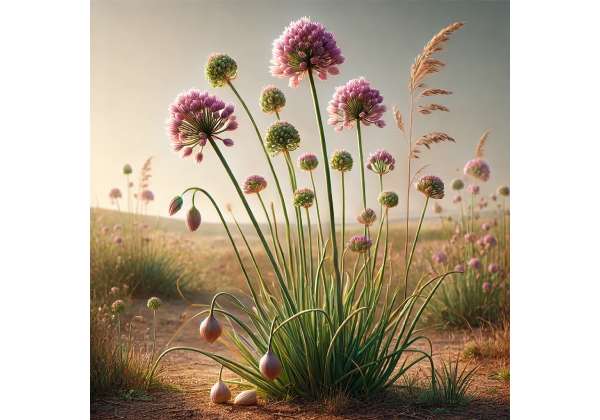
Field garlic, Allium oleraceum, is a wild, bulb-forming member of the onion and garlic family that has long been valued more as a seasonal food and traditional useful plant than as a formal herbal supplement. It grows across much of Europe and nearby regions, producing slender leaves, underground bulbs, and small aerial bulbils with a clear allium scent. That smell is the first clue to its chemistry: like other Allium species, field garlic likely owes much of its value to sulfur-rich compounds, alongside fructans and antioxidant plant chemicals.
Its appeal today is practical. Field garlic can add pungent flavor to meals, contribute prebiotic fibers, and may offer some of the broader cardiometabolic, antimicrobial, and anti-inflammatory advantages often associated with allium vegetables. Still, there is an important limit. Direct human research on Allium oleraceum itself is sparse, so most medicinal claims are inferred from the wider Allium genus rather than proven in field-garlic trials. That makes it a herb best used with curiosity and restraint: food first, medicine second, and concentrated use only with caution.
Essential Insights
- Field garlic is best understood as an edible wild allium with likely antioxidant, prebiotic, and mild cardiometabolic benefits, but direct human evidence is limited.
- Its most relevant compounds are likely organosulfur precursors, fructans, and polyphenols rather than a single standout ingredient.
- A cautious food-based range is about 2 to 5 g fresh bulb or bulbil, or about 5 to 10 g fresh leaves daily.
- Medicinal dosing is not standardized, and concentrated extracts should not be treated like ordinary food use.
- People with allium allergy, planned surgery, anticoagulant use, or FODMAP-sensitive IBS should avoid self-prescribing it.
Table of Contents
- What field garlic is
- Key ingredients and active compounds
- What field garlic may help with
- How to use field garlic
- How much field garlic per day
- Side effects interactions and who should avoid it
- What the research actually shows
What field garlic is
Field garlic, Allium oleraceum, is a perennial wild allium in the Amaryllidaceae family. Botanically, it belongs to the same broad group as garlic, onion, leek, and chives, but it is not simply “wild garlic” in the generic sense. That distinction matters because many different alliums are called wild garlic in everyday speech, and their flavor, size, ecology, and practical uses differ. Field garlic is usually described as smaller and more wiry than common kitchen garlic, with narrow leaves, modest underground bulbs, and a flowering head that often carries bulbils as well as flowers.
One of the most useful things to know about the plant is that it reproduces vigorously. It spreads not only by bulbs below ground but also by aerial bulbils. That helps explain why it persists so well in grasslands, field margins, rocky places, and old human-influenced sites. Historically, it appears to have been more than a casual weed. Ethnobotanical and conservation literature indicates that Allium oleraceum was used as a food, a spice, and a medicinal plant in parts of northern and eastern Europe, which fits its strong scent, edible nature, and hardy growth habit.
In practical terms, field garlic sits between herb and wild food. It is not a standardized supplement with a modern dosing tradition, but neither is it just a botanical curiosity. People have eaten the leaves, bulbs, and bulbils, often using them the same way they use other alliums: chopped into soups, eggs, salads, grain dishes, and savory sauces. Its value is strongest in that food-medicine overlap, where flavor and function live in the same plant.
It also helps to compare it with better-known relatives. Common garlic is denser, more standardized, and much better studied. Leek is milder and bulkier. Chives are leafier and more delicate. Ramsons are broader-leaved and distinctly spring-like. If you already enjoy ramsons as a wild allium option, field garlic fits the same general family pattern, though it is typically tougher, more compact, and more strongly tied to bulbils and dry habitats.
Because field garlic is under-studied, the safest framing is honest and simple. It is an edible wild allium with a traditional history and a strong likelihood of sharing some useful traits with other allium vegetables. But it should not be marketed as if it has the same level of human clinical evidence as common garlic. The realistic role of field garlic is as a culinary herb, a modest functional food, and a plant of ethnobotanical interest rather than a fully established medicinal remedy.
That perspective keeps the plant in focus. Field garlic is interesting not because it is exotic or mysterious, but because it shows how many useful herbs begin: as local foods with plausible chemistry and a long, quiet record of human use.
Key ingredients and active compounds
The chemistry of field garlic is not mapped nearly as well as that of common garlic, but the broad outline is still useful. As an Allium species, Allium oleraceum is expected to contain sulfur-based precursors, storage carbohydrates such as fructans, and a range of polyphenols and other antioxidant compounds. This is important because the health value of alliums rarely comes from one isolated substance. Instead, it comes from a pattern of compounds that change when the plant is cut, crushed, cooked, or dried.
The first group to understand is the sulfur chemistry. In alliums, intact tissue stores relatively stable sulfur precursors and the enzymes that transform them. Once the tissue is chopped or bruised, those components meet and rapidly generate more reactive sulfur compounds. In common garlic, that process produces allicin and then a range of related sulfur metabolites. Field garlic has not been studied as deeply at this level, but it is reasonable to expect a comparable sulfur-driven system because its flavor and odor clearly place it in the same biochemical tradition.
These sulfur compounds matter because they are the main candidates behind many allium-related effects:
- antimicrobial activity,
- mild blood pressure and lipid effects,
- influence on inflammation signaling,
- and the strong aroma that often stimulates appetite and digestive secretions.
The second important group is fructans. Food science research has identified Allium oleraceum as a useful fructan source in certain extraction work. Fructans are storage carbohydrates that behave like fermentable fibers and, in the right context, may support beneficial gut bacteria. This gives field garlic an interesting double character. For some people, fructans are a gut-friendly prebiotic. For others, especially those with FODMAP-sensitive IBS, they can worsen gas and bloating. So the same constituent can be either an advantage or a drawback depending on the person.
The third group includes flavonoids and other phenolic antioxidants. Here again, field garlic likely resembles related alliums more than it differs from them. These compounds may help explain why allium vegetables are often discussed in relation to oxidative stress, vascular health, and inflammation. Their role is usually supportive rather than dramatic, but that is still meaningful in a food-based herb.
A practical way to think about field garlic’s “key ingredients” is this:
- Sulfur compounds shape aroma and most likely drive the plant’s best-known biological actions.
- Fructans contribute potential prebiotic value but can be poorly tolerated in some guts.
- Polyphenols and flavonoids provide antioxidant support and add to the plant’s overall functional-food profile.
This is one reason field garlic is better compared with whole allium foods than with narrow single-compound supplements. In the kitchen and in the body, it behaves more like a relative of onions used for nutrition and flavor than like a purified extract designed to target one pathway.
The key limitation, however, should stay visible. Much of this chemistry is inferred from broader Allium science and partial species-specific data, not from a rich field-garlic literature. That does not make the chemistry unimportant. It simply means the plant’s active profile is plausible and promising, while its exact medicinal fingerprint remains less certain than that of common garlic.
What field garlic may help with
Field garlic may support health in several ways, but the realistic wording here is “may support,” not “has been clinically proven to treat.” The best way to understand its benefits is to separate three layers: likely food-level value, plausible genus-level benefits, and unproven species-specific claims.
At the most grounded level, field garlic is a useful wild food. As part of meals, it can add flavor without much energy cost, encourage vegetable intake, and contribute small amounts of fiber and phytochemicals. This matters more than it sounds. Many herbs earn their health value not because they act like drugs, but because they make nutritious food more appealing and bring mild biological effects along with it.
The most plausible functional benefit is cardiometabolic support borrowed from the wider allium family. Garlic and several related alliums have been studied for effects on cholesterol, blood pressure, oxidative stress, inflammation, and glucose-related markers. Field garlic probably shares at least some of that potential because of its sulfur chemistry, but no one should assume equal potency or identical clinical outcomes. The evidence is strongest for the genus, not specifically for Allium oleraceum.
Digestive effects are another realistic area. Small culinary amounts may stimulate appetite and digestive secretions, especially when used raw or lightly crushed. In addition, its fructan content could help nourish beneficial gut microbes in some people. The catch is that this is highly individual. Someone with a robust gut may find field garlic gently supportive. Someone with IBS, SIBO tendencies, or strong FODMAP sensitivity may feel more bloated rather than better. That nuance is easy to miss in herb summaries and is one of the most practical things to know.
There is also a reasonable case for mild antimicrobial and immune-supportive value. Many alliums have shown activity against bacteria, fungi, and inflammatory pathways in laboratory settings. Field garlic likely shares this broad protective profile, though using it as food is very different from treating an infection. Its role here is supportive and dietary, not antibiotic.
Potential benefit areas include:
- support for a heart-healthy eating pattern,
- mild digestive stimulation in tolerant users,
- possible prebiotic value from fructans,
- culinary replacement for heavier flavoring agents,
- and broad antioxidant support from allium phytochemicals.
What should not be claimed? Field garlic should not be presented as a proven treatment for hypertension, diabetes, infection, or cancer. It may fit into a preventive diet, but that is very different from serving as a therapeutic intervention.
Compared with the better-studied profile of leeks as a milder allium food, field garlic is more of a traditional wild edible than a clinically described herb. Its benefits are most believable when kept close to dietary use.
So, what does it help with in the real world? Most likely, it helps with flavor, food diversity, and some of the low-grade protective effects associated with allium-rich diets. That may sound modest, but modest benefits used consistently often matter more than dramatic claims that never hold up.
How to use field garlic
Field garlic is best used like a strong wild allium, not like a standardized supplement. That means the most sensible forms are fresh culinary use, short food-style infusions, and modest seasoning rather than oils, capsules, or concentrated extracts. Because it is a wild plant, correct identification also matters more here than it does with supermarket garlic.
The edible parts usually include the bulb, leaves, and bulbils. Their flavor varies with age and season. Younger leaves tend to be greener and softer, while bulbils and bulbs are sharper and more concentrated. In the kitchen, field garlic can be used much like chives, wild garlic, or young garlic, but its taste is often slightly coarser and more assertive.
Simple ways to use it include:
- Chopped raw into food
Add a small amount to salads, soft cheese, yogurt sauces, eggs, or dressings. - Folded into cooked dishes at the end
Stir chopped leaves or bulbils into soups, potatoes, lentils, grains, and sautéed vegetables just before serving. - Used in herb butter or green sauces
Blend with olive oil or butter, then use modestly because the flavor can dominate. - Lightly infused
A small chopped amount can be steeped briefly in hot water or broth, though this is less traditional than food use. - Pickled or preserved in vinegar
Bulbils can work especially well here, where their pungency becomes an asset.
One of the most important practical points is preparation. Crushing or chopping releases the sulfur chemistry that gives alliums much of their functional value, but it also intensifies pungency. A good compromise is to chop and let the plant sit for a few minutes before adding it to food. Then decide whether to use it raw for maximum bite or gently cooked for a softer result.
Foraging adds a second layer of caution. Never use field garlic medicinally or culinarily unless the identification is secure. The allium smell is helpful, but smell alone is not enough if you are inexperienced. Wild bulbs should never be consumed from uncertain plants, roadside pollution zones, or chemically treated land.
There is also a practical comparison worth making. If you want a softer, easier leafy allium for frequent use, chives for gentle everyday allium use may be the better choice. Field garlic is more of a seasonal, assertive ingredient that rewards small amounts.
The best uses, then, are not dramatic. Field garlic shines in:
- spring and early summer cooking,
- foraged herb mixtures,
- savory condiments,
- small daily culinary doses,
- and traditional food-first experimentation.
What it is not ideal for is unsupervised supplement use. There is no strong evidence base for standardized tinctures, pills, or essential-oil-style products from Allium oleraceum. If the plant interests you, the safest and most rational route is to use it as a food, observe tolerance, and let its value build through ordinary meals rather than medicinal ambition.
How much field garlic per day
There is no standardized medicinal dose for field garlic established by human clinical trials. That is the most important starting point. Because Allium oleraceum is under-studied, dose guidance should stay in the food-based range and should clearly separate culinary use from speculative medicinal use.
A cautious adult range for fresh use is:
- Fresh bulb or bulbil: about 2 to 5 g per day.
- Fresh leaves or chopped aerial parts: about 5 to 10 g per day.
- Dried powder from the plant: about 0.5 to 1 g per day, if used at all.
These are practical, conservative ranges rather than evidence-based therapeutic doses. They are best understood as “small regular food amounts” rather than “this much treats a condition.” In taste terms, that often means roughly one small bulb, a modest cluster of bulbils, or one to two tablespoons of chopped greens.
Timing matters too. Field garlic is usually best taken with food. Using it in or after meals can reduce stomach irritation and make its pungency easier to tolerate. Raw use gives the strongest sulfur profile, but lightly cooked use is often gentler on the stomach.
Duration is another point many herb guides skip. Because field garlic lacks long-term clinical dosing data, short and moderate use makes more sense than sustained medicinal use. A person who forages it in season and uses it regularly in meals is staying within a reasonable traditional pattern. A person who takes concentrated homemade extracts every day for months is moving into a much less certain zone.
A practical dosing approach looks like this:
- Start with the lower end if you are sensitive to onions or garlic.
- Use food amounts first, not extracts.
- Increase slowly only if digestion stays comfortable.
- Stop if bloating, burning, diarrhea, or reflux appear.
The plant’s fructans add an important twist. Someone who tolerates garlic poorly because of FODMAP sensitivity may also tolerate field garlic poorly, even if the flavor is appealing. In that case, the “right dose” may be tiny or none at all. That is not a failure of the herb. It is simply a reminder that prebiotic plants are not universally gentle.
If you are looking for a broader digestive herb pattern rather than relying on field garlic alone, a different style of support such as fennel for gentler digestive use may be easier for some people.
The most responsible answer to “how much per day?” is therefore not a bold therapeutic number. It is this: use field garlic in small food-like amounts, treat it as a strong wild allium, and avoid assuming that more will create more benefit. For this plant, moderation is not a weak recommendation. It is the evidence-based one.
Side effects interactions and who should avoid it
Field garlic is probably low-risk in modest food amounts for most healthy adults, but “probably” matters here. Because direct safety studies on Allium oleraceum are limited, many safety cautions are sensibly extrapolated from common garlic and the broader allium family.
The most likely side effects are gastrointestinal. These include:
- stomach warmth or burning,
- reflux or belching,
- abdominal discomfort,
- loose stools,
- and increased gas or bloating.
The gas issue deserves special attention because field garlic may contain fructans. In some people, that means prebiotic benefit. In others, especially those with IBS or FODMAP sensitivity, it means more fermentation and more symptoms. This is one of the clearest examples of why “healthy plant compound” does not always equal “universally well tolerated.”
Allergic reactions are also possible. Anyone with a known allergy to garlic, onion, leek, or related alliums should assume cross-reactivity is possible. Symptoms can range from oral irritation to skin rash, digestive upset, or more serious reactions in susceptible people.
Interactions are less well studied for field garlic itself, but caution is reasonable with:
- anticoagulants and antiplatelet drugs,
- medicines around surgery,
- multiple strong herbal supplements aimed at heart or metabolic health,
- and highly concentrated garlic-like extracts.
The reason is not that field garlic is proven to cause the same interactions as supplement-grade garlic, but that its sulfur-active family profile makes those interactions plausible enough to respect. A food garnish is one thing. Repeated medicinal self-dosing is another.
People who should avoid medicinal self-use include:
- pregnant people,
- breastfeeding people,
- children,
- people with active ulcer symptoms or severe reflux,
- those with allium allergy,
- those awaiting surgery,
- and people with highly sensitive bowel patterns.
There is also a wild-plant safety issue that has nothing to do with chemistry: misidentification. Correct identification is essential before consumption. Wild bulbs from contaminated ground, sprayed fields, or uncertain habitats should also be avoided.
A practical safety distinction helps keep things clear:
- Culinary use: usually low risk for tolerant adults.
- Repeated medicinal use: uncertain and should stay conservative.
- Concentrated products: not well studied and best avoided without expert guidance.
Compared with some more familiar pungent herbs, field garlic belongs to the same general caution zone as other strong allium foods and seasonings: beneficial for many, irritating for some, and capable of becoming a problem when dose moves far beyond normal eating.
In short, field garlic is safest when treated as a wild food with medicinal potential, not as an informal supplement experiment. The less evidence a plant has, the more valuable that distinction becomes.
What the research actually shows
The research story around field garlic is unusual because the plant sits inside a very well-known genus but remains poorly studied as its own medicinal entity. That creates a common trap: people see the strong literature on garlic and then assume field garlic inherits the same evidence. It does not. It inherits plausibility, not proof.
What is reasonably well supported is the broader case for allium vegetables. Reviews and umbrella analyses show that garlic, onion, leek, and related alliums contain sulfur compounds, flavonoids, and other bioactives linked with antioxidant, anti-inflammatory, antimicrobial, and cardiometabolic effects. Some garlic preparations in particular have human evidence for modest effects on lipids, blood pressure, and selected metabolic outcomes. That literature tells us the genus matters nutritionally and pharmacologically.
What is specific to Allium oleraceum is much thinner. Species-level papers focus mainly on botany, ecology, ploidy, reproduction, and distribution rather than controlled therapeutic testing in humans. Ethnobotanical and historical work supports its use as a food, spice, and medicinal plant in earlier regional traditions, which is valuable context, but not the same as a modern clinical evidence base.
So what can we fairly conclude?
- Strongest evidence: allium vegetables as a broader dietary group.
- Moderate support: sulfur-rich allium chemistry as a meaningful functional-food feature.
- Species-specific support for field garlic: mainly traditional use, edibility, and botanical documentation.
- Weakest area: human clinical trials on Allium oleraceum itself.
That distinction should shape the way the herb is presented. It is fair to say field garlic is likely nutritious, chemically active, and consistent with the health logic of other alliums. It is not fair to say that it has been clinically proven to lower blood pressure, fight infection, or prevent chronic disease on its own.
The research also helps explain why a food-first approach makes the most sense. When evidence is indirect, culinary use is the safest way to benefit from the plant. You get flavor, diet diversity, and probable functional value without pretending the herb is a validated medicine.
This is where field garlic becomes especially interesting. It reminds us that evidence does not have to be all or nothing. A plant can be worthwhile even when the research is incomplete. It simply needs to be described accurately. For field garlic, that means:
- a promising wild allium,
- historically useful,
- chemically plausible,
- nutritionally relevant,
- and not yet clinically established.
That is a strong enough identity on its own. In fact, it is more useful than inflated claims would be, because it tells the reader exactly where field garlic belongs: in the overlap between traditional plant use, wild food culture, and cautious modern herbal interest.
References
- Intricate Distribution Patterns of Six Cytotypes of Allium oleraceum at a Continental Scale: Niche Expansion and Innovation Followed by Niche Contraction With Increasing Ploidy Level 2020
- Allium vegetables: Traditional uses, phytoconstituents, and beneficial effects in inflammation and cancer 2023 (Review)
- On the Prospects of In Situ Conservation of Medicinal- and Aromatic-Plant Genetic Resources at Ancient-Hillfort Sites: A Case Study from Lithuania 2023
- Functionality of garlic sulfur compounds (Review) 2025 (Review)
- Allii sativi bulbus – herbal medicinal product | European Medicines Agency (EMA) 2025 (Guideline)
Disclaimer
This article is for educational purposes only and does not replace medical advice, diagnosis, or treatment. Field garlic is an under-studied wild allium, and many of its proposed health effects are inferred from broader allium research rather than direct human trials on Allium oleraceum. Do not use it as a substitute for treatment of cardiovascular disease, diabetes, infection, digestive disease, or any chronic condition. Seek professional guidance before medicinal use if you are pregnant, breastfeeding, taking blood thinners, preparing for surgery, managing IBS or reflux, or have any known allium allergy.
If you found this article helpful, please share it on Facebook, X, or any platform your readers prefer.