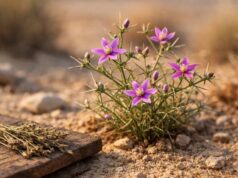
Fluellen, botanically known as Kickxia elatine, is a small trailing field herb in the plantain family that has lived for a long time at the edge of formal medicine and local folk practice. It is not a mainstream herbal remedy, which is exactly why it deserves a careful introduction. Traditional uses recorded in Europe and parts of South Asia connect fluellen with wound care, hemostatic support, excessive sweating, eye watering, and general tonic or soothing uses. Modern research is still limited, but the plant has attracted fresh attention because it contains iridoid glycosides, flavonoids, phenolic compounds, and other secondary metabolites that suggest real biological activity.
What makes fluellen unusual is the gap between tradition and modern evidence. It has a genuine ethnobotanical record and a growing laboratory profile, yet there is still very little direct human research, especially for internal use. The one clearer modern signal comes from experimental skin-care and dermocosmetic work rather than from classic herbal clinical trials. For readers, that means fluellen is best understood as a historically used but still under-researched medicinal herb with interesting chemistry, cautious practical potential, and important limits.
Quick Overview
- Fluellen is traditionally associated with wound support, mild astringent use, and local skin care, but modern clinical evidence is still sparse.
- Its best-known compounds include iridoid glycosides such as kickxioside and kickxin, along with flavonoids such as pectolinarin.
- A modern topical study used a 2% extract cream once daily for 6 weeks, but no standardized internal dose has been established.
- Historical internal use exists, yet modern oral safety and efficacy data remain too limited for confident self-treatment.
- Pregnant or breastfeeding people, children, and anyone with serious skin or bleeding problems should avoid unsupervised medicinal use.
Table of Contents
- What Is Fluellen
- Key Ingredients in Fluellen
- What Fluellen May Help With
- How to Use Fluellen
- Fluellen Dosage and Timing
- Side Effects and Who Should Avoid It
- What the Research Actually Says
What Is Fluellen
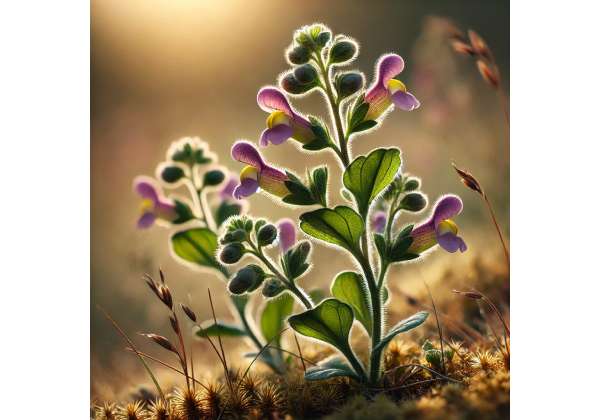
Fluellen is a small annual herb most commonly identified as Kickxia elatine, sometimes called sharp-leaved fluellen. It belongs to the Plantaginaceae family, though older sources place related plants in what used to be a broader figwort grouping. In the field, it is easy to overlook. It tends to creep or sprawl close to the ground, with delicate stems, small leaves, and modest yellow flowers marked by purple or darker tones. Unlike more famous medicinal herbs, fluellen was never a dominant part of commercial herbal practice. Its reputation survives mostly through regional ethnobotany, older herbals, and scattered phytochemical research.
That modest profile can be misleading. Lesser-known herbs often preserve a more local, use-specific tradition, and fluellen fits that pattern. Historical and ethnobotanical sources describe it as a wound herb, a hemostatic aid, an astringent, and a topical plant for reducing sweating in the feet. Some records also associate it with excessive tearing, minor skin problems, and general tonic or soothing use. In parts of the Balkans, it has been documented as a farmer’s wound herb applied directly after cuts or field injuries. In India, regional reports connect it with wound use and bleeding control. Older Western herbal references also describe internal infusion use, though these accounts are much harder to translate into modern evidence-based practice.
One useful way to understand fluellen is to compare it with the kind of humble field herbs that often gained reputations through repeated practical use rather than through formal medicine. In that sense, it sits closer to plantain and other field-soothing herbs than to better-known commercial botanicals such as ginseng or echinacea. It is a plant of local application, modest preparations, and traditional familiarity, not of heavy standardization or broad clinical adoption.
Another reason fluellen deserves careful handling is that the modern research base is thin. Unlike larger medicinal species, Kickxia elatine has very few human studies. That means its identity as a medicinal herb depends on a patchwork of ethnobotanical reports, older chemistry papers, and newer laboratory work. This is important because it prevents a common mistake: assuming the plant is either a hidden miracle or an obsolete curiosity. It is neither. Fluellen is best viewed as a real but underdeveloped medicinal species whose practical use should stay close to what is historically plausible and what current research can actually support.
In short, fluellen is a traditional herb with most of its credibility rooted in wound-related folklore, topical use, astringency, and a growing chemical profile. It is not a mainstream internal herbal medicine, and that distinction should shape every other part of the discussion.
Key Ingredients in Fluellen
Fluellen’s medicinal interest depends almost entirely on its chemistry, because the clinical evidence is still so limited. Recent and older studies together suggest that Kickxia elatine contains several groups of biologically active compounds, especially iridoid glycosides, flavonoids, phenolic glycosides, benzoic acid derivatives, hydroxycinnamic acid derivatives, tyrosol-related compounds, and other phenylpropanoid-type molecules. These compound classes help explain why the plant keeps appearing in discussions of wound care, skin support, mild anti-inflammatory action, and antimicrobial potential.
The best-known classic compounds reported from Kickxia elatine include:
- Kickxioside
- Antirrinoside
- Antirride
- Mussaenosidic acid
- 5-O-menthiafoloylkickxioside
- Kickxin
- Pectolinarin
- Acetylpectolinarin
- Demethoxycentaureidin glycosides
The iridoid glycosides are especially important. These compounds are often linked in medicinal plants with anti-inflammatory, protective, or signaling-related effects. In fluellen, kickxioside and kickxin stand out because they are unusually species-relevant markers rather than generic plant compounds. Their presence helps distinguish Kickxia elatine from herbs whose medicinal discussion revolves mostly around widespread flavonoids. Iridoids also help explain why the plant has drawn attention in anti-inflammatory and antiviral speculation, although those areas remain more theoretical than clinically proven.
The flavonoid side of the chemistry matters too. Pectolinarin and related compounds appear in the species and give it a more recognizable polyphenol profile. Flavonoids are common across medicinal plants, but their specific combination shapes how a plant behaves. In fluellen, they support the idea of antioxidant activity, mild inflammation control, and possible dermal or tissue-protective effects. Readers familiar with quercetin and related flavonoids will recognize the broader pattern, though fluellen’s chemistry is more species-specific because of its iridoid content.
More recent in vitro and biomass studies add another layer. They describe the presence of benzoic acid derivatives, phenolic glycosides, phenylpropanoic acids, and hydroxycinnamic acid derivatives in cell cultures and extracts. These findings matter because they move the plant beyond folklore. They suggest that fluellen has a real biochemical foundation for some of its traditional uses, especially around external care and biologically active extracts.
At the same time, the chemistry should not be oversold. The presence of interesting metabolites does not automatically create a proven medicine. A plant can be chemically rich and still clinically underdeveloped. This is exactly where fluellen sits. Its chemistry is more impressive than its human evidence.
For practical purposes, the key medicinal picture is this:
- Iridoid glycosides likely help drive fluellen’s traditional wound and anti-inflammatory reputation.
- Flavonoids and phenolic compounds add antioxidant and tissue-support plausibility.
- Newer metabolomic work suggests the plant is chemically broader than older literature once implied.
- Different preparations may vary widely in composition, especially because modern cell-culture extracts are not the same as historical whole-herb infusions.
That last point matters. A traditional aerial-part infusion, a crude ethanolic extract, and a cultured-cell cosmetic ingredient are all “fluellen,” but they are not the same medicinal preparation.
What Fluellen May Help With
Fluellen’s potential benefits are easiest to understand when they are sorted into three categories: traditional external uses, modern topical and skin-support possibilities, and broader laboratory signals that are still too preliminary for confident self-treatment.
The most grounded traditional use is wound support. Ethnobotanical records from the Balkans describe Kickxia elatine being applied directly to wounds, especially field injuries. Separate traditional reports connect the plant with hemostatic use and wound treatment in India. Older herbal sources also mention it for bleeding control, excessive lacrimation, and sweating of the feet. When several geographically separated traditions preserve similar external uses, that does not prove clinical effectiveness, but it does suggest the plant’s reputation was not random.
This wound and external-care profile remains the most believable benefit area. It aligns with fluellen’s astringent image, its phenolic and flavonoid content, and its traditional direct-application history. If a reader wants a modern comparison point, fluellen sits closer to calendula for minor skin support than to a strong internal medicinal herb. It belongs in the conversation about local tissue care far more than in sweeping claims about full-body healing.
The second benefit area is dermocosmetic and skin-barrier support. A recent placebo-controlled topical study using a 2% Kickxia elatine cell-culture extract cream found improvements in several skin biophysical parameters in healthy adult women, including hydration-related and appearance-related measures. This is promising, but it needs careful interpretation. The study did not prove that fluellen treats eczema, wounds, acne, or chronic inflammatory skin disease. It showed that a modern topical preparation may positively influence healthy facial skin parameters over time. That is a useful result, just not the same as a medical treatment claim.
The third category includes laboratory findings with broader appeal. Newer in vitro work suggests antimicrobial and anti-Acanthamoeba activity from cultured biomass and extracts. Separate cell-based work has also looked at cytotoxic effects against melanoma lines. These findings make fluellen scientifically interesting, but they do not justify telling readers that the herb treats infections, cancer, or systemic inflammation. This is where many niche herb articles drift into hype. The responsible reading is that the plant has biologically active compounds worth studying, not that it has already proved clinical value in those serious areas.
A careful list of plausible current uses looks like this:
- Traditional topical use for minor wounds
- Historical astringent use
- Traditional help for sweating of the feet
- Experimental skin-support and barrier-related topical use
- Emerging antimicrobial interest in laboratory settings
Uses that remain too uncertain for confident real-world claims include:
- Internal anti-inflammatory therapy
- Cancer treatment
- Antiviral use
- Systemic antimicrobial therapy
- Reliable treatment for bleeding disorders
So what may fluellen help with most realistically right now? The answer is modest but meaningful: external care, skin-focused formulations, and possibly local tissue support in traditional use. Everything beyond that is still exploratory. That is not a dismissal of the herb. It is the most trustworthy way to describe a plant whose chemistry is moving faster than its clinical evidence.
How to Use Fluellen
Because fluellen is still under-researched, the safest and most realistic use discussion is built around external preparations and traditional whole-herb handling rather than aggressive internal supplementation. In other words, this is not the sort of plant that should be translated immediately into capsules, tincture stacks, or high-potency extracts just because laboratory studies look interesting.
Historically, the herb appears to have been used in simple ways. These include direct application of the fresh plant to wounds, traditional infusions, and external use for sweating or bleeding-related situations. Modern work adds a new form: extract-based topical cream. The most recent human data on the plant come from a 2% cream made with Kickxia elatine cell suspension culture extract and applied once daily for six weeks. That is the clearest modern preparation linked to measurable human outcomes.
Practical forms that make sense to discuss include:
- Fresh aerial parts for traditional external folk use
- Mild historical infusion of the aerial parts
- Topical extract cream
- Experimental laboratory or cosmetic extracts
A sensible modern reader should treat these forms very differently. The 2% cream from the recent skin study is a controlled cosmetic-style preparation. It is not the same thing as crushing a field plant and applying it to broken skin. Likewise, an old infusion formula from a historical herbal source should not be assumed to equal a safe or effective modern oral medicine.
If fluellen is used externally, the most reasonable approach is gentle and limited. That means small-area use, intact or minimally affected skin when possible, and watching closely for irritation. This is especially important because astringent and phenolic-rich herbs can be soothing in one context and irritating in another. For mild external care, it may be more familiar to compare fluellen with witch hazel in external astringent care, although fluellen has far less modern safety and formulation data.
For internal use, caution should dominate. Historical sources mention infusion use, but modern clinical evidence for oral use is essentially absent. That means there is no good reason to improvise with homemade strong decoctions, concentrated alcohol extracts, or daily internal supplementation. If a person wants a gentle traditional infusion because of historical interest, that should remain low-intensity, short-term, and secondary to safer, better-known herbs.
A practical framework looks like this:
- Choose external use over internal use when possible.
- Prefer defined topical preparations over improvised strong extracts.
- Treat historical oral use as descriptive tradition, not modern clinical guidance.
- Keep the purpose narrow and specific rather than “general health.”
- Stop if irritation, redness, burning, or unexpected symptoms appear.
The biggest mistake with fluellen is assuming that rarity or obscurity makes it more powerful. In reality, its best use is disciplined and modest. A plant with limited human data should be handled with less enthusiasm, not more. Fluellen is most promising as a topical or traditional-support herb, not as an experimental internal tonic.
Fluellen Dosage and Timing
The most important dosage fact about fluellen is that there is no well-established modern oral dose. This is not a sign that the plant is useless. It is simply a sign that modern clinical development has not caught up with its traditional reputation.
Two dosage references can still be discussed responsibly.
The first is the modern topical study. In that trial, participants used a cream containing 2% Kickxia elatine cell suspension culture extract. The cream was applied once daily to the cheek for six weeks. This is the clearest current human-use regimen connected to the species. But it is a skin-support regimen, not a treatment model for internal disease.
The second reference is historical. Older herbal literature cited in newer plant studies describes an infusion of the herb prepared at about 1 ounce to 1 pint of water for internal use and topical application. In practical terms, that is about 28 g of herb to roughly 473 mL of water. This is a preparation formula, not a modern therapeutic dose range. It says how an older infusion was made, not how much a present-day adult should safely consume as a medicinal routine.
So a realistic dosage picture looks like this:
- Modern topical reference:
- 2% extract cream
- Applied once daily
- Used for 6 weeks
- Historical infusion reference:
- About 28 g herb to 1 pint water
- Described for internal and topical use
- Not clinically standardized
For oral timing, no evidence-based schedule exists. If someone uses a light historical-style infusion despite the lack of modern guidance, it makes sense to keep the amount modest, use it briefly, and avoid combining it with multiple other herbs. There is no evidence that “more often” improves the outcome, and with under-researched herbs, frequency should be conservative.
For topical timing, the best guidance is simpler. Follow the rhythm used in the available human data: once daily, with reassessment rather than indefinite use. If the preparation irritates the skin, causes redness, or worsens the condition being treated, it should be stopped.
The practical rules for fluellen dosage are:
- Do not invent a capsule dose from thin evidence.
- Do not translate cell or antimicrobial lab concentrations into home use.
- Prefer topical use because the evidence is clearer there.
- Treat historical oral formulae as heritage information, not modern proof.
- Keep any trial short and purposeful.
This is one of those herbs where restraint is part of the dosage advice. The safest honest recommendation is not a bold number in milligrams. It is a conservative framework: topical use has one modern reference point, oral use has only historical description, and neither supports aggressive self-experimentation.
Side Effects and Who Should Avoid It
Fluellen’s safety profile is defined less by known severe toxicity and more by lack of robust data. That may sound subtle, but it matters. Some herbs are clearly dangerous in specific ways. Fluellen is different. The larger issue is that modern oral safety, drug interaction data, pregnancy data, and long-term use studies are all very limited.
The most likely side effects, based on the plant’s chemistry and the kinds of preparations associated with it, are relatively local and nonspecific:
- Skin irritation
- Redness or stinging on topical application
- Mouth or throat irritation if a strong infusion is used
- Mild digestive upset if taken internally
- Allergy-like reactions in sensitive individuals
The recent facial skin study suggests that a 2% cream can be tolerated in healthy adult users under controlled conditions, but that finding should not be stretched too far. A dermocosmetic preparation tested on healthy skin is not the same as broad proof of safety for damaged skin, children, systemic internal use, or long-term therapeutic exposure.
Because the evidence base is thin, the avoid list should be conservative. The people most likely to need extra caution are:
- Pregnant people
- Breastfeeding people
- Children and adolescents
- People with serious or infected wounds
- Anyone with active bleeding disorders
- Anyone using it internally while also taking multiple medications
There is also a diagnostic safety issue. Fluellen has traditional ties to wounds and bleeding, but that does not make it appropriate for significant bleeding, infected wounds, delayed wound healing, deep cuts, or unexplained skin changes. Those situations need medical evaluation. A plant with a folk hemostatic reputation should never become a reason to delay proper care.
People with very reactive skin should also be cautious. Many niche botanical extracts behave well in a study and still cause irritation in a small subset of users. A patch test is sensible before broader topical use, especially with handmade or unfamiliar preparations.
Compared with gentler, better-known infusion herbs such as chamomile and other mild household botanicals, fluellen has a thinner safety cushion because it is less studied. That does not mean it is harsher by nature. It means uncertainty itself becomes part of the risk calculation.
The best safety summary is this:
- Topical use is more plausible than internal use.
- Controlled cosmetic-type preparations are safer than improvised extracts.
- Lack of known interactions is not proof of no interactions.
- Lack of reported major toxicity is not proof of broad safety.
- Medical conditions involving wounds, bleeding, or infection should not be self-managed with fluellen alone.
That may sound restrained, but restraint is exactly what under-researched medicinal plants require.
What the Research Actually Says
The research on fluellen is promising, but it is also fragmented. This is the key point readers should keep in mind. There is no large modern clinical literature showing that Kickxia elatine reliably treats a defined disease in humans. Instead, the evidence comes from four main sources: ethnobotanical documentation, older phytochemical studies, newer in vitro cell-culture and metabolomic work, and one human placebo-controlled topical skin study.
The ethnobotanical record is stronger than many people would expect for such a little-known herb. It supports the idea that fluellen has been used traditionally for wounds, hemostatic purposes, sweating, and local care. That does not prove efficacy, but it gives the plant a credible historical base rather than a recently invented wellness narrative.
The chemistry is also real and species-specific. Older work identified distinctive flavonoids, and later studies described iridoid glycosides such as kickxioside and kickxin. More recent metabolomic research on cultured biomass expanded that picture and found broad groups of phenolic glycosides, phenylpropanoids, hydroxycinnamic acid derivatives, and related metabolites. In simple terms, the plant has enough chemical complexity to justify further investigation.
The most interesting modern human evidence comes from the 2025 placebo-controlled facial skin study. A 2% cream containing Kickxia elatine cell suspension culture extract improved several skin biophysical parameters in healthy adult women over six weeks. That is a meaningful result, but it needs proper boundaries. It does not establish the herb as a treatment for wounds, dermatitis, acne, or inflammatory skin disease. It supports dermocosmetic potential.
Other recent laboratory work adds antimicrobial and anti-Acanthamoeba interest. Cell culture-derived biomass from Kickxia elatine has shown biologically active potential in these areas, and newer cytotoxic work has explored effects against melanoma cells. These findings are legitimate research directions, but they are far from clinical proof. A cytotoxic effect against a cell line is not cancer therapy. An antimicrobial lab result is not proof of real-world infection treatment.
So what does the evidence support most honestly?
Most supported:
- Traditional wound-related and topical relevance
- Real phytochemical richness
- Topical skin-support potential in a cosmetic context
- Laboratory antimicrobial and cytotoxic interest
Less supported:
- Standardized internal medicinal use
- Defined oral dosage
- Reliable systemic anti-inflammatory treatment
- Disease-specific therapeutic claims
Weakest area:
- Human internal clinical evidence
This means the article cannot responsibly present fluellen as a well-established medicinal herb in the modern sense. It is better described as an under-researched traditional herb with promising skin and topical potential, an interesting iridoid and flavonoid profile, and a need for better human trials.
That conclusion may seem modest, but it is also valuable. Herbs like fluellen are often either ignored or exaggerated. The evidence suggests a better middle path: respect the traditional uses, respect the chemistry, and do not pretend the clinical science is already stronger than it is.
References
- Impact of Kickxia elatine In Vitro-Derived Stem Cells on the Biophysical Properties of Facial Skin: A Placebo-Controlled Trial 2025 (Placebo-Controlled Trial)
- Biotechnology Production of Cell Biomass from the Endangered Kickxia elatine (L.) Dumort: Its Untargeted Metabolomic Analysis and Cytotoxic Potential Against Melanoma Cells 2025 (Open Experimental Study)
- Can In Vitro Cell Cultures of Eryngium planum, Lychnis flos-cuculi, and Kickxia elatine Be an Alternative Source of Plant Biomass with Biological Antimicrobial and Anti-Acanthamoeba Activities? 2025 (Open Experimental Study)
- Small regions as key sources of traditional knowledge: a quantitative ethnobotanical survey in the central Balkans 2022 (Ethnobotanical Survey)
- Flavonoids of the epigeal part of Kickxia elatine 1996 (Seminal Phytochemistry Study)
Disclaimer
This article is for educational purposes only and is not medical advice. Fluellen is a traditionally used herb with limited modern human evidence, especially for internal use. It should not be used to replace medical care for deep wounds, infection, significant bleeding, skin disease, or any chronic health problem. Because modern safety data are incomplete, pregnant or breastfeeding people, children, and anyone taking prescription medicines should avoid medicinal use unless advised by a qualified healthcare professional.
Please share this article on Facebook, X, or any other platform you prefer if you found it useful.