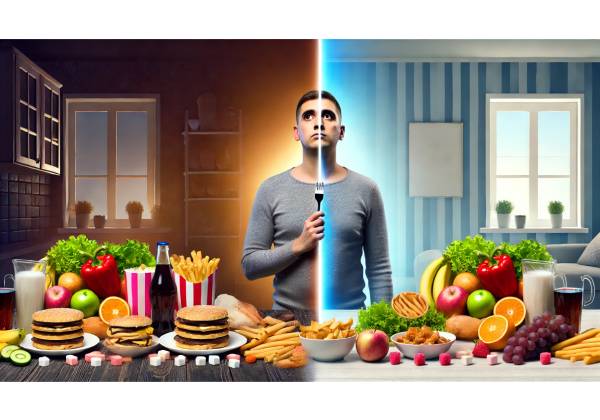
Food addiction is a phrase many people use quietly, often with embarrassment. It can describe feeling pulled toward certain foods even when hunger is not the real driver, eating past comfort, promising to stop and then returning to the same pattern, or feeling that food has become a source of relief that is increasingly hard to control. For some people, this pattern centers on highly processed foods rich in refined carbohydrates, fats, salt, and intense flavor. For others, it shows up through a broader cycle of craving, loss of control, guilt, and repeated emotional eating.
The topic is also scientifically complex. Food addiction is widely studied, but it remains debated and does not appear as a formal diagnosis in the way substance use disorders do. Even so, the experiences behind the term can be real, impairing, and deeply distressing. Understanding the pattern matters because the harm often extends far beyond willpower or body weight.
Table of Contents
- What food addiction means
- Why certain foods pull so hard
- Signs, symptoms, and daily patterns
- Why some people are more vulnerable
- Cravings and withdrawal-like reactions
- Overlap with binge eating and dieting
- Health and life risks
What food addiction means
Food addiction does not simply mean enjoying dessert, overeating on holidays, or struggling with diet culture. The term is usually used to describe a repetitive pattern of craving, loss of control, continued overeating despite negative consequences, and a strong pull toward specific foods or eating experiences. In research, this pattern is often measured using the Yale Food Addiction Scale, which adapts addiction-style criteria such as craving, unsuccessful efforts to cut down, and continued use despite harm to eating behavior.
That does not mean the concept is fully settled. One of the most important facts about food addiction is that it remains debated. Some researchers argue that certain highly processed foods can trigger addictive-like behavior in vulnerable people, especially when foods are engineered for intensity, convenience, and repeated reward. Others argue that the broader behavior may be better explained by binge eating, emotional eating, dietary restraint, trauma-related coping, or the social environment around food rather than by addiction itself. Both views matter because they help explain why the subject can feel confusing to people living through it.
A practical way to understand the term is to look at the pattern rather than argue only about labels. Food addiction becomes more relevant when a person experiences several of the following:
- repeated urges for specific foods that feel difficult to resist
- eating more than intended, especially once the behavior starts
- feeling unable to cut back despite repeated attempts
- continuing to eat in the same way despite shame, distress, medical advice, or worsening health
- spending significant time thinking about, obtaining, or recovering from eating episodes
- feeling that food is being used for relief rather than nourishment
A key feature is the emotional function of the behavior. Many people do not describe eating in this pattern because they are physically hungry. They describe eating because they feel overwhelmed, empty, exhausted, lonely, angry, bored, or numb. The food becomes a fast way to change internal state. That is why the problem can feel so compelling. It is not just about taste. It is about what the eating experience seems to solve for a few minutes.
This pattern can also exist at many levels of severity. Some people feel trapped in a chronic loop of cravings and overeating that affects mood and self-trust but not yet their finances or work. Others experience severe impairment, including recurrent binge episodes, health complications, secrecy, and a sense that food is dominating daily life. The word “addiction” may not fit every case, but the suffering behind the pattern is often real, complex, and worthy of careful attention.
Why certain foods pull so hard
Not all foods tend to trigger addictive-like eating in the same way. The strongest pull is often reported with highly processed foods that combine refined carbohydrates, added fats, salt, flavor enhancers, and rapid convenience. These foods are not merely tasty. They are often designed to be easy to consume quickly, require little effort, create strong sensory reward, and encourage repeated eating beyond fullness.
Part of the explanation lies in the brain’s reward system. Highly palatable foods can produce strong motivation, anticipation, and learning around cues such as packaging, smell, delivery apps, social media images, or familiar routines. The brain begins to connect certain foods with relief, comfort, celebration, distraction, or escape. Over time, the cues themselves can become powerful. A person may crave the idea of the food before the first bite even occurs.
This is why food addiction is often less about basic hunger and more about a reward loop. The cycle tends to look like this:
- stress, sadness, fatigue, boredom, or restriction builds
- the mind narrows toward a specific food or eating experience
- anticipation creates a sense of urgency
- eating brings temporary relief, numbness, or pleasure
- guilt, shame, or discomfort follows
- the same emotional state later returns and restarts the loop
This reward learning overlaps with broader discussions of dopamine and motivation. The important point is not that food works exactly like cocaine or nicotine. It does not. The point is that certain foods can become linked to reward, relief, and repetition in ways that resemble other compulsive patterns, especially in vulnerable people.
The food environment matters as much as biology. Constant availability, large portions, food delivery, aggressive marketing, and social normalization of “treating yourself” all lower friction. A person no longer needs to plan a binge or even leave the house. A craving can be acted on within minutes. That convenience shortens the distance between urge and action, which makes habits harder to interrupt.
Another reason certain foods pull so hard is speed. Whole foods often come with fiber, texture, chewing, and satiety signals that slow intake. Many highly processed foods are easier to eat quickly and in large amounts before the body registers fullness. That can intensify the feeling of having “lost control” and make the aftermath more distressing.
None of this means the food is the whole story. Emotional pain, chronic stress, sleep loss, dieting, trauma, and low mood can all make the same food environment more potent. But it does help explain why some foods become the center of a repetitive cycle while others remain easier to eat with flexibility.
Signs, symptoms, and daily patterns
Food addiction often shows up in ordinary moments long before it is named. The person may think about food more than they want to admit. They may plan their day around access to certain items, eat in secret, or promise each morning that today will be different, only to return to the same pattern by evening. The behavior may look private, but its effects can spread across mood, concentration, energy, sleep, and self-esteem.
Common emotional and cognitive signs include:
- frequent cravings for specific foods, especially highly processed foods
- preoccupation with what to eat, when to eat, or how to get certain foods
- feeling out of control once eating begins
- repeated mental bargaining such as “just one last time”
- guilt or shame after eating
- distress about the pattern but difficulty changing it
Common behavioral signs include:
- eating beyond physical fullness
- eating quickly or automatically
- eating in secret or hiding wrappers and receipts
- repeatedly buying foods that the person has tried to stop keeping at home
- making rules about food and then breaking them soon after
- going back for more even when the original craving seems satisfied
- arranging errands, driving routes, or delivery orders around specific foods
Some people also notice physical or daily-life symptoms such as:
- stomach discomfort from overeating
- energy crashes after intense eating episodes
- poor sleep following late-night eating
- repeated dieting attempts that swing into overeating
- shame-related isolation or social avoidance
- feeling emotionally numb during eating and emotionally flooded afterward
A useful clue is how often the eating feels disconnected from hunger. A person may have eaten a full meal and still feel pulled toward more food because the real driver is emotional state. Stress-related eating patterns often overlap with comfort eating and stress cravings, but food addiction usually adds a stronger sense of compulsion, repetition, and failed attempts to regain control.
The behavior can also become very ritualized. Some people always eat in the car, late at night, after conflict, or while scrolling on their phone. Others repeatedly seek the same restaurants, the same packaged foods, or the same delivery routines. These rituals matter because they train the brain to expect relief from very specific cues.
One challenge is that the pattern may look “normal” from the outside. Unlike many substance-related disorders, there may be no obvious intoxication. The person may continue working, parenting, and appearing high functioning while privately struggling with cravings, overeating, body shame, and a growing sense that food is running more of life than it should. That quiet presentation is one reason the problem is often minimized, even when the internal distress is substantial.
Why some people are more vulnerable
There is no single cause of food addiction. It usually develops from the interaction of biology, psychology, environment, and learning. Two people can live in the same food environment and have very different outcomes depending on temperament, trauma history, dieting patterns, stress load, sleep, and how strongly food has become linked to relief.
Several factors can raise vulnerability:
- high impulsivity or difficulty delaying reward
- chronic stress or burnout
- depression, anxiety, or emotional numbness
- childhood adversity or trauma
- repeated dieting and food restriction
- poor sleep
- chaotic routines or irregular meals
- frequent exposure to highly processed foods
- loneliness and low social support
Restriction deserves special attention. Many people do not realize that rigid dieting can intensify cravings rather than solve them. When a person labels foods as forbidden, cuts intake drastically, or spends long stretches underfed, the body and brain may respond with stronger preoccupation, stronger reward when the food becomes available, and a greater chance of overeating once control breaks. In that way, the person may feel as if the food is the whole problem when part of the cycle is actually being driven by deprivation.
Emotional vulnerability matters too. Food can become a dependable regulator when other forms of regulation feel unreliable or unavailable. Someone who struggles to soothe sadness, anger, rejection, or emptiness may learn that certain foods work quickly. The more often that relief is paired with eating, the stronger the learned association becomes.
The modern food environment amplifies this vulnerability. Many people live in constant contact with highly processed foods, food advertising, social comparison, and stress. That is one reason the topic overlaps with broader conversations about ultra-processed foods and mental health. The issue is not only individual discipline. It is also repeated exposure to foods and cues that are designed to be hard to ignore.
There may also be biological differences in sensitivity. Some people seem more responsive to reward cues, more prone to craving, or less likely to feel satisfied by ordinary amounts of highly palatable food. Genetics probably contribute, though they do not determine destiny. Likewise, hormones, metabolic patterns, and previous exposure can all shape how strongly the person experiences appetite, satiety, and reward.
One final source of vulnerability is shame. Shame does not cause food addiction on its own, but it can trap it in place. When people feel defective or embarrassed about eating, they often hide the behavior rather than seek help. That secrecy increases isolation, and isolation makes food more likely to remain a private coping method. Over time, the disorder becomes not just a problem of eating, but a problem of self-trust and emotional survival.
Cravings and withdrawal-like reactions
Food addiction does not produce a medically dangerous withdrawal syndrome like alcohol, benzodiazepines, or opioids. There is no standard detox phase defined by seizures or severe autonomic collapse. But many people do experience withdrawal-like reactions when they sharply cut out the foods they have been relying on. These reactions are usually emotional, behavioral, and subjective rather than medically hazardous, but they can still feel intense and discouraging.
Craving is often the clearest feature. A craving is more than simple desire. It tends to feel urgent, intrusive, and emotionally loaded. The person may not just want the food. They may feel pulled toward it as if it is the fastest route to relief. Cravings can intensify around cues such as:
- stress at the end of the day
- loneliness
- conflict
- fatigue
- certain stores, delivery apps, or commercials
- dieting rules or the thought of never having the food again
When people try to stop or sharply restrict highly palatable foods, they may notice experiences such as:
- irritability
- restlessness
- headaches
- low mood
- mental preoccupation with food
- difficulty concentrating
- feeling deprived or emotionally flat
- stronger urges to binge or overeat later
These symptoms do not mean that everyone who enjoys sweets or chips is addicted. They mean that in some people, food has become part of emotional regulation and reward expectation. Removing the food exposes the discomfort it had been muting and may also create a rebound effect if the change is too rigid or shame-driven.
Many people also describe a crash after overeating: temporary relief followed by guilt, heaviness, disgust, and renewed craving later. That is part of why the cycle persists. The same food that briefly softens distress may later create more distress, which then sets the stage for another urge. In that sense, the loop is maintained both by reward and by relief from negative feelings.
This is one reason simple advice to “just stop eating it” often fails. For people caught in a repetitive craving cycle, abrupt restriction can intensify obsession rather than reduce it. More structured approaches are discussed separately in food addiction therapies, but at the condition level the key point is straightforward: the craving is real, and it often reflects an entrenched relationship between food, emotion, and reward rather than a lack of character.
A final nuance matters here. Some people experience craving mostly after dieting. Others experience it even without deliberate restriction. Both patterns can be distressing, but they suggest different underlying dynamics. That is why it is important to look not only at the foods involved, but at the emotional state, routine, and beliefs surrounding them.
Overlap with binge eating and dieting
Food addiction overlaps significantly with binge eating, emotional eating, and chronic dieting, but the terms are not interchangeable. Understanding the overlap helps explain why the topic remains debated and why people can feel confused about which label fits their experience.
Binge eating disorder is a recognized eating disorder defined by recurrent episodes of eating unusually large amounts of food with a sense of loss of control and marked distress. Food addiction, by contrast, is a research-based construct that frames certain eating patterns using addiction-style features such as craving, continued use despite harm, and repeated failed attempts to cut down. Many people with food addiction symptoms also have binge eating symptoms, and the overlap is especially strong in clinical samples. But the two are not identical. A person may report addiction-like cravings and compulsive eating without meeting full criteria for binge eating disorder, and some people with binge eating may not describe their experience primarily through an addiction lens.
Chronic dieting complicates the picture even more. Restriction can produce some of the very symptoms people later interpret as evidence that they are addicted to food:
- intense food preoccupation
- rebound overeating
- black-and-white thinking about “good” and “bad” foods
- shame after eating forbidden foods
- feeling out of control once a rule is broken
This does not mean the suffering is unreal. It means the mechanism may involve both deprivation and reward. In some people, the most accurate understanding is not “I am addicted to all food,” but “I have been trapped in a restriction-and-craving loop that now feels compulsive.” In others, the addictive-like pull remains strong even without obvious restriction, especially around highly processed foods.
Emotional eating also overlaps but is not always the same. Many people eat emotionally at times without developing a disorder. The pattern becomes more concerning when emotional eating grows repetitive, secretive, difficult to stop, and associated with significant distress or impairment. That is the zone where food addiction language becomes most relevant.
This is also why recognition can be challenging. A person may search for answers under food addiction when the deeper issue is binge eating, chronic dieting, trauma, or depression. Another person may identify strongly with binge eating while still experiencing a very addiction-like relationship to specific foods. These distinctions matter clinically, even though they can blur in everyday life. The treatment side of that overlap belongs in more detail under binge eating care, but for understanding the condition itself, the central point is that food addiction often sits at the crossroads of reward, restriction, and emotional coping rather than inside one simple box.
Health and life risks
The risks of food addiction are not limited to body weight. The most immediate harm is often emotional: guilt, self-criticism, secrecy, and the exhausting sense of being caught in a cycle that keeps repeating. Over time, however, the consequences can extend into physical health, mental health, relationships, and daily functioning.
Possible physical and health-related consequences include:
- weight gain or repeated weight cycling
- worsening blood sugar control
- higher risk of metabolic problems
- elevated blood pressure
- digestive discomfort from recurrent overeating
- poor sleep from nighttime eating or heavy late meals
- reduced energy and greater day-to-day fatigue
The mental health burden can be just as serious. Many people with food addiction symptoms experience anxiety, depression, low self-worth, and chronic shame. Some describe feeling numb before eating and ashamed afterward. Others feel trapped in constant mental noise about food, weight, rules, and failure. This can gradually narrow life. Social plans may be avoided. Intimacy may suffer. Work concentration can decline when food thoughts or guilt dominate attention.
Common life consequences include:
- secrecy around eating
- social withdrawal
- conflict with partners or family
- financial strain from frequent delivery or binge foods
- repeated “fresh start” cycles that erode self-trust
- reduced participation in hobbies, movement, or ordinary pleasure
- feeling hopeless about change
This last point matters. One of the most painful risks is the loss of self-belief. When a person repeatedly promises to change and then returns to the same eating pattern, they may begin to believe they cannot trust themselves anywhere. That hopelessness can spill into mood and identity. It can also increase vulnerability to other compulsive behaviors, especially if food has been serving as a main coping tool.
The condition can quietly reinforce other health problems too. Poor sleep, chronic stress, low mood, and a diet heavy in highly processed foods can each worsen the others. The result is often a feedback loop rather than one isolated consequence. A person feels worse physically and emotionally, then becomes more likely to reach for food for relief, then feels worse again.
Food addiction does not usually create the kind of overdose emergency seen with opioids or sedatives, but that does not make it minor. The harm is often cumulative, intimate, and daily. It may affect how the person eats, but also how they cope, connect, and think about themselves. When food becomes both comfort and source of suffering, the pattern can be deeply destabilizing. That is why it deserves to be understood with the same seriousness given to other compulsive and addictive conditions, even while the science around the label continues to evolve.
References
- Ultra-Processed Food Addiction: A Research Update 2024 (Review)
- Prevalence of food addiction determined by the Yale Food Addiction Scale and associated factors: A systematic review with meta-analysis 2022 (Systematic Review)
- Is Food Addictive? A Review of the Science 2021 (Review)
- Questioning the validity of food addiction: a critical review 2025 (Critical Review)
- Ultra-processed food consumption and human health: an umbrella review of systematic reviews with meta-analyses. 2025 (Umbrella Review)
Disclaimer
This article is for educational purposes only and is not medical advice, diagnosis, or a substitute for professional care. Food addiction is a debated but clinically meaningful pattern for some people, and it can overlap with binge eating disorder, depression, anxiety, trauma-related distress, or other eating and weight concerns. If eating patterns are causing severe emotional distress, significant health problems, rapid weight change, purging, fainting, or thoughts of self-harm, seek prompt help from a licensed clinician, eating disorder specialist, or emergency service when needed. A qualified professional can help assess whether the problem is best understood as food addiction, binge eating, restrictive dieting, or another condition.
If this article was helpful, please share it on Facebook, X, or another platform you prefer.