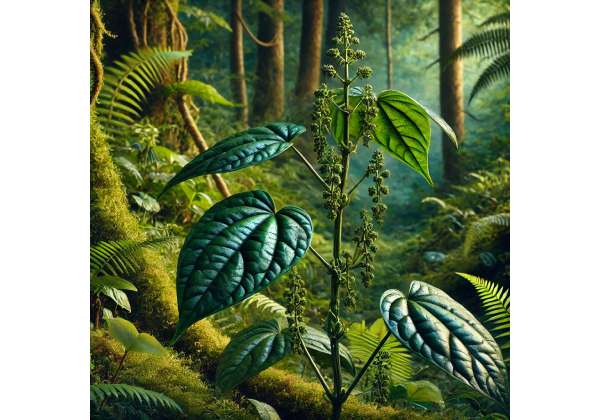
Forest Pepper, botanically known as Piper sylvaticum, is a lesser-known pepper vine from South and Southeast Asia that sits at an interesting crossroads between food, folk medicine, and modern phytochemistry. In some regions it is also called mountain long pepper or wild long pepper, which hints at both its botanical family and its traditional role. Unlike common black pepper, this herb is not widely standardized or clinically studied, yet it continues to attract attention because its leaves, stems, and roots contain pungent alkaloids and related compounds linked to antioxidant, digestive, and inflammation-related activity in early research.
What makes Forest Pepper worth a closer look is not a long list of proven human benefits, but a combination of traditional uses and promising preclinical signals. Folk practice connects it with coughs, indigestion, sluggish digestion, and parasite-related concerns, while laboratory and animal studies suggest antioxidant, anxiolytic, and other bioactive effects. The key is perspective: Forest Pepper may be a useful traditional support herb, but it is not a substitute for diagnosis, prescription treatment, or evidence-based dosing.
Essential Insights
- Forest Pepper shows the strongest early promise for antioxidant support and traditional digestive or respiratory use, but human trials are lacking.
- Its best-known compounds include piperine, piperlonguminine, sylvamide, and sylvatine, which help explain why researchers are interested in it.
- No validated clinical dose exists; a cautious traditional-style range is about 1 to 2 g dried cut herb in 200 mL water once daily to start.
- Avoid it during pregnancy, breastfeeding, and in children, and use extra caution if you take medicines affected by CYP3A4 or P-glycoprotein.
- People with active ulcers, severe reflux, unexplained bleeding, or strong reactions to pungent herbs should avoid concentrated preparations.
Table of Contents
- What is Forest Pepper?
- Key compounds and actions
- What can it realistically help with?
- How to use Forest Pepper
- How much should you take?
- Safety, interactions, and who should avoid it
- What the research actually shows
What is Forest Pepper?
Forest Pepper is a climbing plant in the Piperaceae family, the same botanical group that includes black pepper, long pepper, and several medicinally important tropical vines. Its scientific name is Piper sylvaticum, and in traditional contexts it may also be referred to as mountain long pepper, wild long pepper, or by regional names connected to Ayurveda and local folk practice. The plant grows in humid forest environments and has been recorded across parts of India, Bangladesh, China, and nearby regions.
That geography matters because Forest Pepper belongs to a class of herbs that are often used locally rather than globally standardized. It is not a mainstream supplement on the level of black pepper extract or piperine capsules. Instead, it has a more traditional profile: leaves may be eaten or used fresh in some places, while roots and stems appear in older medicinal use for digestive complaints, bronchitis-like symptoms, worm-related conditions, and other problems that were historically managed with pungent, warming herbs.
One detail that helps readers understand the plant is this: Forest Pepper should not be treated as interchangeable with black pepper. They share a genus, and some overlapping chemistry, but they are not the same medicine. Black pepper is mostly discussed as a culinary spice and bioavailability enhancer. Forest Pepper is better understood as a folk medicinal pepper vine with a narrower and less studied evidence base.
Traditional reports describe different parts of the plant being used for:
- indigestion and dyspepsia
- cough and cold-related discomfort
- chronic cough or asthma-like complaints
- carminative support for gas and sluggish digestion
- laxative or worm-expelling uses in older practice
- rheumatic pain or inflammatory discomfort
- occasional external folk uses
That does not mean all of those uses are proven. It means Forest Pepper has a broad ethnomedicinal reputation, and that reputation is what guided modern researchers to test its extracts and compounds.
In practical terms, Forest Pepper is the kind of herb that deserves both curiosity and restraint. Curiosity, because its chemistry is richer than many people realize. Restraint, because direct human evidence is still sparse, product quality is inconsistent, and the difference between a traditional household decoction and a concentrated extract can be significant.
A good starting mindset is to see Forest Pepper as a traditional Piper herb with digestive, respiratory, and phytochemical interest, rather than as a fully established clinical botanical. That frame makes the rest of the discussion—benefits, uses, dosage, and safety—much easier to assess clearly.
Key compounds and actions
Forest Pepper is chemically interesting because it combines familiar Piper-family alkaloids with less familiar amides and related compounds. That mix helps explain why the plant keeps appearing in phytochemical and pharmacological discussions, even though it is far less famous than black pepper or long pepper.
The compounds most often associated with Piper sylvaticum include:
- piperine
- piperlonguminine
- sylvamide
- sylvatine
- beta-sitosterol
- N-isobutyldeca-trans-2-trans-4-dienamide
These names matter because they point to the plant’s likely biological style. Forest Pepper is not primarily valued for vitamins or minerals. It is valued for pungent alkaloids and related secondary metabolites that may influence oxidative stress, digestive function, inflammation pathways, parasite biology, and possibly neurobehavioral signaling in preclinical models.
From a practical standpoint, its key actions appear to fall into five broad buckets.
First, antioxidant activity. Extract studies on leaves and stems suggest the plant can scavenge free radicals and show reducing power in laboratory assays. That does not prove a household tea will behave like a high-potency antioxidant supplement, but it does support the idea that Forest Pepper contains redox-active compounds worth studying.
Second, digestive stimulation. Like other pungent Piper herbs, Forest Pepper likely acts as a warming, stimulating botanical. Traditionally, that makes it relevant for sluggish appetite, gas, heaviness after meals, and dyspepsia. The effect is not necessarily dramatic, but it matches the old herbal logic of using sharp, aromatic plants to “wake up” digestion.
Third, anti-inflammatory and pain-related potential. Several Piper-family amides are known to interact with inflammatory pathways. Forest Pepper is discussed in this context because its isolated compounds fit that chemistry profile, even though direct clinical proof remains absent.
Fourth, neuropharmacological interest. Animal work on methanol extracts of the leaves and stems suggests anxiolytic-like effects under study conditions. This is promising, but it should be interpreted carefully: extract-based mouse data do not automatically translate into a practical anti-anxiety herb for self-treatment.
Fifth, absorption and interaction relevance. Because Forest Pepper contains piperine, it deserves the same caution applied to other piperine-containing plants. Readers who want context for that well-known alkaloid may find it helpful to compare it with black pepper’s piperine profile, especially when thinking about drug interactions and “bioenhancer” claims.
The larger insight is that Forest Pepper’s medicinal identity comes from compound synergy, not from one miracle constituent. Its alkaloids and amides make it pharmacologically active enough to be interesting, but also active enough to justify caution. That is why the smartest way to discuss the herb is neither dismissive nor overly promotional: its chemistry is real, but its clinical certainty is still limited.
What can it realistically help with?
Forest Pepper is one of those herbs that sounds more powerful online than it currently looks in evidence-based review. The realistic position sits in the middle: it may support a few traditional wellness goals, but most of the stronger claims are still based on folklore, animal work, or isolated compound research rather than human trials.
The most plausible uses are the ones that match both traditional use and the plant’s chemistry.
Digestive support is probably the clearest example. Pungent Piper herbs have long been used as carminatives, meaning they may help reduce gas, heaviness, and sluggish digestion. Forest Pepper appears to fit that traditional category. It may be most relevant for people who feel better with warming herbs than with cooling or strongly bitter ones.
Respiratory comfort is another traditional niche. Folk use connects the herb with cough, cold, and bronchial discomfort. That does not mean it treats asthma or infection, but it may help as part of a short-term traditional support routine when the goal is warmth, stimulation, and mild soothing.
Antioxidant support is a reasonable modern framing for the extract data. This is not the same as saying the herb prevents disease. It means the plant contains compounds that perform well in antioxidant assays and may contribute to a broader plant-rich, spice-rich approach to health.
Mild anxiolytic or calming potential has also entered the conversation because leaf and stem extracts showed anxiolytic-like effects in mice. Still, this is exactly where people can overread the data. An extract studied at experimental doses is not the same thing as a home decoction, and “anxiolytic potential” is not the same as “works reliably for anxiety in humans.”
Benefits that are better framed as possibilities than promises include:
- short-term digestive ease
- mild warming support during cold-weather respiratory discomfort
- adjunct antioxidant intake from a bioactive plant
- exploratory use in traditional formulas
- preclinical interest for inflammation-related conditions
Benefits that should not be oversold include treatment of cancer, major inflammatory disease, chronic anxiety, helminth infection in humans, or serious airway disease. Those claims move far beyond the current evidence.
One useful comparison is with better-known kitchen herbs. If your main goal is post-meal comfort, ginger for digestive support usually has a clearer and more familiar real-world role. Forest Pepper may still be relevant, but it is more niche, more pungent, and less standardized.
So what can it realistically help with? The best answer is modest but meaningful: it may support digestion, add warming respiratory comfort, and offer preclinical antioxidant and neuropharmacological interest. That can be enough to justify careful use, but not enough to justify inflated expectations.
How to use Forest Pepper
How you use Forest Pepper matters as much as why you use it. With under-researched herbs, the form often determines both the likely benefit and the risk. In general, simpler and less concentrated preparations are easier to use safely.
Traditional and practical forms include:
- fresh leaves used in food in some local traditions
- dried cut herb for tea or weak decoction
- stem or root decoction in traditional practice
- powdered crude material
- alcohol extracts, though these are less predictable for self-use
- blended formulas with other digestive or respiratory herbs
For most people, a weak tea or decoction is the most reasonable starting point. It aligns better with traditional use than a highly concentrated capsule, and it lets you judge tolerance more easily. A simple preparation also reduces the temptation to treat the plant like a standardized pharmaceutical when it is not one.
A cautious method looks like this:
- Use only clearly identified material from a reputable herbal source.
- Start with a small amount of dried herb rather than a strong extract.
- Simmer or steep in water, then strain well.
- Take a small test serving first.
- Stop if you feel throat burn, stomach irritation, dizziness, palpitations, or unusual flushing.
Food-level use may also make sense. Because the plant belongs to the pepper family, some people are interested in it as a culinary-medicinal bridge herb. That approach is often safer than jumping straight to extract use, especially for those who mainly want digestive warmth.
The form should match the purpose:
- Food-level or weak tea use: best for mild digestive or warming support
- Traditional decoction: stronger, but also more variable and less beginner-friendly
- Concentrated extract: not ideal unless the product is well characterized and you understand the interaction risk
- Blended formulas: useful in skilled herbal practice, but harder to assess on your own
Another practical rule is to think about temperament. Forest Pepper is probably not the best first choice for someone who already runs hot, has reflux, tends toward mouth or stomach irritation, or reacts poorly to spicy plants. In those cases, a gentler herb such as peppermint for digestive and respiratory comfort may be more suitable.
There is also a quality issue. Because Forest Pepper is not a globally standardized botanical, labels may be incomplete, species may be confused with other Piper plants, and different plant parts may behave differently. A root-heavy product, for example, should not be assumed to act the same as a leaf preparation.
In short, the safest use pattern is conservative and traditional: small amounts, simple water preparation, short duration, and a clear reason for use. That is more consistent with the herb’s actual evidence base than aggressive dosing or multi-capsule supplement routines.
How much should you take?
There is no clinically validated human dose for Forest Pepper. That is the most important dosing fact to keep in view. Any practical range offered for Piper sylvaticum should be understood as a cautious traditional-style estimate, not a proven therapeutic standard.
Because the evidence base is limited, the safest dosing philosophy is:
- start lower than you think you need
- use the least concentrated form first
- keep the trial short
- stop if the herb feels too stimulating or irritating
For adults using dried leaf or stem material as a simple tea or light decoction, a cautious starting range is:
- 1 to 2 g dried cut herb
- in about 200 mL water
- once daily to start
If that is well tolerated and there is a clear reason to continue, some traditional-style users increase toward:
- 2 to 3 g dried herb per serving
- once or twice daily
Stronger folk-style preparations may use 3 to 5 g dried material, especially when the goal is a more assertive warming decoction. But that level is less predictable and more likely to cause stomach or throat irritation, so it is not the best entry point.
For powdered crude material, staying at the lower end is wise. Forest Pepper is not the kind of herb to dose casually “by eye,” especially if the source material is not uniform. Standardized extracts are even trickier. Without clear labeling of plant part, extraction ratio, and piperine-equivalent content, concentrated products can create more uncertainty than value.
Timing also matters:
- take it with or after food if stomach sensitivity is a concern
- avoid close to bedtime if the herb feels stimulating
- avoid stacking it with multiple pungent formulas on the same day
- do not combine a strong decoction with a piperine-heavy supplement
Duration should be short and purpose-driven. A trial of several days up to two weeks is more defensible than indefinite use. If you need longer-term support, that usually means the symptom deserves a clearer diagnosis or a more established herb.
One especially important dosing nuance is the difference between crude plant use and piperine-style extracts. Readers exploring that distinction may want a separate look at piperine-focused extract use, since concentrated alkaloid products behave very differently from a mild botanical tea.
A good final rule is this: if the herb seems to “work” only at a level that causes burning, nausea, loose stools, or noticeable medication-related effects, that is not a sign to keep increasing. It is a sign the preparation, dose, or even the herb itself may be a poor fit.
Safety, interactions, and who should avoid it
Forest Pepper may be traditional, but it is not risk-free. Its likely content of piperine and related alkaloids means it deserves more medication-style caution than many mild herbal teas. The biggest safety themes are irritation, interaction potential, and lack of data in vulnerable groups.
The first concern is gastrointestinal irritation. Because this is a pungent pepper-family herb, it may aggravate:
- reflux
- gastritis
- active peptic ulcer symptoms
- burning throat or mouth sensitivity
- hemorrhoids that worsen with spicy foods
- chronic loose stools in sensitive users
The second concern is drug interaction potential. Piperine is well known for altering absorption and metabolism of some compounds. That means Forest Pepper should be approached carefully if you take medicines with narrow safety margins or medicines metabolized through CYP3A4 and related pathways. Extra caution is sensible with:
- anticoagulants or antiplatelet drugs
- antiseizure medicines
- transplant medicines
- some antihypertensives
- some antidepressants and antipsychotics
- diabetes medications
- sedating agents if you are also using strong herbal formulas
This does not prove every Forest Pepper tea will cause a meaningful interaction. It means the risk is biologically plausible enough that self-experimentation should stay conservative. The same logic applies to combination products, especially those marketed with turmeric or other poorly absorbed compounds. Products built around curcumin paired with piperine are a useful reminder that absorption-enhancing herbs can also raise interaction risk.
Who should avoid Forest Pepper entirely, or use it only with professional guidance?
- pregnant or breastfeeding people
- children
- people with active ulcers or severe reflux
- people with unexplained bleeding
- those with major liver disease unless supervised
- anyone taking multiple prescription medicines
- people who react strongly to pungent spices or pepper extracts
Possible side effects include:
- stomach upset
- heartburn
- throat irritation
- loose stools
- flushing or a “too hot” feeling
- headache
- jitteriness with strong preparations
It is also important to know when not to use an herb. Forest Pepper is not appropriate as a self-treatment for persistent vomiting, severe abdominal pain, weight loss, coughing blood, severe wheezing, fever with dehydration, suspected intestinal parasites requiring medical care, or any symptom cluster that could signal a serious diagnosis.
Because there are no robust long-term safety studies for routine human use, the safest posture is short-term and low-dose. If an herb is both under-studied and pharmacologically active, the right response is caution, not confidence.
What the research actually shows
The research on Forest Pepper is real, but early. That distinction matters. This is not a purely mythical herb with no data at all, yet it is also far from a clinically established botanical. Most of what we know comes from phytochemical work, in vitro testing, computational modeling, and a small number of animal studies.
Here is the strongest part of the evidence:
- the plant contains recognizable Piper-family alkaloids and amides
- leaf and stem extracts have shown antioxidant activity in laboratory assays
- methanol extracts of leaves and stems showed anxiolytic-like effects in mice
- stem extracts have shown experimental anthelmintic activity in preclinical work
- the broader Piper family is rich in bioactive compounds with antimicrobial, anti-inflammatory, and anticancer relevance
Here is what the evidence does not establish well:
- a proven clinical dose for humans
- consistent benefit from tea, powder, and extract forms alike
- effectiveness for anxiety in people
- effectiveness for parasites in patients
- long-term safety
- standardized use by plant part
- predictable interaction magnitude with medications
This is why the phrase “promising but preliminary” fits Forest Pepper so well. The plant clearly contains interesting chemistry. Researchers have already identified compounds that help explain its traditional reputation. But a compound profile is not the same as a proven clinical effect.
It is also worth noting that some enthusiasm around Forest Pepper is borrowed from the wider Piper genus. That can be helpful, because the family offers clues about likely mechanisms. It can also be misleading, because not every Piper herb behaves like black pepper or long pepper. Genus-level resemblance is a useful hint, not a substitute for species-level proof.
A balanced reading of the evidence would rank the claims like this:
- Most credible: bioactive chemistry, antioxidant activity, traditional digestive and respiratory rationale
- Moderately credible: preclinical anxiolytic and anthelmintic interest
- Least established: confident clinical use for major disease outcomes
That puts Forest Pepper in a useful but narrow category: a traditional herb with real pharmacological interest, but not one that should be marketed as broadly proven. If your priority is a well-studied pepper-family botanical, more familiar options will usually have clearer data. Forest Pepper’s value right now is mostly for informed readers, experienced herbalists, and researchers interested in underexplored Piper species.
The most sensible conclusion is simple. Forest Pepper may earn a place in careful, short-term traditional use, especially for digestive warmth and as a subject of phytochemical interest. But the current research still supports caution, modest expectations, and honesty about what remains unknown.
References
- Comparative Study of Piper sylvaticum Roxb. Leaves and Stems for Anxiolytic and Antioxidant Properties Through in vivo, in vitro, and in silico Approaches 2020.
- Piper Species: A Comprehensive Review on Their Phytochemistry, Biological Activities and Applications 2019. (Review)
- Metabolic Insights into Drug Absorption: Unveiling Piperine’s Transformative Bioenhancing Potential 2025. (Review)
- Piperine: an emerging biofactor with anticancer efficacy and therapeutic potential 2025. (Review)
- Structural diversity, biological activities and biosynthetic pathways of [2 + 2] and [4 + 2] amide alkaloid dimers from Piperaceae: An updated review 2025. (Systematic Review)
Disclaimer
This article is for educational purposes only and is not medical advice. Forest Pepper is an under-studied herb with limited human evidence, no validated clinical dosing standard, and plausible drug-interaction potential because of its alkaloid content. Do not use it to replace evaluation or treatment for persistent digestive symptoms, breathing problems, suspected infection, parasitic disease, or any serious condition. Speak with a qualified clinician before using Forest Pepper if you are pregnant, breastfeeding, taking prescription medication, managing a chronic illness, or considering concentrated extracts.
If you found this article useful, please share it on Facebook, X, or your preferred platform to help more readers find balanced, safety-first herbal information.