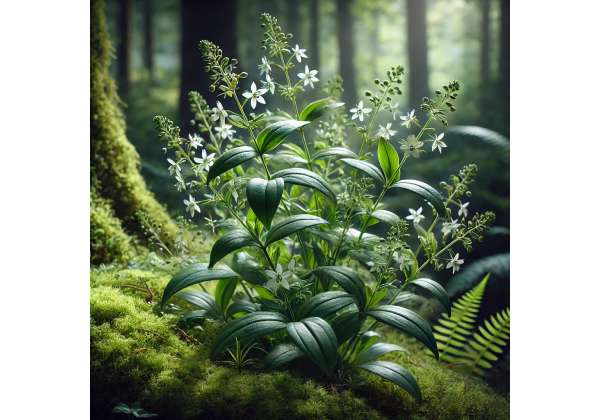
Fragrant bedstraw, better known in many herbal traditions as sweet woodruff, is a shade-loving woodland herb valued as much for its aroma as for its medicinal history. The plant’s soft green whorled leaves and tiny white flowers contain coumarin precursors that give the herb its signature fresh-hay scent, especially after it is cut or lightly dried. That fragrance has made Galium odoratum famous in spring wines, herbal teas, sachets, and household preparations, but its traditional use goes further. European folk medicine has long used it for mild nervous tension, digestive discomfort, restless sleep, and external soothing applications.
What makes fragrant bedstraw interesting today is the contrast between old use and modern caution. It does contain bioactive compounds with plausible anti-inflammatory, antioxidant, and mildly calming effects, yet the herb also deserves respect because coumarin exposure can become a safety issue in sensitive people or with heavy, repeated intake. The most useful way to approach it is neither as a miracle herb nor as a plant to avoid outright, but as a modest, specialized botanical whose benefits, forms, dosing, and safety limits all matter.
Key Facts
- Fragrant bedstraw is most often used as a mild calming and digestive herb rather than a strong therapeutic remedy.
- Its best-known active group includes coumarin-related compounds, which help explain both its aroma and its main safety concern.
- Traditional tea use often starts around 1–2 g dried herb per 150–250 mL water.
- Long daily use and large servings are a poor fit for people with liver concerns or those using anticoagulant medicines.
- Pregnant or breastfeeding people, children, and anyone with active liver disease should generally avoid medicinal use.
Table of Contents
- What is fragrant bedstraw
- Key compounds and medicinal properties
- What can it help with
- How is fragrant bedstraw used
- How much fragrant bedstraw per day
- Side effects, interactions, and who should avoid it
- What does the research actually show
What is fragrant bedstraw
Fragrant bedstraw is a low-growing perennial herb in the Rubiaceae family. Its botanical name is Galium odoratum, though many readers will know it as sweet woodruff or sweetscented bedstraw. It grows naturally in cool, shady woodlands across much of Europe and parts of Asia, and it is also cultivated as an ornamental groundcover because of its tidy form and sweet scent.
Unlike many herbs that are prized mainly for flowers, seeds, or roots, fragrant bedstraw is usually used for its aerial parts. The leaves and tender flowering stems are the main herbal material. Freshly harvested herb has a lighter scent, but once it wilts or dries slightly, its characteristic hay-like fragrance becomes much stronger. That change is not just sensory. It reflects a shift in coumarin chemistry that gives the plant much of its identity in food, drink, and herbal practice.
Traditionally, fragrant bedstraw occupied an unusual middle ground between medicine and domestic herbcraft. It was infused into spring beverages, used in mild teas for nervousness or digestive upset, tucked into linens and sachets, and applied in folk remedies for minor skin problems. That broad, everyday use helps explain why the plant still attracts attention. It feels approachable. It smells pleasant. It has a long cultural history. Yet it is not simply a culinary herb.
A practical detail that often gets overlooked is that not every bedstraw is interchangeable. Galium is a large genus, and different species have different chemical profiles and traditional uses. When buying dried herb or a tincture, the label should clearly say Galium odoratum. If it only says “bedstraw,” that is not specific enough.
It also helps to know what fragrant bedstraw is not. It is not a major modern clinical herb with large human trials behind it. It is not a dependable treatment for chronic insomnia, liver disease, urinary tract infection, or severe digestive symptoms. Its real role is narrower and gentler: occasional tea, light calming support, aromatic household use, and selected traditional applications. That may sound modest, but it is a better match for the evidence and the safety profile than exaggerated claims.
The most helpful starting point is to think of fragrant bedstraw as a traditional European aromatic herb with mild medicinal potential, pleasant flavor value, and one important rule: respect its coumarin content rather than assuming that “pleasant-smelling” means risk-free.
Key compounds and medicinal properties
Fragrant bedstraw’s medicinal profile comes from a small but meaningful mix of phytochemicals. The headline compound for most people is coumarin, because it shapes the herb’s smell and much of its safety discussion. Still, coumarin is only part of the story. Galium odoratum also contains iridoid glycosides, flavonoids, phenolic acids, tannins, and volatile compounds that likely work together rather than acting in isolation.
The best-known chemistry includes:
- Coumarin precursors and coumarin itself. These are central to the herb’s sweet-hay aroma and may contribute to mild spasm-relaxing and sensory effects, but they also drive most cautions about excess use.
- Iridoid glycosides such as asperuloside, monotropein, and related compounds. These are commonly associated with anti-inflammatory and protective activities in many medicinal plants.
- Flavonoids such as rutin, quercetin derivatives, and kaempferol derivatives. These help explain antioxidant and vessel-supportive themes often discussed around the genus.
- Phenolic acids, including chlorogenic acid in some extracts. These may support antioxidant activity and broader anti-inflammatory signaling.
- Trace aromatic constituents that contribute to scent and traditional household uses.
One of the more interesting findings in newer research is that coumarin behavior changes with post-harvest handling. In simple terms, the herb’s chemistry is dynamic. As the plant wilts, coumarin becomes more noticeable, which fits traditional use in scented drinks and household bundles. But prolonged drying can also reduce coumarin because some of it is lost through sublimation. That means the smell and safety profile of fresh, lightly wilted, and long-dried herb are not identical.
From a functional perspective, fragrant bedstraw is usually described with these medicinal properties:
- Mild calming or gently sedative
- Antispasmodic
- Digestive supportive
- Anti-inflammatory
- Antioxidant
- Traditionally diuretic or “draining”
- Mildly aromatic and external soothing
The most grounded way to interpret those labels is modestly. “Sedative” here does not mean it works like a prescription sleep aid. “Digestive” does not mean it corrects a disease process. Instead, the plant appears better suited to mild, functional complaints: a tense stomach, an unsettled evening, a light tea for winding down, or a topical rinse used as supportive care.
A useful comparison is with herbs that have stronger modern reputations in those categories. Fragrant bedstraw belongs in the same broad calming-herb conversation as lemon balm, but it is generally used more cautiously and with less direct human evidence.
Its chemistry supports interest, but not hype. The pleasant aroma can make the herb feel gentler than it really is. In practice, fragrant bedstraw is best understood as a coumarin-containing aromatic herb with mild pharmacologic activity, not as a casual daily beverage to consume in large amounts without thinking about dose.
What can it help with
Fragrant bedstraw is most likely to be useful when expectations stay realistic. This is not an herb people usually reach for when they need a dramatic effect. It is better matched to mild discomfort, seasonal rituals, and supportive care. Traditional use points to a few main lanes: calming the nerves, easing minor digestive tension, supporting fluid movement, and helping with superficial irritation when used externally.
The most plausible benefit is gentle calming support. Many traditional texts describe the herb as useful for nervousness, restlessness, or difficulty settling in the evening. That fits its aromatic nature and its long use in bedtime-style teas. Still, “gentle” is the key word. Fragrant bedstraw is not a dependable herb for severe insomnia or clinically significant anxiety. Readers who want a softer tea ritual rather than a stronger sleep herb may prefer that mildness.
A second area is digestive comfort. The plant has been used for mild cramping, stomach tightness, and sluggish digestion. In everyday terms, it makes the most sense for the kind of digestive discomfort that rises with tension, heavy meals, or occasional gut spasm. It is less convincing for ongoing reflux, ulcer disease, inflammatory bowel disorders, or unexplained abdominal pain.
Traditional European use also includes urinary and “spring cleansing” formulas. Those older uses likely reflect a mild diuretic reputation and the broader folk idea of herbs that help the body “move out” winter heaviness. Modern readers should treat that carefully. A light increase in fluid flow is not the same as treating urinary infection, edema, or kidney disease. For those problems, self-treatment is not appropriate.
Topical support is another area where fragrant bedstraw remains relevant. Preparations have been used for mild skin irritation, small swollen areas, and soothing washes. This is one of the better practical fits for the herb because it uses the plant in a lower-risk way than frequent oral intake. Even then, it should be viewed as supportive rather than curative.
In practical terms, the benefits most readers may notice are:
- A mild evening calming effect
- A gentler stomach after a light infusion
- Aromatic support in relaxing routines
- External soothing in simple herbal washes
It can also fit into blended teas with other familiar herbs. For example, when digestive tension is the main issue, people often compare or combine aromatic approaches with peppermint for digestive comfort, which tends to have a clearer modern role for gas and cramp.
The right mindset is to look for subtle gains, not transformation. If fragrant bedstraw helps, it usually helps by smoothing the edges of discomfort. That makes it a potentially useful herb for occasional support, but not one to place at the center of care for serious symptoms.
How is fragrant bedstraw used
Fragrant bedstraw has a wider range of uses than many herbs because it lives in three worlds at once: medicinal, culinary, and aromatic household use. The same pleasant scent that made it useful in traditional remedies also made it popular in beverages, sachets, and seasonal preparations.
The most common medicinal form is a light infusion made from the dried aerial parts. This is the simplest way to use the herb and usually the safest place to start for adults who are not in a high-risk group. The flavor is grassy, slightly sweet, and hay-like. Some people enjoy it alone, while others blend it with gentler herbs to soften the taste and lower the amount of fragrant bedstraw per cup.
Other common forms include:
- Loose dried herb for tea
- Tinctures
- Traditional wine or punch infusions
- Sachets and potpourri
- Washes, compresses, or external rinses
Its culinary reputation is especially strong in Central Europe, where sweet woodruff has flavored May wine, syrups, jellies, and desserts. This is one of the herb’s most distinctive cultural uses. Yet traditional flavor use does not erase safety concerns. Because coumarin content varies with freshness, drying, and processing, homemade preparations can be unpredictable. That is why “just a spring herb” is not always a safe assumption.
External use deserves special attention because it is often overlooked. A cooled infusion can be used as a wash or compress for minor skin discomfort, though it should not be applied to deep wounds or used instead of proper treatment for infection. For people mainly interested in the herb’s calming aroma rather than internal effects, sachets are a low-risk way to enjoy it.
A few practical use principles matter:
- Use clearly identified Galium odoratum herb rather than generic “bedstraw.”
- Favor mild tea or external preparations over concentrated extracts at first.
- Keep the herb occasional rather than habitual if using it orally.
- Avoid long-steeped, very strong preparations unless guided by a trained herbal practitioner.
- Do not assume traditional alcohol infusions are ideal for people with liver concerns.
For evening use, fragrant bedstraw can be thought of as a lighter ritual herb than chamomile for evening tea routines. The difference is important: chamomile is usually easier to dose and better studied, while fragrant bedstraw is more specialized and more chemistry-sensitive.
In short, the herb works best when the form matches the goal. Tea suits mild internal support, sachets suit fragrance, and external washes suit simple topical care. Highly concentrated or heavily repeated internal use is where the balance starts to tilt away from benefit and toward avoidable risk.
How much fragrant bedstraw per day
Dosing fragrant bedstraw takes more judgment than many readers expect because there is no well-established modern clinical dosage. Most practical guidance comes from traditional use, historical herbal practice, and coumarin-aware caution rather than large human trials. That means the safest answer is not “the highest tolerated dose,” but “the smallest amount that suits the purpose.”
For tea, a conservative traditional range is about 1 to 2 g of dried herb per 150 to 250 mL of water. A moderate starting method is one cup, steeped for about 5 to 10 minutes, used occasionally rather than several times a day for long stretches. Some people use a somewhat stronger infusion, but with this herb stronger is not necessarily better.
For traditional flavoring of wine or punch, practical guidance is usually much lower relative to volume than people assume. Small amounts of fresh herb are used to scent a full liter rather than treating the drink like an ordinary herbal decoction. This matters because concentrated coumarin intake is exactly what you want to avoid.
A careful dosing framework looks like this:
- Start low, especially with dried herb, because coumarin exposure can vary.
- Use the herb for short periods or occasional ritual use rather than daily, indefinite use.
- Do not combine tea, tincture, and flavored alcoholic preparations on the same day.
- Stop if headache, nausea, unusual fatigue, or digestive upset appears.
- Avoid giving medicinal oral doses to children without professional guidance.
Timing depends on the goal. For calming use, evening is the most sensible time. For digestive support, a mild infusion after meals makes more sense. For external use, dose is less about grams and more about keeping the preparation mild and patch-testing sensitive skin first.
Duration is often the overlooked variable. A single mild cup is a different question from repeated use for weeks. Since the herb’s main safety concern is linked to repeated coumarin exposure in susceptible people, long unsupervised use is a poor strategy. This is not the kind of herb that rewards “consistency at all costs.”
When people need a more reliable calming herb for regular use, something like valerian for stronger sleep support may be considered instead, though that comes with its own different tradeoffs. Fragrant bedstraw is usually the better fit for lighter, occasional, aromatic use.
The simplest rule is this: dose fragrant bedstraw as a light herb, not a heavy one. Keep the preparation modest, the purpose clear, and the duration short. That approach matches both the traditional spirit of the plant and the modern safety reality.
Side effects, interactions, and who should avoid it
This is the section where fragrant bedstraw needs the most honesty. The herb is often described in soft, nostalgic language because it smells pleasant and has a long folk history. But its coumarin content means it is not a carefree daily tonic.
The main safety concern is liver-related sensitivity with excessive or prolonged exposure to coumarin-containing preparations. That does not mean a small cup of tea will harm most adults. It does mean that heavy, repeated use is a bad idea, especially in people with preexisting risk factors. Sensitive individuals may react to comparatively modest exposures over time.
Possible side effects include:
- Headache
- Nausea
- Stomach upset
- Dizziness
- Loose stools in some users
- Liver irritation in susceptible people, especially with repeated intake
The signs that deserve immediate attention are more serious. Stop using the herb and seek medical advice if yellowing of the eyes, dark urine, unusual fatigue, persistent nausea, or upper abdominal pain appears. Those are not symptoms to “watch for a few more days.”
Drug interactions are not fully mapped, which is a reason for caution rather than confidence. Coumarin in plants is not the same thing as prescription anticoagulants, but it still makes sense to be careful with:
- Anticoagulant or antiplatelet medicines
- Other herbs or supplements with bleeding-related effects
- Medicines known to stress the liver
- Heavy alcohol use
- Multiple sedating products taken together at night
Who should avoid medicinal use of fragrant bedstraw altogether?
- People with active liver disease
- People with unexplained abnormal liver tests
- Pregnant or breastfeeding people
- Young children
- People taking anticoagulants unless a clinician approves
- People with a history of sensitivity to coumarin-rich products
- Anyone planning long-term daily use
There is also a product-quality issue. The herb’s chemistry varies with harvest stage, wilting, drying, and preparation. Home preparations can therefore be inconsistent. A strongly scented batch is not automatically a better one. In fact, stronger aroma can be a reason to use less, not more.
One of the more practical safety mistakes is assuming that “natural spring beverage” means unlimited seasonal use. Traditional drinks made with fragrant bedstraw may feel mild, but combining alcohol, repeated servings, and variable coumarin levels is not smart for everyone.
The safest profile for this herb is occasional, low-dose use by a healthy adult who is not pregnant, not using liver-stressing medicines, and not combining it with several other botanicals. Once those conditions change, the margin for error narrows quickly.
What does the research actually show
The research story for fragrant bedstraw is interesting but clearly incomplete. Modern studies support the idea that the plant contains real bioactive compounds and can show antioxidant and anti-inflammatory effects in laboratory settings. Some animal work and traditional use also support topical soothing and mild medicinal value. What the evidence does not yet provide is strong human clinical proof for the herb’s common claims.
That difference matters. It is easy for a plant with attractive chemistry to accumulate broad claims. Fragrant bedstraw has coumarin, iridoids, flavonoids, and phenolic compounds. Extracts show anti-inflammatory and antioxidant behavior in experimental models. Some older work suggests topical wound-healing potential. Folk medicine adds long-standing use for nervousness, digestion, and minor urinary complaints. But when those strands are pulled together, the main conclusion is still cautious promise rather than confirmed clinical benefit.
The strengths of the evidence are:
- The plant chemistry is increasingly well described.
- Anti-inflammatory and antioxidant activity appears plausible.
- Traditional uses are consistent across several European contexts.
- The aroma chemistry and drying behavior are now better understood than before.
The limits are just as important:
- Human trials are scarce.
- Standardized dosing is not established.
- Product form changes the chemistry.
- Safety can be harder to predict than with better-studied herbs.
- Most benefit claims still lean more on tradition and preclinical work than on clinical outcomes.
This gives fragrant bedstraw a distinctive place in herbal practice. It is not unsupported folklore, but it is not a clinically settled herb either. It sits in the middle: historically meaningful, chemically credible, modestly promising, and still under-evidenced.
That middle ground is exactly why exaggerated claims should be ignored. It is reasonable to say the herb may support mild relaxation, simple digestive comfort, and external soothing. It is not reasonable to present it as a proven treatment for insomnia, liver complaints, urinary disease, or chronic inflammation.
A final practical insight is that fragrant bedstraw is often more compelling as a traditional aromatic herb than as a modern therapeutic star. Its strongest value may lie in gentle rituals, carefully limited use, and targeted external applications rather than in daily supplementation. In other words, it is most useful when it is kept in proportion.
For readers who want evidence-heavy herbal choices, fragrant bedstraw is not usually the first option. For readers interested in careful traditional use, it remains worth knowing. The research supports curiosity, but it also supports restraint.
References
- Comprehensive analysis of natural products of Galium odoratum (Rubiaceae), focusing on the formation of coumarin during the drying process 2025
- Phenolic Content and Anti-Inflammatory Activity of Cultivated and Wild-Type Galium odoratum Extracts in Murine Bone Marrow-Derived Macrophages 2024
- Review on phytochemical constituents and pharmacological activities of genus Galium 2024 (Review)
- Coumarin-Induced Hepatotoxicity: A Narrative Review 2022 (Review)
- FAQ on coumarin in cinnamon and other foods 2012 (Official Guidance)
Disclaimer
This article is for educational purposes only and is not a substitute for medical advice, diagnosis, or treatment. Fragrant bedstraw contains coumarin-related compounds and may not be appropriate for people with liver disease, those taking anticoagulants, or anyone who is pregnant or breastfeeding. Persistent digestive symptoms, sleep problems, jaundice, or unexplained fatigue should be evaluated by a qualified clinician rather than self-treated with herbs.
If this article helped you, please share it on Facebook, X, or any platform you prefer.