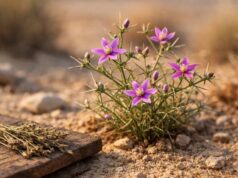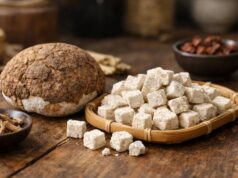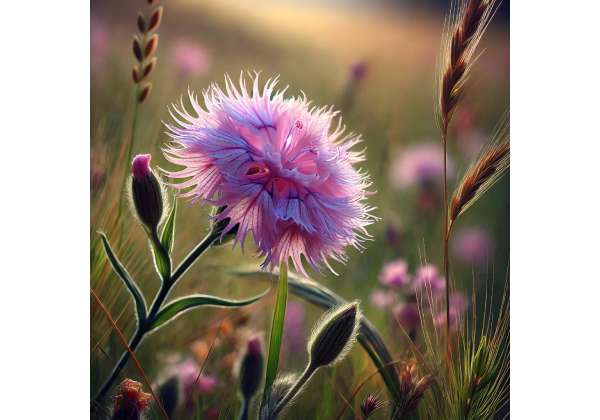
Fringed pink, Dianthus superbus, is a striking perennial known for its deeply cut, fragrant petals, but in traditional East Asian medicine it is valued for far more than appearance. It is one of the botanical sources of Dianthi herba, or Qumai, a classic herb used mainly for urinary difficulty, edema, inflammatory complaints, and certain menstrual patterns. Modern laboratory work has added a richer chemical picture, identifying triterpenoid saponins, flavonoids, cyclic peptides, phenolic compounds, and newer flavone C-glycosides that may help explain its diuretic, anti-inflammatory, and antimicrobial reputation.
At the same time, fringed pink is not a casual wellness tea. Much of the evidence comes from preclinical studies, and some safety concerns are real, especially in pregnancy. Even the traditional dosage guidance often applies to Dianthi herba as a shared medicinal material that may include both Dianthus superbus and Dianthus chinensis. That makes careful interpretation essential. The most useful way to approach fringed pink is as a traditional urinary and inflammation-focused herb with meaningful pharmacology, but with limits that matter just as much as its benefits.
Quick Facts
- Fringed pink is traditionally used for urinary difficulty, mild edema, and heat-pattern inflammation rather than as a general tonic.
- Its best-known compounds include triterpenoid saponins, flavonoids, cyclic peptides, and newer flavone C-glycosides.
- A traditional Dianthi herba range is 9 to 15 g/day, but this should be treated as clinician-supervised dosing rather than routine self-care advice.
- Avoid it during pregnancy because traditional sources and animal data suggest uterine-stimulating and anti-implantation effects.
- People with kidney disease, heavy menstrual bleeding, or multiple prescription medicines should not self-treat with it.
Table of Contents
- What is fringed pink exactly?
- Key compounds and traditional uses
- Could it help urinary symptoms?
- Could it help inflammation?
- How is it used and dosed?
- Side effects, interactions, and who should avoid it
- What the evidence actually says
What is fringed pink exactly?
Fringed pink, Dianthus superbus, is a perennial flowering plant in the Caryophyllaceae family. It grows across temperate Eurasia and is admired for its long, narrow petals that look almost shredded at the edges, along with a sweet fragrance that makes it stand out even among other pinks and carnations. In gardens, it is often treated as an ornamental. In traditional medicine, especially in East Asia, it is something more specific: one of the recognized plant sources for Dianthi herba, known in Chinese medicine as Qumai.
That distinction matters. Many casual herb summaries talk about Dianthus superbus as if every claim applies to this species alone, but a good portion of the traditional literature and official dosage guidance concerns Dianthi herba as a drug category that may come from both Dianthus superbus and Dianthus chinensis. Those two species overlap in medicinal use and chemistry, but they are not botanically identical. This shared identity is one reason the evidence can look broader than it really is when you narrow the question to fringed pink itself.
Traditionally, the dried aerial parts are the main medicinal material. The herb has been described as promoting urination, clearing “heat,” moving blood, and regulating menstruation in specific traditional frameworks. In plain language, that means it has mainly been used when urinary flow is difficult or painful, when there is a sense of inflammatory heat, and sometimes when menstrual stagnation is thought to be part of the problem. That is a much narrower role than the vague “immune herb” or “detox herb” labels sometimes seen online.
Fringed pink also has a more complicated profile than its elegant flowers suggest. This is not a soothing kitchen herb in the style of mint or chamomile. It is closer to a focused traditional medicine with a drying, clearing, and stimulating character. It has also been associated historically with contraceptive or pregnancy-related effects, which makes safety more important here than with many ornamental plants turned into teas.
A practical way to picture fringed pink is this: it is a decorative perennial with a genuine medicinal history, but that history belongs mostly to professional traditions rather than household self-care. The form used medicinally is the dried aboveground herb, not the flower as a casual edible garnish. Readers who only know it as a garden plant are often surprised by how strong the traditional claims around urination, inflammation, and pregnancy actually are.
That is why identity comes first. Before asking what fringed pink “does,” it is worth understanding what it is: a specific Dianthus species with a traditional medicinal role, a chemically active aerial herb, and a reputation that deserves careful interpretation rather than copy-and-paste enthusiasm.
Key compounds and traditional uses
The medicinal interest in fringed pink comes from a broad mix of compounds rather than a single famous active ingredient. Reviews of Dianthi herba report roughly 194 identified compounds across Dianthus superbus and Dianthus chinensis, and the main groups include triterpenoid saponins, flavonoids, cyclic peptides, anthraquinones, phenolic acids, amides, phenylpropanoids, and volatile constituents. That diversity is one reason the herb has been linked to so many pharmacological signals in laboratory work.
Among the most important groups are the triterpenoid saponins. These are often treated as characteristic constituents of medicinal Dianthus species and are thought to contribute to several of the herb’s biological activities. Saponins can influence membranes, inflammation pathways, and tissue responses, which helps explain why they keep showing up in discussions of urinary and anti-inflammatory use.
Flavonoids are another major category. Compounds such as quercetin glycosides, luteolin-related molecules, and newer flavone C-glycosides have drawn attention in recent studies. These compounds matter because they are often connected with antioxidant activity, immune modulation, and inflammatory signaling. They do not prove clinical benefit on their own, but they give the herb a more credible biochemical foundation than a plant known only from folklore.
Fringed pink is also notable for cyclic peptides and amide-type compounds, including dianthramide-related molecules. These are less familiar to everyday readers, but they are part of what makes Dianthus superbus interesting to phytochemists. More recently, researchers have also isolated phytoecdysteroids and C-glycosylflavones from the plant, which suggests that the chemical story of fringed pink is still expanding.
Traditional use patterns line up with this chemistry in a broad way. Dianthi herba has historically been used for:
- Dysuria and urinary difficulty.
- Edema and fluid retention patterns.
- Heat-type irritation in the urinary tract.
- Certain menstrual irregularities or stagnation patterns.
- Inflammatory or sore tissue states in traditional formulations.
What is important, though, is that traditional use is not the same as proven modern efficacy. These uses come from a coherent medical tradition, but they do not all carry the same level of modern evidence. The herb’s role is focused and pattern-based, not general. It is not usually taken as a nutritive tonic, stress adaptogen, or casual daily supplement.
That also helps clarify comparison. If someone wants a gentler urinary-support herb with a broader self-care reputation, corn silk for urinary comfort and mild fluid support is much easier to place in modern practice. Fringed pink is more targeted, more medicinal in tone, and more safety-sensitive.
So the most useful takeaway is this: fringed pink has a respectable traditional profile and a rich phytochemical one, but both point in the same direction. It is a purposeful herb for urinary and inflammatory patterns, not a broad-spectrum wellness plant. The chemistry supports interest. It does not erase the need for caution.
Could it help urinary symptoms?
Urinary support is the most credible traditional use for fringed pink. In Chinese medicine and related East Asian traditions, Dianthi herba is classically used when urination is painful, difficult, dribbling, or accompanied by a sensation of heat. Modern summaries often translate that into terms such as dysuria, urinary irritation, edema, or urinary tract inflammation. That translation is helpful up to a point, but it needs some care.
The herb’s traditional urinary role seems to rest on two main ideas. First, it is thought to promote urination. Second, it is used when the urinary tract is irritated or “hot,” meaning the person may experience burning, dark urine, swelling, or difficulty passing urine. That makes fringed pink more of a directed urinary herb than a general kidney tonic.
Modern evidence offers some support, but it is uneven. The review literature describes animal and clinical observations suggesting diuretic effects and improved urinary symptoms in certain settings, including use in decoctions and formulas. Some reported clinical applications involved urinary tract symptoms or ureteral stones, but often in combination formulas or with other interventions such as extracorporeal shock wave lithotripsy. That means fringed pink is part of the picture, not always the whole explanation.
This is a key point for readers: the strongest human-style evidence around fringed pink often comes from multi-herb prescriptions or traditional practice patterns, not from clean trials of Dianthus superbus alone. That makes it hard to answer the simple question, “Does fringed pink work for urinary symptoms?” with the same clarity you might expect from a modern single-ingredient supplement.
Still, the traditional fit is strong enough that a few realistic conclusions can be made:
- It may be helpful in short-term urinary irritation patterns where a diuretic and anti-inflammatory effect is desired.
- It may be more appropriate for “hot,” uncomfortable urination than for cold, weak, or chronic kidney-deficient patterns.
- It should not be used as a substitute for diagnosis in urinary retention, fever, flank pain, blood in the urine, or suspected infection.
This is where comparison helps. If your goal is gentle urinary self-care rather than a more formal medicinal herb, uva ursi for urinary-focused herbal support is more familiar in Western herbal writing, though it has its own safety limits. Fringed pink belongs to a more traditional framework and is less suitable for casual self-directed use.
It is also worth saying plainly that “diuretic” is not always a benefit. People with dehydration, kidney disease, or medication-managed fluid balance do not necessarily need more urination. In those cases, the herb’s traditional strength becomes the reason for restraint, not for enthusiasm.
So yes, fringed pink may help certain urinary symptoms, especially in the traditional role that made Dianthi herba famous. But the best evidence still points to supervised, context-specific use rather than routine home use for every urinary complaint. The more serious the symptom, the less appropriate self-treatment becomes.
Could it help inflammation?
Inflammation is the second major area where fringed pink shows promise, although the strongest evidence is still preclinical. Traditional use already points in this direction. Dianthi herba has long been used where heat, swelling, and irritation are part of the pattern, and modern compound studies help explain why.
Several lines of research suggest that Dianthus superbus contains molecules capable of modulating inflammatory pathways. In recent work, flavone C-glycosides isolated from the plant influenced inflammatory signaling in a zebrafish model of metabolic dysfunction-associated steatotic liver disease. Other studies have identified anti-inflammatory activity for isolated compounds such as tunicoside B, and newer phytoecdysteroid research suggests suppression of inflammatory nitric oxide signaling in microglial cells. In simpler terms, the plant contains multiple compounds that can dampen inflammatory responses under laboratory conditions.
That sounds promising, but the limits matter. These studies are not human clinical trials. They involve cell systems, animal models, docking analyses, and early mechanistic work. They tell us fringed pink is pharmacologically active. They do not yet prove that taking a decoction will reliably improve arthritis, chronic pain, asthma, or liver disease in people.
A useful way to frame the evidence is to separate “signal” from “certainty.”
There is a real signal:
- Anti-inflammatory compounds have been isolated from the herb.
- Multiple inflammatory pathways appear to be affected in preclinical models.
- Traditional use is consistent with this general activity.
There is not yet clinical certainty:
- We do not have robust human trials for common inflammatory conditions.
- Preparations vary widely between whole-herb decoctions and isolated fractions.
- Some positive findings involve disease models far removed from normal self-care use.
This is why “anti-inflammatory” can be both accurate and misleading. Accurate, because the herb clearly does something in experimental systems. Misleading, because readers may assume that means it is ready to use like a standardized pain or inflammation remedy. It is not.
If someone simply wants a better-studied herb for inflammatory discomfort, boswellia for inflammation and joint support is easier to justify from a modern evidence standpoint. Fringed pink is more interesting as a traditional medicinal herb with emerging compound-level evidence than as a first-choice supplement for chronic inflammation.
It is also possible that inflammation control helps explain some of its traditional urinary use. Painful urination and irritated tissues are not only about fluid flow; they also involve local inflammatory processes. In that sense, the diuretic and anti-inflammatory stories may not be separate at all.
The most balanced conclusion is that fringed pink probably does have meaningful anti-inflammatory potential. But at present, that potential belongs mainly to the lab, the pharmacology paper, and the traditional formula context. For everyday self-care, the promise is real but still preliminary.
How is it used and dosed?
Fringed pink is traditionally used as a dried aerial herb, most often in decoctions, compound prescriptions, or other formal preparations rather than as a casual flower tea. That already tells you something important about how it should be approached. The medicinal part is the herb as a whole aboveground material, not mainly the ornamental blossom. In traditional practice, the plant is often part of formulas rather than a stand-alone home remedy.
The core preparation is a decoction. That means the dried herb is simmered in water rather than simply steeped briefly like delicate leaves or flowers. Decoction is a sensible method for a medicinal plant with saponins, flavonoids, and other compounds that may need stronger extraction than a light infusion provides. It also reflects the herb’s traditional seriousness: this is a prepared medicine, not just a fragrant beverage.
The most commonly cited traditional dosage range for Dianthi herba is 9 to 15 g per day of the dried herb. This is the range usually reported in relation to the Pharmacopoeia of the People’s Republic of China. But this number needs an asterisk. It applies to Dianthi herba as an official medicinal material that may derive from both Dianthus superbus and Dianthus chinensis, and it assumes professional context, quality-controlled herb, and appropriate pattern matching. It should not be read as an invitation for unsupervised self-dosing with any fringed pink plant material.
A cautious way to think about dosage is:
- Traditional range: 9 to 15 g/day of the dried herb in decoction.
- Best reserved for clinician-guided use.
- Lower, brief exposure makes more sense for self-care than jumping into the full traditional range.
- Long-term daily use is hard to justify without professional oversight.
Timing depends on purpose. In traditional use for urinary symptoms, it may be taken as part of a formula during an acute phase rather than as an ongoing tonic. For menstrual-related use, the timing is even more pattern-specific and should not be improvised, especially given the pregnancy concerns.
If someone wants a gentler plant with a mild fluid-moving reputation, dandelion for mild diuretic-style support is much easier to place in routine self-care. Fringed pink is more exacting. It asks for the right patient, the right pattern, and the right reason.
A few practical cautions are worth listing:
- Do not use ornamental garden material of uncertain identity or treatment history.
- Do not assume the flowers alone represent the medicinal herb.
- Do not copy traditional doses out of context.
- Do not use it for long periods without supervision.
- Do not use it in pregnancy.
So how is it used and dosed? Traditionally, as a decocted medicinal herb within a supervised framework. Modern readers can learn from that, even if they decide the herb is too specialized for self-treatment.
Side effects, interactions, and who should avoid it
Safety is one of the most important parts of the fringed pink story. The herb is pharmacologically active, and traditional sources do not treat it as neutral. The strongest safety concern is pregnancy. Review data describe uterine-excitatory activity and anti-implantation or pregnancy-disrupting effects in animal studies, and official traditional guidance advises caution for pregnant women. That alone is enough to move fringed pink out of the “harmless ornamental turned tea” category.
Potential side effects are not fully mapped in modern human trials, but several plausible issues stand out:
- Increased urination or fluid loss.
- Gastrointestinal discomfort from decoctions or concentrated extracts.
- Worsening dryness if used in someone who is already dehydrated.
- Menstrual changes or uterine stimulation in sensitive individuals.
- Unpredictable responses when combined with other strong herbs.
The herb may also pose interaction concerns, even though direct human interaction studies are sparse. The most obvious theoretical overlaps include:
- Diuretics and other medicines that alter fluid balance.
- Blood-pressure medicines if the herb’s fluid-moving effect is significant.
- Anticoagulant or menstrual-regulating therapies where bleeding pattern changes matter.
- Fertility, contraception, or hormone-sensitive contexts.
- Nephrology medications, because urinary and kidney-related symptoms are precisely where self-treatment can become risky.
Who should avoid fringed pink altogether or use it only under trained supervision?
- Pregnant people.
- People trying to conceive.
- Breastfeeding people, because safety data are too limited.
- Children.
- People with kidney disease or a history of kidney stones unless advised by a clinician.
- People with unexplained blood in the urine, fever, or severe urinary pain.
- People with heavy bleeding or unstable menstrual symptoms.
- Anyone taking multiple prescription medicines for blood pressure, fluid balance, or reproductive health.
One more point deserves emphasis: the herb’s traditional use for menstruation does not make it a general women’s health herb. In traditional medicine, it is used in specific patterns, and the same uterine activity that may have made it useful historically is the reason modern unsupervised use can be inappropriate. If your interest is in gentler menstrual-support context, yarrow for menstrual support patterns is easier to discuss in a self-care framework, though it also requires care.
Another practical concern is misreading serious symptoms. Painful urination, edema, and blood in the urine are not trivial complaints. They can signal infection, obstruction, kidney disease, or other urgent problems. A strong diuretic-style herb is not the right first response when the cause is unknown.
The best safety summary is simple: fringed pink is a real medicine in traditional systems, and that is exactly why it should not be used casually. Its benefits may be targeted, but its risks are targeted too.
What the evidence actually says
The evidence for fringed pink is credible but mixed, and the reason is not just study quality. It is also a species-identity problem. Much of the best review literature is about Dianthi herba, the traditional drug, which includes both Dianthus superbus and Dianthus chinensis. That means some of the compound lists, dose ranges, and pharmacological claims belong to the medicinal category as a whole rather than to fringed pink alone. Any honest article has to say that upfront.
Within that limitation, the evidence divides into four layers.
First, traditional use is strong. Fringed pink is one accepted source of a long-established East Asian medicinal herb used for dysuria, edema, menstrual regulation, and inflammatory “heat” patterns. That gives it deep historical legitimacy.
Second, phytochemistry is substantial. Reviews identify a wide range of saponins, flavonoids, peptides, anthraquinones, phenolic acids, and related compounds. More recent studies have added new C-glycosylflavones and phytoecdysteroids, which shows the chemistry is still being actively explored.
Third, preclinical pharmacology is promising. Animal and cell work suggests anti-inflammatory, antioxidant, antimicrobial, diuretic, neuroinflammatory, renal-protective, and metabolic effects. This is where many of the exciting headlines come from. It is also where restraint is most needed. Preclinical success does not automatically produce human benefit.
Fourth, human evidence is limited and often indirect. Some reports describe improvement in urinary symptoms or diuretic effects, but these often involve formulas, mixed clinical contexts, or traditional practice settings rather than modern stand-alone trials of Dianthus superbus. That makes it difficult to separate the herb’s specific effect from the broader prescription context.
A realistic ranking of confidence would look like this:
- High confidence that fringed pink is a genuine traditional medicinal plant.
- Moderate confidence that it contains bioactive compounds relevant to urinary and inflammatory use.
- Moderate confidence that preclinical anti-inflammatory and diuretic effects are real.
- Low confidence that it has been clinically validated as a solo herb for modern self-care.
That last point is what keeps the article honest. Fringed pink is not hype-proof because it lacks activity. It is hype-proof because the activity has not yet been translated into clean clinical certainty. If you want a more broadly studied polyphenol-rich herb with much clearer human evidence, green tea and other better-studied antioxidant herbs are easier to defend in modern practice.
So what does the evidence actually say? It says fringed pink deserves respect. It is a real medicinal species, part of an official traditional materia medica, and rich in compounds with measurable biological effects. But it also says this is still a herb for careful interpretation, not a shortcut to self-prescribing. The traditional role is clearer than the modern clinical one, and that is the most useful truth a reader can take away.
References
- Dianthus superbus L. | Plants of the World Online | Kew Science n.d. (Official database)
- Dianthi herba: a comprehensive review of its botany, traditional use, phytochemistry, and pharmacology 2022 (Review)
- Preparative isolation of maltol glycoside from Dianthus superbus and its anti-inflammatory activity in vitro 2022
- Impact of Preparative Isolation of C-Glycosylflavones Derived from Dianthus superbus on In Vitro Glucose Metabolism 2024
- Flavone C-Glycosides from Dianthus superbus L. Attenuate Metabolic Dysfunction-Associated Steatotic Liver Disease (MASLD) via Multi-Pathway Regulations 2025
Disclaimer
This article is for educational purposes only and is not medical advice. Fringed pink is a traditional medicinal herb with meaningful pharmacology and limited modern clinical data. It should not replace evaluation for urinary pain, blood in the urine, kidney problems, menstrual irregularities, or inflammatory disease. Because of reported uterine-stimulating and pregnancy-related concerns, avoid medicinal use during pregnancy unless specifically directed by a qualified clinician. Speak with a healthcare professional before using it if you take prescription medicines, are breastfeeding, have kidney disease, or are managing reproductive health issues.
If this article helped you, please share it on Facebook, X, or any platform your readers prefer.