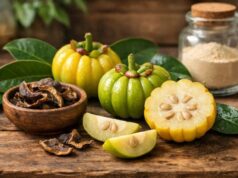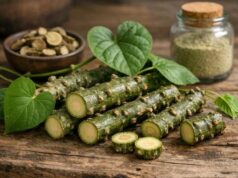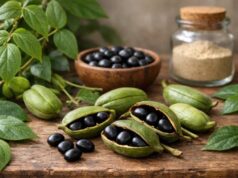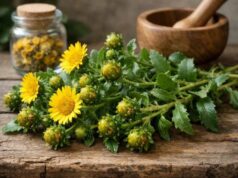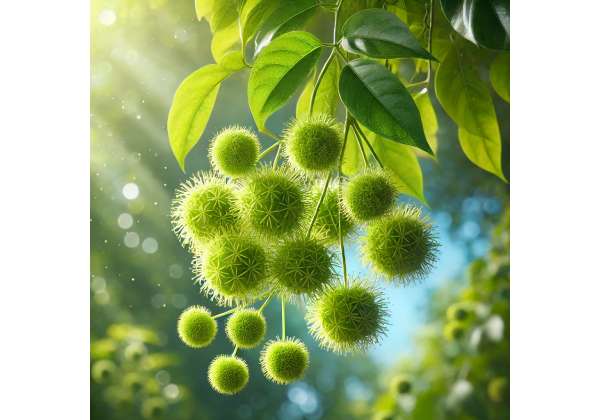
Gambir, also written as gambier, is a concentrated herbal extract made mainly from the leaves and young twigs of Uncaria gambir, a climbing shrub native to Southeast Asia. It has a long history in traditional medicine and everyday use, especially for its strongly astringent taste and its rich supply of plant polyphenols. The best-known compounds in gambir are catechin, epicatechin, and tannin-like constituents that help explain why it has been used for mouth problems, mild digestive complaints, skin applications, and wound support.
Today, gambir draws interest for several reasons. It appears to have antioxidant, antimicrobial, anti-inflammatory, and tissue-supporting effects in laboratory and animal research. It is also being studied for oral care, digestive support, and metabolic health. At the same time, it is not a mainstream supplement with well-established human dosing, and much of the enthusiasm around it still runs ahead of the evidence. That makes a balanced view important. The most useful way to think about gambir is as a traditional, polyphenol-rich extract with promising local and short-term uses, but with limited clinical proof and a real need for careful dosing and safety awareness.
Essential Insights
- Gambir is a catechin-rich, tannin-rich extract best known for astringent, antimicrobial, and anti-inflammatory activity.
- The most plausible uses are short-term oral-care and topical-support applications, while metabolic claims remain preliminary.
- No standardized human oral dose exists; published research is mostly preclinical, with study doses ranging from 6.25 to 25 mg/kg in rats and much higher in some disease models.
- High-dose or long-term oral use is not well studied in people and may be too irritating for sensitive stomachs or mouths.
- Avoid self-treating with gambir during pregnancy, breastfeeding, childhood, or alongside diabetes medicines without medical guidance.
Table of Contents
- What is gambir?
- Key ingredients in gambir
- Does gambir have benefits?
- How gambir is used
- How much gambir per day
- Gambir safety and interactions
- What the research really shows
What is gambir?
Gambir is a dried extract prepared from Uncaria gambir, a tropical plant in the coffee family, Rubiaceae. The plant grows most prominently in Indonesia and Malaysia, where it has long been cultivated for both medicinal and non-medicinal purposes. Traditionally, the leaves and young twigs are boiled, pressed, concentrated, and dried into a dense mass that can later be shaped into blocks, cubes, or powder. That processing step matters because gambir is not usually consumed as a fresh herb. Most people encounter it as a concentrated extract.
One reason gambir has attracted interest for centuries is its intense astringency. Astringent herbs create a tightening, drying sensation on tissues. That helps explain why gambir has been used for swollen gums, sore throat, canker sores, diarrhea, and minor skin problems. In practical terms, people often turned to it when they wanted something that felt drying, protective, and firming rather than soothing and slippery.
Gambir also has a broader cultural history. In some regions it has been used in betel chewing mixtures, as well as in dyeing, tanning, and other traditional industries. That mixed history is important because it reminds readers that gambir is not just a supplement. It is a botanical extract with medicinal, cultural, and industrial roles.
Another point that helps reduce confusion: gambir is only one member of the Uncaria genus. It is not the same plant as cat’s claw, another Uncaria species that is more familiar in Western herbal practice. The shared genus may sound impressive, but the plants differ in chemistry, traditional use, and evidence base.
In modern herbal discussions, gambir is best understood as a concentrated catechin-rich extract rather than a simple leaf tea. That distinction helps explain why it can feel potent even in small amounts. It also explains why quality varies. The finished material can differ widely depending on plant source, harvest conditions, and extraction method. For readers, the practical takeaway is simple: gambir is a traditional Southeast Asian extract with strong astringent character, useful local applications, and growing scientific interest, but it is not yet a standardized, plug-and-play wellness product.
Key ingredients in gambir
The value of gambir comes from its dense concentration of polyphenols, especially flavan-3-ols and related tannin-like compounds. Catechin is the headline constituent and the one most often discussed in research. Depending on the source and extraction method, gambir can contain a large amount of catechin, which is one reason it is frequently described as one of the richer natural catechin sources. That puts it in the same broad conversation as green tea, although the overall plant matrix and traditional uses are quite different.
The most important constituents include:
- Catechin, often considered the dominant active marker and a major contributor to antioxidant and antimicrobial activity.
- Epicatechin, a closely related flavonoid that may add to the extract’s antioxidant and tissue-supporting profile.
- Gallocatechin, epigallocatechin, and epicatechin gallate in smaller amounts, depending on the extract.
- Condensed tannins and dimeric flavonoids, which contribute to the strong astringent character.
- Minor alkaloids and phenolic compounds that may support or modify the activity of the main flavonoids.
These ingredients matter because they help explain gambir’s core actions. Catechin and related polyphenols can interact with proteins and cell membranes, which may contribute to the herb’s drying, tightening, and antimicrobial effects. In simpler terms, gambir does not behave like a slimy demulcent herb that coats tissues. It behaves more like a firming, contracting botanical that may reduce weeping, irritation, or excess secretions.
That chemistry also shapes how gambir feels in the mouth and digestive tract. The same tannin-rich compounds that may make it useful for swollen gums or loose stools can also make it too drying for some people. This is one of the most practical chemistry-to-use lessons with gambir: the compounds that likely create its benefits are also the compounds most likely to make it irritating when overused.
Another helpful insight is that gambir is not just “catechin in plant form.” Whole extracts often contain a mixture of flavonoids, dimers, phenolics, and minor alkaloids. That means the extract may behave differently from an isolated catechin supplement. It may also explain why two gambir products can feel noticeably different even when both list the same plant name.
From a buyer’s perspective, the key questions are whether the extract is standardized, how it was prepared, and whether the seller identifies catechin content or quality controls. Products that simply say “gambir powder” without any compositional information leave too much uncertainty. For a concentrated botanical with variable chemistry, quality markers matter more than marketing language.
Does gambir have benefits?
Yes, gambir appears to have meaningful medicinal potential, but the strongest support is still preclinical rather than clinical. The most believable benefits are the ones that match its chemistry and traditional use: astringent support for the mouth and throat, antimicrobial activity, anti-inflammatory effects, and possible help in minor digestive complaints involving excess looseness or irritation.
A good way to think about gambir is to separate likely short-range benefits from bigger, still-unproven claims.
More plausible benefits include:
- Oral support. Because gambir is both astringent and antimicrobial, it makes sense as a traditional remedy for swollen gums, mouth irritation, and oral hygiene. It may be more useful as a rinse, gargle, or localized preparation than as a general wellness supplement.
- Mild digestive support. Traditional use for diarrhea and dysentery fits the herb’s drying profile. Astringent botanicals can sometimes help when tissues are irritated and secretions are excessive.
- Topical tissue support. Gambir has been studied for wound-related applications, likely because catechin-rich extracts may support antimicrobial balance, inflammation control, and tissue response.
- Antioxidant and anti-inflammatory effects. These are seen repeatedly in lab and animal studies and likely form part of the foundation for its other uses.
Less certain but actively discussed areas include blood sugar regulation, lipid metabolism, liver protection, fibrosis-related pathways, and even anticancer activity. These research directions are interesting, but they are not the same as proven clinical benefits. In most of these areas, gambir looks promising because it affects biological markers in cells or animals, not because large human trials have shown dependable outcomes.
That distinction matters. A herb can have real biological activity without being ready for broad health claims. Gambir seems to fit that pattern. It is active enough to deserve attention, but not yet established enough for sweeping promises.
One especially useful comparison is with other astringent botanicals such as witch hazel. Like witch hazel, gambir often makes the most sense when the goal is local tissue support rather than whole-body transformation. That is a more grounded, less hype-driven way to view it.
So, does gambir help? Probably yes, especially in areas tied to oral care, surface tissues, and astringent digestive support. But readers should be cautious about treating it as a proven solution for diabetes, obesity, cancer, or chronic inflammatory disease. At this stage, it is better described as a promising traditional extract with targeted practical uses than as a fully validated therapeutic herb.
How gambir is used
Gambir can be used in several forms, and the form often matters as much as the dose. Because it is concentrated and astringent, it is rarely approached the same way as a gentle tea herb.
Common forms include:
- Dried extract blocks or cubes, which are dissolved or reprocessed.
- Powdered extract, used in traditional preparations or modern formulas.
- Mouth rinse or gargle preparations for oral and throat use.
- Topical pastes, gels, or incorporated wound-care formulas.
- Multi-herb products, especially in traditional medicine systems.
For oral care, gambir is most naturally suited to short-term local use. A dilute rinse or gargle may make more sense than swallowing large amounts. This approach matches both its traditional use and its chemistry. When a herb is strongly astringent, direct contact with gums or irritated mouth tissue may deliver the most obvious effect with less systemic exposure.
In topical use, gambir may appear in ointments, salves, or research formulations aimed at wound support. Here the goal is not simply to “kill germs,” but to create a local environment that supports cleaner, calmer tissue. That is why gambir is sometimes discussed alongside plants such as clove in oral and topical care, though the two herbs work very differently.
As an internal product, gambir should be approached more carefully. Traditional internal use exists, especially for diarrhea-like complaints, but modern consumers should not assume that every concentrated powder is meant for daily swallowing. Some products are far better suited to occasional, targeted use than to routine supplementation.
A few practical guidelines help:
- Match the form to the goal.
For mouth or gum issues, choose a rinse, gargle, or localized preparation rather than a capsule whenever possible. - Think short-term first.
Gambir is better viewed as a problem-specific botanical than as a daily foundational supplement. - Check the extract details.
Because chemistry varies, a standardized extract is easier to judge than a generic powder. - Avoid confusing traditional use with universal suitability.
Historic use in betel chewing or cultural mixtures does not automatically translate into a safe modern health routine. - Watch tissue response.
If the mouth feels overly dry, the throat feels scratched, or the stomach feels tight or irritated, the preparation may be too strong.
Used thoughtfully, gambir is a practical herb. Used casually, it is easy to overdo because its concentrated nature can make a small amount feel much stronger than expected.
How much gambir per day
This is the hardest part of any gambir guide, because there is no well-established, evidence-based human oral dose. That is the most honest answer. Unlike herbs with long modern supplement histories and standardized monographs, gambir still lives in a gray zone between traditional practice, experimental products, and early research.
Most published dose ranges come from preclinical studies, not from large human trials. Examples include:
- 6.25 to 25 mg/kg in rat antidiarrheal research.
- Around 100 mg/kg in animal anti-inflammatory work with catechin-rich material.
- 200 to 400 mg/kg in diabetic rat models.
- Up to 500 micrograms per milliliter as a non-cytotoxic concentration in one cell-based safety study.
Those numbers are useful for understanding potency and research direction, but they should not be copied into human self-dosing. Animal doses and cell concentrations do not convert neatly into safe personal use.
For real-world use, a more cautious framework works better:
- Start with the product label if you are using a commercial preparation.
- Choose the lowest suggested amount first.
- Prefer short-term, goal-specific use over continuous daily intake.
- Use dilute local preparations for mouth and throat applications.
- Stop if you notice excessive dryness, irritation, nausea, or constipation.
For many readers, the best practical “dose” is not a capsule count at all, but a use pattern: small amount, short duration, and targeted application. That may mean a diluted oral rinse once or twice daily for a limited period, or a carefully formulated topical product used as directed.
A common mistake is assuming that more gambir means better results because it is plant-based. With tannin-rich extracts, the opposite is often true. Too much can create more irritation than benefit. Another mistake is using it for months without a clear reason. Gambir is better suited to focused use than to open-ended daily consumption.
So if you want a bottom-line rule, use this one: there is no universal human daily dose for gambir, and any oral use should stay conservative, short-term, and product-specific unless guided by a qualified clinician familiar with botanical medicine.
Gambir safety and interactions
Gambir is not automatically unsafe, but it should be treated with more respect than many casual herbal products receive. The main reason is simple: it is concentrated, strongly astringent, and not backed by robust long-term human safety data.
The most likely tolerability issues are related to its drying and contracting nature. In practice, that may mean:
- Mouth dryness or stinging if the rinse is too strong.
- Stomach tightness, queasiness, or irritation in sensitive people.
- Constipation or overly drying digestive effects with repeated oral use.
- Local irritation if a concentrated product is applied too often.
Interactions are harder to define because direct human studies are limited. Still, several sensible cautions apply.
People who should be especially careful include:
- Pregnant or breastfeeding individuals, because safety data are too limited.
- Children, unless a clinician specifically recommends a product and dose.
- People with chronic digestive irritation, severe constipation, or a very sensitive stomach.
- Anyone taking diabetes medicines, since gambir has shown glucose-lowering activity in preclinical work.
- Anyone using multiple strong astringent oral products at once, which may over-dry tissues instead of helping them.
There is also a quality-control issue. Gambir products can vary by extraction method, catechin content, and purity. A poorly described raw powder is harder to use safely than a standardized preparation. This is where comparison with another tannin-rich botanical such as oak bark can be useful: both herbs may offer firming, drying benefits, but both can also become too harsh when concentration and duration are ignored.
Another practical safety point involves context. Gambir’s historic presence in betel chewing traditions should not be treated as proof of modern health value. Traditional mixtures often contain other ingredients that change both effects and risk. A concentrated gambir extract used on its own is not the same thing as a cultural chewing preparation.
If you want the safest approach, keep these principles in mind:
- Use the smallest effective amount.
- Favor localized, short-term use over prolonged internal use.
- Choose standardized products whenever possible.
- Stop promptly if tissues feel more irritated rather than calmer.
- Ask for medical advice before combining gambir with treatment for diabetes or other chronic conditions.
In short, gambir’s safety profile looks cautiously acceptable in limited research, but the absence of strong human data means restraint is part of responsible use.
What the research really shows
The research on gambir is intriguing, but it is still uneven. That is the fairest summary.
What looks reasonably well supported at the preclinical level:
- Gambir contains a broad set of bioactive polyphenols, especially catechin-rich fractions.
- It shows antioxidant, antimicrobial, anti-inflammatory, and astringent activity in laboratory studies.
- It has promising results in animal work related to diarrhea, inflammation, wound support, and blood sugar control.
- Early safety work suggests that certain concentrations are not strongly cytotoxic in cell models.
What remains limited:
- Large human clinical trials.
- Standardized dosing guidance for consumers.
- Long-term human safety data.
- Clear comparisons between crude gambir, purified catechin fractions, and finished commercial products.
This matters because the “evidence ladder” is still incomplete. A herb can look excellent in petri dishes and rats and still fail to produce predictable outcomes in people. Gambir has not failed, but it also has not yet crossed that clinical threshold in a convincing way.
One of the more promising patterns in the literature is that gambir’s best prospects are practical and local rather than dramatic and systemic. Oral care, topical support, and short-range astringent uses make more sense today than bold claims about reversing metabolic disease. That is not a dismissal. It is a way of matching the strength of the claim to the strength of the evidence.
Another useful insight is that gambir research often studies extracts, isolates, or combinations rather than a single traditional household preparation. That means readers should be careful when moving from published results to self-use. Not every product on the market resembles the material used in a study.
The smartest conclusion is neither hype nor dismissal. Gambir is a real medicinal plant with a strong phytochemical foundation and several believable applications. But the research still points more clearly to potential than to proof. For now, it is best approached as a traditional catechin-rich extract with promising oral, topical, and digestive-support uses, limited human dosing guidance, and a need for careful, evidence-aware use.
References
- Therapeutic Potential of the Herbal Plant Uncaria gambir: A Systematic Review 2024 (Systematic Review)
- Current Research of Phytochemical, Medicinal and Non-Medicinal Uses of Uncaria gambir Roxb.: A Review 2022 (Review)
- Role of Herbal Extracts of Catechu from Uncaria gambir in the Treatment of Chronic Diabetic Wounds 2022
- Preliminary in vitro cytotoxic evaluation of Uncaria gambier (Hunt) Roxb extract as a potential herbal-based pulpotomy medicament 2023
- Antidiarrheal Effect of DLBS1Y62, a Bioactive Fraction of Uncaria gambir Roxb. Dried Sap Extract, in Wistar Rats 2021
Disclaimer
This article is for educational purposes only and does not replace medical advice, diagnosis, or treatment. Gambir is a concentrated botanical extract with limited human clinical data, so its benefits, appropriate dose, and long-term safety are not fully established. Do not use gambir to self-treat persistent diarrhea, serious mouth lesions, chronic wounds, diabetes, or any condition that needs professional care. Speak with a qualified healthcare professional before using gambir if you are pregnant, breastfeeding, giving it to a child, taking prescription medicines, or managing a chronic illness.
If you found this article useful, please share it on Facebook, X (formerly Twitter), or any platform your readers trust.