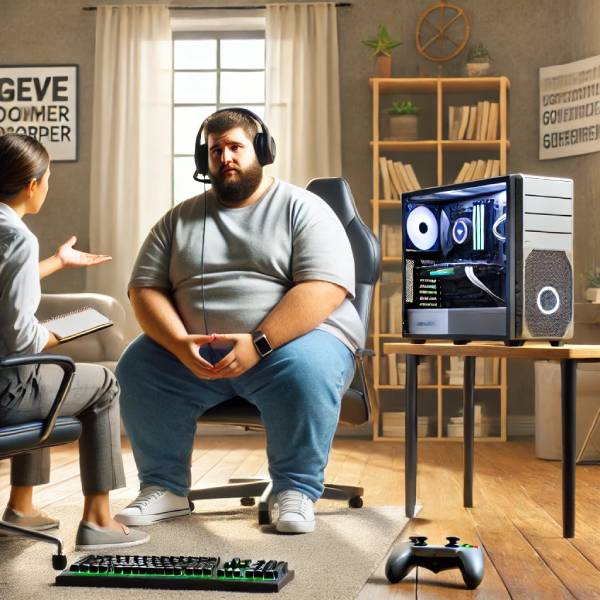
Gaming disorder can be hard to recognize as a real treatment issue because the behavior often hides inside ordinary routines. A person may still be at home, still online, and still talking with friends, yet their sleep shifts later and later, work or school slips, meals become irregular, and life begins to narrow around the next session, update, or ranked match. By the time many families or adults seek help, the problem is not just “too much screen time.” It is loss of control, rising conflict, avoidance, emotional dependence on gaming, and growing impairment.
Treatment works best when it is practical, specific, and built around the person’s actual life. That usually means more than cutting hours. It means changing triggers, treating co-occurring mental health problems, rebuilding daily structure, and creating a recovery plan that can hold up when stress, boredom, or loneliness return.
Table of Contents
- How treatment starts
- Cutting back without a crisis
- Therapy that changes the loop
- Family, school, and device boundaries
- Treating ADHD, anxiety, and depression
- Rebuilding sleep, routine, and reward
- Long-term recovery and relapse prevention
How treatment starts
Good treatment begins with a careful assessment, not a judgment about whether games are “good” or “bad.” Clinicians want to understand how gaming is functioning in the person’s life. That means looking at loss of control, failed attempts to cut down, emotional dependence, deception, sleep disruption, academic or work decline, social withdrawal, and whether gaming continues despite clear harm. Hours matter, but hours alone do not make the diagnosis. A teenager who plays heavily on weekends but still sleeps, attends school, and maintains relationships may need structure, not formal treatment. A person who cannot stop, lies about play, skips responsibilities, and becomes distressed when blocked likely needs more support.
The first phase also separates gaming disorder from related problems that can look similar. Some people are mainly caught in habit loops driven by boredom and constant device access. Others are using games to escape depression, social anxiety, trauma, loneliness, or shame. Some are struggling with attention problems and find games easier to tolerate than school, planning, or frustration. That is why a good evaluation asks what gaming is doing for the person emotionally. Does it numb stress, provide status, create belonging, avoid failure, or regulate mood?
Clinicians also assess immediate risk. Important questions include whether the person is missing school or work, staying awake most of the night, neglecting hygiene, losing money through in-game purchases, becoming aggressive when access is restricted, or having suicidal thoughts. In adolescents, parents are often asked about academic decline, conflict at home, meal skipping, hidden devices, and the child’s ability to transition away from gaming. Adults are asked about debt, work performance, isolation, relationship strain, and whether gaming has displaced sleep, movement, and offline functioning. A broader review of gaming disorder warning signs can help frame those discussions, but treatment decisions depend on individual severity and context.
Most people start with outpatient care, usually weekly therapy with family involvement when needed. More severe cases may need intensive outpatient treatment, partial hospitalization, or coordinated care across psychiatry, therapy, school, and family systems. The goal at this stage is not to punish gaming or impose shame. It is to define the problem clearly, identify what is maintaining it, and build a treatment plan that fits the person’s age, symptoms, and daily environment.
Cutting back without a crisis
Unlike alcohol or sedatives, gaming disorder does not involve a medical detox. Still, many people experience a very real withdrawal-like period when they reduce or stop. Irritability, restlessness, boredom, low mood, strong cravings, sleep changes, and a feeling of emptiness are common in the early phase. Families often misread this period as proof that treatment is failing. In reality, it often means the person has lost a major coping tool and has not yet built a replacement.
Because of that, treatment usually favors a structured reduction plan instead of vague promises to “play less.” The plan depends on severity. For some people, especially those with repeated failed attempts at moderation, a full break from gaming for several weeks may be the safest starting point. For others, especially adults with milder symptoms, a measured step-down plan can work. The choice should reflect trigger strength, prior relapses, game type, and how tightly gaming is linked to money, identity, or online relationships.
Early management often includes practical changes such as:
- removing devices from the bedroom at night
- disabling notifications and promotional alerts
- unlinking saved payment methods
- turning off autoplay, streams, and game-related content
- pausing or deleting the highest-risk games first
- setting access only during preplanned hours
- adding visible routines for meals, sleep, school, and work
Specificity matters. “No gaming after dinner” works better than “be more balanced.” “Console stays in the living room” works better than “show more self-control.” These are not punishments. They are environmental supports that reduce the need for constant willpower.
The first few weeks are usually harder than people expect because gaming has often been carrying too much emotional weight. A person may suddenly have to face silence, disappointment, family tension, unfinished work, or the absence of online status. This is why treatment pairs reduction with immediate replacement strategies: therapy appointments, offline contact, short planned activities, movement, sleep repair, meals at regular times, and simple tasks that produce a quick sense of completion. The aim is not just to take gaming away. It is to prevent the nervous system from feeling stripped and directionless.
When the early reduction phase is handled well, the person begins to learn an important recovery lesson: urges peak and pass. They do not need to be obeyed. That sense of regained control is one of the first real turning points in treatment.
Therapy that changes the loop
Psychotherapy is usually the core of treatment because gaming disorder is rarely just about entertainment. It is about a repeated loop: trigger, urge, gaming, temporary relief, and then more avoidance, guilt, conflict, or loss of control. Therapy helps a person see that loop clearly enough to change it.
Cognitive behavioral therapy is the approach with the strongest support. In practice, CBT for gaming disorder focuses on identifying triggers, tracking patterns, challenging distorted beliefs, and building new responses. Common beliefs include “gaming is the only thing that helps me relax,” “if I stop, I will lose my friends,” “I can fix this by one more ranked climb,” or “real life feels impossible, so I may as well stay online.” Therapy tests those beliefs against evidence and helps the person build alternatives that are less immediate but more sustainable.
A therapist will often ask the person to map the moments when gaming becomes hardest to resist. These may include coming home from school, finishing work, feeling criticized, being lonely at night, or opening social apps and seeing gaming content. Once the sequence is clear, treatment becomes more targeted. Instead of telling someone to “use moderation,” therapy teaches concrete moves such as delaying the urge by 20 minutes, leaving the room where they usually play, handing over a device at a set time, or doing a short replacement task before the first gaming thought turns into a session.
Many people also benefit from other therapy approaches used for compulsive and anxiety-linked patterns. Acceptance and commitment therapy can help when gaming has become fused with identity or avoidance. Dialectical behavior therapy can be useful when gaming is tied to emotional volatility, self-soothing, or impulsive behavior. Motivational interviewing is often important at the start because many people feel deeply divided. They want relief from the damage, but they also do not want to give up mastery, comfort, community, or escape.
Therapy often works on four areas at once:
- understanding what gaming is regulating
- reducing rigid or automatic play patterns
- increasing tolerance for boredom, frustration, and discomfort
- building a wider life that does not collapse when gaming is removed
Group therapy can help when shame and secrecy are strong, though it works best when the group stays focused on recovery rather than becoming a place to swap gaming culture. The broader goal is not to make games feel forbidden forever. It is to break the automatic loop so the person can think, choose, and live with more freedom.
Family, school, and device boundaries
Gaming disorder is treated inside a real environment, not inside a vacuum. That matters because many relapses are not caused by a lack of insight. They are caused by the fact that the console, phone, group chat, payment system, and game community are still fully active and available. Treatment becomes much stronger when the family, school, or household stops working against it.
For adolescents, family involvement is often essential. Parents do not need to become surveillance officers, but they do need to shift from repeated arguments to clear structure. Endless negotiation tends to fail because it turns every limit into a debate. What works better is a calm, written plan: when devices are used, where they are charged, how homework and sleep are protected, what happens if rules are broken, and which adults are responsible for follow-through. Consistency matters more than intensity.
Useful household rules often include:
- no gaming devices in the bedroom overnight
- fixed shutoff times that protect sleep
- meals and key family times without screens
- no spending on games without adult review
- router or device controls used openly, not secretly
- clear rules for weekends, holidays, and school nights
School involvement can matter just as much. Many young people with gaming disorder fall behind gradually, then avoid school because the backlog feels humiliating. Treatment may need coordination with teachers, counselors, or university staff to rebuild attendance, reduce overwhelm, and set smaller, reachable targets. Adults may need similar support around work performance, missed deadlines, or a return to normal office hours after long periods of nighttime gaming.
This environmental work also includes understanding the broader digital ecosystem. For many people, the pull is not only the game itself. It is Discord, streaming, patch notes, highlights, social comparison, and a steady flow of gaming content that keeps cravings active. A wider conversation about screen time and mental health can help, especially when the person insists they are “not gaming” while still consuming hours of game-adjacent media.
Treatment is more effective when family members stop swinging between harsh control and helpless surrender. Recovery usually moves forward when boundaries are clear, communication is calmer, and the home environment supports sleep, school, work, meals, and offline life. That structure can feel restrictive at first. Over time, it often becomes the scaffold that lets the person regain trust in themselves.
Treating ADHD, anxiety, and depression
Gaming disorder often improves only partially if the treatment plan ignores the mental health problems surrounding it. Many people are not gaming compulsively in isolation. They are gaming in the context of ADHD, social anxiety, depression, autism-related overwhelm, trauma, insomnia, or chronic stress. In those cases, the game is doing a job. It may be providing stimulation, predictability, relief from shame, quick reward, or social contact that feels safer than offline interaction.
ADHD is especially important to assess because games offer rapid feedback, novelty, and strong reward signals. A person who feels scattered, underperforming, or chronically frustrated in school or work may discover that gaming is the one place where focus comes easily. That does not mean ADHD causes gaming disorder, but it can make the pattern harder to break if the underlying attention problem goes untreated. When the history fits, a proper ADHD evaluation can change the treatment plan in meaningful ways.
Depression and anxiety also need direct treatment. Someone who is withdrawn, hopeless, or socially fearful may reduce gaming for a week and then return because real life still feels empty or threatening. Therapy may need to target avoidance, self-esteem, panic, or social discomfort. In some cases, medication for depression, anxiety, or ADHD can be appropriate, especially when symptoms are clearly impairing and well evaluated by a qualified clinician.
Medication is not considered a primary stand-alone treatment for gaming disorder itself. The research base is still limited, and most studies are small and concentrated in a few regions. Some medications have shown promise in certain settings, especially when ADHD or depressive symptoms are present, but the safest clinical principle is to use medication to treat the co-occurring condition rather than assuming there is a single pill for compulsive gaming.
Other issues that may need attention include:
- sleep reversal and insomnia
- bullying or peer rejection
- family conflict or high criticism
- autism-related social strain or rigidity
- substance use, especially caffeine or cannabis
- self-harm, suicidality, or severe emotional dysregulation
When co-occurring problems are named and treated directly, the person usually has a better chance of sustaining gaming recovery. Without that work, treatment can become a superficial battle over screen hours while the original distress remains untouched. Recovery deepens when the question shifts from “How do I force myself offline?” to “What needs help in the rest of my life so I no longer need gaming to carry everything?”
Rebuilding sleep, routine, and reward
One of the most important parts of recovery is also one of the least glamorous: rebuilding an ordinary day. Gaming disorder often distorts basic rhythms long before treatment begins. Bedtime drifts later, mornings become chaotic, meals are skipped, movement drops, and the brain adapts to high-intensity reward. When that happens, real-world tasks feel flat, slow, and effortful. Recovery is not just about stopping gaming. It is about teaching the body and mind to tolerate normal life again.
Sleep repair is usually a priority. Late-night gaming, blue light exposure, emotional arousal, and “one more match” thinking can push the sleep window later for months. Many people are not just tired. They are living in a reversed schedule that makes school, work, and therapy harder to sustain. Treatment often starts with a consistent wake time, device cutoff before bed, morning light, and a gradual shift back toward a workable routine. For some people, learning how to repair a disrupted sleep schedule is a major part of recovery, not a side issue.
Recovery also depends on rebuilding reward in slower forms. Games provide fast goals, fast feedback, fast social response, and a strong sense of progress. Real life rarely does. That gap is why people in early recovery often say everything feels boring. The solution is not to wait for motivation to appear. It is to create small, repeated sources of mastery and pleasure until the reward system becomes less narrowed.
Helpful recovery targets often include:
- regular meals and hydration
- some daily movement, without turning it into another compulsion
- short offline activities with visible completion
- contact with friends or family outside gaming spaces
- hobbies that involve making, building, learning, or being outdoors
- scheduled blocks for study, chores, and rest
This stage requires patience because it can feel unimpressive compared with the intensity of gaming. But this is where people start getting parts of themselves back. Concentration improves. Tolerance for quiet improves. Small tasks feel less impossible. The person begins to remember what it feels like to have an evening that is not dictated by cravings, notifications, or in-game obligations.
A stable routine does not cure gaming disorder by itself. But without routine, treatment has very little to stand on. Recovery becomes more durable when daily life is predictable enough that sleep, food, work, school, and offline reward are no longer constantly losing to the game.
Long-term recovery and relapse prevention
Long-term recovery is not simply the absence of gaming. It is the return of choice, balance, and functioning over time. Some people decide they need complete abstinence from certain games, especially those tied to ranking, spending, or repeated relapse. Others eventually return to limited gaming under firm rules. The right approach depends on the person’s history, triggers, and ability to keep gaming in a controlled place rather than letting it reclaim the center of life.
Relapse prevention starts with knowing the personal warning signs. These often appear before total loss of control returns. A person may begin watching more streams, following patch news, rejoining old servers, buying cosmetic items, staying up later, hiding play time, or telling themselves they can handle “just weekends.” These steps can look small, but they often signal that the recovery plan is loosening around the edges.
High-risk situations often include:
- loneliness after school or work
- conflict at home
- major deadlines or failures
- school breaks and holidays
- ranked seasons, updates, or special events
- illness, burnout, or depression
- contact with old gaming groups that normalize overuse
A solid relapse plan is usually written down. It should name triggers, early signs, emergency steps, and the people who need to know when things are slipping. For example, the plan might say that two late-night sessions in a week triggers a review with a therapist or parent, or that reinstalling a high-risk game means handing over payment access for a period. Clear plans work better than vague promises.
Many people also benefit from keeping a short list of non-gaming coping tools close at hand: walking, showering, calling someone, structured work sprints, leaving the house, listening to music without screens, or using evidence-based stress-management skills before the urge becomes a full session. The point is not to create a perfect life. It is to shorten the time between warning sign and response.
Recovery is often stronger when the person widens identity beyond gaming. They are not just someone “trying not to relapse.” They are a student, friend, worker, artist, partner, sibling, athlete, volunteer, or learner building a fuller life. When gaming stops being the main source of reward, mastery, and belonging, relapse loses some of its power. That is the deeper aim of treatment: not only fewer hours online, but a life that feels worth returning to offline.
References
- Treatment of gaming disorder: A systematic review and meta-analysis 2025 (Systematic Review and Meta-Analysis)
- Treatment of Gaming Disorder in Children and Adolescents: A Systematic Review 2025 (Systematic Review)
- A Systematic Review of Pharmacological Treatments for Internet Gaming Disorder 2023 (Systematic Review)
- Effective interventions for gaming disorder: A systematic review of randomized control trials 2023 (Systematic Review)
- Psychological treatments for excessive gaming: a systematic review and meta-analysis 2022 (Systematic Review and Meta-Analysis)
Disclaimer
This article is for educational purposes only and is not a diagnosis or a substitute for medical, psychological, or psychiatric care. Gaming disorder can overlap with ADHD, depression, anxiety, autism-related difficulties, sleep disorders, substance use, and other mental health conditions. Seek professional help if gaming is causing serious conflict, school or work failure, financial harm, severe sleep disruption, aggression, self-neglect, self-harm, or suicidal thoughts. Children and teenagers should be assessed with family involvement whenever possible.
If this article was useful, please consider sharing it on Facebook, X, or another platform you trust.