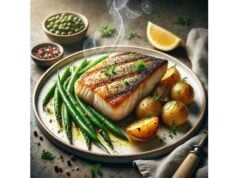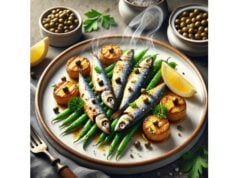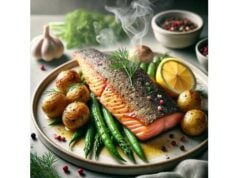
Garfish (Belone belone) is a slim, silver-green coastal fish known for its delicate flavor, fine flakes, and striking green bones—a harmless pigment effect that surprises first-time cooks. Often classed as a “lean fish,” garfish offers high-quality protein, meaningful omega-3s, and standout micronutrients like vitamin B12, vitamin D, selenium, and phosphorus. It’s also a versatile ingredient: pan-fried fillets crisp up beautifully, whole fish roast quickly on the bone, and the mild taste pairs well with citrus, herbs, and light sauces. Because it’s typically small and fast-growing, garfish can be a smart choice for weeknight meals and for eaters seeking fish lower on the food chain. This guide walks you through what to know—from nutrition and potential benefits to sourcing, storage, cooking methods, and sensible portions—so you can enjoy garfish confidently and get the most from every serving.
At a Glance
- Lean protein (≈19.5 g/100 g) with ~0.9 g omega-3 per 100 g.
- Vitamin B12 (≈7.7 µg/100 g) and vitamin D (≈5.2 µg/100 g) are notable strengths.
- Allergy risk applies to all finfish; freeze or cook thoroughly to control parasites.
- Typical portion: 150–170 g cooked fillet, 1–2 times weekly within varied seafood intake.
- People who are pregnant or serving young children should follow national fish advisories.
Table of Contents
- Detailed Overview
- Nutrition Profile
- Evidence-Based Health Benefits
- Risks, Allergies and Interactions
- Selecting, Quality, Sustainability and Storage
- Preparation, Cooking and Nutrient Retention
- Portions, Comparisons and FAQs
Detailed Overview
Garfish (family Belonidae) is a streamlined, needle-jawed fish common to temperate coastal waters of the Northeast Atlantic and Mediterranean. Sold whole or as fillets, it has a mild, sweet taste and a tender, low-fat flesh that cooks in minutes. Its signature green bones come from biliverdin, a natural bile pigment, not from spoilage or dye; the color is food-safe and disappears once the bones are discarded. If you enjoy light, white fish like smelt or sardines but prefer fewer strong oils, garfish sits in a pleasant middle ground: leaner than sardines yet still contributing omega-3s.
From a culinary perspective, garfish is versatile across cuisines. Whole fish take well to grilling, broiling, or pan-roasting over high heat. Fillets shine in quick skillet preparations, tempura, or gentle poaching. Because the bones are thin and plentiful, many cooks either: (1) butterfly and fry whole fish so tiny bones soften, or (2) pin-bone fillets carefully for a clean, bone-free experience. The delicate flesh benefits from short marinades with citrus zest, parsley, dill, chives, or fennel; stronger acidic marinades can firm the surface, useful for pan-searing.
Nutritionally, garfish brings complete protein and a balanced fat profile: low saturated fat, small but meaningful EPA and DHA (long-chain omega-3s), and trace amounts of monounsaturated and polyunsaturated fats. Micronutrients are a strong suit—vitamin B12 and vitamin D are particularly high per 100 g, with substantial selenium and phosphorus that support antioxidant enzymes and bone health. Iodine content is modest but present, and sodium is naturally low in the raw fish.
Sustainability and safety considerations are practical. As a relatively small, short-lived species harvested with coastal gears, garfish typically carries a lower contaminant burden than top predators. Standard fish-safety advice still applies: pregnant individuals and young children should choose fish lower in mercury and observe parasite-control steps (proper freezing or thorough cooking). For quality, look for clear, bright eyes; tight, shiny skin with metallic luster; and a fresh, sea-clean smell—never fishy or sour. Handle cold, cook soon after purchase, and enjoy within a day or two for best texture.
Finally, cost-to-nutrition value makes garfish attractive. You get top-tier B12, meaningful vitamin D, and lean protein in a quick-cooking format that fits simple weeknight meals—proof that “healthy seafood” does not need to be expensive or complicated.
Nutrition Profile
Serving basis: Values below are per 100 g raw garfish edible portion. Percent Daily Values (%DV) use common adult reference DVs (U.S. labeling conventions) to aid comparison. Where a DV does not exist or labels do not routinely display it, %DV is omitted.
Macros & Electrolytes (per 100 g)
| Nutrient | Amount | %DV |
|---|---|---|
| Energy | 107 kcal | — |
| Protein | 19.5 g | 39% |
| Total Fat | 3.2 g | 4% (78 g DV) |
| Saturated Fat | 0.7 g | 4% (20 g DV) |
| Polyunsaturated Fat | 1.1 g | — |
| Monounsaturated Fat | 0.9 g | — |
| Omega-3 (total) | 0.9 g | — |
| EPA (20:5n-3) | 0.1 g | — |
| DPA (22:5n-3) | 0.1 g | — |
| DHA (22:6n-3) | 0.7 g | — |
| Cholesterol | 85 mg | — |
| Carbohydrate | 0 g | 0% |
| Sodium | 62 mg | 3% (2,300 mg DV) |
| Potassium | 301 mg | 6% (4,700 mg DV) |
| Water | 77 g | — |
Vitamins (per 100 g)
| Vitamin | Amount | %DV |
|---|---|---|
| Vitamin D | 5.2 µg | 26% (20 µg DV) |
| Vitamin B12 (cobalamin) | 7.7 µg | 321% (2.4 µg DV) |
| Vitamin B6 (pyridoxine) | 0.41 mg | 24% (1.7 mg DV) |
| Niacin equivalents | 10.7 mg | 67% (16 mg DV) |
| Riboflavin (B2) | 0.11 mg | 8% (1.3 mg DV) |
| Vitamin A (RAE) | 3 µg | 0% (900 µg DV) |
| Vitamin C | 0 mg | 0% |
Minerals & Trace Elements (per 100 g)
| Mineral | Amount | %DV |
|---|---|---|
| Phosphorus | 213 mg | 17% (1,250 mg DV) |
| Selenium | 30 µg | 55% (55 µg DV) |
| Zinc | 2.7 mg | 25% (11 mg DV) |
| Calcium | 79 mg | 6% (1,300 mg DV) |
| Magnesium | 23 mg | 5% (420 mg DV) |
| Iodine | 19 µg | 13% (150 µg DV) |
Allergens & Intolerance Markers
- Finfish allergen: Standard fish proteins; individuals with fish allergy should avoid.
- Histamine: Not typically an issue in fresh garfish when properly handled; time-temperature abuse can raise amines in any fish—buy from reputable sources and keep cold.
- Bones: Thin, green-pigmented bones are numerous; remove carefully to prevent choking risk, especially for children.
Contaminants/Residues (context)
- Garfish sits low on the marine food chain and is not a high-mercury apex predator. Nonetheless, contaminant levels vary by region; follow local advisories and general seafood guidance for sensitive groups.
Notes on data
- Nutrient data reflect compositional tables for Belone belone; natural variation occurs with season, diet, and catch area. Vitamin D and B12 are consistently strong; omega-3 content is meaningful for a lean fish.
Evidence-Based Health Benefits
1) High-quality protein that supports muscle and recovery
At roughly 19–20 g protein per 100 g, garfish provides all essential amino acids with minimal saturated fat. For active adults and older adults aiming to maintain muscle, a typical 150–170 g cooked portion can deliver ~30–35 g protein—squarely in the effective range for stimulating muscle protein synthesis at meals. As a lean fish, it adds protein without many calories, making it easy to fit into weight-management or cardiometabolic plans.
2) Long-chain omega-3s for heart and neuro benefits
Garfish contains about 0.9 g total omega-3 per 100 g, including DHA (~0.7 g) and a smaller amount of EPA and DPA. Regular intake of fish rich in EPA/DHA is linked with lower risk of cardiovascular disease outcomes and favorable lipids (particularly triglyceride lowering). While garfish is leaner than “oily fish,” its DHA is still meaningful. Using garfish alongside one oilier fish in the weekly rotation can help you reach ~250–500 mg/day of long-chain omega-3s across the week.
3) Vitamin D and B12 density
Vitamin D is uncommon in most foods; garfish supplies ~5.2 µg per 100 g (~26% DV). Combined with other fish choices and safe sun exposure or supplements where appropriate, it can support bone health and immunity. Vitamin B12 stands out at ~7.7 µg per 100 g (~321% DV), supporting red blood cell formation and nerve function. For individuals with limited red-meat intake, garfish is an excellent B12 source with far less saturated fat.
4) Selenium, phosphorus, and zinc
Selenium (~30 µg/100 g) supports glutathione-dependent antioxidant enzymes. Phosphorus (~213 mg/100 g) contributes to bone mineralization and cellular energy metabolism. Zinc (~2.7 mg/100 g) supports immune function and wound healing. These together make garfish more than “just protein.”
5) Practical dietary pattern benefits
Including seafood one to two times weekly is consistently associated with better cardiometabolic outcomes in population data. Swapping a refined-meat dinner for a garfish dish reduces saturated fat and increases beneficial micronutrients—an easy pattern upgrade that accumulates over time.
How to apply this
- Build a weekly seafood plan that mixes one lean choice (garfish, cod, pollock) and one oily choice (sardine, mackerel, trout, salmon).
- Aim for ~2 seafood meals per week as a baseline; increase if advised for your health goals and consistent with national guidance.
- Pair garfish with high-fiber sides (beans, whole grains, vegetables) to support a heart-healthy plate.
Risks, Allergies and Interactions
Allergy
Garfish is a finfish and can trigger IgE-mediated reactions in people with fish allergy. Symptoms may include hives, swelling, wheeze, gastrointestinal distress, or anaphylaxis. Those with diagnosed finfish allergy should avoid garfish unless cleared by an allergy specialist; cross-contact in fishmongers and kitchens is common.
Parasites (e.g., Anisakis spp.)
Marine fish can harbor nematode larvae. Risk is largely neutralized by thorough cooking (to 63 °C/145 °F internal temperature) or by adequate freezing before raw or lightly cured preparations. For home freezing, the safest practice is to buy fish labeled “previously frozen for sushi/raw” from reputable suppliers. If you catch or buy fresh wild garfish for recipes like escabeche or ceviche, freeze according to food-safety guidance before preparation.
Bones
Garfish has many fine bones; some are green-tinted from natural pigments. They’re not harmful but can pose a choking hazard, particularly for children and older adults. Pin-bone carefully; consider cooking methods that soften tiny bones (pressure-cooking, simmering in soups, or deep-frying small whole fish).
Mercury and environmental contaminants
As a small, fast-growing coastal fish, garfish typically has lower mercury than long-lived predators. Still, mercury can vary by region. Pregnant or breastfeeding individuals and young children should prioritize species listed as lower-mercury choices and adhere to recommended serving frequencies. For everyone, a varied seafood rotation helps spread exposure risk.
Foodborne illness
As with all seafood, time-temperature control is critical. Keep fish ≤4 °C (≤40 °F), minimize time in the “danger zone” (5–60 °C / 41–140 °F), and cook promptly. Avoid vacuum-packing leftovers warm; cool rapidly and refrigerate within two hours.
Medication interactions
Garfish itself has no specific drug interactions. People on anticoagulants sometimes ask about omega-3s; the amounts in normal fish portions are considered compatible with these medicines in routine diets. If you take high-dose omega-3 supplements, discuss with your clinician.
Who should limit or avoid
- Individuals with confirmed finfish allergy.
- Those who cannot safely navigate bones (young children, some older adults) unless fish is deboned or processed.
- People advised by clinicians to follow specialized low-histamine or strict parasite-avoidance diets should choose thoroughly cooked, previously frozen fish from trusted suppliers.
Selecting, Quality, Sustainability and Storage
How to choose high-quality garfish
- Eyes: Bright, clear, and full; avoid cloudy or sunken eyes.
- Gills: Bright red to pink, moist; avoid brown or slimy gills.
- Skin & scales: Shiny metallic sheen with tight scales; no dulling or dryness.
- Smell: Fresh ocean scent—never “fishy,” sour, or ammonia-like.
- Texture: Flesh should spring back when pressed; belly cavity clean with no off-odors.
Seasonality and forms
Garfish is commonly sold whole, sometimes butterflied, and less often filleted due to bone structure. Buying whole fish and asking the fishmonger to butterfly and pin-bone saves time and reduces waste.
Sustainability snapshot
As a small pelagic/near-shore species with relatively rapid turnover, garfish tends to be more resilient to fishing pressure than large apex predators. That said, sustainability depends on local management and gear types (e.g., small-scale netting vs. indiscriminate methods). Favor:
- Local, in-season supplies where monitoring exists.
- Vendors who can tell you catch method and area.
- A varied seafood roster to reduce pressure on any one species.
Storage and shelf life
- Refrigerate at ≤4 °C (≤40 °F) on ice in a covered container; use within 24–36 hours.
- Freeze tightly wrapped at −18 °C (0 °F): quality is best within 2–3 months for lean fish.
- Thaw overnight in the refrigerator or under cold running water just before cooking.
- Leftovers: cool quickly, store chilled ≤3 days, and reheat to steaming hot.
Green bones explained
The green color is a natural pigment (biliverdin) deposited in the bones of garfish. It’s not harmful, does not indicate spoilage, and does not tint the flesh. Simply remove bones before serving, especially for children.
Buying tips
- Ask for “day boat” or recent catch—shorter time from sea to counter usually means better texture.
- If planning crudos or acid-cured dishes, request previously frozen fish that meets parasite-control standards.
Preparation, Cooking and Nutrient Retention
Pin-boning and prep
Garfish has many fine bones. If you buy fillets, run fingers along the lateral line to locate pin bones and pull with tweezers. For whole fish, you can butterfly by cutting along the belly, removing the backbone, and flattening the fish for pan-frying or grilling. Keep skin on for easier handling and moisture retention.
Simple, reliable cooking methods (with outcomes)
- Pan-sear (skin-on fillets)
- Pat dry, salt lightly, and cook skin-side down in a pre-heated skillet with a thin oil film.
- 2–3 minutes skin-side, 30–60 seconds flip.
- Outcome: crisp skin, moist flesh; minimal nutrient loss and added fat.
- Grill or broil (whole or butterflied)
- Brush with oil, lemon zest, and herbs; cook over high heat 3–4 minutes per side.
- Outcome: charred edges, smoky aroma; watch for bones when serving.
- Poach (fillets)
- Simmer aromatics (onion, peppercorns, bay, lemon). Slide in fish; cook gently 4–6 minutes.
- Outcome: very tender, no added fat; excellent for cold salads.
- Oven-roast (whole)
- 220 °C / 425 °F, oiled tray, 8–10 minutes depending on size.
- Outcome: even doneness, easy batch cooking.
- Tempura or light batter
- Quick fry at 175–180 °C / 347–356 °F for 2–3 minutes.
- Outcome: bones soften in small fish; higher fat uptake, so serve with fresh salad sides.
Nutrient-retention tips
- Keep it quick: Short cooking times protect vitamin B-group and omega-3s.
- Use lower heat or moist methods (poaching, steaming) when prioritizing omega-3 retention.
- Mind the pan fat: Omega-3s can leach; serving with the pan juices or a quick lemon-olive-oil finish keeps flavor and fats on the plate.
- Avoid over-marinating in strong acids (long soaks in lemon/lime); they firm the exterior and may squeeze out moisture.
- Salt at the right time: Salt fish just before cooking for crisp skin without excessive moisture loss.
Flavor pairings
- Herbs: dill, parsley, chives, tarragon, fennel fronds.
- Citrus: lemon, orange, yuzu.
- Vegetables: spring onions, shaved fennel, tomatoes, cucumber, new potatoes.
- Pantry: capers, green olives, white wine, light miso for umami depth.
Food-safety temperatures
- Cook to 63 °C / 145 °F internal temperature. Flesh should turn opaque and flake easily.
- For raw/undercooked preparations, use fish that has been frozen under parasite-control standards; keep cold at all times and consume promptly.
Portions, Comparisons and FAQs
How much is a portion of garfish?
A practical cooked fillet portion is 150–170 g for adults (raw weight ~180–220 g depending on yield). For children, tailor portions to hand size and age. As part of a varied seafood pattern, enjoy 1–2 garfish meals per week, complemented by one “oily fish” meal for higher omega-3 intake.
How does garfish compare with other fish?
- Versus oily fish (sardine, mackerel, salmon): Garfish is leaner, with lower total fat but still meaningful DHA. It’s ideal when you want protein-rich, lighter seafood; rotate in oily fish to maximize omega-3s.
- Versus very lean white fish (cod, pollock): Garfish tends to have more vitamin D and B12 than many lean white fish, with a slightly richer mouthfeel.
- Versus large predators (swordfish, shark): Garfish is generally lower in mercury and quicker-cooking, making it a friendlier everyday choice.
Are the green bones safe?
Yes. The green color is from biliverdin, a natural pigment. It is harmless and does not affect flavor or safety. Remove bones before serving.
Is garfish suitable for meal prep?
Yes—especially poached or lightly roasted fillets, which reheat well or eat nicely chilled with salads. Store refrigerated and consume within 3 days.
Any special handling for raw dishes?
If preparing crudo, ceviche, or lightly cured fish, use previously frozen garfish that meets parasite-control standards. Keep cold at all times. When in doubt, cook through.
Budget tips
- Buy whole fish and ask for butterflying and pin-boning at the counter.
- Use heads/bones (not the fine pin bones) for quick stock; strain carefully.
- Cook once, use twice: roast extra fillets for next-day salads or tacos.
Quick meal ideas
- Crispy skin garfish with lemon-herb couscous and a cucumber-dill yogurt.
- Poached garfish with new potatoes, capers, and parsley—a light, briny lunch.
- Butterflied grilled garfish with fennel and orange salad; finish with olive oil and sea salt.
References
- Advice about Eating Fish 2024 (Guidance)
- Re‐evaluation of certain aspects of the EFSA Scientific Opinion of April 2010 on risk assessment of parasites in fishery products, based on new scientific data. Part 2 2024 (Guideline/Scientific Opinion)
- Belone belone, Garfish : fisheries, gamefish 2016 (Species Profile/Nutrient Summary)
- Garfish, raw 2024 (Food Composition Table)
- Fish consumption in multiple health outcomes: an umbrella review of meta-analyses of observational and clinical studies 2023 (Systematic Review)
Disclaimer
This information is educational and does not replace personalized medical advice. Nutrition and safety needs vary by individual health status, age, medications, pregnancy, and local advisories. Consult a qualified healthcare professional or registered dietitian for guidance tailored to you.
If you found this guide helpful, please consider sharing it—on Facebook, X (formerly Twitter), or wherever you connect with friends. Your support helps us keep creating high-quality, reader-first resources.