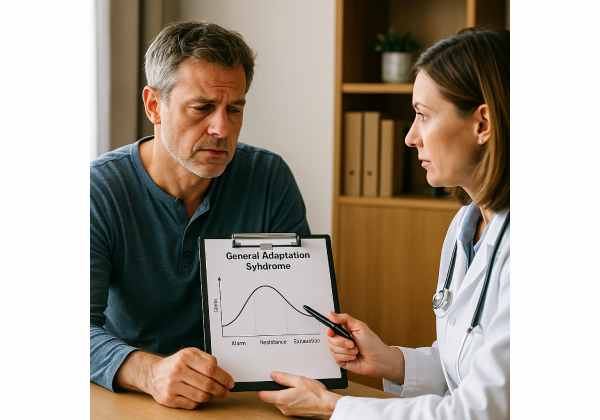
General adaptation syndrome is a classic way of explaining how the body responds when stress is intense, repeated, or prolonged. It is not a single psychiatric diagnosis, and it does not mean a person has “failed” to cope. Instead, it describes a biological pattern: the body detects a demand, mobilizes energy to respond, tries to adapt if the stress continues, and may eventually become depleted if the demand does not let up.
The idea is especially relevant in mental health because stress affects both the body and the mind. It can shape sleep, concentration, appetite, mood, pain, immune function, and the way a person reacts to ordinary demands. Understanding this pattern can help make sense of why ongoing stress may feel physical, emotional, cognitive, and behavioral all at once.
Table of Contents
- What general adaptation syndrome means
- Stages of general adaptation syndrome
- Symptoms and signs
- Causes and common stressors
- Risk factors for prolonged stress
- Complications of chronic stress
- Diagnostic context and red flags
What general adaptation syndrome means
General adaptation syndrome, often shortened to GAS, describes the body’s broad stress response over time. It is a framework for understanding adaptation, not a formal mental health disorder, laboratory diagnosis, or personality trait.
The concept was developed by physician and researcher Hans Selye, who observed that different stressors could produce a similar biological response. In simple terms, the body reacts to demands by activating systems that prepare it to survive, respond, and restore balance. These systems include the sympathetic nervous system, the hypothalamic-pituitary-adrenal axis, stress hormones such as cortisol and adrenaline, immune signaling, cardiovascular changes, and shifts in energy use.
A key point is that stress is not always harmful. Short-term stress can sharpen attention, increase energy, and help a person respond to a challenge. The problem arises when stress is too intense, too frequent, too unpredictable, or too prolonged for the body to return to a calmer baseline. In that situation, the same systems that help in the short term can begin to create strain.
General adaptation syndrome is often described in three stages: alarm, resistance, and exhaustion. These stages are not always cleanly separated in real life. A person may move back and forth between them, experience only parts of the pattern, or have physical and emotional symptoms that overlap. Still, the model remains useful because it explains why chronic stress can gradually shift from feeling energizing or urgent to feeling draining, numbing, or destabilizing.
In mental health, GAS overlaps with related concepts such as allostatic load, which refers to the cumulative wear and tear of repeated stress adaptation. It also connects with everyday experiences described in discussions of what stress does to the body, including changes in sleep, digestion, mood, and concentration.
The syndrome should not be used to self-diagnose a medical or psychiatric condition. Many symptoms linked with stress can also occur with anxiety disorders, depression, trauma-related disorders, thyroid problems, anemia, sleep disorders, substance use, medication effects, pain conditions, and neurological illness. GAS helps explain a pattern, but it does not replace a careful evaluation when symptoms are persistent, severe, new, or interfering with daily life.
Stages of general adaptation syndrome
The three stages of general adaptation syndrome describe how the body may respond as stress begins, continues, and eventually overwhelms adaptive capacity. The stages are best understood as a flexible pattern rather than a strict timeline.
| Stage | What is happening | Common experiences |
|---|---|---|
| Alarm | The body detects a threat or demand and rapidly mobilizes energy. | Racing heart, faster breathing, tension, alertness, shakiness, urgency. |
| Resistance | The body tries to adapt while the stressor continues. | Ongoing tension, irritability, sleep disruption, concentration problems, fatigue. |
| Exhaustion | Stress-response systems become depleted or dysregulated after prolonged strain. | Burnout-like fatigue, low mood, reduced resilience, frequent illness, feeling unable to recover. |
During the alarm stage, the body reacts quickly. The sympathetic nervous system becomes more active, and stress hormones help redirect energy toward immediate action. Heart rate and blood pressure may rise, breathing may become faster, muscles may tense, digestion may slow, and attention may narrow toward the perceived threat. This is the familiar fight-or-flight response, though some people also freeze, feel detached, or become unusually compliant under stress.
The resistance stage develops when the stressor does not resolve quickly. The body may look outwardly functional, but it remains under increased demand. A person may keep working, caregiving, studying, or managing responsibilities while feeling wired, tense, or emotionally stretched. Cortisol and other stress mediators may remain more active than usual. Sleep may become lighter or more fragmented, appetite may change, and concentration may become more effortful.
The exhaustion stage reflects prolonged strain. It does not mean that every resource is literally gone, but it describes a state in which the body and mind are no longer adapting efficiently. The person may feel emotionally flat, physically drained, cognitively slow, easily overwhelmed, or unusually vulnerable to minor demands. This stage can resemble aspects of burnout, depression, anxiety, trauma reactions, chronic fatigue, or medical illness, which is why context matters.
In real life, people do not always move neatly from one stage to the next. Someone with repeated alarms, such as constant conflict, unpredictable work demands, caregiving pressure, financial insecurity, or repeated trauma reminders, may cycle between alarm and resistance for months. Another person may notice exhaustion only after the stressor ends, when the body no longer has to stay mobilized.
Symptoms and signs
General adaptation syndrome can affect emotions, thinking, behavior, and physical functioning. Symptoms are what the person feels or reports, while signs are changes that others may observe or that can sometimes be measured.
In the alarm stage, symptoms often feel intense and immediate. A person may feel startled, panicky, energized, hyperalert, angry, or unable to settle. Physical sensations may include a pounding heart, chest tightness, sweating, trembling, dry mouth, nausea, diarrhea, muscle tension, headache, or a sense of heat or cold. These sensations can be frightening, especially when they resemble panic symptoms or medical problems.
In the resistance stage, symptoms are often less dramatic but more persistent. The person may feel on edge, impatient, easily irritated, emotionally sensitive, or unable to fully relax. Concentration may suffer. Tasks that once felt manageable may require more effort. Sleep may become irregular, with trouble falling asleep, waking during the night, early morning waking, or feeling unrefreshed after sleep. Appetite may increase or decrease, and some people notice more cravings for sugar, caffeine, alcohol, or highly stimulating activities.
Cognitive symptoms are common. Stress can make it harder to hold information in mind, make decisions, remember names, shift attention, or solve problems calmly. These changes may overlap with concerns about chronic stress, memory, and focus, especially when stress has continued for weeks or months.
Behavioral signs can include withdrawal, procrastination, restlessness, overworking, emotional outbursts, increased reassurance seeking, reduced patience, changes in eating patterns, more substance use, or neglect of ordinary responsibilities. Others may notice that the person seems tense, distracted, unusually reactive, or less emotionally available.
Physical signs and stress-linked patterns may include:
- Elevated heart rate or blood pressure during periods of stress
- Muscle tightness, jaw clenching, neck pain, or tension headaches
- Digestive changes such as nausea, reflux, constipation, diarrhea, or abdominal discomfort
- Sleep disruption and daytime fatigue
- More frequent colds or slower recovery after illness
- Changes in menstrual regularity, libido, or sexual functioning
- Skin flares, itching, or stress-sensitive inflammatory symptoms in some people
The exhaustion stage may bring a heavier, more depleted quality. A person may describe feeling “burned out,” emotionally numb, unable to recharge, or overwhelmed by small tasks. Mood may become persistently low or anxious. Some people become tearful; others feel detached, cynical, or disconnected from things they used to care about. Physical fatigue may become more prominent than the original stressor itself.
These symptoms are not specific to GAS. They can occur in many medical and psychiatric conditions. The pattern, timing, triggers, severity, and effect on functioning are what make the stress-response explanation more or less likely.
Causes and common stressors
General adaptation syndrome is triggered by demands that the body or mind experiences as challenging, threatening, overwhelming, or prolonged. The stressor can be physical, psychological, social, environmental, or a combination of several pressures at once.
Physical stressors include illness, injury, pain, sleep deprivation, major surgery, infection, intense exertion, hunger, heat, cold, and substance withdrawal. Even when a person does not feel emotionally upset, the body may still mount a stress response to biological strain. This is one reason stress physiology is broader than everyday worry.
Psychological stressors include fear, uncertainty, grief, conflict, perceived failure, perfectionistic pressure, shame, rumination, major life changes, and repeated exposure to distressing memories or reminders. A person’s interpretation of a situation matters. Two people can face the same event and have different stress responses because of prior experiences, resources, expectations, health status, and perceived control.
Social stressors are especially important in mental health. These include relationship conflict, caregiving overload, social isolation, discrimination, financial insecurity, unsafe housing, workplace pressure, bullying, academic stress, community violence, and ongoing exposure to crisis or instability. When stress is socially embedded and has no clear endpoint, the body may remain in a state of resistance for long periods.
Trauma-related stress can be particularly potent. A traumatic event may trigger acute alarm responses, but repeated reminders or ongoing threat can keep stress systems activated beyond the original event. This may overlap with trauma symptoms such as hypervigilance, sleep disturbance, irritability, emotional numbing, intrusive memories, or dissociation. Related trauma patterns are discussed in emotional, physical, and cognitive PTSD symptoms.
Common stressors that can contribute to GAS-like patterns include:
- Ongoing work pressure with little control or recovery time
- Financial strain or housing insecurity
- Chronic illness, pain, or disability
- Caring for a child, partner, parent, or family member with high needs
- Relationship conflict, separation, bereavement, or loneliness
- Repeated exposure to emergencies, violence, or traumatic reminders
- Major transitions such as moving, job loss, immigration, exams, or becoming a parent
- Sleep disruption from shift work, insomnia, caregiving, or untreated sleep disorders
- Persistent uncertainty, including legal, medical, employment, or family uncertainty
Not all stressors are negative. Positive events such as a promotion, wedding, new baby, relocation, or demanding athletic goal can also activate stress systems because they require adaptation. The difference is often whether the demand is time-limited, meaningful, supported, and followed by recovery, or whether it becomes unrelenting and depleting.
Risk factors for prolonged stress
The risk of moving from short-term stress into a prolonged resistance or exhaustion pattern rises when stress is intense, repeated, unpredictable, or paired with limited recovery. Vulnerability is not a personal weakness; it reflects the interaction between biology, environment, history, and current demands.
One major risk factor is chronicity. Stressors that continue without a clear endpoint are more likely to strain adaptation than brief challenges. Examples include long-term caregiving, unsafe living conditions, chronic workplace overload, prolonged unemployment, ongoing legal problems, persistent pain, or unstable relationships. The body can respond strongly to a short crisis and then recalibrate, but constant activation leaves less room for repair.
A second risk factor is low control. People tend to experience more strain when they face demands they cannot predict, influence, or escape. This is why uncertainty can be so stressful even when nothing dramatic happens on a given day. Waiting for test results, navigating unstable income, or living with unpredictable conflict can keep the stress system alert.
Earlier adversity can also shape later stress responses. Childhood trauma, neglect, household instability, bullying, discrimination, and repeated exposure to threat may sensitize stress-response systems. This does not mean later problems are inevitable, but it can make some people more reactive to certain cues, especially when current stress resembles earlier danger.
Current health status matters. Sleep disorders, chronic pain, inflammatory illness, endocrine problems, substance use, poor nutrition, and certain medications can change how the body experiences stress. Mental health conditions can also increase vulnerability. Anxiety may intensify alarm responses; depression may reduce energy and recovery; trauma-related disorders may keep threat detection on high alert; and substance use may both reflect and worsen stress physiology.
Social context can either buffer or amplify stress. Isolation, conflict, stigma, loneliness, and lack of practical support can increase risk. Supportive relationships, safe environments, and predictable routines can reduce the intensity of stress exposure, but the absence of those buffers can make ordinary demands feel much heavier.
Work-related stress deserves special mention. High demands, moral injury, lack of autonomy, unfairness, job insecurity, harassment, long hours, and emotional labor can all contribute to a prolonged resistance state. When stress becomes tied to identity, income, responsibility, or fear of consequences, it may be harder to step back psychologically, even outside work hours.
Individual temperament and coping style also influence risk, but they should be framed carefully. Perfectionism, high responsibility, people-pleasing, intolerance of uncertainty, and difficulty setting limits may increase exposure to stress. However, these traits often develop for understandable reasons and are not the sole cause. A demanding environment can overwhelm even a resilient person.
Complications of chronic stress
The main complication of prolonged general adaptation syndrome is that adaptive stress responses can become maladaptive over time. Systems designed for short-term survival may begin to disrupt sleep, mood, immunity, cardiovascular function, digestion, cognition, and behavior.
Mental health complications are common. Chronic stress can worsen anxiety symptoms, contribute to depressive symptoms, intensify irritability, reduce emotional flexibility, and make trauma reminders harder to tolerate. It can also increase emotional numbing, loss of pleasure, or a sense of being unable to care. These patterns may overlap with stress, cortisol, focus, and burnout, especially when a person has remained in a high-demand state for a long time.
Sleep disruption is both a symptom and a complication. Stress can make sleep lighter, shorter, or more fragmented. Poor sleep then increases emotional reactivity, pain sensitivity, appetite changes, and difficulty concentrating. Over time, this can create a loop in which stress worsens sleep and poor sleep makes stress harder to regulate.
Cognitive complications may include forgetfulness, poor concentration, slower decision-making, mental fatigue, and reduced working memory. People may misinterpret these changes as laziness or loss of ability, but they often reflect a brain under sustained demand. When attention is repeatedly pulled toward threat, unfinished tasks, or uncertainty, fewer mental resources remain for learning, planning, and recall.
Physical complications can involve several body systems. Chronic stress may contribute to elevated blood pressure, headaches, muscle pain, digestive symptoms, appetite changes, metabolic strain, immune changes, and worsening of existing medical conditions. Stress does not cause every illness, and it should not be blamed for symptoms without evaluation. Still, prolonged activation can make the body more vulnerable and can worsen conditions that are already present.
Behavioral complications often develop gradually. A person may rely more on alcohol, nicotine, cannabis, stimulants, sedatives, overeating, doomscrolling, avoidance, overworking, or emotional shutdown. These behaviors may provide short-term relief or escape, but they can add new stressors and make the overall pattern harder to identify.
Relationships can also be affected. Chronic stress may reduce patience, empathy, sexual interest, emotional availability, and capacity for conflict resolution. Some people become more controlling or reactive; others withdraw. Misunderstandings can grow when stress symptoms are read as indifference, anger, or unreliability rather than signs of overload.
At the exhaustion end of the pattern, the person may experience a marked drop in functioning. Daily tasks may feel unusually difficult. Minor setbacks may trigger disproportionate reactions. The body may feel heavy, tense, or constantly tired. This is the point where GAS overlaps most with clinical concerns such as major depression, generalized anxiety, panic disorder, post-traumatic stress disorder, substance use disorders, sleep disorders, and medical illnesses that mimic stress.
Diagnostic context and red flags
General adaptation syndrome itself is not diagnosed the way depression, PTSD, panic disorder, thyroid disease, anemia, or sleep apnea may be diagnosed. Clinicians use stress history, symptom patterns, functional impact, medical context, and sometimes screening tools or laboratory tests to determine what is actually happening.
A careful evaluation usually starts with timing. When did symptoms begin? Did they follow a clear stressor, illness, loss, conflict, trauma, medication change, or sleep disruption? Are symptoms constant, episodic, or tied to specific triggers? Have they improved when the stressor eased, or do they continue even in safer conditions?
The next question is scope. Stress-related symptoms can affect many systems, but certain patterns point toward specific conditions. Persistent low mood, loss of interest, guilt, hopelessness, appetite change, sleep change, and impaired functioning may suggest depression. Excessive worry, restlessness, tension, and difficulty controlling fear may suggest an anxiety disorder. Intrusive memories, avoidance, hypervigilance, and trauma-linked arousal may suggest PTSD. Sudden episodes of intense fear with physical symptoms may suggest panic attacks.
Because overlap is common, mental health screening may be part of the diagnostic context. For example, a clinician may use tools related to anxiety screening, depression screening, or trauma assessment when symptoms are persistent or impairing. These tools do not diagnose general adaptation syndrome, but they can help clarify whether a recognized mental health condition is present.
Medical assessment may also matter. Symptoms that feel like stress can sometimes come from thyroid disease, anemia, vitamin deficiencies, heart rhythm problems, medication effects, substance use, infections, inflammatory illness, menopause transition, pregnancy-related changes, neurological conditions, or sleep disorders. When symptoms are new, severe, unexplained, or physically prominent, clinicians may consider medical causes alongside stress physiology. The broader process is similar to how clinicians rule out medical causes of depression, anxiety, and brain fog.
Urgent evaluation is important when symptoms suggest immediate risk rather than ordinary stress. Red flags include chest pain, fainting, severe shortness of breath, signs of stroke, sudden confusion, seizure, severe dehydration, psychosis, inability to care for basic needs, suicidal thoughts, thoughts of harming someone else, or a sense that the person may not be safe. In those situations, the priority is prompt professional assessment, not deciding whether symptoms fit a stress model.
For non-urgent but persistent symptoms, evaluation is still important when stress symptoms last for weeks, interfere with work or relationships, lead to increased substance use, disrupt sleep most nights, cause repeated panic-like episodes, or feel out of proportion to the current situation. A stress explanation can be valid and still deserve professional attention, especially when daily functioning is affected.
References
- Stress and the general adaptation syndrome 1950
- Physiology, Stress Reaction 2024 (Review)
- Stress 2026
- Stress Effects on the Body 2024
- Allostatic Load and Its Impact on Health: A Systematic Review 2021 (Systematic Review)
- Stress 2024
Disclaimer
This article is for general educational purposes only and is not a substitute for professional medical advice, diagnosis, or treatment. Stress-related symptoms can overlap with medical and psychiatric conditions, so persistent, severe, sudden, or safety-related symptoms should be evaluated by a qualified health professional.
Thank you for taking the time to read this resource; sharing it may help someone else better understand how prolonged stress can affect the mind and body.