Giant fennel is a striking Mediterranean herb, but it is not the gentle kitchen fennel many readers expect. Known botanically as Ferula communis, it is a tall umbel plant in the carrot family with a long history in regional folk medicine and a much more complicated safety profile than most familiar herbs. Traditional preparations from its roots, resin, fruits, and aerial parts have been used for digestive complaints, infections, skin problems, fever, and women’s health concerns. Modern research has added another layer of interest by identifying active compounds linked with antimicrobial, antioxidant, estrogen-like, and cytotoxic effects.
What makes giant fennel unusual is that it appears in both toxic and non-toxic chemotypes. One group of plants is associated with ferulenol-rich anticoagulant toxicity, while another contains daucane esters such as ferutinin that are being studied for hormonal and cellular effects. That difference changes everything. It affects whether the plant may have therapeutic promise, whether a dose is sensible, and whether self-use is safe at all. This guide explains what giant fennel contains, what it may help with, how it has been used, what dose information exists, and why safety deserves first priority.
Quick Facts
- Giant fennel shows the most credible promise in standardized low-ferulenol extracts studied for menopausal discomfort, not in casual whole-herb self-use.
- Laboratory studies suggest antimicrobial, antioxidant, estrogen-like, and cytotoxic actions, but most claimed benefits still lack strong human confirmation.
- No general self-use dose is established; the main human study used 100 mg/day of a standardized extract for 90 days.
- Toxic chemotypes can cause dangerous bleeding because of ferulenol, so wild-harvested or poorly identified material is especially risky.
- People who are pregnant, breastfeeding, have hormone-sensitive conditions, take anticoagulants, or have bleeding disorders should avoid medicinal use.
Table of Contents
- What is giant fennel?
- Giant fennel active compounds
- Does giant fennel have benefits?
- How is giant fennel used?
- How much giant fennel per day?
- Giant fennel safety and interactions
- What the evidence says
What is giant fennel?
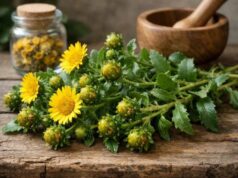
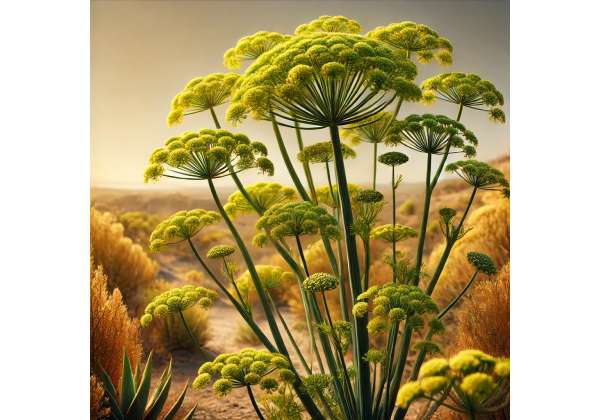
Giant fennel, or Ferula communis, is a large perennial herb in the Apiaceae family, the same broad family that includes carrot, celery, angelica, and many aromatic seed herbs. It grows across parts of the Mediterranean basin and North Africa and is easy to recognize when mature: tall stems, broad sheathing leaf bases, and large umbrella-shaped clusters of yellow flowers. Despite its common name, it is not the same plant as sweet fennel and should not be treated like a culinary spice or everyday digestive tea.
This distinction matters because giant fennel has a very different risk profile from ordinary table herbs. Traditional medicine has made use of several plant parts, including root, resin, leaves, fruits, and sometimes roasted flower buds. In regional practices, it has been used for dysentery, fever, skin conditions, microbial complaints, weight support, and hormone-related issues. Those traditional uses explain why it still appears in ethnobotanical and pharmacological research. But tradition alone is not enough here. Giant fennel is one of those plants where botanical identity and plant chemistry are central to safety.
The single most important concept to understand is chemotype. Giant fennel occurs in both poisonous and non-poisonous forms. The toxic chemotype is associated with prenylated coumarins, especially ferulenol, which can produce serious anticoagulant effects and cause hemorrhagic poisoning. The non-toxic chemotype is richer in daucane esters such as ferutinin, teferin, and lapiferin, which are the compounds more often discussed for estrogen-like and experimental therapeutic effects. For the average consumer, that means the plant’s name alone tells you too little. Two samples both labeled Ferula communis may not behave the same way at all.
This makes giant fennel very different from better-known members of the same botanical family, such as angelica, where safety questions still matter but chemotype-based hemorrhagic risk is not the defining issue. With giant fennel, the first question is not “What is it good for?” but “What exact material is this, and has it been characterized well enough to trust?”
That is why giant fennel should be approached as a research-backed but high-caution medicinal plant rather than a casual wellness herb. Its promise comes from a complex chemistry and some intriguing early studies. Its limitation is that those same chemical features can move it quickly from interesting to dangerous when the source is unknown. For readers deciding whether it belongs in self-care, that chemotype issue is the practical bottom line.
Giant fennel active compounds
Giant fennel has attracted scientific interest because it contains several classes of biologically active compounds, and their balance changes sharply across chemotypes and plant parts. That variation is not a small technical detail. It is the reason the plant can be discussed in one paper as a promising phytoestrogen and in another as a hemorrhagic toxicant.
The best-known compounds fall into a few major groups:
- Sesquiterpene coumarins
These are especially important in the toxic chemotype. Ferulenol is the main concern. It is strongly linked to anticoagulant toxicity and the hemorrhagic syndrome historically called ferulosis. In practical terms, this is the compound that makes giant fennel potentially dangerous. - Daucane sesquiterpene esters
These include ferutinin, teferin, and lapiferin. They are more associated with the non-toxic chemotype and are the compounds most often linked with estrogen-like, cytotoxic, and cell-signaling effects in laboratory work. Ferutinin, in particular, is the major reason giant fennel is being studied in menopause-related research. - Polyphenols and phenolic acids
Recent fruit and leaf studies report compounds such as p-hydroxybenzoic acid, p-coumaric acid, sinapic acid, syringic acid, and related phenolics. These compounds help explain antioxidant activity in extract studies and may contribute to antimicrobial or anti-inflammatory potential. - Flavonoids and other minor constituents
These contribute to the broader antioxidant profile, though they are not the compounds that define giant fennel’s unique identity in the way ferulenol and ferutinin do. - Volatile and resin-related constituents
Some extracts contain aromatic and resinous compounds that may support traditional antimicrobial or digestive uses, but this area is less clinically developed than the coumarin and daucane chemistry.
One of the most useful ways to think about giant fennel is that it has two research stories at once. The first is a toxicity story built around ferulenol. The second is a potential therapeutic story built around ferutinin-rich or otherwise low-ferulenol extracts. That split is rare and important. It means any discussion of “active compounds” has to identify not just what is present, but what has been removed, reduced, or standardized.
This is also why giant fennel differs even from another famous Ferula species, asafoetida. They share a genus, but not the same practical identity. Asafoetida is mainly discussed as a culinary resin with digestive use. Giant fennel is discussed through the lens of chemotype, estrogenic potential, and anticoagulant danger.
For readers, the key takeaway is simple. Giant fennel is not active because it has vague “plant nutrients.” It is active because it contains potent specialized compounds. That is exactly why it cannot be judged by the same standards as a mild tea herb. Its chemistry creates both its promise and its risk, and the two cannot be separated.
Does giant fennel have benefits?
Giant fennel may have meaningful health benefits, but the evidence needs to be ranked carefully. The strongest modern signal is not broad “wellness support.” It is a narrower set of possible uses tied to standardized extracts, especially in hormone-related research. Many other claims remain preclinical.
The most promising human area so far is postmenopausal discomfort. A recent randomized, double-blind, placebo-controlled trial studied a Ferula communis extract standardized to ferutinin and reported improvements in menopausal symptoms over 90 days. That gives giant fennel a more credible human foothold than many obscure herbs ever reach. Still, this finding has limits. It comes from one specific extract, in one study population, over a defined time frame. It does not mean that crude root powder, wild-harvested resin, or homemade decoctions can be expected to produce the same result.
A second potential benefit area is phytoestrogenic support. Ferutinin behaves in ways that resemble selective estrogenic activity, which helps explain the interest in menopause, bone physiology, and hormone-responsive tissues. This is biologically interesting, but it is also the reason safety becomes more complicated. Estrogen-like action may be a benefit in one setting and a reason to avoid the herb in another.
A third area is antimicrobial activity. Giant fennel extracts have shown antibacterial and antifungal effects in laboratory studies. This fits its traditional use for infections and topical complaints. Still, laboratory inhibition of microbes does not automatically translate into safe or effective treatment in humans.
A fourth area is antioxidant and phenolic activity. Recent fruit and leaf studies suggest meaningful antioxidant potential in vitro, especially in extracts richer in phenolic compounds. This makes the plant relevant to natural product research, but antioxidant capacity alone is not enough to establish a clinical benefit.
A fifth area is cytotoxic and antiproliferative research. Some root extracts and isolated compounds show interesting activity in cancer cell models. This is scientifically important, but it is also one of the easiest areas to oversell. Cytotoxicity in cultured cells is not the same thing as effective cancer treatment in people.
So what benefits are realistic right now?
- Possible symptom support in menopause with a studied, standardized extract
- Plausible antimicrobial and antioxidant effects in experimental models
- Hormone-related biological activity that may be useful in tightly defined contexts
- Research potential in oncology and inflammatory biology
What benefits are not established?
- General self-treatment for digestive disease
- Safe everyday use as a wellness herb
- Proven metabolic, anticancer, or anti-infective treatment in humans
- Reliable benefit from unstandardized whole-plant material
In that sense, giant fennel belongs closer to high-caution phytoestrogen discussions than to everyday herbs sometimes compared in menopause contexts, such as red clover. The conversation is less about “gentle support” and more about whether a highly specific extract can produce a useful effect without crossing into hormone-related or anticoagulant risk.
How is giant fennel used?
Giant fennel has been used in several ways historically, but traditional use and modern safe use are not the same thing. The herb appears in folk practice as roasted buds, decoctions, extracts, resin preparations, and local remedies made from roots or fruits. In parts of North Africa and the Mediterranean, it has been used for digestive complaints, fever, skin problems, dysentery, and women’s health concerns. These uses help explain why the plant keeps reappearing in ethnopharmacology papers.
Modern use is more selective. Researchers do not generally treat giant fennel as a kitchen herb or a casual tea ingredient. Instead, they work with characterized extracts, often focusing on one of two goals:
- Reducing toxic risk by lowering or removing ferulenol
- Concentrating compounds of interest such as ferutinin or phenolic fractions
That difference is critical. Traditional preparations could vary enormously depending on which plant part was collected, the season, the local chemotype, and the extraction method. A boiled fruit extract, a root extract, and a resin preparation are not interchangeable. They may not even be working through the same compounds.
In practical terms, giant fennel is used today in four main contexts:
- Research extracts
These are the most important modern form. Human and laboratory studies rely on material that is at least somewhat characterized, especially when hormone-related effects are being studied. - Experimental phytoestrogen products
Some formulations aim to use low-ferulenol or ferutinin-standardized extracts for menopause-related symptom support. - Ethnobotanical and traditional preparations
These remain part of local practice, but they are not automatically safe for broad self-care. - Laboratory natural product work
Fruit, leaf, and root extracts are increasingly studied for antioxidant, antimicrobial, and cytotoxic properties.
For readers, the most useful advice is what not to do. Do not treat giant fennel like a household digestive seed, a familiar infusion, or a culinary botanical. It is not comparable to aromatic Apiaceae herbs that are commonly used after meals, such as coriander. The plant may share a family resemblance, but not the same margin of safety.
If someone is considering giant fennel in a product, the questions to ask are practical:
- Which plant part was used?
- Is the chemotype known?
- Was ferulenol tested or reduced?
- Is the extract standardized to a known compound?
- Is the product intended for short-term or long-term use?
- Is there any human data behind this exact preparation?
Without good answers to those questions, “how to use it” becomes much less important than “whether to use it at all.” That is the unusual reality of giant fennel. With this herb, preparation is not just about convenience or tradition. It determines whether the plant stays in the realm of research promise or moves into toxic uncertainty.
How much giant fennel per day?
There is no universally accepted daily dose of giant fennel for general health, and that is not a minor gap in the literature. It is a major reason this plant should not be self-dosed casually. The safest honest answer is that no evidence-based whole-herb dose has been established for ordinary consumer use, especially because plant chemistry can differ so much between toxic and non-toxic chemotypes.
The most useful dose information comes from specific studies, not from broad herbal consensus. The clearest human example is a standardized extract used in postmenopausal women at 100 mg per day for 90 days, titrated to 20% ferutinin. This is the closest thing giant fennel has to a clinically relevant modern dosage reference. But it applies only to that kind of characterized extract, not to raw plant material, homemade tinctures, or wildcrafted roots and fruits.
That distinction matters for three reasons:
- Standardized extract does not equal crude herb
One hundred milligrams of a defined extract may reflect a very different chemical exposure than one hundred milligrams of dried root powder. - Chemotype changes risk
A product rich in ferutinin and low in ferulenol is not equivalent to untested material from a toxic population of the plant. - The studied duration was limited
Ninety days in a trial is not the same as open-ended routine use.
For crude material, traditional literature shows varied local preparation styles, but not a reliable modern dosing framework that an average user could apply safely. Because of the hemorrhagic risk tied to some chemotypes, giving a simple “tea dose” or “powder range” would be misleading. The usual herbal logic of starting low and increasing slowly is not enough if the underlying plant chemistry is unknown.
A practical dosing framework looks like this:
- For general readers: no self-use dose of whole giant fennel can be recommended
- For research-style products: follow only product-specific instructions tied to characterized extracts
- For clinically supervised use: rely on authenticated, low-ferulenol material with a clear rationale and time frame
- For wild or unverified material: avoid oral medicinal use
Timing is also product-dependent. A menopause-focused extract might be taken once daily for a defined course. A laboratory or traditional decoction cannot be assumed to follow that pattern safely. Duration should be limited and purposeful, not habitual.
This leads to the most important dosing insight in the article: with giant fennel, the main issue is not how high the dose is, but how well the material is identified. A modest dose of the wrong chemotype can be more dangerous than a carefully studied dose of the right extract. That is why giant fennel is one of the few herbs where “no standard self-dose exists” is not evasive language. It is the most responsible answer.
Giant fennel safety and interactions
Safety is the defining issue with giant fennel. Many herbs have side effects. Giant fennel has a more serious problem: some forms of the plant can produce dangerous anticoagulant toxicity. That risk changes the entire conversation around benefits, dosage, and who should avoid it.
The central concern is ferulenol, a prenylated coumarin associated with the toxic chemotype. Ferulenol has been linked to hemorrhagic toxicity in animals and is the reason giant fennel has a reputation for ferulosis. In practical terms, that means the plant can impair normal clotting and raise the risk of bruising, bleeding, and potentially severe toxicity when the wrong material is used.
Possible signs of toxic exposure can include:
- Easy bruising
- Nosebleeds or gum bleeding
- Blood in urine or stool
- Unusual weakness or dizziness
- Abdominal discomfort
- Prolonged bleeding after minor injury
This is why giant fennel should never be approached like a harmless folk tonic. Even recent mouse toxicity work on aqueous fruit extract, which suggested relatively low acute toxicity by some measures, still found blood-related changes at higher repeated doses. That is not reassuring enough to justify unsupervised use.
Major interaction risks include:
- Anticoagulants and antiplatelet drugs
Avoid combining giant fennel with warfarin, direct oral anticoagulants, heparins, aspirin, clopidogrel, and similar agents unless a specialist is directly involved. - Bleeding disorders and surgery
Anyone with a clotting disorder or an upcoming procedure should avoid medicinal use. - Hormone-sensitive conditions
Ferutinin-rich extracts may have estrogen-like activity. That creates a reason for caution in people with a history of estrogen-sensitive cancers, endometriosis, uterine fibroids, or unexplained vaginal bleeding. - Pregnancy and breastfeeding
Medicinal use should be avoided because safety has not been established and hormonal or toxic exposures are not desirable in these settings. - Diabetes therapy
Since traditional hypoglycemic use exists and some extracts may affect metabolism, people using glucose-lowering medication should proceed only with clinician oversight.
Who should avoid giant fennel medicinally?
- Pregnant or breastfeeding people
- Anyone taking anticoagulants or antiplatelet drugs
- Anyone with a bleeding disorder
- People with hormone-sensitive cancers or hormone-sensitive gynecologic conditions
- Children and adolescents
- Anyone considering wild-harvested or uncharacterized plant material
The biggest practical problem is source uncertainty. A person may not know whether a product comes from a low-ferulenol chemotype, whether the extract was tested, or whether the label meaningfully reflects the chemistry. That uncertainty is itself a safety risk.
For most readers, the conclusion is straightforward. Giant fennel is not a good candidate for experimentation at home. The potential upside belongs to authenticated extracts under controlled conditions. The downside includes a genuine bleeding risk that is too serious to dismiss.
What the evidence says
The evidence for giant fennel is intriguing, but it is still narrow and uneven. This is not a herb with broad clinical validation across many conditions. It is a plant with one noteworthy modern human signal, several active lines of laboratory research, and a major safety caveat that prevents simple translation into general use.
The strongest human evidence so far concerns postmenopausal discomfort with a defined ferutinin-standardized extract. That study matters because it moves giant fennel beyond theory and into controlled human data. Still, it is one trial with one formulation. Replication, longer follow-up, and independent confirmation are still needed before the result can be treated as robust clinical consensus.
Most of the remaining evidence falls into four categories:
- Traditional use reports
These show how the plant has been valued in regional medicine, but they do not resolve chemotype or modern safety questions. - Phytochemical studies
These give strong support to the idea that giant fennel contains pharmacologically meaningful compounds, especially ferulenol, ferutinin, and phenolic constituents. - In vitro research
This is where antimicrobial, cytotoxic, estrogen-like, and antioxidant effects are most often demonstrated. It is useful for mechanism and screening, but not enough for treatment claims. - Animal toxicity and exploratory pharmacology
These studies clarify risk and plausibility, but they still do not create a reliable self-care framework.
That means giant fennel should be viewed as a research-stage medicinal plant, not a validated over-the-counter remedy. Its most important evidence-based lessons are actually twofold:
- It likely contains compounds worth serious pharmacological attention.
- It is too chemically variable and potentially toxic to use casually.
This dual message is what makes giant fennel distinctive. Many herbs are under-researched because they are mild and unremarkable. Giant fennel is under-validated for the opposite reason: it is powerful enough to be interesting, but variable enough to be risky.
The best current summary is this:
- Benefit claims are most credible when tied to specific standardized extracts
- Whole-plant self-use remains poorly supported
- Safety concerns are not theoretical; they are central
- Human data are promising but still limited
- Product quality and chemotype identification matter as much as the plant name itself
For readers looking for a simple herbal recommendation, giant fennel is probably not it. For readers interested in phytochemistry, hormone-related botanical research, or the tension between traditional use and toxicology, it is one of the more fascinating case studies in modern herbal medicine.
References
- Evaluation of the Potential Beneficial Effects of Ferula communis L. Extract Supplementation in Postmenopausal Discomfort 2024 (RCT)
- Ferula communis leaf extract: antioxidant capacity, UHPLC-MS/MS analysis, and in vivo and in silico toxicity investigations 2025 (Preclinical Study)
- Comprehensive analysis of different solvent extracts of Ferula communis L. fruit reveals phenolic compounds and their biological properties via in vitro and in silico assays 2024 (Preclinical Study)
- Assessment of the acute and subacute toxicity of the aqueous extract of Moroccan Ferula communis fruit in a mouse model 2023 (Toxicology Study)
- Review of the traditional uses, phytochemistry, pharmacology and toxicology of giant fennel (Ferula communis L. subsp. communis) 2015 (Review)
Disclaimer
This article is for educational purposes only and does not replace medical advice, diagnosis, or treatment. Giant fennel has a more serious safety profile than many herbs, including possible anticoagulant toxicity in some chemotypes. Do not use medicinal giant fennel without qualified guidance, especially if you are pregnant, breastfeeding, take blood thinners, have a bleeding disorder, or have a hormone-sensitive condition.
If this article helped you, please share it on Facebook, X, or any platform where your readers look for reliable herbal guidance.