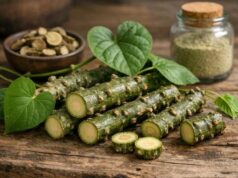
Ginger is one of the few herbs that feels equally at home in a kitchen, a travel bag, and a medicine cabinet. The knobby rhizome of Zingiber officinale has been used for centuries to warm digestion, ease nausea, support circulation, and add depth to both sweet and savory foods. Modern research has helped explain why it remains so popular: ginger contains pungent compounds such as gingerols and shogaols that influence inflammation, gut motility, and nausea pathways in ways that are both practical and measurable.
What makes ginger especially useful is its flexibility. It can be eaten fresh, dried, powdered, brewed as tea, added to syrups, or taken in capsules. It also has one of the stronger evidence bases among culinary herbs, especially for nausea and vomiting. Even so, “natural” does not mean consequence-free. Product form, dose, and context matter, particularly for pregnancy, reflux, gallbladder disease, and people taking blood thinners.
The most sensible way to use ginger is as a targeted herb with proven strengths, not a cure-all for every inflammatory or digestive complaint.
Top Highlights
- Ginger is most reliable for nausea and vomiting, especially motion sickness, pregnancy-related nausea, and some postoperative or treatment-related nausea.
- Its best-known active compounds are gingerols, shogaols, zingerone, and zingiberene, which shape its digestive and anti-inflammatory effects.
- A practical oral range is 250 to 1000 mg powdered ginger per dose, or 1 to 2 g dried ginger as tea, depending on the goal.
- Ginger can trigger heartburn, stomach upset, or mouth irritation, especially in concentrated forms or at higher doses.
- People with active gallbladder disease, significant reflux, or those using anticoagulants should use medicinal doses cautiously.
Table of Contents
- What is ginger and why use it
- Key ingredients in ginger
- Does ginger actually help
- How to use ginger well
- How much ginger per day
- Ginger side effects and interactions
- What the research really says
What is ginger and why use it
Ginger is the underground rhizome of Zingiber officinale, a tropical plant in the Zingiberaceae family. That family also includes turmeric, cardamom, and galangal, which helps explain why these plants share a warm, aromatic, slightly resinous quality. If you know the sharper profile of galangal in the same botanical family, you already have a useful reference point for ginger’s broader herbal identity. Ginger, though, is softer, juicier, and more widely used for digestion and nausea.
The plant likely originated in maritime Southeast Asia and spread through India, China, the Middle East, Africa, and Europe through trade and medicine. Over time, it earned a rare status: it became both a staple spice and a recognized medicinal herb. In food, ginger adds brightness, warmth, and pungency. In herbal practice, it is known as a warming carminative and antiemetic, meaning it can help settle the stomach, reduce gas, and ease nausea.
That dual role still matters today. Many herbs are either culinary or medicinal, but ginger moves easily between both. A few slices in soup, a tea brewed from fresh root, or a standardized capsule each deliver ginger in different ways, yet they all come from the same rhizome. That makes it especially approachable for people who want a gentle starting point in herbal self-care.
Ginger also stands out because it works across several common real-life problems:
- motion sickness before travel
- queasiness during early pregnancy
- nausea after surgery or during treatment
- bloating, heaviness, or sluggish digestion
- menstrual pain or inflammatory discomfort in some users
Still, the most important reason people use ginger is not that it does a little bit of everything. It is that it does a few things especially well. Among herbs, nausea support is its clearest strength. That is why ginger appears in teas, capsules, chews, lozenges, syrups, and travel remedies around the world.
Another practical point is that fresh and dried ginger are not identical. Fresh ginger feels brighter, juicier, and more digestive. Dried ginger is often warmer, sharper, and more concentrated in certain pungent breakdown products. This difference explains why ginger tea, powdered capsules, and a piece of fresh root can feel similar but not exactly the same.
The most useful way to think about ginger is as a versatile, warming rhizome with strong digestive credibility and respectable evidence for targeted symptom relief. It is not just a spice. It is one of the best examples of a food herb that has crossed into evidence-based self-care without losing its culinary identity.
Key ingredients in ginger
Ginger’s activity begins with its chemistry. The rhizome contains a mix of pungent phenolic compounds, volatile oils, and resin-like substances that work together rather than in isolation. The most important names to know are gingerols, shogaols, paradols, zingerone, and zingiberene. These compounds are central to ginger’s flavor, heat, digestive effects, and anti-inflammatory reputation.
Fresh ginger is especially rich in gingerols, particularly 6-gingerol. This is one of the main compounds linked to ginger’s pungent taste and many of its biological effects. Gingerols are often discussed in relation to nausea reduction, gut motility, and inflammatory signaling. When ginger is dried, heated, or stored, some gingerols convert into shogaols. Shogaols are often considered more pungent and, in some settings, more bioactive. That is one reason dried ginger can feel stronger and warmer than fresh ginger.
Zingerone is another notable constituent. It forms during cooking and heating, giving cooked ginger a sweeter, rounder aroma than fresh ginger. Volatile oils such as zingiberene, beta-sesquiphellandrene, bisabolene, cineole, citral, and borneol add fragrance and complexity. These volatile compounds matter more for aroma and sensory effects, but they also contribute to antimicrobial and digestive-support claims.
A practical way to understand ginger’s chemistry is to group it by function:
- Gingerols and shogaols contribute most strongly to pungency, nausea support, and inflammatory effects.
- Zingerone gives cooked ginger part of its milder, sweeter profile.
- Volatile oils shape aroma and may support digestive and antimicrobial actions.
- Polyphenols add antioxidant capacity and tissue-protective potential.
This chemical picture also explains why ginger is not a uniform ingredient. The composition changes depending on:
- fresh versus dried form
- storage time
- heat exposure
- extraction method
- capsule standardization
- geographic origin and cultivar
That variability matters in real life. A homemade fresh ginger tea, a dried powder capsule, a concentrated extract, and pickled ginger served with food will not deliver the same balance of compounds. The tea may feel soothing and warming. The capsule may feel stronger and more standardized. The food form may be gentler but still effective for day-to-day digestion.
Ginger’s chemistry also helps explain why it is so often described as both digestive and anti-inflammatory. These are not separate personalities of the herb. They come from overlapping actions: changes in gut signaling, effects on serotonin-related nausea pathways, shifts in inflammatory mediators, and mild stimulation of digestive processes.
Readers who know cinnamon’s balance of culinary and metabolic compounds will recognize a similar pattern here. Both are kitchen spices with real pharmacology, but ginger has a clearer evidence base for nausea and a more direct warming effect on the stomach.
The main takeaway is that ginger’s benefits are not based on a single miracle molecule. They come from a layered chemical profile, with gingerols and shogaols doing much of the heavy lifting while the rest of the rhizome shapes the full effect.
Does ginger actually help
Yes, ginger can help, but not equally for every claim attached to it. Its strongest use is for nausea and vomiting. Beyond that, the evidence becomes more mixed and more dependent on the exact symptom, dose, and preparation.
Nausea is ginger’s clearest strength
This is the benefit with the best overall support. Ginger is commonly used for motion sickness, early pregnancy nausea, postoperative nausea, and treatment-related nausea. Across these settings, it tends to improve nausea more reliably than it improves vomiting itself. That distinction matters. People often notice that ginger takes the edge off queasiness, reduces the urge to retch, or makes the stomach feel calmer, even when it does not eliminate every symptom.
Pregnancy-related nausea is one of the most searched uses. Ginger appears helpful for many pregnant people when used in moderate oral amounts, often around 1 g daily in divided doses in studies. Still, pregnancy is also the setting where readers should be most careful with self-prescribing. Research is encouraging, but formal monographs remain cautious, especially when products are concentrated or quality is uncertain.
Digestive comfort is a realistic second use
Ginger often helps when the problem is mild bloating, post-meal heaviness, or a sluggish, unsettled stomach. It seems especially useful when cold, greasy, or heavy meals are involved. This is one reason ginger tea remains such a common after-meal remedy. It is not a strong laxative or a cure for chronic digestive disease. It is better understood as a warming digestive stimulant and anti-nausea herb.
For cramp-prone digestion, some people still prefer peppermint for spasm-heavy digestive discomfort, while ginger is often the better fit when nausea, coldness, and heaviness are part of the picture.
Pain and inflammation support is promising but less absolute
Ginger also has a credible role in pain-related self-care, especially primary dysmenorrhea and some osteoarthritis-type discomfort. This does not mean it works like a prescription anti-inflammatory drug in every person. It means that ginger, especially in capsule or powder form, may modestly reduce pain intensity in some users and may perform surprisingly well in menstrual pain comparisons.
Metabolic benefits are possible but not consistent enough to overpromise
There is ongoing interest in ginger for blood sugar, lipids, inflammation markers, and weight-related outcomes. Some trials show improvement in fasting glucose, insulin resistance, triglycerides, or inflammatory biomarkers. Others are less impressive. That makes metabolic claims plausible but not first-line.
A realistic benefits summary looks like this:
- Strongest: nausea and vomiting support
- Good secondary use: digestion and post-meal comfort
- Modest but credible: menstrual pain and some inflammatory pain
- Emerging and inconsistent: metabolic and cardiometabolic markers
The key is not to expect ginger to solve every problem with one form and one dose. It helps most when the symptom matches the herb. Ginger is at its best when the stomach feels unsettled, the body feels cold or stagnant, or pain has an inflammatory, cramp-like quality rather than a severe structural cause.
How to use ginger well
Ginger is easy to use, but the best form depends on the goal. Fresh root, dried powder, tea, capsules, chews, syrups, and food preparations all have a place. The mistake many people make is assuming they are interchangeable. They are not.
Fresh ginger
Fresh ginger is ideal for tea, cooking, broths, stir-fries, smoothies, and simple digestive support. It is especially helpful when you want a warming, soothing effect rather than a precise standardized dose. A few slices simmered in hot water can work well for mild nausea, early cold symptoms, or post-meal heaviness.
Dried ginger powder
Dried powder is more concentrated and often easier to dose consistently. It is commonly used in capsules, tablets, and medicinal powders. This form fits better for motion sickness, menstrual pain, and more targeted self-trials because the amount is easier to measure.
Tea and infusion
Tea is one of the gentlest options. It is well suited to mild nausea, digestive discomfort, and daily use in small amounts. Fresh ginger tea is brighter and less harsh. Dried ginger tea feels warmer and a bit more medicinal. Both can be useful.
Capsules and extracts
These are best when you want consistency. Capsules are often easier for travel, pregnancy-related nausea under clinical guidance, or repeat dosing in studies. Extracts can be more concentrated, but that also means they are more likely to cause heartburn or stomach irritation in sensitive people.
Food use
Do not underestimate everyday culinary ginger. It is one of the easiest ways to use the herb regularly with low risk. Fresh grated ginger in soups, rice dishes, curries, congee, roasted vegetables, or warm drinks can add both flavor and functional value.
A simple matching guide helps:
- Use tea for mild nausea and digestive heaviness.
- Use capsules or powder for predictable dosing and travel use.
- Use fresh ginger in food for ongoing culinary support.
- Use chews or lozenges when convenience matters more than precision.
There is also a “less is more” principle with ginger. Very strong preparations are not always better. If the stomach is already irritated, large amounts of concentrated ginger can worsen the very discomfort you hoped to calm.
For gentler evening use, some people prefer chamomile when they want a softer, less pungent infusion. Ginger is more active and more warming, which is exactly why it works so well for some symptoms and less well for others.
Used well, ginger is practical, flexible, and easy to tailor. The best strategy is to choose the form that matches the situation rather than relying on the strongest version by default.
How much ginger per day
Ginger dosing depends on the form and the goal. A piece of ginger in soup, a mug of tea, and a capsule are not equivalent, so dose advice only makes sense when the preparation is clear.
For everyday tea, a practical range is:
- 5 to 10 g fresh sliced ginger in 250 to 300 mL hot water
- or 1 to 2 g dried ginger in the same amount of water
- taken 1 to 3 times daily
For powdered ginger in capsules or loose powder, common practical ranges are:
- 250 to 500 mg per dose for mild nausea
- 500 to 1000 mg per dose for more targeted use
- often 2 to 3 times daily depending on the goal
For motion sickness, one of the clearest traditional medicinal patterns is:
- 1 to 2 g powdered ginger about 1 hour before travel
For digestive complaints such as bloating or flatulence, ginger is often used in smaller repeated doses rather than one large dose. That is usually more comfortable and more practical than taking a large amount at once.
Pregnancy-related nausea deserves its own note. Many trials used around 1 g per day in divided doses, but that does not mean every pregnant person should self-dose the same way. Product quality, formulation, trimester, and medical history matter. Ginger in pregnancy is a situation where moderate use may be reasonable, but routine supplement use should still be discussed with a prenatal clinician.
Duration matters too. Ginger is excellent for short-term self-care and often fine in food long term. Concentrated medicinal use, though, should not continue indefinitely without reassessing the reason. If nausea is persistent, painful, or unexplained, or if digestive symptoms keep returning, more ginger is not the answer. Evaluation is.
A few dose-adjusting factors are worth remembering:
- fresh versus dried form
- body size and sensitivity
- reflux tendency
- medication use
- pregnancy status
- whether the product is food, powder, or extract
Many adults do well with a total daily oral intake in the broad range of 1 to 3 g dried ginger equivalent for short-term symptom relief, while some studies go somewhat higher. Still, pushing upward increases the chance of heartburn and stomach irritation.
If your main goal is pain support rather than digestion or nausea, compare your expectations with options that are more joint-focused, such as boswellia for a more dedicated joint-pain strategy. Ginger can help, but it is usually not the most specialized herb for long-term musculoskeletal support.
The best dosing rule is simple: start low, match the form to the purpose, and stop escalating once the stomach begins to protest.
Ginger side effects and interactions
Ginger is generally well tolerated in food amounts, but medicinal doses can cause problems in the wrong person or the wrong context. Most side effects are digestive rather than dangerous, yet they still matter because they often determine whether a preparation feels helpful or irritating.
The most common issues are:
- heartburn
- stomach upset
- burping
- upper abdominal warmth
- mild nausea from overly concentrated products
- mouth or throat irritation from strong powders or extracts
These effects are more common with capsules, concentrated extracts, and dried powder taken on an empty stomach. Fresh ginger in food or tea is usually gentler.
Who should be more cautious
People with reflux or a sensitive upper stomach are the most likely to dislike medicinal ginger. A small amount may feel soothing, but larger doses can aggravate burning or regurgitation. People with gallstones or active gallbladder disease should also be cautious because ginger can influence digestive secretions and motility.
Pregnancy needs nuance. Ginger is widely used for nausea in pregnancy and appears reasonably safe in moderate amounts in many studies, but official monographs still recommend caution, especially for supplements rather than food-level use. Lactation data are also less settled than many marketing pages suggest.
Children are another special case. Ginger may be used in some traditional settings and some formal motion-sickness dosing exists for older children, but routine medicinal use in younger children should not be improvised casually.
Drug interactions
The interaction story for ginger is not dramatic, but it is important. Caution is sensible with:
- anticoagulants and antiplatelet drugs
- diabetes medications
- antihypertensive therapy in people prone to low pressure
- preoperative settings when bleeding risk is already being watched
Ginger is often discussed as if it definitely causes major bleeding interactions. The reality is more measured. Evidence is mixed, and food-level ginger is unlikely to be a problem for most people. Still, medicinal doses deserve caution, especially before surgery or in people taking multiple agents that affect clotting.
A few practical safety rules go a long way:
- Take ginger with food if it causes stomach irritation.
- Reduce the dose if heartburn appears.
- Avoid concentrated essential oil for internal use.
- Pause medicinal doses before surgery unless your clinician says otherwise.
- Seek care if nausea is severe, persistent, or paired with fever, dehydration, chest pain, or abdominal pain.
It is also wise to separate culinary use from supplement use in your own mind. The fact that ginger is common in food does not mean every extract is low-impact. Concentration changes the risk picture.
Used thoughtfully, ginger has a favorable safety profile. Used aggressively or in the wrong setting, it can become irritating, and occasionally inappropriate. Respecting form, dose, and context keeps it on the helpful side of that line.
What the research really says
Ginger has one of the better evidence bases among everyday herbs, but the evidence is not flat. Some uses are backed by multiple reviews and formal monographs. Others rest on promising but inconsistent studies. Understanding that hierarchy is what separates realistic use from overhype.
The best-supported area is nausea and vomiting. Across motion sickness, postoperative nausea, chemotherapy-related nausea, and pregnancy-related nausea, ginger repeatedly performs well enough to stay clinically relevant. It does not always eliminate vomiting, and not every study shows a large effect, but nausea reduction is a consistent theme. That makes ginger more credible than many herbs marketed for “stomach wellness.”
Pain support is the next most convincing category. Ginger has shown useful effects in primary dysmenorrhea and some inflammatory pain settings, including osteoarthritis-related discomfort. The effect size is usually modest rather than dramatic, and study quality varies. Still, the signal is strong enough to take seriously.
Digestive and metabolic outcomes are more mixed. Ginger appears to support gastric motility and may help with bloating or heaviness, but chronic digestive disease is a different matter. Metabolic studies are even more heterogeneous. Some show improvement in fasting glucose, insulin resistance, triglycerides, or inflammatory markers. Others show smaller or inconsistent results. That means metabolic claims should stay careful.
The biggest limitations in ginger research are not a lack of studies. They are differences in:
- product form
- ginger dose
- fresh versus dried material
- extract standardization
- duration of treatment
- symptom severity
- comparator choice
This matters because a 250 mg extract capsule is not the same intervention as fresh ginger tea or 2 g of powdered rhizome. Results often look stronger in abstracts than they feel in real life because different ginger products are pooled together under one name.
Another important limit is that many trials are short. Ginger is easy to study for nausea over a few days or menstrual pain over one cycle. It is harder to study for long-term joint disease, metabolic syndrome, or chronic inflammation in a way that gives high-certainty conclusions.
That is why ginger is best described as evidence-backed but use-specific. It truly earns its reputation for nausea. It has respectable support for menstrual pain and some inflammatory symptoms. It has plausible support for broader metabolic and anti-inflammatory effects, but those benefits are less settled and more dependent on preparation and context.
If your main interest is comparing kitchen spices with anti-inflammatory potential, turmeric’s curcuminoid-focused research profile makes a useful contrast. Ginger is often more immediately practical for nausea and digestion, while turmeric is usually discussed more in long-term inflammation terms.
The honest conclusion is strong and simple: ginger deserves its place as a serious medicinal food, especially for nausea and digestive support, but it works best when its proven strengths guide the choice.
References
- European Union herbal monograph on Zingiber officinale Roscoe, rhizoma 2025 (Monograph)
- The Use of Ginger Bioactive Compounds in Pregnancy: An Evidence Scan and Umbrella Review of Existing Meta-Analyses 2024 (Umbrella Review)
- Ginger for treating nausea and vomiting: an overview of systematic reviews and meta-analyses 2024 (Overview of Reviews)
- Ginger for Pain Management in Primary Dysmenorrhea: A Systematic Review and Meta-Analysis 2024 (Systematic Review and Meta-Analysis)
- A critical review of Ginger’s (Zingiber officinale) antioxidant, anti-inflammatory, and immunomodulatory activities 2024 (Review)
Disclaimer
This article is for educational purposes only and is not a substitute for medical advice, diagnosis, or treatment. Ginger can be a useful self-care herb for nausea, digestion, and some pain conditions, but persistent vomiting, dehydration, significant abdominal pain, unexplained weight loss, severe reflux, or symptoms during pregnancy should be reviewed by a qualified clinician. Concentrated ginger products deserve extra caution in people using anticoagulants, managing gallbladder disease, or preparing for surgery.
Please share this article on Facebook, X, or your preferred platform if you found it useful.