Panax ginseng, often called Asian ginseng or Korean ginseng, is one of the most studied traditional herbs in the world. It has been used for centuries as a tonic for vitality, resilience, and recovery, but modern interest is more specific: can it help with fatigue, stress, memory, blood sugar, sexual function, or immune support? Part of its appeal lies in its chemistry. Panax ginseng contains ginsenosides, distinctive saponins that help explain why the root behaves differently from simpler botanical tonics. It also changes with processing, so fresh, white, red, and fermented preparations are not quite the same herb in practice.
What makes ginseng worth a careful look is that the evidence is mixed but meaningful. Some studies suggest modest benefits for fatigue, memory, cardiometabolic markers, and erectile function, especially in selected groups and short-term use. At the same time, many trials are small, products vary widely, and exaggerated claims remain common. The most useful way to understand Panax ginseng today is as a research-backed but not all-powerful adaptogenic root whose value depends on the preparation, dose, timing, and the health goal in question.
Essential Insights
- Panax ginseng may modestly help fatigue, memory, and some cardiometabolic markers in selected adults.
- The main active compounds are ginsenosides, and red ginseng and white ginseng do not behave identically.
- Clinical studies commonly use about 200 to 3,000 mg per day, depending on the preparation and the goal.
- Insomnia is the most commonly reported side effect, and the herb may affect blood sugar and blood clotting.
- People who are pregnant, breastfeeding, taking anticoagulants, or managing autoimmune disease should avoid self-prescribing ginseng.
Table of Contents
- What is Panax ginseng
- Key ingredients in the root
- Does ginseng help energy, stress, and thinking
- Can it support metabolism, immunity, and sexual health
- How ginseng is used and prepared
- How much ginseng per day
- Safety, interactions, and evidence limits
What is Panax ginseng
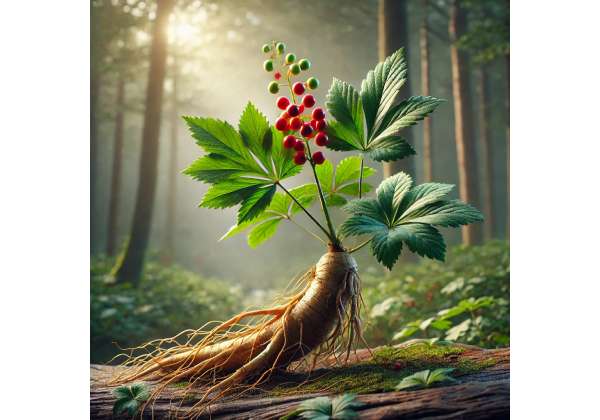
Panax ginseng is a slow-growing perennial root from East Asia, especially Korea, northeastern China, and parts of far eastern Russia. The medicinal part is the root, which may be sold fresh, dried, steamed, powdered, sliced, or extracted. In daily language, people often say simply “ginseng,” but that shortcut creates confusion. Panax ginseng is not the same as American ginseng, Siberian ginseng, or unrelated plants marketed with “ginseng” in the name. When the discussion is clinical or medicinal, species identity matters.
Traditional systems have long described Panax ginseng as a tonic used to support stamina, adaptability, and recovery after physical or mental strain. That broad reputation is one reason it is often placed in the adaptogen category. Unlike looser wellness language around many modern “energy herbs,” Panax ginseng has accumulated a much larger research record than most botanicals in this group. Still, it is not interchangeable with other adaptogenic herbs such as ashwagandha, because its chemistry, studied indications, and tolerability profile are different.
Preparation also matters more than many readers expect. Fresh ginseng is simply harvested root. White ginseng is peeled and dried. Red ginseng is steamed before drying, a process that changes the chemical profile and creates some transformed ginsenosides that may behave differently in the body. Fermented or tissue-cultured preparations shift the profile again. This is one reason ginseng studies are hard to compare directly. Two trials may both say “Panax ginseng,” yet use very different materials.
Age matters, too. Cultivated roots are often harvested after several years, and higher-priced products may emphasize older roots or specific growing regions. While those details can matter commercially, they do not always translate into better clinical evidence. Standardization is usually more useful to the average reader than romantic claims about mountain origin or age.
The most practical way to define Panax ginseng is this: it is a traditional tonic root with distinctive saponins, multiple processed forms, and a real but limited clinical evidence base. It sits somewhere between a food-like restorative botanical and a targeted supplement. That middle position is why it remains attractive. It is not a drug, yet it is active enough that it should not be treated casually. Understanding what Panax ginseng is means understanding that the name covers a family of preparations, not one uniform product.
Key ingredients in the root
The best-known active compounds in Panax ginseng are ginsenosides, a family of triterpenoid saponins often described as the plant’s signature molecules. These compounds are the main reason Panax ginseng is discussed differently from ordinary tonic herbs. Ginsenosides do not all do the same thing. Some appear more stimulating, some more neuroprotective, some more anti-inflammatory, and some are transformed by steaming, digestion, or gut microbes into metabolites with different effects.
Several ginsenosides appear repeatedly in research, including Rb1, Rg1, Rg3, Re, Rc, and Rd. These names may sound technical, but the practical point is simple: ginseng is chemically diverse. A product rich in one subgroup of ginsenosides may not behave exactly like another. This helps explain why white ginseng, red ginseng, and fermented red ginseng can differ in both perceived effect and study outcomes.
Ginsenosides are not the whole story. Panax ginseng also contains polysaccharides, peptides, polyacetylenes, phenolic compounds, and a lesser-known fraction sometimes discussed under names such as gintonin. These non-saponin components may contribute to immune effects, metabolic signaling, cellular resilience, and neurological actions. In other words, ginseng is not merely “one active ingredient in a root.” It is a complex botanical system whose parts may work together.
Processing changes that system. Steaming and drying create chemical transformations, which is why red ginseng is often described as having a distinct profile from white ginseng. Some transformed ginsenosides are studied for circulation, cognition, sexual function, and inflammatory pathways. Fermentation may further alter bioavailability by making certain compounds easier to absorb or more accessible to the body after ingestion.
Bioavailability is another key issue. Ginsenosides are not absorbed identically by everyone. Gut microbiota, digestive conditions, and preparation method can all influence what reaches circulation. This means two people can respond differently to the same product, even before dosage and health status are considered. That is part of the reason ginseng effects sometimes feel inconsistent in real life.
One useful comparison is with more straightforward botanicals where one compound dominates the conversation. Ginseng is less like that and more like a system herb, where groups of compounds shape the final effect. This is why simple labels such as “high potency” often tell you less than a standardized extract description. Readers who are used to ingredient-centered plants such as saponin-containing herbs like licorice may find ginseng familiar in one sense, but Panax ginseng remains unusually complex even by herbal standards.
The bottom line is that Panax ginseng’s core medicinal identity comes from ginsenosides, but its broader activity depends on a larger chemical network. That network shifts with species, processing, and metabolism, which is why product form is never a side detail with ginseng. It is part of the treatment question itself.
Does ginseng help energy, stress, and thinking
This is where Panax ginseng is most often marketed, and also where careful nuance matters most. Ginseng is not a caffeine substitute, and it does not create energy in the immediate, stimulant sense most people mean. Its effects, when they appear, tend to look more like improved fatigue resistance, steadier mental performance, or better resilience under stress than a sudden surge.
Fatigue is one of the more credible targets. Reviews of ginseng research suggest that it may modestly reduce general fatigue or disease-related fatigue in some groups. The effect is not universal, and not every study agrees, but fatigue is one of the few areas where the balance of evidence leans somewhat positive. Importantly, the benefits tend to be modest rather than dramatic. Ginseng is more likely to help someone feel somewhat less worn down than to transform low energy overnight.
Stress is trickier. Traditional language often describes ginseng as improving adaptation to stress, but modern trials do not always measure “stress” in the same way. Some people report feeling steadier, more durable, or less mentally drained, but that is not the same as a proven anti-anxiety effect. Panax ginseng may support resilience in a broad sense, yet it does not have the clear calming profile some readers expect from herbs that are used more directly for mood balance.
Cognitive effects are mixed but interesting. Recent evidence suggests that Panax ginseng may help memory more than it helps overall cognition. That distinction matters. Studies do not show a dependable improvement in every mental domain. Attention, executive function, and general cognition often show weak or inconsistent results, while memory outcomes appear somewhat more promising. For readers comparing it to other herbs used for stress and mental endurance such as rhodiola, ginseng seems less like a universal brain booster and more like a targeted, context-dependent support herb.
A few practical points help keep expectations grounded:
- It may work better in people with fatigue, stress load, or age-related decline than in already healthy high performers.
- Effects are usually measured over weeks, not hours, although some acute mental effects have been explored.
- Preparation type matters. Red ginseng and standardized extracts may perform differently from generic powdered root.
- Sleep quality matters. If ginseng worsens sleep, any daytime benefit can disappear quickly.
So, does ginseng help energy, stress, and thinking? It may, but selectively. The best summary is that Panax ginseng has modest evidence for fatigue and some memory-related outcomes, weaker evidence for broader stress claims, and too much product variability to support exaggerated mental-performance marketing. It is better understood as a resilience-supporting root than as a reliable stimulant or all-purpose nootropic.
Can it support metabolism, immunity, and sexual health
Panax ginseng is often promoted for blood sugar, immune defense, circulation, sexual function, and “whole-body vitality.” Some of these claims are better supported than others, but none should be treated as a replacement for standard care.
Metabolic support is one of the more plausible areas. Reviews suggest ginseng may improve some cardiometabolic markers, including fasting glucose, total cholesterol, LDL cholesterol, inflammatory markers, and sometimes systolic blood pressure. These effects are usually small, and the study populations vary widely, but they are strong enough to suggest that Panax ginseng may have a supportive role in people with prediabetes, diabetes risk, or broader metabolic strain. The important caution is that “may improve markers” is not the same as “treats diabetes.” It is an adjunctive possibility, not a primary therapy.
Immune support is a second area of interest. Some studies suggest ginseng preparations may reduce the risk of developing seasonal upper respiratory infections or support immune function in a broader sense. Still, the evidence is not strong enough to claim that Panax ginseng reliably prevents colds or substantially changes the course of infection. It makes more sense to think of it as an immune-modulating botanical than as a natural antiviral shortcut.
Sexual health is perhaps the most overinterpreted area. The best recent synthesis suggests ginseng may have a trivial effect on validated erectile function scores, while showing some improvement in self-reported ability to have intercourse. That is a meaningful but limited result. It suggests there may be benefit for some men, but not enough to treat ginseng like a dependable equivalent to established erectile dysfunction treatments. It is best understood as a mild supportive option rather than a primary intervention. Readers interested in broader libido or performance herbs sometimes compare it to plants used for hormonal and sexual vitality such as maca, but the evidence profiles and mechanisms are not identical.
There is also some interest in menopausal symptoms and inflammatory balance. Reviews suggest possible improvement in hot flashes, quality of life, or inflammatory markers, but these findings need stronger trials.
A realistic summary looks like this:
- Metabolic effects are modest but believable.
- Immune effects are plausible but not definitive.
- Sexual-health effects are limited and probably smaller than marketing suggests.
- Cardiovascular-marker improvements may matter most in people with existing risk rather than in healthy adults.
Panax ginseng’s appeal in these areas comes from breadth, not depth. It influences several systems at once, which is why it has remained relevant for centuries. But its broad activity should not be confused with strong proof in each category. The herb may support metabolism, immunity, and sexual health in certain contexts, but the benefits are usually incremental rather than dramatic.
How ginseng is used and prepared
Panax ginseng can be used as sliced root, powder, tea, capsules, tablets, extracts, red ginseng products, fermented preparations, and occasionally as a food ingredient in soups or tonics. The challenge is that these forms are not interchangeable. A person taking a standardized red ginseng capsule is not using the same material as someone simmering slices of dried root in a tea.
The main forms include:
- Fresh ginseng, used more traditionally and often in food-like tonic preparations.
- White ginseng, which is peeled and dried.
- Red ginseng, which is steamed before drying and has a changed chemical profile.
- Fermented or processed extracts, designed to alter absorption or concentrate certain compounds.
- Standardized capsules or tablets, often labeled by ginsenoside content.
Red ginseng often receives special attention because steaming creates transformed compounds that may change its pharmacological profile. Many sexual-function and vitality products use red ginseng for that reason. White ginseng, by contrast, is often presented as a more general traditional form. Neither is automatically “better.” The preparation should match the goal.
Standardization is important. A supplement labeled only “ginseng root powder” may tell you very little. A product that specifies Panax ginseng, the extract ratio, and the ginsenoside content is easier to evaluate. This matters because much of the inconsistency in ginseng experiences comes from inconsistent products rather than from the plant itself.
Timing also matters. Many people take ginseng earlier in the day because insomnia is the most common side effect. Taking it late may undercut tolerance, especially in sensitive people. Some people also prefer cycles, such as several weeks on and then a break, though there is no universally accepted cycling rule.
Traditional use often placed ginseng in decoctions, soups, or restorative formulas rather than in isolated capsules. Modern supplement culture shifts it into a different context. That can be useful, but it also strips away the slower, food-like framework that originally shaped its use. Readers familiar with other roots such as ginger and other medicinal root preparations may find the basic format familiar, but ginseng is usually handled with more attention to extract quality and treatment aim.
A practical way to choose a form is:
- Pick a standardized extract if you want consistency.
- Choose red ginseng when the product goal emphasizes vitality or sexual-health research.
- Use earlier in the day if you are sensitive to stimulation.
- Avoid assuming tea, powder, and extract can be dosed the same way.
Panax ginseng works best when people treat preparation type as part of the intervention, not as packaging. The form is one of the variables that determines whether the herb feels steady, helpful, overstimulating, or ineffective.
How much ginseng per day
There is no single universal dose for Panax ginseng because dose depends on the preparation, the standardization, and the goal. That said, research does offer a useful framework. Across reviews of randomized trials, ginseng doses have ranged widely, from very small amounts of isolated preparations to multiple grams per day. In practical adult use, many clinical studies fall in the broad range of about 200 to 3,000 mg per day.
That range sounds huge because it includes very different products. A concentrated extract at 200 mg is not equivalent to a gram of dried root powder. Red ginseng studies for erectile dysfunction have often used roughly 800 to 3,000 mg per day over four to twelve weeks. Studies looking at broader fatigue or cardiometabolic outcomes often include doses from a few hundred milligrams up to several grams, usually for several weeks or a few months.
A grounded dosing approach starts with four rules:
- Match the dose to the preparation, not just the plant name.
- Use the lowest evidence-based or label-based range first.
- Reassess tolerance before increasing.
- Do not treat “more” as automatically better.
For most adults using a standardized extract, it makes sense to think in short-to-medium study windows rather than indefinite daily use. Many trials last 4 to 24 weeks. This fits well with what is known about the evidence: most studies are small and short-term, and long-term safety is less certain than short-term tolerance.
The most common dosing mistake is confusion between extract dose and root dose. Another mistake is taking ginseng late in the day, then assuming the product “doesn’t suit” them when the main issue is sleep disruption. Starting earlier in the day and with a conservative dose often improves tolerability.
People also underestimate how much individual response varies. Some notice mild stimulation, while others feel very little. Gut microbiota, sleep quality, stress load, and the exact preparation all influence response. This is why rigid one-size-fits-all dosing advice rarely works well with Panax ginseng.
A useful summary is this:
- Common clinical ranges often fall between 200 and 3,000 mg per day.
- Red ginseng studies for sexual function often cluster between 800 and 3,000 mg per day.
- Duration in studies is often 4 to 24 weeks.
- There is no universal “best dose” across all products and goals.
So if you are choosing a ginseng dose, think like a clinician rather than a marketer: identify the preparation, define the goal, start conservatively, and watch sleep, mood, and tolerability as closely as any hoped-for benefit.
Safety, interactions, and evidence limits
Panax ginseng is generally considered reasonably safe for short-term oral use in recommended amounts, but that does not mean it is side-effect free or suitable for everyone. The most commonly reported problem is insomnia. That single detail explains many disappointing experiences with ginseng. An herb that mildly helps daytime fatigue can easily become counterproductive if it disrupts sleep.
Other adverse effects reported in research and clinical summaries include gastrointestinal symptoms, headache, nervousness, rash, and, less commonly, more serious reactions. There are also concerns about blood sugar lowering, immune effects, and blood clotting. These do not mean harm is inevitable. They mean ginseng is active enough to deserve medical-style caution.
People who should be especially careful include:
- Pregnant or breastfeeding individuals.
- Infants and children.
- People with autoimmune disorders.
- Anyone taking anticoagulants or dealing with bleeding risk.
- People using diabetes medications or other agents that affect blood sugar.
- People who are prone to insomnia, overstimulation, or rapid heartbeat with activating supplements.
Medication interactions are one of the biggest practical issues. Even when evidence is incomplete, the possibility of interaction with blood-pressure drugs, diabetes treatments, anticoagulants, and certain mood-related medications is enough to justify caution. When a person already uses several prescription medicines, ginseng becomes much less suitable as a casual self-experiment.
The other major limitation is evidence quality. Large parts of the ginseng literature remain methodologically weak. Many trials have fewer than 200 participants, last less than 3 months, and use different preparations that are hard to compare. That is why Panax ginseng occupies an unusual evidence position: there is a lot of research, yet the conclusions are often still cautious. More papers have not automatically produced simple answers.
This helps explain the strange contrast people notice around ginseng. It is one of the most famous herbs in the world, but it is still difficult to make strong universal claims about it. The best-supported position is that it may offer modest, targeted benefits for fatigue, memory, some cardiometabolic markers, and sexual function in certain populations, while remaining far less reliable than advertising suggests.
In the end, Panax ginseng is neither hype nor miracle. It is a biologically active root with meaningful but limited clinical promise, real product variability, and clear reasons for careful use. That is enough to make it valuable, but not enough to justify treating it as a cure-all.
References
- Asian Ginseng 2025 (Official Fact Sheet)
- Ginseng and health outcomes: an umbrella review 2023 (Umbrella Review)
- Effects of Ginseng on Cognitive Function: A Systematic Review and Meta-Analysis 2024 (Systematic Review and Meta-Analysis)
- Effects of Ginseng Consumption on Cardiovascular Health Biomarkers in Adults: A Systematic Review and Meta-Analysis of Randomized Controlled Trials 2024 (Systematic Review and Meta-Analysis)
- Ginseng for Erectile Dysfunction: A Cochrane Systematic Review 2021 (Systematic Review)
Disclaimer
This article is for educational purposes only and does not replace medical advice, diagnosis, or treatment. Panax ginseng may affect sleep, blood sugar, blood clotting, and medication response, so it should not be used casually for self-treatment of fatigue, erectile dysfunction, diabetes, infections, memory decline, or any chronic medical condition. Speak with a qualified healthcare professional before using ginseng if you are pregnant, breastfeeding, taking prescription medicines, or managing a cardiovascular, autoimmune, metabolic, or psychiatric condition.
If you found this article helpful, please share it on Facebook, X, or any other platform your readers prefer.