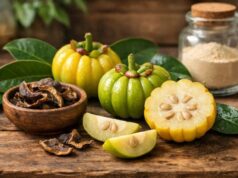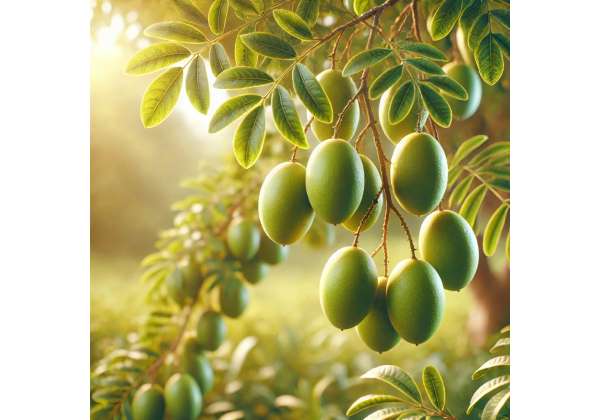
Golden apple, better known in many regions as ambarella or June plum, is a crisp, tart tropical fruit from the Anacardiaceae family. It is eaten fresh, pickled, juiced, stewed, or turned into chutneys and preserves, and it also has a long record of folk use involving the leaves, bark, and fruit. What makes Spondias dulcis interesting today is the combination of practical food value and emerging phytochemical research. The fruit provides vitamin C, fiber, organic acids, and polyphenols, while laboratory studies on leaf, peel, and bark extracts point to antioxidant, antimicrobial, anti-inflammatory, and enzyme-modulating activity. At the same time, this is not a fruit with a strong human clinical literature. Most of the more medicinal claims still come from food-composition studies, cell work, and animal experiments rather than well-designed trials in people. The most useful way to understand golden apple is as a nutritious tropical fruit with promising medicinal potential, not as a proven natural treatment.
Core Points
- Golden apple offers vitamin C, fiber, pectin-rich peel fractions, and polyphenol-rich fruit and leaf compounds.
- Its most realistic benefits are nutritional support, digestive help from whole-fruit use, and antioxidant support rather than clinically proven disease treatment.
- A sensible food-based serving is about 100 to 200 g fresh fruit or 120 to 240 mL diluted juice.
- Leaf and bark extracts do not have an established human self-dose, so supplement-style use should stay cautious.
- Pregnant or breastfeeding people, children, and anyone with a strong sensitivity to Anacardiaceae fruits should avoid medicinal use unless advised by a clinician.
Table of Contents
- What is golden apple
- Key ingredients in golden apple
- What benefits can you expect
- How to use golden apple
- How much golden apple per day
- Golden apple side effects and interactions
- What the research really says
What is golden apple
Golden apple is the fruit of Spondias dulcis, a tropical tree that likely originated in Island Southeast Asia and the Pacific before spreading across South Asia, the Caribbean, Central America, and parts of Africa. Depending on where you are, it may also be sold as ambarella, June plum, kedondong, or golden ambarella. That mix of names matters because it is often confused with other Spondias species, especially hog plum types. For readers, the practical point is simple: Spondias dulcis is a specific fruit tree with its own chemistry, flavor profile, and traditional uses, even if the common names overlap.
The tree belongs to the same broad plant family as mango, cashew, pistachio, and poison ivy. Its fruit is usually oval, firm, juicy, and crisp, with a tangy flavor that shifts as it ripens. Unripe fruit is sharply acidic and often eaten with salt, chili, or sugar in many tropical food traditions. Riper fruit becomes sweeter, more aromatic, and better suited to juice, jam, chutney, compote, or cooked sauces. This culinary flexibility is one reason golden apple has remained popular even where it is still considered underused. Like guava among tropical kitchen fruits, it occupies the space between everyday food and traditional functional plant.
Traditional use goes beyond the fruit itself. Ethnobotanical reports describe the leaves, bark, peel, and even fruit pulp being used for sore throat, skin irritation, localized pain, digestive complaints, and inflammatory conditions. Modern reviews of the Spondias genus confirm that S. dulcis is part of a wider tradition of medicinal use involving antioxidant, antimicrobial, anti-inflammatory, and protective plant actions. Still, the strongest modern evidence for golden apple itself remains food composition and preclinical work, not clinical medicine. That distinction is important because it keeps expectations realistic.
Another useful feature of golden apple is its ripening behavior. Studies on fruit maturity show that acidity, soluble solids, vitamin C, and phenolic content shift meaningfully as the fruit changes from green to semi-ripe to fully ripe. In practice, this means the best fruit depends on what you want. Green fruit is sharper and more astringent, semi-ripe fruit can show an especially strong balance for fresh eating and processing, and fully ripe fruit is softer in flavor and more suitable for juices and sweet preparations. That maturity effect is one reason home cooks and traditional users often treat the same fruit differently depending on stage.
The most practical modern definition of golden apple is therefore not miracle fruit and not just another tropical plum. It is a nutrient-dense, tart-sweet tropical fruit with culinary value, traditional medicinal uses, and a growing but still preliminary research profile. That makes it worth knowing, but also worth describing honestly.
Key ingredients in golden apple
Golden apple’s value begins with its mix of nutrients and plant compounds. At the food level, the fruit contributes vitamin C, fiber, organic acids, and various phenolic compounds. At the medicinal-research level, the leaves, bark, peel, and fruit have yielded flavonoids, tannins, phenolic acids, ellagic acid derivatives, pectin-related compounds, and other antioxidant molecules. This layered composition is why the fruit can be discussed as both a nourishing food and a plant with bioactive potential.
One of the most relevant practical nutrients is vitamin C. Maturity studies on Spondias dulcis show that ascorbic acid changes with ripening and that semi-ripe fruit may contain more vitamin C than fully ripe fruit. The same studies also show shifting levels of polyphenols, acidity, and soluble solids as the fruit matures. This means golden apple is not nutritionally static. A tart green fruit and a golden-yellow ripe fruit may taste different because their chemistry genuinely is different.
The peel and leaf chemistry also matters. Reviews and phytochemical analyses of Spondias dulcis report flavonoids and phenolic compounds such as gallic acid, methyl gallate, ellagic acid derivatives, tannins, rutin, and related molecules. These are the compounds that most often drive the fruit’s antioxidant and enzyme-inhibitory reputation in laboratory studies. Methanolic and aqueous extracts from leaves and bark often show higher measured antioxidant activity than plain fruit flesh, which is one reason many medicinal claims are really claims about extracts, not about ordinary fruit servings. If you already appreciate the value of polyphenol-rich fruits such as blackberry, the logic here will feel familiar: the whole fruit matters nutritionally, but the more dramatic laboratory results usually come from concentrated fractions.
Pectin is another overlooked part of the story. Golden apple peel and peel-derived fractions have been studied for food-technology and bioactivity reasons, including antimicrobial and anti-Salmonella work. That does not mean eating the fruit is the same as taking a pectin extract, but it does show that the fruit’s fibrous parts are more than waste. In traditional food systems, this helps explain why unripe golden apple works so well in pickles, relishes, and preserves: the chemistry supports texture as well as flavor.
A practical chemistry summary looks like this:
- Vitamin C helps explain immune-support and antioxidant interest.
- Fiber and pectin support the fruit’s digestive reputation.
- Organic acids create tartness and influence appetite and palatability.
- Flavonoids and phenolic acids support antioxidant and anti-inflammatory potential.
- Rutin and related flavonoids appear in extract research more than in everyday food use.
The key insight is that golden apple’s active ingredients are not confined to one molecule. Its value comes from a whole-food core, plus a more concentrated medicinal layer found mainly in leaves, bark, peel, and specialized extracts. That makes it more interesting than a simple tart fruit, but also much less appropriate for exaggerated supplement claims.
What benefits can you expect
The most honest way to talk about golden apple benefits is to separate what is realistic for fruit eaters from what is only promising in the lab. For most people, the clearest benefits are nutritional and culinary. The fruit provides vitamin C, fiber, fluid, tart organic acids, and polyphenols, which together make it a reasonable choice for digestive regularity, antioxidant intake, and fruit variety in the diet. That does not sound dramatic, but it is useful and believable.
Digestive support is one of the most practical benefits. Whole fruit contributes fiber, while peel-derived pectin fractions and traditional food use suggest a role in bowel regularity and general gastrointestinal comfort. The fruit’s tartness may also stimulate appetite in some people. This is not the same as saying golden apple treats chronic digestive disease. It means it behaves like a functional tropical fruit that can fit well into a digestion-friendly pattern when tolerated. In this respect, it is easier to compare it with papaya as a food-first digestive fruit than with a heavily standardized digestive supplement.
The second realistic benefit is antioxidant support. Fruit, peel, leaf, and bark extracts have repeatedly shown antioxidant activity in in vitro testing, and some animal work suggests protective effects against oxidative stress and DNA damage. That helps explain the fruit’s long folk reputation for supporting recovery and general vitality. Still, readers should keep the scale in mind. Test-tube antioxidant capacity is not the same thing as a proven human health outcome. It makes golden apple promising, not clinically settled.
A third area of interest is anti-inflammatory and antimicrobial action. Here again, the evidence is strongest for extracts from leaves, bark, or peel rather than for ordinary food servings. Reviews of Spondias dulcis and the broader Spondias genus describe antioxidant, antimicrobial, anti-inflammatory, enzymatic inhibitory, and even laxative-type findings in preclinical work. That matters because it shows the plant is chemically active. But it does not justify telling readers that eating a few fruits will treat infection, pain, or inflammation in a clinical sense.
There are also more speculative areas. Some studies point to protective effects against DNA damage, others to intestinal motility or specific antimicrobial uses from pectin extracts. These are interesting leads, especially for future food science and phytotherapy, but they remain far from routine medical advice. The gap between interesting and clinically useful is still large here.
A realistic benefit hierarchy looks like this:
- strongest and most practical: nutrient support, tart fruit variety, and fiber-based digestive value
- plausible but still modest: general antioxidant support from regular fruit use
- promising but not proven: anti-inflammatory and antimicrobial effects from extracts
- least established: supplement-style medicinal claims based on leaves, bark, or high-dose fractions
That ranking keeps the fruit in the right place. Golden apple is worth eating and worth studying. It is not yet a clinically validated medicinal intervention.
How to use golden apple
Golden apple is best used first as a food. That may sound obvious, but it matters because the fruit’s strongest real-world value is culinary and nutritional, while its more medicinal uses are still poorly standardized. The good news is that it is versatile. You can use it green, semi-ripe, or ripe depending on the result you want.
For fresh eating, semi-ripe fruit is often the most balanced stage. It keeps the fruit’s characteristic crunch and tartness without becoming too sour. In many tropical cuisines, sliced golden apple is eaten with salt, chili, tamarind, or a little sugar. Riper fruit works better for juices, relishes, and sweeter preparations. The peel is often edible when tender, but the fibrous stone should not be chewed aggressively because it is tough and inconvenient rather than pleasant.
A simple food-use guide looks like this:
- green to semi-ripe fruit for tart salads, pickles, relishes, or spicy snacks
- semi-ripe to ripe fruit for juices, smoothies, sauces, and chutneys
- ripe fruit for jams, compotes, preserves, and cooked desserts
- peel-rich preparations when you want more pectin and structure in cooked foods
Golden apple also responds well to heat. Cooking softens the sharp acidity and brings out a more rounded aroma. That is why the fruit works so well in chutneys, curries, sauces, and preserves. If you know how quince becomes gentler and more aromatic after cooking, golden apple follows a similar culinary logic even though the flavor profile is much more tropical and acidic.
Juice is another common form, but it deserves one caution: juice is easier to overconsume than whole fruit. Whole fruit gives more fiber and slows intake naturally. Juice is better treated as a small serving rather than a health drink to sip all day.
Traditional medicinal use is broader but far less standardized. Leaves and bark have been prepared as folk remedies in different regions for pain, skin complaints, digestive issues, and inflammatory problems. Modern studies also use alcoholic or aqueous extracts of bark and leaf fractions. But that research does not translate into a reliable home-use recipe. Leaf tea, bark decoctions, and homemade extracts may sound natural, yet their chemistry varies greatly and their human safety data are thin. That means casual medicinal use of non-fruit parts should be approached cautiously.
The most sensible use pattern is therefore:
- start with whole fruit
- use ripeness to match your recipe
- prefer food forms over extract forms
- treat leaf and bark preparations as traditional or experimental, not routine
That framework gives golden apple the role it deserves: a flavorful, nutrient-rich fruit with medicinal promise, but not yet a do-it-yourself herbal extract for everyday use.
How much golden apple per day
Golden apple does not have a standardized medicinal human dose. That is the single most important dosage point. Unlike herbs with formal monographs or standardized supplements, Spondias dulcis is used mainly as a food, and most of its more medicinal findings come from animal or laboratory work. So the practical way to talk about dosage is in food-based servings, not supplement-style precision.
For ordinary dietary use, a reasonable starting range is:
- about 100 to 200 g fresh fruit flesh in a day
- or roughly 1 medium fruit, depending on size and ripeness
- or about 120 to 240 mL diluted juice
Those amounts are practical rather than clinical. They are meant to keep intake in a normal food range while giving room to assess tolerance. Because the fruit is acidic and fibrous, many people do better with moderate portions rather than very large servings, especially if the fruit is green or if it is eaten with salt, chili, or sweetened juice bases.
Ripeness changes the best dose experience. Green fruit is more acidic and astringent, so smaller amounts usually feel better. Semi-ripe fruit is often easiest for repeated use. Fully ripe fruit may be easier on the stomach in some people, though it is also sweeter and often lower in certain phenolic measures than less ripe fruit.
For preserves, chutneys, or candied preparations, the issue is less about the fruit itself and more about the sugar and salt added around it. In those forms, golden apple can still be enjoyable and useful, but it stops behaving like a straightforward health food. Keep portions smaller and use them as accompaniments rather than primary fruit servings.
The harder question is leaf or bark dosing. Here the honest answer is that there is no established self-dose for people. Animal studies have used much higher body-weight-adjusted quantities than would be appropriate to translate directly into home use, and extract types differ widely. If you are looking for a fruit with a more established supplement tradition and clearer oral-use patterns, amla is a better example of a research-driven fruit supplement model. Golden apple is not there yet.
Timing also matters a little. If you are eating golden apple for flavor, hydration, and nutrient variety, it can fit anywhere in the day. If you are using it for digestive comfort, it often makes more sense with or after meals rather than on an empty stomach. Very tart fruit can irritate sensitive stomachs when eaten alone.
A practical dosing rule is therefore simple:
- keep fruit use food-like
- start with modest servings
- use more caution with green fruit and juice
- avoid inventing medicinal extract doses
That approach is less exciting than supplement marketing, but it is much more reliable and much more appropriate for this plant.
Golden apple side effects and interactions
For most healthy adults, golden apple as a fruit is generally well tolerated. The main problems tend to be practical rather than dangerous: too much acidity, too much fiber at once, or overuse of salty or sugary preparations. That means the fruit itself usually belongs in the watch tolerance category rather than the high-risk herb category.
The most common side effects from ordinary fruit use are:
- mouth irritation from very sour unripe fruit
- stomach discomfort in sensitive people
- reflux or heartburn if large acidic servings are eaten
- loose stools or bloating when intake rises quickly
- excess sugar intake from sweetened juices or preserves rather than from the fruit itself
These effects are much more likely with green fruit, concentrated juice, or preserved products than with moderate servings of ripe fruit.
The bigger safety question involves medicinal use of leaves, bark, or concentrated extracts. Here the evidence base is much thinner. Recent reviews describe high-dose acute oral testing in mice without obvious short-term side effects and also report laxative and antioxidant activity, but that is still preclinical evidence. It does not create a reliable safety guarantee for long-term human use, pregnancy, breastfeeding, or self-medication in children.
People who should be more cautious include:
- pregnant or breastfeeding people using anything beyond normal fruit intake
- children given leaf or bark preparations
- people with reflux, gastritis, or strong acid sensitivity
- anyone with a history of allergy to Anacardiaceae fruits and plants
- people trying multiple herbal extracts at once without clear dosing information
That last point matters because golden apple is sometimes promoted with broad traditional claims. A tart fruit and a bark extract are not the same safety category.
Drug interactions are not well documented for ordinary fruit consumption. That is reassuring, but it is not the same as proven absence of interactions for concentrated extracts. Since medicinal extract data are sparse, the cautious rule is to separate normal food use from experimental plant-extract use. If you want more vitamin C from a fruit with a more familiar supplement pathway, acerola is more clearly positioned for that role than golden apple.
A few practical safety rules work well here:
- start with small portions if the fruit is new to you
- choose riper fruit if you are sensitive to acidity
- do not assume bark or leaf remedies are automatically safe because the fruit is edible
- stop if you notice rash, worsening stomach pain, or persistent digestive irritation
- seek medical advice for medicinal use during pregnancy, breastfeeding, or chronic illness
Golden apple’s safety profile is best described as food-safe for most people and underdefined for medicinal extract use. That distinction should guide every decision about it.
What the research really says
The research on golden apple is promising, but it is still early. This is the clearest truth a reader should leave with. Spondias dulcis has a respectable body of food chemistry, phytochemical, and preclinical research, yet almost no meaningful human clinical evidence for the kinds of health claims that appear online. That gap shapes the whole article.
What the research supports well is the fruit’s identity as a nutrient-bearing tropical food with measurable phytochemicals. Studies show changes in vitamin C, total polyphenols, acidity, and soluble solids with ripeness. Other work identifies gallic acid derivatives, ellagic acid derivatives, rutin, tannins, and related polyphenols in leaf and bark extracts. These findings give the plant a believable biochemical foundation.
What the research supports moderately is the idea that Spondias dulcis extracts have interesting biological activity. Lab and animal studies have reported antioxidant, antimicrobial, anti-inflammatory, enzyme-inhibitory, laxative, antigenotoxic, and protective effects against oxidative damage. Peel-derived pectin fractions have even shown anti-Salmonella activity in experimental models. None of that is trivial. It means the plant deserves further work. But it still stops well short of proving that golden apple fruit or home extracts treat infections, inflammation, constipation, or metabolic disease in people.
What the research supports weakly is the supplement-style language often wrapped around the fruit. Claims such as anti-cancer, blood sugar remedy, powerful detox fruit, or natural antibiotic lean much more on early-stage evidence than on human outcomes. The same caution applies to broad statements about eye health, ulcers, or systemic inflammation. The plant may have relevant chemistry, but human translation is still limited. Compared with fruits that are more often discussed through a nutrient-centered evidence base, like camu camu for concentrated antioxidant fruit use, golden apple remains much more exploratory in the research landscape.
That leads to the most honest bottom line:
- whole fruit use is supported mainly by nutrition and food science
- medicinal interest is supported mainly by extracts and preclinical studies
- human therapeutic evidence is still very limited
- safety is clearer for fruit than for leaf or bark preparations
This does not make golden apple unimportant. It makes it correctly sized. It is a worthwhile tropical fruit with real phytochemical interest, culinary versatility, and traditional medicinal value. But at this stage, its best use is as a nutrient-rich food with promising research around it, not as a clinically settled herbal treatment.
References
- Pharmacological, toxicological and phytochemical analysis of Spondias dulcis parkinson 2024 (Review)
- Spondias sp: Shedding Light on Its Vast Pharmaceutical Potential 2023 (Review)
- Exploring the Chemical Profiles and Biological Values of Two Spondias Species (S. dulcis and S. mombin): Valuable Sources of Bioactive Natural Products 2021 (Research Article)
- Identification of Physical, Chemical Properties and Flavor Profile of Spondias dulcis in Three Maturity Stages 2020 (Research Article)
- Protective effects of bark ethanolic extract from Spondias dulcis Forst F. against DNA damage induced by benzo[a]pyrene and cyclophosphamide 2019 (Research Article)
Disclaimer
This article is for educational purposes only and is not a substitute for medical advice, diagnosis, or treatment. Golden apple is a nutritious fruit with promising laboratory and animal research, but it does not have a strong human clinical evidence base for most medicinal claims. Whole-fruit use is very different from leaf, bark, or extract use. Persistent digestive symptoms, unexplained inflammation, allergy concerns, pregnancy-related questions, or chronic health conditions should be discussed with a qualified clinician before using this plant medicinally.
Please share this article on Facebook, X, or your preferred platform if you found it useful.