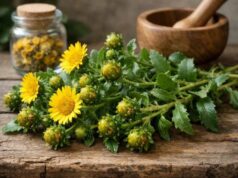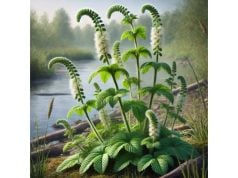
Goldenrod refers to a group of bright yellow flowering plants in the Solidago genus, but not all species are used the same way in herbal medicine. The best-studied medicinal species is European goldenrod, Solidago virgaurea, while Canadian goldenrod and giant goldenrod appear more often in modern laboratory research than in official therapeutic monographs. As a herbal remedy, goldenrod is known mainly for urinary tract support, mild diuretic action, and a long history of use in formulas for bladder irritation, urinary gravel, and inflammatory discomfort.
Its appeal comes from a combination of flavonoids, saponins, phenolic acids, and essential-oil components that may help explain its traditional reputation for increasing urine flow and calming minor urinary complaints. At the same time, goldenrod is not a stand-alone treatment for urinary infection, kidney disease, or severe pain. It works best when its role stays realistic.
The most useful way to understand goldenrod is as a classic urinary-support herb with species-specific evidence, a strong traditional foundation, and enough safety considerations to deserve careful, informed use.
Essential Insights
- Goldenrod is used mainly to increase urine flow and support minor urinary complaints, especially in traditional European herbal medicine.
- The strongest official guidance applies to European goldenrod, not automatically to every Solidago species sold under the same common name.
- A common adult range is 3 to 5 g of herb as an infusion, 2 to 4 times daily, or 350 to 450 mg of dry extract, 3 times daily.
- Avoid use if you have severe heart or kidney disease that requires fluid restriction, or if you are allergic to Asteraceae plants.
- People who are pregnant, breastfeeding, or taking synthetic diuretics should generally avoid unsupervised use.
Table of Contents
- What Is Goldenrod
- Key Compounds and Actions
- Does Goldenrod Help Urinary Health
- How to Use Goldenrod
- How Much Per Day
- Side Effects Interactions and Who Should Avoid It
- What the Evidence Actually Says
What Is Goldenrod
Goldenrod is the common name for many species in the Solidago genus, a group of perennial plants in the Asteraceae family. They are known for tall stems and clusters of yellow flowers that bloom in late summer and early autumn. In herbal medicine, however, “goldenrod” is not just a garden or meadow plant. It refers to a medicinal raw material prepared from the aerial parts of selected species, especially Solidago virgaurea, the European goldenrod.
That species distinction matters. Most official monographs, dose ranges, and therapeutic indications are based on S. virgaurea. Other species, especially S. canadensis and S. gigantea, are chemically active and increasingly studied, but they do not all carry the same level of official recognition for human use. In practical terms, this means a label that says only “goldenrod” may not tell you enough unless the botanical species is clearly named.
Goldenrod has a long history in European herbalism as a urinary tract herb. Traditional uses center on increasing urine output, supporting the flushing action of the urinary tract, and easing minor complaints such as irritation, mild discomfort, and urinary gravel. In some regional traditions it was also used for rheumatic complaints, wound washing, mouth rinses, and occasional digestive or inflammatory complaints. Still, urinary support remains its clearest herbal identity.
A few basics help place goldenrod correctly:
- The medicinal part is usually the flowering aerial herb.
- European goldenrod is the most established medicinal species.
- Canadian and giant goldenrod are more prominent in modern phytochemical and preclinical papers.
- The herb is best known as an adjunct, not a primary treatment for serious disease.
Goldenrod is also one of the more misunderstood meadow plants. It is often blamed for seasonal hay fever because it blooms when allergy symptoms are common, but its pollen is relatively heavy and insect-carried. That does not mean goldenrod is allergy-free. It still belongs to the Asteraceae family, so people with known sensitivity to that plant family may react to herbal preparations.
Another useful way to think about goldenrod is as a “urinary-support herb” rather than a “kidney cure.” It does not dissolve major stones, eradicate urinary infections on its own, or replace diagnostic workup. But for mild lower urinary complaints where a clinician has ruled out serious disease, it fits a long-standing pattern of herbal use.
That practical narrowness is part of its value. Goldenrod is not famous because it claims to do everything. It has stayed relevant because, within the right context, it has a clear and traditional job.
Key Compounds and Actions
Goldenrod’s medicinal activity comes from a combination of phytochemicals rather than one dominant ingredient. The most discussed groups are flavonoids, saponins, phenolic acids, and essential-oil constituents. Together, these compounds help explain why goldenrod is traditionally described as diuretic, mildly anti-inflammatory, spasm-modulating, and supportive for urinary tract comfort.
Among the more important compound groups are:
- Flavonoids, including quercetin, kaempferol, and rutin derivatives
- Phenolic acids, especially caffeoylquinic and chlorogenic acid derivatives
- Triterpene saponins, which are often linked with the herb’s urinary and membrane-active effects
- Essential-oil constituents, which vary by species and preparation
- Tannins and other polyphenols, which may contribute astringent and antioxidant effects
In European goldenrod, flavonoids and caffeoylquinic acids receive the most attention because they appear closely tied to antioxidant, anti-inflammatory, and urinary-support actions. Saponins also matter because they are often invoked when discussing mild diuretic effects and altered epithelial permeability. In simpler terms, goldenrod contains a set of compounds that may help increase urinary flow while also influencing inflammatory tone and microbial behavior.
That does not mean every preparation works the same way. Water infusion, alcohol extract, and essential-oil fraction can yield very different profiles. A tea emphasizes one range of compounds, while concentrated alcohol extracts or essential-oil studies highlight others. This helps explain why laboratory findings can sometimes sound broader than everyday clinical use. A test-tube study of a concentrated extract may show antimicrobial or antioxidant effects that are real but not fully reproduced by an ordinary herbal tea.
Species differences matter too. European goldenrod has the strongest medicinal tradition and official herbal status. Canadian and giant goldenrod also contain useful flavonoids and phenolic compounds, but their saponin patterns and essential-oil composition are not identical. That is one reason not to generalize too confidently across all Solidago species.
One practical takeaway is that goldenrod is best seen as a “formula herb” in the urinary sphere. It is often paired with other urinary-support plants, and its chemistry fits that role well. Readers interested in broader urinary or mineral-rich herb traditions sometimes compare it with stinging nettle in urinary-support blends, though the two plants differ substantially in chemistry and indications.
Another useful point is that goldenrod’s compounds appear more supportive than aggressive. This is not the kind of herb used to force a strong purge or to act like a pharmaceutical diuretic. Its chemistry suggests a gentler increase in urinary flow together with secondary effects on oxidative stress, smooth muscle tone, and inflammatory signaling.
That pattern is exactly why goldenrod still matters: its chemistry aligns with its traditional use instead of sounding impressive but clinically irrelevant. Even so, chemistry alone is not proof of broad therapeutic power, and that distinction remains important throughout the rest of the article.
Does Goldenrod Help Urinary Health
Goldenrod’s strongest traditional use is urinary support, and this is still the most defensible area to focus on today. In official European herbal guidance, European goldenrod is used to increase the amount of urine as an adjuvant in minor urinary complaints. That wording is more important than it may sound. It tells you the herb is meant to support urinary flow and symptom relief, not to replace diagnosis or antibiotic treatment when infection is present.
The kinds of complaints goldenrod is most often associated with include:
- mild urinary irritation,
- a sense of incomplete flushing,
- urinary gravel or light discomfort related to passing small particles,
- and urinary tract symptoms that may benefit from increased flow.
This “urinary irrigation” idea is central to goldenrod’s use. The herb is not primarily valued because it kills bacteria directly in the body. It is valued because it may support a higher urine volume, which can help flush the lower urinary tract and reduce lingering irritation. Some experimental work also suggests antimicrobial and anti-biofilm activity, but that is better understood as a promising supportive mechanism than as proof that goldenrod treats urinary infection on its own.
That difference matters in real life. Someone with a burning sensation, mild irritation, and no systemic symptoms may discuss herbal support with a clinician. Someone with fever, back pain, visible blood in the urine, or worsening pain needs medical evaluation rather than a tea.
Goldenrod may also help by affecting smooth muscle behavior and inflammatory signaling. Laboratory studies suggest extracts can influence bladder or urinary tract-related pathways, which may partly explain why it has been used for spasm-like discomfort and irritable lower urinary symptoms. Still, these mechanistic clues should not be oversold. The herb’s most grounded role remains supportive, not curative.
It is helpful to compare goldenrod with other urinary-support herbs. For recurrent urinary health strategies, many people first think of cranberry for recurrent urinary support. Cranberry is usually framed around bacterial adhesion and recurrence prevention, while goldenrod is more often framed around urine flow, herbal diuresis, and minor irritative complaints. They are not interchangeable, but they can occupy different roles in a broader urinary-care conversation.
A realistic expectation for goldenrod looks like this:
- it may help support urine flow,
- it may ease mild urinary discomfort when used appropriately,
- it may fit as an adjunct in urinary-support formulas,
- but it should not be used to self-manage serious or worsening urinary symptoms.
That last point is the key safety boundary. Goldenrod makes the most sense when the complaint is mild, the diagnosis is not alarming, fluid intake is appropriate, and the user understands that “supportive urinary herb” is not the same as “treatment for infection or kidney disease.”
In other words, yes, goldenrod can help urinary health, but mainly within a modest, well-defined, and traditional scope.
How to Use Goldenrod
Goldenrod is usually taken as an infusion, tincture, liquid extract, or dry extract. These forms all aim at the same basic goal: delivering the herb in a way that supports urinary flow and minor urinary comfort. The best choice depends on how much consistency, convenience, and species clarity you want.
The most traditional form is herbal tea made from the dried flowering herb. This suits people who prefer a classic preparation and are willing to drink it several times per day. Tea also encourages fluid intake, which is part of the logic behind urinary-support herbs in the first place.
Tinctures and liquid extracts are useful when a person wants more precise dosing or dislikes drinking repeated cups of tea. These are often simpler for travel or short-term use.
Dry extracts and tablets can feel more modern and convenient, but they require greater attention to labeling. Ideally, the botanical name, extraction ratio, and solvent system should be clear. A product that says only “goldenrod” without the species can leave too much ambiguity, especially since the official monograph guidance is centered on S. virgaurea.
A practical way to use goldenrod well is:
- choose a product that names the species,
- use one preparation style rather than stacking several,
- drink enough water unless fluid restriction has been advised,
- and stop if symptoms worsen or take on “red flag” features.
Goldenrod is often used in combination formulas. In urinary herbalism, it may be paired with nettle, birch leaf, parsley, lovage, or bearberry relatives. These blends can make sense, but they also create a common problem: once several herbs are combined, it becomes hard to know which one is helping or causing an adverse effect. For short-term self-care, simpler is often better.
For people exploring short-course urinary herbs, uva ursi for short-term urinary herb use is another classic comparison point, but its safety logic is very different. Goldenrod is mainly a urinary-flow and support herb, while uva ursi is used more narrowly and with greater short-term caution.
One more subtle use point matters: goldenrod works best when the goal is supportive urinary care, not when the user is trying to “push through” a potentially serious problem. If you already have fever, flank pain, or visible blood in the urine, the herb is not being used in its best context.
Goldenrod can also appear in mouth rinses or topical folk applications in older traditions, but those uses are secondary in modern herbal writing. The oral urinary-support route remains the core use.
In practice, the herb tends to work best when taken consistently over days rather than as a one-time rescue. It is less like a painkiller and more like a targeted supportive herb that fits into a short period of increased hydration and observation.
How Much Per Day
Goldenrod dosing depends heavily on the form, and the clearest guidance comes from official monographs on European goldenrod. That matters because many online articles give one broad number without saying whether they mean tea, tincture, or dry extract. With goldenrod, those are not interchangeable.
For adults and adolescents, commonly cited traditional-use ranges include:
- infusion from 3 to 5 g of comminuted herb, 2 to 4 times daily
- liquid extract 0.5 to 2 mL, 3 times daily
- tincture 0.5 to 2 mL, 3 times daily
- dry extract 350 to 450 mg, 3 times daily
A practical duration often given for traditional use is 2 to 4 weeks. If symptoms continue during that period, the right response is not to keep escalating the dose. It is to reassess the problem.
That duration limit is important because goldenrod is usually used for minor complaints, not for indefinite daily use. A herb that makes sense for short-term urinary support may not make sense as a constant background supplement, especially when the underlying issue is uncertain.
A few dosing principles help keep use sensible:
- Match the dose to the preparation, not to the herb name alone.
- Start near the lower end if you are trying a new product.
- Maintain good fluid intake unless you have been told to restrict fluids.
- Do not combine it casually with multiple other diuretic-style herbs or synthetic diuretics.
- Stop and seek advice if symptoms intensify rather than improve.
This is also a good place to note that goldenrod dosing is not fully transferable across species. A Canadian or giant goldenrod extract studied in a laboratory does not automatically justify copying the same dose into human self-care. When a product uses a species other than S. virgaurea, the dosing language should be treated with more caution.
Readers familiar with other traditional urinary herbs may notice that goldenrod’s dose style resembles that of horsetail as another traditional diuretic herb, where tea, tincture, and extract can differ substantially even when the herb name stays the same. The principle is the same: form and context matter more than a single isolated number.
Goldenrod is also not the kind of herb where “if some is good, more must be better” makes sense. Because its role is supportive, very high intake may simply increase inconvenience, risk of stomach upset, or inappropriate fluid loss without producing a better clinical outcome.
The best dose is the one that fits the correct preparation, the correct species, and the correct reason for use. That may sound less exciting than a bold universal claim, but it is far more useful and much safer.
Side Effects Interactions and Who Should Avoid It
Goldenrod is generally described as reasonably well tolerated in short-term traditional use, but that should not be confused with “risk-free.” The most relevant safety concerns are allergy, fluid-balance issues, and inappropriate self-treatment of more serious urinary symptoms.
Possible adverse effects include:
- hypersensitivity reactions,
- mild gastrointestinal upset,
- and, less commonly, poor tolerance in sensitive users.
Because goldenrod belongs to the Asteraceae family, allergy is an important consideration. People who have reacted to plants in this family may be more likely to react here as well. That includes sensitivity patterns that can overlap with other familiar members of the family, including chamomile in the same botanical family. This does not mean cross-reaction is guaranteed, but it is enough reason for caution.
Goldenrod should also be avoided in situations where reduced fluid intake is medically required, such as severe cardiac or renal disease. That warning is central to its official safety profile. Since the herb is used in part to support urinary flow, it does not fit well when fluid restriction is part of treatment.
Other people who should use caution or avoid self-use include:
- children under 12,
- pregnant or breastfeeding people,
- anyone using synthetic diuretics,
- and those with severe kidney or heart disease.
Pregnancy and lactation are not usually recommended contexts for goldenrod because sufficient safety data are lacking. This is not the same as saying the herb is proven harmful. It means there is not enough reliable evidence to support routine use.
Interaction data are limited, but one official caution stands out: concomitant use with synthetic diuretics is not recommended. The reason is practical rather than dramatic. Stacking a herbal urinary-flow aid with a pharmaceutical diuretic may make fluid balance harder to predict.
Perhaps the most important safety message is about red flag symptoms. Do not rely on goldenrod alone if urinary complaints come with:
- fever,
- painful urination that is clearly worsening,
- spasms,
- blood in the urine,
- flank pain,
- or symptoms that persist.
These features suggest a problem that needs medical evaluation. Goldenrod is a support herb for minor complaints, not a substitute for diagnosing infection, stones, obstruction, or kidney disease.
For readers who like mild daily diuretic or bitter herbs, dandelion among gentler everyday bitter and diuretic herbs often feels more food-like in practice than goldenrod. That does not make it automatically better, but it shows how botanical personality matters. Goldenrod has a narrower, more specific clinical fit.
In short, goldenrod is safest when its boundaries are respected: short-term, well-hydrated, species-aware, and never used to ignore warning signs.
What the Evidence Actually Says
Goldenrod has a stronger traditional and official herbal position than many popular herbs, but the quality of modern evidence still varies by question. The most reliable takeaway is not that goldenrod is “proven for everything urinary.” It is that European goldenrod has a recognized traditional-use role, while newer laboratory studies continue to explore mechanisms that may support that role.
The strongest evidence base supports three broad points.
First, European goldenrod has official traditional-use recognition for increasing urine flow as an adjunct in minor urinary complaints. This does not mean the herb passed the kind of large modern randomized-trial standard used for pharmaceuticals. It means long-standing use, plausibility, and accumulated experience were considered sufficient for traditional herbal status.
Second, phytochemical and preclinical research is quite substantial. Reviews and experimental studies consistently show flavonoid-rich, saponin-rich, and phenolic-rich preparations with antioxidant, anti-inflammatory, antimicrobial, anti-biofilm, and smooth-muscle-related effects. This helps explain why the herb persisted in urinary phytotherapy instead of fading into folklore.
Third, the evidence is species-weighted. European goldenrod, S. virgaurea, carries the strongest medicinal identity in human herbal guidance. Canadian goldenrod and other Solidago species are increasingly studied and chemically interesting, but their evidence is still more preclinical and less translated into official therapeutic recommendations.
What remains limited is equally important:
- strong randomized clinical evidence for uncomplicated UTI treatment,
- clear proof that goldenrod alone resolves bacterial infection,
- and modern comparative trials that show exactly which preparation works best in humans.
This is why many responsible herbal sources still describe goldenrod as an adjunct rather than a definitive treatment. The herb fits best in supportive care, especially for urinary tract conditions that may benefit from increased flushing and mild anti-inflammatory support.
Compared with some other urinary botanicals, goldenrod occupies an interesting middle ground. It has more official traditional support than many fashionable supplements, but it has less modern clinical depth than consumers often assume. Readers comparing it with juniper in traditional urinary formulas may notice that goldenrod tends to have a clearer official urinary-support profile, even if neither herb should be treated like a stand-alone medical solution.
A realistic evidence summary would be:
- Traditional use is strong.
- Mechanistic and phytochemical research is credible.
- Modern human evidence exists, but it is not strong enough for grand claims.
- The official medicinal story is much stronger for S. virgaurea than for the genus as a whole.
That last point may be the most important insight in the whole article. “Goldenrod” sounds singular, but the evidence is not evenly distributed across all Solidago species. If you keep that distinction in view, the herb becomes much easier to understand and much harder to misuse.
References
- COMMUNITY HERBAL MONOGRAPH ON SOLIDAGO VIRGAUREA L., HERBA 2008 (Official Monograph)
- Solidago virgaurea L.: A Review of Its Ethnomedicinal Uses, Phytochemistry, and Pharmacological Activities 2020 (Review)
- Is it Worth Combining Solidago virgaurea Extract and Antibiotics against Uropathogenic Escherichia coli rods? An In Vitro Model Study 2021 (Research Article)
- Influence of the Extraction Method on the Biological Potential of Solidago virgaurea L. Essential Oil and Hydrolates 2024 (Research Article)
- Solidago canadensis L. Herb Extract, Its Amino Acids Preparations and 3D-Printed Dosage Forms: Phytochemical, Technological, Molecular Docking and Pharmacological Research 2025 (Research Article)
Disclaimer
This article is for educational purposes only and is not medical advice. Goldenrod may support minor urinary complaints, but it should not replace diagnosis or treatment for urinary tract infection, kidney disease, blood in the urine, fever, flank pain, or any persistent urinary symptom. Herbal products vary by species and preparation, and the strongest official guidance applies mainly to European goldenrod. Speak with a qualified healthcare professional before using goldenrod if you are pregnant, breastfeeding, have kidney or heart disease, must restrict fluids, or take prescription diuretics.
If this guide was useful, please share it on Facebook, X, or any platform where readers look for careful, evidence-aware herbal information.