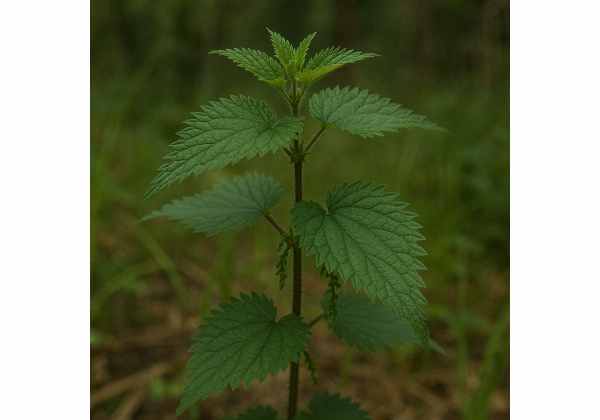
Nettle, or Urtica dioica, is one of those herbs that manages to be both humble and remarkably useful. It grows wild in many temperate regions, stings on contact when fresh, and has been used for centuries as food, tea, root medicine, and topical remedy. That range is important, because nettle is not just one thing. The leaf is best known as a mineral-rich green and traditional urinary and joint-support herb, while the root is more closely linked with men’s lower urinary tract symptoms, especially those associated with benign prostatic hyperplasia. Modern research has also drawn attention to nettle’s polyphenols, flavonoids, lignans, sterols, and lectin-like compounds.
What makes nettle especially interesting is how well its traditional uses align with its chemistry. It is nutrient-dense, biologically active, and available in several practical forms, from teas and powders to root extracts and topical products. Even so, the strongest uses vary by plant part, dose, and person. A careful guide should therefore do more than list benefits. It should explain which nettle preparation fits which goal, what a sensible dose looks like, and where safety deserves more attention.
Core Points
- Nettle leaf is best known for nutritional value, mild urinary support, and traditional joint comfort use.
- Nettle root is more specifically used for lower urinary tract symptoms related to benign prostatic hyperplasia.
- A practical leaf tea range is 2 to 4 g dried herb per cup, up to 3 times daily.
- People who are pregnant, breastfeeding, or limiting fluids because of severe kidney or heart disease should avoid unsupervised use.
Table of Contents
- What nettle is and which parts are used
- Key ingredients in Urtica dioica
- Health benefits and medicinal properties of nettle
- How nettle is used in traditional and modern practice
- How to prepare and use nettle well
- Dosage, timing, and how long to use it
- Safety, side effects, and interactions
What nettle is and which parts are used
Nettle is a perennial flowering plant in the Urticaceae family. Many people know it first as a weed that stings bare skin, but in herbal medicine it is better understood as a multi-part medicinal plant with very different uses depending on what is harvested. This is the first thing worth getting right. When people say “nettle,” they often mean the leaf, but the root has a different tradition, different chemistry, and different practical uses.
Fresh aerial parts, especially the young leaves and tops, are used as food and as herbal tea material. Once cooked, dried, or infused, the sting is no longer the main story. The plant becomes a deep-green, earthy herb that is traditionally valued for nutritional support, gentle urinary flushing, and minor joint discomfort. It is also used in some scalp and skin routines.
The fresh sting comes from tiny hollow hairs, or trichomes, on the plant. These contain biologically active substances such as histamine, acetylcholine, serotonin, and irritating organic compounds. That is why fresh contact causes immediate burning or tingling. Yet the same plant, once properly handled, can become one of the gentler tonic herbs in Western and European practice.
The root is another matter. Nettle root is not mainly taken as a mineral-rich tonic. Instead, it is most closely associated with support for lower urinary tract symptoms in older men, especially when these symptoms are related to benign prostatic hyperplasia. This part-specific use is important because many articles blur the distinction and make nettle sound like one uniform remedy. It is not.
A simple way to organize nettle is by part:
- Leaf and aerial parts: food, tea, general tonic, mild urinary and joint support
- Root: lower urinary tract support, especially in prostate-related contexts
- Fresh whole plant: traditional external stimulation in older folk practices, though this is far less common today
- Topical preparations: scalp, skin, and cosmetic use, usually based on leaf extracts
This difference in plant part also shapes expectations. Someone drinking nettle leaf tea for general nourishment should not expect the same effect profile as someone taking a standardized nettle root extract for urinary symptoms. Both are “nettle,” but they act in different ways and belong to different herbal conversations.
That distinction is one reason nettle has remained relevant. It is not a one-note herb. It can be a food, a tea, a root extract, or a topical botanical. Used thoughtfully, it is more versatile than many stronger, narrower herbs. Used vaguely, it is easy to misunderstand.
Key ingredients in Urtica dioica
Nettle’s medicinal reputation makes more sense when you look at its chemistry. Urtica dioica is rich in several families of compounds, and those families are distributed differently across the leaf, stem, root, and stinging hairs. That is one reason the plant can behave as both a nourishing green and a more targeted medicinal root.
The leaf and aerial parts are especially notable for their mineral content and polyphenol profile. Depending on soil, season, and preparation, nettle may provide useful amounts of iron, calcium, magnesium, potassium, and trace minerals, along with chlorophyll, carotenoids, and vitamins. It is not best treated as a replacement for iron therapy or prescription nutrition support, but it is one of the more nutrient-dense herbal greens used in teas, soups, powders, and traditional tonics.
Polyphenols and flavonoids are another major part of the picture. These include quercetin, rutin, kaempferol derivatives, phenolic acids, and related antioxidant compounds. For readers interested in the broader role of quercetin in inflammation and oxidative balance, nettle is one of many plants that naturally contributes these types of molecules. These compounds help explain why nettle is regularly described as antioxidant and anti-inflammatory in modern reviews.
The root has a different chemical emphasis. It contains sterols, lignans, polysaccharides, coumarin-like compounds, and lectins, including the well-known Urtica dioica agglutinin. These compounds are part of the reason root preparations are discussed in relation to prostate tissue, sex hormone-binding mechanisms, and lower urinary tract symptoms. They do not turn nettle root into a hormonal drug, but they do help explain why root extracts occupy a more specialized place in herbal practice than leaf teas do.
The fresh sting itself is linked to yet another cluster of constituents. The trichomes contain irritating substances such as histamine, serotonin, and acetylcholine, which create the plant’s distinctive contact effect. This feature has shaped nettle’s folklore just as much as its internal use has shaped its medicinal identity.
A useful way to view nettle’s ingredients is by function:
- Minerals and chlorophyll support its reputation as a nourishing herb
- Polyphenols and flavonoids support antioxidant and anti-inflammatory interest
- Lignans, sterols, and lectin-like compounds help explain root-specific uses
- Trichome compounds explain the fresh sting
This layered chemistry also explains why preparation matters so much. A leaf infusion, a dried leaf powder, a root extract, and a fresh plant tincture do not deliver the same balance of compounds. When people claim that nettle “works” or “does not work,” they often skip over that critical detail.
The best practical takeaway is that nettle’s chemistry is broad, not narrow. It is not famous because of one isolated superstar compound. It is valued because several compound groups act together, and different plant parts emphasize different strengths.
Health benefits and medicinal properties of nettle
Nettle has one of the widest benefit profiles in traditional herbalism, but some uses are more credible than others. The best way to evaluate it is to separate food-like benefits, traditional therapeutic uses, and targeted root applications instead of treating every claim as equally strong.
The first realistic benefit is nutritional support. Nettle leaf is genuinely useful as a mineral-rich, phytochemical-rich green. This does not mean one cup of tea will correct a deficiency, but it does mean nettle can contribute meaningfully to a broader diet or herbal routine, especially when consumed as food, long infusion, or powder. In this sense it behaves more like a medicinal food than a purely pharmacological herb.
The second widely accepted area is mild urinary support. Nettle herb has a long traditional use as a flushing herb in minor urinary complaints, provided there is no fever, blood in the urine, or serious disease. This is a gentle use, not a substitute for diagnosis. But it remains one of nettle’s more stable traditional roles.
A third area is minor joint discomfort. Nettle leaf has long been used in rheumatic and inflammatory traditions. The evidence is mixed, but the idea is plausible because the plant contains polyphenols, fatty acids, and other compounds linked to inflammatory signaling. In this broad anti-inflammatory category, nettle belongs beside other research-backed botanical approaches such as boswellia, though it is usually gentler and more food-like in its use.
Nettle root deserves separate treatment. Its best-known application is lower urinary tract symptoms associated with benign prostatic hyperplasia. Root preparations have been studied more specifically for this purpose than leaf preparations. That does not make nettle root a cure for prostate enlargement, but it does mean the root has a clearer targeted use than many other parts of the plant.
Potential benefit areas that make practical sense include:
- nutritional and antioxidant support from leaf use
- gentle urinary flushing support from the herb
- mild support for occasional joint discomfort
- support for lower urinary tract symptoms with root extracts
- topical use for scalp and skin routines
There are also areas where restraint is wiser. Nettle is frequently promoted for allergies, blood sugar control, hair growth, anemia, hormone balance, and even cancer support. Some of these areas have interesting preclinical or limited clinical data, but they are not equally established. For example, nettle is popular in seasonal allergy conversations, yet the human evidence remains modest and inconsistent. The same is true for metabolic claims. Interesting mechanisms exist, but they do not justify sweeping promises.
This is where nettle becomes most useful when it is described honestly. It is a broad-spectrum support herb, not a miracle herb. It can nourish, it can soothe, and certain extracts can be targeted more specifically. But its best use still depends on matching the preparation to the goal. Nettle leaf tea for general support is one thing. Nettle root for urinary symptoms is another. Keeping that distinction clear is what turns a long list of claims into something clinically sensible.
How nettle is used in traditional and modern practice
Nettle’s longevity in herbal medicine comes from how easily it crosses categories. It is a food, a tonic, a traditional urinary herb, a joint-support herb, a prostate-support root, and a cosmetic ingredient. Few herbs manage that range without becoming vague, but nettle usually works because each use has its own logic.
In traditional food practice, young nettle leaves are cooked into soups, porridges, stews, and spring dishes. Once heated, the sting disappears and the plant becomes a savory green. This food role matters because it reinforces nettle’s identity as a nourishing herb rather than only a medicinal extract. Many people get the best value from nettle through repeated low-intensity use instead of aggressive short-term supplementation.
As an herbal leaf, nettle is commonly used in infusions, powders, juices, and blends. It often appears in formulas aimed at seasonal support, minor urinary complaints, convalescence, and general vitality. In older Western herbalism, nettle was often spoken of as a builder or restorer, particularly in people who were run down, undernourished, or recovering.
Nettle root has a more modern identity. It is commonly found in capsules, tablets, and mixed formulas designed for urinary symptoms in aging men. This is the form most often compared with other prostate-focused herbal options such as saw palmetto. The comparison is useful because both herbs often appear in the same conversation, but they are not identical. Nettle root tends to be framed as supportive for lower urinary tract symptoms, while saw palmetto is more often discussed in relation to lipid extracts and androgen-related mechanisms.
Topical use is also common. Nettle extracts show up in shampoos, scalp tonics, skin cleansers, and cosmetic blends. In these products, nettle is usually chosen for a combination of antioxidant, astringent, and conditioning roles rather than for one dramatic action. It fits well in routines aimed at oily scalp care or calming irritated skin, but it is rarely the only active ingredient.
A realistic modern use map looks like this:
- Leaf tea or infusion for general daily support
- Leaf powder or food use for a nutrient-dense herbal green
- Root extract for prostate-related urinary support
- Topical formulations for scalp and skin care
One reason nettle remains popular is that it scales well. A person can use it gently as food, moderately as tea, or more specifically as a root extract. That flexibility makes it accessible to people who are not looking for an intense herb.
Still, context matters. A nourishing nettle infusion is not the same as a standardized root extract, and neither is the same as a shampoo with a little nettle on the label. The plant stays useful when each of those forms is judged on its own terms. That may sound obvious, but it is exactly where many commercial claims become misleading.
How to prepare and use nettle well
Nettle works best when the preparation matches the reason for using it. Because the plant serves both food-like and medicinal roles, the same herb can be prepared in very different ways. Choosing the right form is more important than chasing the strongest possible product.
For leaf use, tea or infusion is the most approachable form. A short tea is convenient and mild, while a longer infusion extracts more flavor, color, and minerals. People who want a daily nourishing herb often do best with this approach because it encourages consistency rather than intensity. Leaf powder is another practical option. It can be added to smoothies, soups, or capsules, though the taste is grassy and sometimes more intense than tea.
If the goal is urinary or general tonic use, leaf infusions and powders make more sense than complex extracts. If the goal is prostate-related urinary symptoms, root-specific preparations are more logical. Root teas exist, but many people use root capsules or extracts because they are easier to standardize and compare.
Topically, nettle appears in several useful forms:
- scalp rinses
- shampoos
- creams
- facial cleansers
- hair and skin tonics
These products are usually chosen for supportive care rather than fast treatment. Nettle can be a good addition to gentle routines, particularly when combined with herbs such as calendula for soothing external care. The two herbs are different, but both fit well in calm, non-aggressive topical formulations.
A few preparation principles help avoid disappointment:
- Use leaf for nourishment and general support
- Use root when the reason is specifically urinary and prostate-related
- Treat fresh raw nettle with respect because of the sting
- Do not assume a cosmetic product contains enough nettle to act like a medicinal preparation
- Start simple before stacking multiple nettle products together
Preparation method also shapes tolerability. People with sensitive digestion often do better with tea than with concentrated capsules. People seeking food-like use often prefer cooked nettle or powder added to meals. Those who dislike bitter or grassy herbs may tolerate capsules better, though they also lose the sensory cues that often help keep dose moderate.
There is also a practical quality issue. Nettle is common, but quality still varies. Poorly stored leaf loses vibrancy and aroma. Weak products may contain a little powdered herb without enough potency to do much. With root products, vague labels are the biggest problem. “Nettle extract” is not very informative unless the product states whether it uses root, leaf, or whole herb.
The most effective nettle use is rarely the fanciest. For most people, the best starting point is either a plain leaf infusion or a clearly labeled root preparation chosen for a specific need. Simple forms make it easier to notice whether the herb is helping and easier to stop if it is not.
Dosage, timing, and how long to use it
Nettle dosing depends first on the plant part and second on the preparation. This is not a herb with one universal number. Leaf, herb, and root are used differently, and official monographs reflect that difference.
For nettle herb or leaf used as tea, a practical traditional range is 2 to 4 g of dried herb per single dose as an infusion, up to 3 times daily. This is one of the most useful ranges for everyday readers because it fits how nettle is commonly prepared at home. It is food-like enough to feel approachable but still structured enough to be meaningful.
For powdered herb, traditional monographs list about 380 to 570 mg per dose, up to 3 to 4 times daily, though in practice many commercial powders are used somewhat more flexibly. For casual wellness routines, people often work in teaspoons or capsules rather than milligram-perfect doses, but official ranges still help set boundaries.
For root use, especially in lower urinary tract symptom support, the dose is different. A traditional root infusion may use 2 g of comminuted root in 150 mL water, 2 to 3 times daily. Standardized extracts vary widely, but common daily totals often fall in the range of roughly 300 to 720 mg per day depending on the extraction solvent and product. That is why root extracts should be followed according to product-specific instructions rather than treated as interchangeable.
Timing can be simple:
- Leaf tea can be taken once to three times daily
- Food-like or tonic use often works best earlier in the day or between meals
- Root products are commonly taken consistently at the same time each day
- If nettle is used for urinary support, many people avoid taking large amounts very late in the evening
Duration also depends on the form and the goal. Nettle leaf can be used in short courses or as a recurring seasonal tonic. Root preparations are more often tried for several weeks to a few months, because urinary symptom changes are not judged overnight.
A practical dosing guide looks like this:
- Start with the lowest reasonable form and dose
- Match leaf with nourishment or mild urinary goals
- Match root with prostate-related urinary goals
- Reassess after a few weeks instead of escalating quickly
The biggest dosing mistake is assuming that more nettle is always better because it is “just a plant.” That logic causes trouble with many herbs. Nettle is generally gentle, but product form still matters. A large volume of infusion, a concentrated capsule, and a root extract do not affect the body in the same way.
The second major mistake is not matching dose to purpose. People who want a nourishing daily herb may do beautifully with tea and gain nothing from chasing a concentrated extract. Others with a clearly targeted urinary reason may need the root, not the leaf.
Moderation and fit are what make nettle useful. It is not an herb that rewards random megadosing. It rewards consistency, correct plant part, and sensible expectations.
Safety, side effects, and interactions
Nettle is often described as safe, and in many common forms that is reasonable. Leaf infusions, culinary use, and well-made topical products are usually well tolerated. Still, safe does not mean risk-free. As with many traditional herbs, the main problems come from using the wrong part, the wrong context, or the wrong assumptions.
Fresh nettle can sting sharply on contact. This is unpleasant but usually short-lived. Dried, cooked, or infused nettle no longer behaves this way. Internal side effects are more relevant in modern use. Leaf and root preparations can occasionally cause mild stomach upset, nausea, heartburn, fullness, gas, diarrhea, itching, rash, or hives. These reactions are not common, but they are well within the normal range of herbal side effects.
Who should be more careful:
- pregnant or breastfeeding people, because safety data are limited for general medicinal use
- children, unless a clinician advises otherwise
- people with severe heart or kidney disease who have been told to restrict fluid intake
- people with persistent urinary symptoms, blood in the urine, fever, spasms, painful urination, or urinary retention
- anyone with known allergy to nettle products
Interactions are usually discussed more in theory and case-based practice than through strong clinical trials. Still, caution makes sense with:
- diuretics
- blood pressure medicines
- diabetes medicines
- multiple urinary-support herbs taken together
- products that shift mineral balance or fluid status
This last point matters more than it seems. Someone combining nettle with other diuretic-style herbs such as dandelion may amplify fluid-related effects without meaning to. That does not guarantee harm, but it is a good example of how “gentle” herbs can add up.
There is also a diagnostic safety issue with nettle root. Men using root for urinary symptoms should remember that lower urinary tract complaints are not automatically harmless or automatically due to benign prostatic hyperplasia. Worsening symptoms, blood in the urine, or urinary retention need medical assessment, not more herbs.
A grounded safety summary would be:
- Culinary and tea use are usually low risk when reasonable
- Root extracts deserve a more targeted and informed approach
- Pregnancy, breastfeeding, severe cardiac or renal disease, and significant urinary symptoms call for extra caution
- Stop use if the herb clearly worsens symptoms or causes allergic or digestive reactions
Nettle’s reputation as a nourishing herb can sometimes make people too relaxed about it. The better view is more balanced. It is a broadly useful plant with a relatively favorable safety profile, but like any active herb, it works best when the dose, preparation, and person all match. That is especially true when moving from leaf tea to more medicinal root preparations.
References
- Stinging Nettle (Urtica dioica L.): Nutritional Composition, Bioactive Compounds, and Food Functional Properties 2022 (Review)
- Nutritional and pharmacological importance of stinging nettle (Urtica dioica L.): A review 2022 (Review)
- An Overview on Nettle Studies, Compounds, Processing and the Relation with Circular Bioeconomy 2024 (Review)
- European Union herbal monograph on Urtica dioica L.; Urtica urens L., radix 2025 (Monograph)
- COMMUNITY HERBAL MONOGRAPH ON URTICA DIOICA L. AND URTICA URENS L., HERBA 2008 (Monograph)
Disclaimer
This article is for educational purposes only and is not medical advice, diagnosis, or treatment. Nettle products vary by plant part, preparation, and strength, and the leaf should not be treated as equivalent to the root. Seek professional advice before using medicinal doses of nettle if you are pregnant, breastfeeding, living with kidney or heart disease, using medicines for blood pressure or blood sugar, or managing urinary symptoms. Blood in the urine, urinary retention, fever, severe pain, or rapidly worsening symptoms need prompt medical evaluation.
If you found this article useful, please share it on Facebook, X, or your preferred platform to help more readers find accurate herbal information.