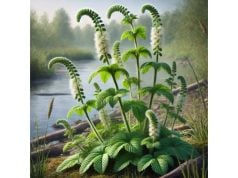
Goldenseal is a woodland herb native to eastern North America, recognized by its bright yellow rhizome and root and long associated with traditional digestive, mucosal, and topical use. Modern interest in Hydrastis canadensis centers on its bitter alkaloids, especially berberine and hydrastine, which help explain why the herb has been studied for antimicrobial activity, digestive support, and herb-drug interactions. That last point matters as much as any benefit. Goldenseal is one of those plants that sounds gentler than it really is. Its history is rich, but its best-supported modern uses are narrower than many labels suggest, and its interaction potential is more significant than many readers expect.
The most balanced way to approach goldenseal is as a potent, short-term botanical with specific traditional roles rather than as a broad immune tonic. It may still be useful in carefully chosen circumstances, especially for bitter digestive support and certain topical or mucosal preparations, but it is not well proven for common cold prevention, and it should never be treated as a casual daily supplement.
Essential Insights
- Goldenseal is best known for traditional digestive and mucosal use, not for broad immune boosting.
- Its key constituents are berberine, hydrastine, canadine, and related isoquinoline alkaloids.
- A traditional adult oral range is 0.6 to 3 g dried root and rhizome per day.
- Goldenseal can inhibit drug-metabolizing enzymes and may interact with many medications.
- Pregnant or breastfeeding people, children, and anyone taking prescription medicines should avoid self-prescribing it.
Table of Contents
- What is goldenseal and why use it
- Key ingredients in goldenseal
- What benefits can you expect
- How to use goldenseal
- How much goldenseal per day
- Goldenseal side effects and interactions
- What the research really says
What is goldenseal and why use it
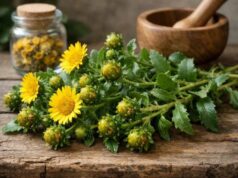
Goldenseal is a perennial herb in the buttercup family, Ranunculaceae. It grows low to the ground, with wrinkled leaves, a small red fruit, and a thick yellow rootstock that stains hands, tools, and water with its characteristic golden color. That yellow underground stem is the part most often used medicinally. It is also the part most tied to the plant’s commercial history, which matters because goldenseal has been heavily harvested and is now a conservation concern in parts of its native range.
Historically, Native American communities used goldenseal for digestive complaints, skin conditions, sore eyes, mouth and throat irritation, and other problems involving mucous membranes. Later, Eclectic and Western herbal traditions adopted it as a bitter digestive stimulant and a topical or mucosal herb for short-term use. Over time, it also gained a reputation as a “natural antibiotic” and, more recently, as a cold-season immune herb. That newer reputation is part of why it is so often paired with echinacea in cold-season formulas, even though the strength of evidence for the pairing is often assumed rather than clearly proven.
The reason people still reach for goldenseal today is simple: it feels medicine-like. It is intensely bitter, strongly colored, and associated with compounds that do show real biological activity in the lab. That makes it easy to overestimate. Goldenseal is not a culinary herb, not a gentle tonic, and not a plant that fits every person or every problem. Its traditional uses cluster around three themes:
- digestive bitterness and stomach support
- mucosal and topical support
- short-term use in infection-adjacent situations
Those themes are narrower than the marketing language around “immune support,” “sinus health,” or “natural cleansing.” That narrower frame is more honest and more useful.
Another important point is that goldenseal is not the same thing as berberine. Berberine is one of its major alkaloids, but the herb contains other alkaloids and supporting compounds that change both its actions and its risks. The whole plant, especially the root and rhizome, also raises sustainability questions. Because Hydrastis canadensis has been overharvested historically, choosing cultivated or responsibly sourced material matters more here than with many more abundant herbs.
The best modern reason to use goldenseal is not that it “boosts immunity.” It is that it remains a potent traditional botanical with bitter digestive value, mucosal relevance, and enough real pharmacology that it deserves to be used carefully and selectively.
Key ingredients in goldenseal
Goldenseal’s medicinal identity comes mainly from its isoquinoline alkaloids. These bitter yellow compounds are concentrated in the root and rhizome and are responsible for much of the herb’s taste, color, and biological activity. The three names that matter most are berberine, hydrastine, and canadine. Smaller amounts of hydrastinine and related alkaloids also contribute to the overall profile.
Berberine is the best-known constituent. It appears in other botanicals too, which is why goldenseal is often compared with barberry as another berberine-containing herb. Berberine helps explain goldenseal’s antimicrobial reputation in laboratory settings and is central to many discussions of gut effects, metabolic effects, and botanical synergy. But berberine is only one piece of the story. If someone wants to understand goldenseal, it is more accurate to think in terms of a berberine-dominant alkaloid herb rather than a berberine capsule in plant form.
Hydrastine is the second major alkaloid and may be even more important than berberine in some interaction questions. Modern pharmacokinetic work suggests that hydrastine, especially one of its forms, may play a major role in the way goldenseal affects drug metabolism. This is one reason the herb can be more interaction-prone than readers expect from its “natural” image.
Canadine is present in smaller amounts but still matters as part of the herb’s broader chemical signature. Together, these alkaloids give goldenseal several characteristics:
- intense bitterness
- antimicrobial activity in laboratory models
- enzyme-modulating and drug-interaction potential
- a more pharmacologically active profile than many gentle herbal bitters
Goldenseal also contains minor constituents such as resin-like compounds and other plant metabolites, but the alkaloids dominate the conversation for good reason. They help explain both the herb’s old uses and its modern cautions.
A useful way to understand the chemistry is to separate whole-herb use from isolated-compound thinking. Whole goldenseal has been studied for synergy, including cases where the extract appears to strengthen berberine’s antimicrobial performance in the lab through mechanisms such as efflux pump inhibition. That means the herb cannot always be reduced to “berberine equals effect.” At the same time, the more exciting metabolic and antimicrobial human research often belongs to isolated berberine or to other berberine-rich botanicals, not to goldenseal itself.
This is the core chemical lesson: goldenseal is bitter, alkaloid-rich, and biologically active. That makes it interesting, but it also makes it unsuitable for casual daily use. It is the sort of herb where chemistry immediately changes the safety conversation. Readers do not need to memorize every compound name, but they do need to remember that goldenseal’s active profile is real enough to affect both the body and many medications.
What benefits can you expect
Goldenseal can offer benefits, but the realistic benefits are narrower than its reputation. The strongest modern case for the herb is not “immune boosting.” It is its traditional use as a bitter digestive support and a short-term botanical for mucosal or topical contexts. Once you move beyond those areas, the evidence becomes much thinner.
The first realistic benefit is digestive support through bitterness. Goldenseal has long been used as a stomachic bitter, meaning it may help stimulate digestive secretions, appetite, and the general readiness of the digestive tract before or around meals. This fits both its taste and its traditional use for dyspepsia, sluggish digestion, and gastritis-type complaints. Even here, though, it is not the gentlest choice. If the goal is a classic digestive bitter without goldenseal’s interaction burden, there are cleaner options. Goldenseal is best thought of as a strong bitter, not an everyday sipping herb.
The second plausible benefit is short-term mucosal support. This is where its traditional use becomes more specific. Goldenseal has been used for irritated mouth tissues, sore throat preparations, and topical applications. That does not mean it is proven for every mouth ulcer, sinus problem, or “infection.” It means it has a long record of use where bitter astringent herbs meet mucous membranes. If the goal is a much gentler soothing approach, slippery elm is often the softer comparison for irritated throat and gut lining, while goldenseal is the more forceful and less universally tolerated option.
The third category is laboratory antimicrobial potential. Here goldenseal genuinely looks interesting. Extracts and alkaloids have shown antimicrobial effects in vitro, and some research suggests the whole herb can strengthen berberine’s performance through synergistic actions. This is the part of goldenseal’s story that has fueled its popularity. But it is also the part most often overstated. Laboratory activity does not automatically translate into clinical usefulness for colds, sinus infections, urinary infections, or self-treated digestive infections.
A few claims deserve particular skepticism:
- broad immune boosting
- routine cold prevention
- masking illicit drugs in urine
- general detoxification
- long-term daily “gut cleansing”
These claims are common online, but they are not the most evidence-based reasons to use the herb. In fact, modern official sources still say there is not enough evidence to determine whether goldenseal is useful for health conditions broadly.
So what can you reasonably expect? Goldenseal may function as a strong bitter digestive herb, a short-term traditional mucosal botanical, and a plant with real antimicrobial promise in laboratory work. What you should not expect is a clinically proven natural antibiotic or a catch-all immune herb. That distinction keeps the herb in its proper place: potent, interesting, sometimes useful, but far from universally indicated.
How to use goldenseal
Goldenseal is best used in clearly defined forms and for clearly defined reasons. Because the herb is potent and interaction-prone, it is not something to experiment with casually. The most common medicinal forms are dried root and rhizome powder, tinctures, capsules, and non-standardized extracts. Traditional practice also includes topical and mucosal preparations, though these deserve more caution than romanticized folk descriptions suggest.
For oral use, the root and rhizome are the main medicinal parts. These may appear as:
- powdered root and rhizome in capsules
- tinctures made with alcohol and water
- decoctions or infusions
- loose powdered herb
Oral use makes the most sense when the goal is bitter digestive support or a short traditional self-care trial. It makes much less sense when the goal is broad “immune strengthening.” Goldenseal is not an adaptogen and not a daily nutritive tonic. It is better suited to defined, shorter uses.
Topical or mucosal use has a long history, especially for the mouth, throat, and skin. In modern practice, that might include diluted mouth or throat preparations or topical blends created for external use. Even then, strong mucosal applications can be irritating, especially if a person is already inflamed or sensitive. This is where many people do better with something gentler and more clearly topical, such as witch hazel for simple external astringent use, instead of trying to make goldenseal do every job.
A useful practical framework is:
- choose a clear reason for use
- select one form only
- keep the trial short and deliberate
- do not combine it with multiple other strong herbs unless there is a specific rationale
Goldenseal is often sold in “immune blends,” often with echinacea or other cold-season herbs. These blends are popular, but they also make evaluation harder. If you feel better, you do not know what did it. If you feel worse or interact with a medication, you do not know which ingredient caused the problem. Single-herb use is often more sensible.
Another important point is that goldenseal is not a stand-in for isolated berberine supplements. Some people assume the two are interchangeable because both are yellow and bitter. They are not. Goldenseal contains a different chemical balance, different sustainability concerns, and a more complicated interaction profile.
The best way to use goldenseal is as a short-term, clearly justified herb rather than as an open-ended supplement. That mindset alone prevents many of the mistakes people make with it.
How much goldenseal per day
Goldenseal dosing should stay conservative because the herb is potent and the strongest formal guidance emphasizes traditional digestive use rather than broad modern indications. A practical adult range from a current official monograph is 0.6 to 3 g of dried root and rhizome per day. That range applies to adults 18 years and older and covers dried material, powders, and non-standardized extract forms made with water and or ethanol.
That range is useful because it keeps the dose discussion anchored to the actual herb rather than to berberine alone. Many products on the market contain blends, proprietary formulas, or unclear extract ratios. In those cases, the safest rule is to follow the product label only if the manufacturer is reputable and the reason for use is clear.
A sensible dosing approach looks like this:
- start near the low end of the range
- use only one goldenseal product at a time
- take it a few hours before or after other medications or health products
- avoid long, indefinite self-prescribing
The timing advice is especially important. Spacing does not eliminate all interaction risk, because goldenseal can alter drug metabolism rather than simply bind other products in the gut. Still, separating doses is a reasonable minimum precaution and is part of formal monograph guidance.
There is much less clarity for every other type of claim. There is no well-established human dose for “immune boosting,” cold prevention, chronic sinus problems, or routine antimicrobial use. These are exactly the areas where the herb’s reputation outruns its evidence.
If the goal is appetite stimulation or digestive bitterness, it can help to compare goldenseal with a more classic bitter such as gentian as a clearer traditional appetite and digestive bitter. That comparison often reveals what goldenseal actually is: a bitter herb with extra pharmacological baggage, not simply a stronger version of every digestive tonic.
Duration also deserves attention. Even though some monographs do not impose a strict short-term limit, goldenseal is not a plant that most people should take continuously for months. Its interaction potential and its uncertain value outside narrow traditional uses make long-term unsupervised use hard to justify.
In practice, goldenseal dosing works best when it is tied to a defined, short goal. If the goal is vague, the dose becomes vague too, and that is usually when mistakes begin. With this herb, clarity matters more than bravado. A lower dose with a real reason is smarter than a bigger dose built on marketing language.
Goldenseal side effects and interactions
Goldenseal’s biggest modern issue is not that it is dramatically toxic at ordinary doses. It is that it can interact with medications in clinically meaningful ways. That alone makes it a herb that deserves more respect than many over-the-counter supplements receive.
Common side effects are usually digestive and may include:
- stomach discomfort
- nausea
- irritation from intense bitterness
- loose stools in some users
- constipation or digestive heaviness in others, depending on form and dose
These effects are not the main reason to be cautious. The main reason is herb-drug interaction risk. Human studies show that goldenseal can inhibit important drug-metabolizing enzymes, especially CYP3A and CYP2D6. That means it has the potential to alter the blood levels of medications processed through those pathways. This is not theoretical hand-wringing. It is one of the most clearly demonstrated modern concerns with the herb.
That interaction profile matters for people taking:
- psychiatric medications
- cardiovascular medicines
- opioids
- sedatives
- some antihistamines
- certain cancer drugs
- many other prescription medicines metabolized through CYP3A or CYP2D6
Spacing goldenseal a few hours away from medicines is helpful but not fully protective, because enzyme inhibition is not the same as a simple absorption conflict.
There are also clear populations who should avoid it. Goldenseal should not be used during pregnancy or breastfeeding. Breastfeeding concerns are especially important because berberine-related compounds raise theoretical concerns for infants, and official sources recommend avoiding exposure of newborns. People with kidney disorders or blood pressure disorders are also advised to seek professional guidance before use in formal monographs.
Children are another group where self-prescribing is a poor idea. Goldenseal is too pharmacologically active and too poorly studied in that population to treat as a harmless folk remedy.
One more safety point is stacking. Some people combine multiple “strong” botanicals without realizing how quickly that complicates the picture. A person taking goldenseal, berberine, strong bitters, and several cardiovascular supplements is not practicing harmless natural wellness. They are creating a pharmacology experiment. The same caution applies when combining goldenseal with other active herbs such as garlic in medication-sensitive wellness routines.
The best safety rule is straightforward: if you take prescription medications, talk to a clinician or pharmacist before using goldenseal. That advice may sound conservative, but for this herb it is realistic. Goldenseal’s interaction risk is one of the clearest places where traditional use and modern pharmacology genuinely collide.
What the research really says
The research on goldenseal is strong enough to justify caution, but not strong enough to justify many of the claims made about it. That is the central evidence story. Goldenseal has a respectable laboratory and pharmacokinetic literature, but a much thinner clinical efficacy literature for the conditions people most often buy it for.
The best-supported modern finding is not a symptom benefit. It is interaction potential. Human studies have shown that goldenseal can significantly inhibit CYP3A and CYP2D6 activity. This is one of the rare areas where modern evidence is stronger for the herb’s risk than for its broad therapeutic effectiveness. That does not make the herb useless. It means that the most certain thing we know is that it can meaningfully affect the way the body handles other compounds.
The second strong area is phytochemistry and preclinical antimicrobial research. Goldenseal extracts and alkaloids, especially berberine, show antimicrobial effects in vitro. Some work also suggests that goldenseal extracts can enhance berberine’s antibacterial performance through efflux pump inhibition. This is scientifically interesting and supports the herb’s long anti-infective reputation at a mechanistic level. But it still does not equal clinical proof that goldenseal effectively treats colds, sinus infections, or other everyday infections in people.
The weakest area is the one most often marketed: broad clinical usefulness. Official sources still say there is not enough evidence to determine whether goldenseal is useful for any health condition. That includes many of the common claims around cold support, immune boosting, and general “natural antibiotic” use.
Another important evidence point is that not all goldenseal research belongs to the whole herb. Much of the enthusiasm around its chemistry comes from berberine and related alkaloids. That matters because isolated berberine has a much larger modern research profile than goldenseal as a whole. People often transfer berberine’s reputation onto goldenseal and assume the evidence is equivalent. It is not.
The evidence picture can be summarized simply:
- traditional digestive use remains plausible
- laboratory antimicrobial activity is real
- clinical proof for common marketed uses is limited
- interaction evidence is strong
- product quality and interpretation matter
That last point matters because quality variation, adulteration concerns, and different extraction methods can change what a product actually is. Goldenseal is not a herb where every capsule can be assumed to resemble the research.
The most honest conclusion is that goldenseal remains a serious traditional herb, but a narrower one than many readers expect. It is worth respecting for its bitterness, its chemistry, and its interaction potential. It is not worth romanticizing as a cure-all. In modern evidence-based terms, goldenseal is far more justified as a cautious, short-term botanical than as a broad lifestyle supplement.
References
- Goldenseal – Hydrastis canadensis – Oral 2024 (Monograph)
- An Integrative Approach to Elucidate Mechanisms Underlying the Pharmacokinetic Goldenseal-Midazolam Interaction: Application of In Vitro Assays and Physiologically Based Pharmacokinetic Models to Understand Clinical Observations 2023 (Clinical Pharmacokinetics Study)
- Goldenseal 2025 (Review)
- Goldenseal (Hydrastis canadensis L.) and its active constituents: A critical review of their efficacy and toxicological issues 2020 (Review)
- Supplementation with goldenseal (Hydrastis canadensis), but not kava kava (Piper methysticum), inhibits human CYP3A activity in vivo 2007 (RCT)
Disclaimer
This article is for educational purposes only and is not a substitute for medical advice, diagnosis, or treatment. Goldenseal is a potent herb with real herb-drug interaction potential and limited clinical evidence for many popular uses. It should not replace medical care for infection, chronic digestive disease, pregnancy-related symptoms, or medication management. Anyone who is pregnant, breastfeeding, taking prescription medicines, or managing a chronic condition should discuss goldenseal with a qualified clinician before using it.
Please share this article on Facebook, X, or your preferred platform if you found it useful.