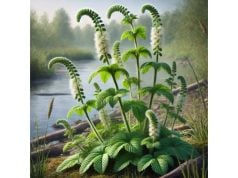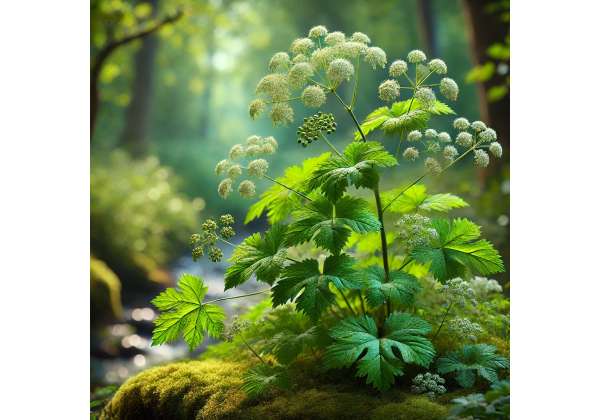
Goutweed, also called ground elder, bishop’s weed, or Aegopodium podagraria, is one of those plants that sits between food, folk remedy, and modern phytochemistry. For centuries, it was gathered as a spring green and used in European herbal practice for gout, rheumatic pain, urinary irritation, and sluggish metabolism. Today, it is drawing new interest because its leaves and roots contain flavonoids, hydroxycinnamic acids, coumarins, polyacetylenes, vitamins, and aromatic compounds with antioxidant and anti-inflammatory potential.
That sounds promising, but goutweed is still better supported as a traditional edible herb than as a clinically proven treatment. Most modern evidence comes from laboratory work, cell studies, and animal research rather than human trials. That does not make the plant unimportant. It means the most responsible way to use goutweed is with measured expectations: as a nutrient-rich wild herb with plausible medicinal actions, not as a stand-alone cure for gout, kidney problems, or metabolic disease.
Quick Overview
- Goutweed is best understood as an edible traditional herb with plausible anti-inflammatory, antioxidant, and mild diuretic effects.
- Its key compounds include hydroxycinnamic acids, flavonoids, coumarins, and the polyacetylenes falcarinol and falcarindiol.
- No standardized clinical dose exists; folk tea use is often described as about 1 to 2 teaspoons dried herb per 250 mL water, up to 2 to 3 cups daily.
- People with Apiaceae allergy, uncertain plant identification, pregnancy, breastfeeding, or active treatment for gout, diabetes, or kidney disease should avoid unsupervised use.
Table of Contents
- What Is Goutweed
- Key Compounds and Actions
- What Can Goutweed Really Help With
- How to Use Goutweed
- How Much Per Day
- Side Effects Interactions and Who Should Avoid It
- What the Evidence Actually Says
What Is Goutweed
Goutweed is a perennial herb in the carrot family, Apiaceae. It spreads aggressively through rhizomes, which is why gardeners often know it first as a persistent groundcover or invasive weed rather than as a medicinal plant. In older European food traditions, the young spring leaves were valued as an early green before cultivated vegetables were widely available. In herbal practice, the leaves and upper aerial parts were used most often, while roots and fresh leaf poultices appeared more in folk medicine than in standardized modern preparations.
Its Latin name, podagraria, points directly to its historical reputation. “Podagra” referred to gout, especially gout affecting the foot. That does not prove goutweed treats uric acid disorders in the modern medical sense, but it shows how central joint pain and inflammatory swelling were to its traditional identity. Historical sources also associate it with rheumatism, sciatica, bladder irritation, kidney complaints, hemorrhoids, and wound care. The breadth of these uses tells you something important: goutweed was treated less like a single-purpose drug and more like a versatile household herb.
One modern reason goutweed deserves attention is that it is both edible and medicinal. Young leaves can be eaten raw in salads or blended into soups, fillings, pestos, and spring greens. That food-first role matters because it changes how the plant should be judged. Many herbs are discussed only as tinctures or capsules, but goutweed also belongs to the category of nutrient-dense wild edible plants. In that sense it has more in common with dandelion as a food-and-herb crossover plant than with a narrowly standardized supplement.
At the same time, botanical identity matters. Goutweed belongs to a plant family that includes many edible herbs but also some highly poisonous lookalikes. Anyone foraging it should already be confident in identification rather than relying on rough resemblance. That caution is practical, not alarmist. A plant can be useful and still be a poor candidate for casual guesswork. The safest route is either reliable cultivation or purchase from a reputable herb source that clearly labels Aegopodium podagraria.
The most grounded starting point is this: goutweed is a traditional European edible medicinal herb with a strong folk reputation, interesting chemistry, and a modern evidence base that is still mostly preclinical. That makes it worth understanding, but not overselling.
Key Compounds and Actions
Goutweed’s medicinal profile comes from a mix of polyphenols, polyacetylenes, coumarins, essential-oil constituents, vitamins, and minerals rather than one single active ingredient. Recent analytical work consistently identifies hydroxycinnamic acids such as caffeic and chlorogenic acid derivatives, flavonoids such as quercetin, kaempferol, apigenin, and rutin, as well as coumarins and aromatic terpenes in different parts of the plant.
The most interesting compounds may be the polyacetylenes, especially falcarinol and falcarindiol. These are not unique to goutweed, but they help explain why researchers keep circling back to the plant’s anti-inflammatory and antimicrobial potential. Falcarindiol, in particular, has shown strong cyclooxygenase-related activity in experimental settings, while both falcarinol and falcarindiol contribute to antioxidant and signaling effects. Extraction method matters a great deal here. Some studies found much higher polyacetylene and polyphenol levels when ethanol or hotter extraction conditions were used, which means a fresh salad, a household tea, and a concentrated extract may not behave the same way at all.
That is why it helps to think of goutweed as a plant with several overlapping actions rather than one dramatic effect. Its chemistry suggests:
- antioxidant support from phenolic acids and flavonoids,
- anti-inflammatory potential linked to polyacetylenes and polyphenols,
- mild antimicrobial and anti-biofilm activity in extracts,
- possible uricosuric, diuretic, and metabolic effects in traditional and preclinical work,
- and nutritional support from vitamin C, carotenoids, tocopherols, minerals, and amino acids.
Another useful point is that leaves and roots are not chemically identical. Root fractions may contain higher amounts of certain volatile compounds and polyacetylenes, while leaf extracts often show stronger antioxidant behavior in water-based preparations. That matters because herbal advice often treats the plant as chemically uniform when it is not. If you are using goutweed as food, you are mostly working with young leaves. If you are reading about experimental anti-inflammatory effects, the relevant fraction may be something much more concentrated or extracted differently.
For readers who already use nutrient-rich spring herbs, goutweed can also be viewed alongside nettle as another mineral-rich traditional green, though the two plants differ markedly in botanical family and medicinal emphasis. Goutweed leans more toward folk rheumatic and urinary use, while nettle has a broader established role in mineral nutrition and inflammatory support.
The key takeaway is that goutweed has real biochemical depth. That helps justify its historical reputation, but it does not automatically convert folk claims into proven clinical outcomes.
What Can Goutweed Really Help With
This is where accuracy matters most. Goutweed has a long traditional reputation for gout, rheumatism, bladder and kidney irritation, wound healing, and even calming support, but the strongest modern evidence is still indirect. Most studies are laboratory-based or conducted in animals. That means the best answer is not “it definitely works” and not “it does nothing.” The fairest answer is that it shows plausible benefits in several areas, while direct human proof remains thin.
The first realistic category is mild inflammatory and joint support. Folk use for gout, arthritis-like pain, sciatica, and rheumatism is deeply rooted in the herb’s history, and modern chemistry gives that use some plausibility. Falcarindiol and related constituents have shown cyclooxygenase and lipoxygenase-related effects in experimental settings, and antioxidant-rich extracts may help explain why the plant was traditionally applied as poultices or taken as infusions for aching joints. Still, that is not the same as proving goutweed lowers uric acid or treats gout attacks in people. Anyone wanting an herb with a clearer pain-focused modern identity would more often look to willow bark for pain-relief support.
The second category is urinary and kidney support. Traditional literature repeatedly associates goutweed with bladder irritation, nephrolithiasis support, and mild diuretic use. Some modern papers still mention nephroprotective and uricosuric effects in experimental settings. That makes urinary support one of the more plausible traditional roles, but the evidence is not strong enough to call it a proven urinary remedy. It is better framed as a supportive folk herb rather than a replacement for evaluation of infection, kidney stones, or chronic kidney disease.
The third category is metabolic and antioxidant support. Preclinical research suggests goutweed tincture or extracts may influence glucose handling, lipid metabolism, liver chemistry, and oxidative stress. This is interesting, especially because it hints at biologic activity strong enough to matter. It is not, however, a basis for recommending goutweed as a diabetes treatment in humans.
A fourth and perhaps most practical benefit is simply that goutweed is an edible, nutrient-rich herb. Young leaves contribute vitamin C, carotenoids, minerals, and polyphenols, and the food form may be the most reasonable way to use the plant for many people.
So what can goutweed really help with? Most honestly: it may support mild inflammatory discomfort, add nutritional value as a wild green, and offer plausible urinary or metabolic benefits in traditional use. What it cannot yet claim is strong human evidence for treating gout, chronic kidney disease, diabetes, or inflammatory arthritis.
How to Use Goutweed
The best way to use goutweed depends on whether you are approaching it as food, as a folk herbal infusion, or as a more concentrated extract. For most people, the safest and most realistic entry point is food use. Young spring leaves are tender, pleasantly herbal, and far less intense than many medicinal greens. They can be chopped into soups, blended into pesto, folded into omelets, mixed into spinach-style fillings, or added sparingly to salads. The flavor is mild enough that it works well in everyday cooking, especially when mixed with other greens.
Traditional medicinal use usually focuses on infusions, teas, and poultices. Dried leaves were used in teas for joint complaints, bladder irritation, and “metabolic sluggishness,” while fresh bruised leaves were applied externally over sore joints in older folk practice. Modern discussions still mention these uses, but it is important to read them as part of herbal history rather than as standardized therapy. An external poultice is a folk preparation, not a clinically validated anti-inflammatory treatment.
Commercial dried herb products are also available in some markets, usually sold for tea, culinary use, or general herbal blending. In those cases, simplicity is best:
- use one preparation at a time,
- avoid combining it immediately with multiple other diuretic or anti-inflammatory herbs,
- keep the first trial modest and short.
That is especially true because goutweed’s evidence is not robust enough to justify complex “detox” or “anti-gout” herbal stacks.
If your interest is mostly culinary, goutweed fits naturally alongside celery and other aromatic Apiaceae plants, though it is wilder, more herbal, and more strongly associated with folk medicine than ordinary stalk celery. If your interest is medicinal, it helps to think of food use and extract use as different experiences. The former is nutritional and gentle. The latter is closer to traditional phytotherapy and deserves more caution.
A practical rule is that goutweed should be used in the context that best matches the evidence. Food use has the fewest downsides and fits the plant’s strong identity as an edible weed. Tea or infusion use is reasonable when you want to explore traditional practice. Concentrated use makes less sense unless there is a clear reason and a knowledgeable practitioner involved. This is not because goutweed is known to be highly dangerous. It is because the plant sits in that common herbal gray zone where tradition is rich, chemistry is active, and clinical certainty is limited.
The most responsible use pattern is therefore modest, food-first, and goal-specific. That approach respects both the plant’s history and the limits of its evidence.
How Much Per Day
This is the weakest area for precise guidance, because goutweed does not have a well-established modern clinical dose. There is no widely accepted monograph-style range comparable to what exists for some European urinary or digestive herbs. That means any dosing advice should be presented as traditional and customary, not clinically standardized.
For ordinary food use, the easiest guide is practical rather than pharmacologic: use the young leaves the way you would use another spring green or herb, starting with small amounts and building up based on taste and digestive tolerance. A few chopped leaves in salad or soup is a very different use case from repeated medicinal tea intake. Because food use is gentler and more familiar, it is the form most people will tolerate best.
For tea, traditional folk practice often describes 1 to 2 teaspoons of dried herb per 250 mL of hot water, taken as 2 to 3 cups daily. Some fresh-leaf folk preparations use roughly 2 tablespoons of finely chopped fresh leaves per 250 mL for a short infusion. These ranges should be read as customary household use, not as evidence-based therapeutic dosing.
That difference matters for three reasons:
- the plant part is not always specified clearly,
- commercial products may vary a lot in cut, dryness, and potency,
- and human trials are too limited to confirm an optimal or safe medicinal range.
A sensible approach is:
- start low,
- use one form only,
- try it for a short period,
- stop if you feel worse rather than better.
If you are using goutweed as a culinary herb, daily use in moderate food amounts is probably the most realistic path. If you are trying it as tea for a traditional reason such as mild joint discomfort or urinary support, keep the trial short and well observed. If you are considering tinctures or concentrated extracts, caution increases because the plant’s chemistry becomes more pronounced while the evidence does not become proportionally stronger.
This is also why goutweed should not be used as if it were a natural drug equivalent for gout or diabetes. Experimental work on metabolic interaction is interesting, but it does not provide a dose conversion that ordinary consumers should copy. In fact, the main lesson from that work is that goutweed is biologically active enough to potentially alter other treatments, not that it has a ready-made self-care dosage for humans.
The safest summary is simple: there is no standardized clinical dose, only traditional tea and food patterns. When in doubt, stay at the food end of the spectrum rather than the concentrated-herb end.
Side Effects Interactions and Who Should Avoid It
The published literature on goutweed safety is much thinner than the literature on its chemistry. That means the right tone is cautious, not alarmist. Current reviews describe the plant as having relatively low reported toxicity in traditional use, and some experimental work notes a wide gap between active and toxic levels for specific compounds such as falcarinol. At the same time, low reported toxicity is not the same as comprehensive human safety testing.
The most realistic safety concerns are these.
First, allergy and plant-family sensitivity. Goutweed belongs to Apiaceae, the same broad family as celery, fennel, coriander, dill, and some more problematic plants. Anyone with known sensitivity to this family should be cautious. Even if the plant itself is mild, allergic cross-reactivity is a reasonable concern.
Second, foraging risk. This is not about the chemistry of goutweed alone. It is about the fact that an edible Apiaceae herb can be confused with other umbellifers. If there is any doubt about identification, do not forage it. That is a far more immediate risk than most of the plant’s own documented adverse effects.
Third, interaction caution in metabolic disease. Animal work suggests goutweed extracts may influence glucose and lipid metabolism and can interact with metformin in experimental settings. That does not prove dangerous interactions in routine human use, but it is enough reason for anyone with diabetes, recurrent hypoglycemia, or prescription metabolic treatment to avoid casual medicinal use.
Fourth, uncertain use in pregnancy and breastfeeding. Because there are no strong human safety data, it is more honest to say “avoid unsupervised use” than to imply established safety. The same applies to children and to people with active kidney disease, recurrent urinary pain, or uncontrolled gout. Traditional use is not a substitute for diagnosis.
It is also wise to be cautious if combining goutweed with strong diuretic-style herbs or prescription therapies aimed at uric acid, glucose, or fluid balance. An herb can have mild effects on its own and still become less predictable when layered with multiple other products. Readers who already use urinary or joint herbs such as golden rod for urinary support should resist the urge to build large mixtures without a clear reason.
Possible mild side effects are not well described, but digestive upset or poor tolerance is always possible with any new herb, especially when taken as repeated tea or concentrated extract. The practical rule is to stop if symptoms worsen, especially if you notice rash, oral irritation, digestive discomfort, dizziness, or unexpected changes in blood-sugar symptoms.
So the safety message is not “goutweed is dangerous.” It is “goutweed is under-studied enough that modest use and clear boundaries are the smart approach.”
What the Evidence Actually Says
The evidence for goutweed is promising but still mostly preclinical. That is the central conclusion. Recent reviews that pull together the ethnomedicinal record, nutritional composition, and known pharmacologic data conclude that the plant shows anti-inflammatory, antioxidant, antimicrobial, antirheumatic, diuretic, and protective effects in the existing literature, but they also note that the evidence base is still built mainly on in vitro work, animal studies, and cell-line experiments rather than human clinical trials.
That distinction matters because goutweed has exactly the kind of profile that invites exaggeration. It is edible, historical, chemically rich, and linked to several health concerns people actively search for: gout, arthritis, kidneys, metabolism, and natural anti-inflammatory support. But the jump from interesting plant to proven remedy has not been made. There are no strong modern randomized trials showing that goutweed reliably lowers uric acid, prevents gout flares, treats urinary disease, or improves metabolic health in humans.
What the research does support fairly well is this:
- goutweed contains meaningful antioxidant and anti-inflammatory constituents,
- extraction conditions change the profile and potency,
- leaf and root fractions differ,
- and animal or cell studies show enough activity to justify continued research.
This makes goutweed similar to many traditional European herbs that never became fully standardized modern medicines. Their historical use is not imaginary, but their modern validation is incomplete. That does not make them useless. It means the safest conclusions are usually the narrower ones.
For goutweed, the narrow conclusions are:
- it is a legitimate traditional edible medicinal plant,
- it has a strong antioxidant and anti-inflammatory phytochemical profile,
- it may offer mild support for joint, urinary, or metabolic concerns,
- but the evidence is not strong enough to recommend it as treatment for any major disease.
This is why the best modern place for goutweed is probably not the medicine cabinet first. It is the kitchen and the carefully considered herbal shelf. Used as a spring green or simple infusion, it is easier to place honestly. Used as a natural fix for gout or diabetes, it is much easier to overstate. Readers looking for a more established food-herb model may find dandelion’s evidence and practical use profile somewhat clearer, even if goutweed remains a fascinating plant in its own right.
In the end, goutweed is best seen as a traditional herb with strong cultural relevance, interesting pharmacology, and unfinished science. That makes it worth respecting, worth studying, and worth using carefully rather than casually.
References
- Goutweed (Aegopodium podagraria L.)—An Edible Weed with Health-Promoting Properties 2025 (Review)
- Characterization of Steam Volatiles and Evaluation of the Antioxidant Properties of Different Extracts from Leaves and Roots of Aegopodium podagraria L. 2025 (Research Article)
- Bioactive Compounds in Aegopodium podagraria Leaf Extracts and Their Effects against Fluoride-Modulated Oxidative Stress in the THP-1 Cell Line 2021 (Research Article)
- The [DPPH●/DPPH-H]-HPLC-DAD Method on Tracking the Antioxidant Activity of Pure Antioxidants and Goutweed (Aegopodium podagraria L.) Hydroalcoholic Extracts 2020 (Research Article)
- The influence of goutweed (Aegopodium podagraria L.) tincture and metformin on the carbohydrate and lipid metabolism in dexamethasone-treated rats 2016 (Preclinical Study)
Disclaimer
This article is for educational purposes only and is not medical advice. Goutweed is a traditional edible herb with promising laboratory and folk-medicine data, but it is not a proven treatment for gout, arthritis, kidney disease, urinary tract infection, diabetes, or chronic pain. Because human safety and dosing data are limited, any medicinal use should be cautious and short term. Speak with a qualified healthcare professional before using goutweed if you are pregnant, breastfeeding, taking prescription medicines, managing a chronic condition, or foraging wild plants without expert identification.
If this article helped you, please share it on Facebook, X, or another platform where readers look for thoughtful, evidence-aware herbal information.