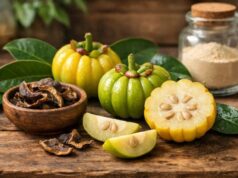
Graviola, also known as soursop or guanábana, is a tropical tree whose fruit is eaten as food and whose leaves, bark, and other parts have long been used in traditional medicine. Interest in graviola has grown because it contains unusual plant compounds called annonaceous acetogenins, along with flavonoids, phenolic acids, and alkaloids that may influence inflammation, oxidative stress, glucose handling, and cell signaling. That combination explains why graviola is often promoted for digestive support, metabolic health, immune balance, and even cancer care.
Still, graviola is one of those herbs that deserves a balanced view. The plant has promising laboratory and animal data, but the leap from petri dish to proven human benefit is much larger than many supplement labels suggest. Its fruit is generally treated as food, while concentrated leaf products raise more meaningful safety questions, especially with long-term or high-dose use. The most useful way to approach graviola is not as a miracle remedy, but as a complex medicinal plant with interesting potential, practical limits, and a safety profile that matters as much as its benefits.
Essential Insights
- Graviola is most often used for digestive comfort, antioxidant support, and general wellness, with most interest centered on the leaves rather than the fruit.
- Its best-known compounds are acetogenins, but the plant also contains flavonoids and phenolics that may contribute to anti-inflammatory and metabolic effects.
- Short-term human studies have used about 300 to 540 mg per day of leaf extract, but teas, powders, and capsules are not directly interchangeable.
- Long-term, high-dose leaf supplements may carry neurotoxicity concerns, so “more” is not a safer or smarter strategy.
- People who are pregnant, breastfeeding, have Parkinson’s disease or similar neurologic disorders, or take blood sugar or blood pressure medicine should avoid self-treating with graviola.
Table of Contents
- What Is Graviola
- Key Ingredients and Medicinal Properties
- What Benefits May Graviola Offer
- Does Graviola Help with Cancer
- How to Use Graviola
- How Much Graviola per Day
- Side Effects, Interactions, and Who Should Avoid It
What Is Graviola
Graviola is the common supplement-market name for Annona muricata, a small evergreen tree in the custard apple family. Depending on region, it is also called soursop, guanábana, Brazilian paw paw, or guyabano. The tree grows in tropical and subtropical climates across the Caribbean, Central and South America, parts of Africa, and Southeast Asia. Its fruit is large, green, and covered with soft spines, with white aromatic pulp inside and dark seeds that should not be eaten.
One reason graviola creates confusion is that “graviola” can mean several very different products. In food use, people usually mean the fruit pulp, which is blended into juices, smoothies, frozen desserts, or eaten fresh. In herbal medicine, however, the leaves are the part most often dried, brewed, or extracted into powders and capsules. Bark, roots, and seeds have also appeared in traditional medicine, but these are not the same thing in potency or safety.
Traditional uses are broad. Different cultures have used graviola preparations for fever, pain, diarrhea, indigestion, skin irritation, coughs, sleep problems, and blood sugar support. That wide reputation is one reason the plant became popular in modern supplement marketing. But traditional use should be seen as a starting point for investigation, not proof that every use is effective.
It also helps to separate fruit from extract. Eating graviola pulp as a tropical fruit is not nutritionally or pharmacologically equivalent to taking a concentrated leaf capsule. Food comes with water, fiber, and a lower concentration of the compounds that make the plant pharmacologically active. Extracts are more targeted, and that is exactly why they deserve more caution.
A practical way to think about graviola is this:
- The fruit is mainly a food with some traditional health value.
- The leaves are the main medicinal material in teas and supplements.
- The seeds and highly concentrated preparations raise more safety questions.
- Product form matters as much as the herb itself.
That distinction is central to making sense of the rest of the evidence. Many sweeping claims about graviola ignore the fact that fruit pulp, homemade tea, and standardized extract are not interchangeable. Once that is clear, the herb becomes easier to evaluate realistically.
Key Ingredients and Medicinal Properties
Graviola’s reputation comes from a layered chemical profile rather than one single “magic” ingredient. The most discussed compounds are annonaceous acetogenins, a distinctive group found across the Annonaceae family. More than 100 of these compounds have been identified in different parts of the plant, and leaves alone contain dozens. Among them, annonacin is especially important because it is both biologically active and central to safety concerns.
Acetogenins are best known for their ability to interfere with mitochondrial complex I, a step involved in cellular energy production. That matters because it helps explain why they can look powerful in cancer-cell experiments: cells under energy stress may stop growing or undergo programmed death. The same mechanism, however, is also why graviola is not a simple “healing plant.” A compound that strongly disrupts cell energy can have risks alongside potential benefits.
Beyond acetogenins, graviola contains alkaloids such as anonaine, coreximine, and reticuline. These may contribute to effects on the nervous system, blood vessels, and smooth muscle. The plant also contains phenolic compounds and flavonoids, including quercetin derivatives, rutin, kaempferol-related compounds, catechin, and caffeoylquinic acids. Those molecules are more familiar in the herbal world because they often support antioxidant and anti-inflammatory actions. As with ginger’s active compound profile, the effect of graviola depends heavily on which molecules are concentrated and how the plant is prepared.
Its key medicinal properties are usually described as:
- Antioxidant, because phenolics and flavonoids can help counter oxidative stress.
- Anti-inflammatory, because leaf extracts may reduce inflammatory signaling in lab and animal studies.
- Hypoglycemic or glucose-modulating, because certain compounds appear to affect carbohydrate digestion, glucose uptake, and insulin-related pathways.
- Cytotoxic, because acetogenins can suppress growth in various cell lines.
- Mildly hypotensive, because some alkaloids and extracts may relax blood vessels or affect calcium channels.
The important detail is that these properties do not all point in the same direction clinically. A fruit rich in antioxidants may be welcome as food. A concentrated extract with cytotoxic and hypotensive activity demands more care. That is why graviola is better understood as a plant with a broad pharmacologic spectrum rather than a gentle daily tonic.
Another useful insight is synergy. Whole-leaf products combine acetogenins, phenolics, tannins, alkaloids, and other secondary metabolites. That may create broader effects than one isolated molecule, but it also makes product standardization difficult. Two supplements labeled “graviola” may differ sharply in leaf content, extraction solvent, acetogenin concentration, and safety profile. This is one of the main reasons graviola research remains hard to translate into simple consumer guidance.
What Benefits May Graviola Offer
Graviola is most often promoted for inflammation, digestion, metabolic health, and immune support. A realistic reading of the evidence suggests there may be genuine potential in some of these areas, but the strength of support varies, and most of it still comes from laboratory and animal research rather than robust human trials.
For general wellness, the least controversial potential benefit is antioxidant support. Leaves, pulp, peel, and other parts contain phenolics and flavonoids that may help reduce oxidative stress. In practical terms, that means graviola may support the body’s normal defense against cellular wear and tear. This is a plausible reason people use the fruit in a food-first wellness routine, much as they might compare it with other tropical plant foods such as guava’s nutrient-rich fruit profile. Still, antioxidant potential in a lab does not automatically translate into meaningful disease prevention in people.
Digestive use is another traditional theme. Leaf and bark teas have long been used for gastritis, poor digestion, and diarrhea. Some animal work suggests gastroprotective effects, including reduced ulcer-like damage and changes in inflammatory markers. That does not make graviola a proven ulcer treatment, but it helps explain why people often reach for it after heavy meals or during periods of digestive irritation.
Metabolic support is one of the more interesting research areas. Graviola leaf and fruit preparations have shown effects on enzymes such as alpha-glucosidase and alpha-amylase, which are involved in carbohydrate breakdown. Researchers have also explored possible effects on insulin signaling and glucose uptake. That makes graviola relevant to people interested in blood sugar balance, although it belongs in the same cautious category as bitter melon for blood sugar support: potentially useful, but not something to combine casually with medication or use as a replacement for standard care.
Potential benefits people most often seek include:
- Occasional digestive soothing
- Mild support for inflammatory balance
- Antioxidant support
- Blood sugar support in carefully monitored settings
- General herbal wellness use
What should expectations look like in real life? For most users, any benefit is more likely to be modest than dramatic. A person using graviola tea may notice gentler digestion or subjective comfort. Someone trying a short course of leaf extract may see subtle changes in appetite, post-meal heaviness, or home glucose readings. What graviola is not supported to do is reliably cure chronic disease, replace medical treatment, or produce strong disease-specific outcomes on its own.
That balanced expectation matters. Graviola is promising enough to study, but not established enough to oversell.
Does Graviola Help with Cancer
This is the question that drives the most online interest, and it is also where the biggest gap exists between hype and evidence. Graviola does show anticancer activity in laboratory settings. Extracts and isolated compounds have inhibited growth in cancer cell lines from the colon, breast, lung, prostate, pancreas, and other tissues. Proposed mechanisms include mitochondrial energy disruption, apoptosis, cell-cycle arrest, and changes in oxidative stress signaling.
Those findings are scientifically interesting. They help explain why acetogenins receive so much attention. But cell-line data is an early stage of research, not proof that graviola treats cancer in humans. Many substances kill cancer cells in a dish and never become safe or effective therapies in real patients.
Animal studies also add some support, especially for antiproliferative and anti-inflammatory effects. Yet animal models still do not answer the core clinical questions people care about: Does graviola improve survival? Does it shrink tumors in a reliable way? Does it enhance standard treatment without causing harm? At this point, those answers are still uncertain.
Human evidence is limited and small. A few clinical studies and supportive trials have explored graviola leaf extract in colorectal cancer settings, including short-term supplementation and surrogate outcomes such as cytotoxicity markers or nutritional status. That is not the same as proving a treatment effect on the disease itself. The available human work is too small and too preliminary to support claims that graviola is a validated cancer therapy.
That leads to the most important practical conclusion: graviola should not be presented as a substitute for surgery, chemotherapy, radiation, immunotherapy, or evidence-based oncology care. Any site or product that frames it as a stand-alone cancer cure is going far beyond what current research supports.
A responsible way to interpret the cancer question is:
- Graviola has notable preclinical anticancer activity.
- Its compounds are biologically active enough to deserve serious research.
- Human clinical evidence is still sparse and not strong enough for treatment claims.
- Safety concerns become even more important in people who are already medically vulnerable.
For patients and families, the safest position is to treat graviola as an investigational herbal supplement, not a proven anticancer medicine. Anyone considering it during active cancer care should involve their oncology team, especially because concentrated supplements may complicate blood pressure, blood sugar, nutrition, symptom management, or treatment planning.
If your goal is “evidence-backed antioxidant support during daily life,” options with a much longer clinical track record, such as green tea for everyday polyphenol support, generally offer a stronger evidence base and a clearer safety picture than graviola leaf supplements.
How to Use Graviola
Graviola can be used as a food, a tea, a powder, or a capsule. The right form depends on your goal. Someone who simply wants to enjoy the fruit or include it in a tropical diet does not need the same strategy as someone experimenting with a leaf extract for short-term wellness support.
The gentlest option is food use. Ripe graviola pulp can be eaten fresh or blended into smoothies, chilled drinks, sorbet, yogurt bowls, or fruit puree. This approach makes sense if you want flavor, fiber, and a lower-intensity way to include the plant. It also avoids the concentration issue that comes with supplements. Just keep the seeds out, especially when blending.
Tea is the traditional herbal form for many people. Leaves are dried and brewed into an infusion or decoction, often used for digestive comfort or general relaxation. Tea may feel more “natural” than capsules, but that does not mean it is automatically mild. Strength varies with leaf amount, steeping time, and whether stems or bark are included. That inconsistency is one reason teas are hard to dose precisely.
Capsules and powders are the most supplement-like forms. These may use whole-leaf powder, aqueous extract, or other concentrated preparations. They are more convenient and easier to repeat day to day, but they also create a greater chance of taking an amount that is pharmacologically active enough to cause problems.
Practical ways people use graviola include:
- Fruit pulp as an occasional food
- Tea after meals or during periods of digestive discomfort
- Short-term capsule use for structured self-monitoring
- Traditional topical or folk applications, which are less standardized and less well studied
A good use strategy starts with one question: what exactly are you trying to achieve? If the answer is “I want a tropical fruit with some added wellness value,” stick with food. If the answer is “I want a medicinal effect,” then product quality, dose, duration, and safety become much more important.
For readers who mainly want a soothing herbal drink rather than a stronger botanical experiment, peppermint for digestive comfort is often a milder and more predictable place to start.
Whatever form you choose, avoid stacking multiple graviola products at once. A smoothie, tea, capsule, and tincture used together can make it almost impossible to know what dose you are really getting. With graviola, simplicity is safer than layering. One form, one reason, one observation window is the better approach.
How Much Graviola per Day
There is no universally accepted medical dose for graviola. That is the most important starting point. Unlike a prescription drug, graviola products vary widely in plant part, extraction method, concentration, and standardization. So the practical question is not just “how much,” but “how much of which product.”
For food, normal culinary portions of ripe pulp are the least complicated. Think in servings of fruit rather than medicinal dosing. That is a dietary choice, not a supplement protocol.
For leaf extract, the small amount of human research gives a rough short-term reference range, not a formal recommendation. Studies have used about 300 mg per day of leaf extract in capsule form in colorectal cancer settings, and safety reviews have reported short-term oral use up to about 540 mg per day. Those numbers are useful mainly because they show what has been studied in people, not because they establish an ideal daily dose for everyone.
A cautious framework looks like this:
- Food: use as a fruit, not a therapy
- Tea: keep strength moderate and avoid escalating the number of cups simply because it is “herbal”
- Leaf extract capsules: stay close to labeled directions, favor lower-dose products first, and avoid combining multiple concentrated forms
- Duration: think short term, not open-ended daily use
If a person is determined to try a supplement, a conservative trial is usually more sensible than aggressive dosing. That means choosing one standardized product, taking it with food, and watching for dizziness, stomach upset, unusual fatigue, or signs of low blood sugar. It also means defining a stop point. Graviola is not a supplement that makes sense as an indefinite “forever” habit.
Timing matters too. Taking it with breakfast or another meal may reduce stomach irritation and makes monitoring easier. If blood sugar effects are a concern, keeping use consistent at the same time of day is smarter than taking it randomly.
A few practical rules help:
- Do not assume tea, powder, and extract are equivalent.
- Do not increase the dose just because you do not “feel” anything immediately.
- Do not use long term without clinical oversight.
- Do not combine graviola with other blood sugar or blood pressure herbs casually.
The best dosing mindset with graviola is restrained, short-term, and observational. With this herb, the lack of a clearly established safe long-term intake is just as important as the possible short-term benefit.
Side Effects, Interactions, and Who Should Avoid It
Graviola safety deserves more attention than it usually gets in marketing copy. Short-term use of some leaf products appears reasonably tolerated in limited human research, but that does not settle the bigger questions. Product composition varies, long-term data is weak, and safety assessments still flag uncertainty around neurotoxicity.
The main concern is prolonged exposure to annonaceous acetogenins, especially in concentrated products. These compounds are biologically active enough to be interesting medicinally, but that same potency is why researchers and risk assessors have raised concern about effects on the nervous system. There is enough uncertainty here that long-term, high-dose supplement use is difficult to justify for routine wellness.
Possible side effects and concerns include:
- Nausea, stomach upset, or loose stools
- Dizziness or lightheadedness
- Lower blood pressure in sensitive users
- Lower blood sugar, especially in people already treated for diabetes
- Potential neurologic risk with heavy, prolonged exposure to certain preparations
- Unpredictability between brands and forms
Interactions are less well mapped than many people assume. Reliable interaction studies are limited, so the safest view is to focus on plausible risk rather than guaranteed certainty. Graviola may be a poor fit with:
- Diabetes medicines, because combined glucose-lowering effects may push readings too low
- Blood pressure medicines, because of possible additive hypotensive effects
- Other sedating or strongly bioactive herbal stacks, where monitoring becomes unclear
- Cancer treatment plans, unless a clinician explicitly approves the product
Who should avoid graviola or only use it under medical supervision?
- Pregnant or breastfeeding people
- Children
- Anyone with Parkinson’s disease, atypical parkinsonism, or significant neurologic symptoms
- People with unstable blood pressure or recurrent dizziness
- People on glucose-lowering medication
- Anyone using it as an alternative to standard treatment for a serious disease
Another sensible precaution is to avoid homemade use of seeds, roots, or unusually strong mixed-part preparations. The edible fruit pulp has a different safety context from concentrated non-food plant parts.
The clearest evidence-based safety message is this: graviola is not a trivial herb. It is a pharmacologically active plant with real research interest, but also real uncertainty around chronic use. For occasional food use, the risk picture is simpler. For repeated medicinal use of leaf extracts, caution should lead the conversation.
References
- The safety and tolerability of Annona muricata leaf extract: a systematic review 2020 (Systematic Review). ([PubMed][1])
- A Review on Annona muricata and Its Anticancer Activity 2022 (Review). ([PMC][2])
- Annona muricata: Comprehensive Review on the Ethnomedicinal, Phytochemistry, and Pharmacological Aspects Focusing on Antidiabetic Properties 2023 (Review). ([PMC][3])
- The Antioxidant Potential of Graviola and Its Potential Medicinal Application 2023 (Review). ([PMC][4])
- Risk assessment regarding the use of Annona muricata in food supplements 2020 (Risk Assessment). ([PMC][5])
Disclaimer
This article is for educational purposes only and is not medical advice. Graviola is not a proven treatment for cancer, diabetes, or any other serious condition, and supplement products can vary widely in strength and safety. Do not use graviola to replace prescribed treatment or delay medical care. Speak with a qualified healthcare professional before using graviola if you are pregnant, breastfeeding, have a neurologic condition, or take medicines for blood sugar, blood pressure, or cancer.
If you found this article helpful, please consider sharing it on Facebook, X, or your preferred platform.