Great burnet, botanically known as Sanguisorba officinalis, is a traditional medicinal herb best known for its strongly astringent root. In East Asian practice it has long been used for minor bleeding, loose stools, irritated skin, burns, and inflamed tissue. Modern lab research gives some support to those traditional uses because the plant is rich in tannins, phenolic acids, flavonoids, and triterpenoid saponins, compounds linked with tissue-tightening, antioxidant, antimicrobial, and anti-inflammatory effects.
What makes great burnet especially interesting is that it sits at the crossroads of folk medicine and modern phytochemistry. It is not a mainstream everyday supplement, and it is not backed by large, high-quality human trials for most uses. Still, it remains relevant because the herb’s chemistry is unusually well studied, especially its tannins and ziyuglycosides. For readers trying to decide whether great burnet is worth considering, the useful questions are practical ones: what it may actually help with, how it is used, how much is customary, and where the safety limits begin. That is exactly where this guide will focus.
Essential Insights
- Great burnet is best known as a tannin-rich astringent used traditionally for mild diarrhea, minor bleeding, and irritated skin.
- Its best-studied compounds include tannins, phenolic acids, and triterpenoid saponins such as ziyuglycosides.
- A traditional adult decoction commonly uses 6 to 15 g of dried root per day, but there is no firmly established modern clinical dose.
- Avoid unsupervised use during pregnancy or breastfeeding, before surgery, or alongside anticoagulants, antiplatelet drugs, and multiple oral medicines.
Table of Contents
- What is Great Burnet
- Active compounds and actions
- Benefits and common uses
- Does it really work
- How to use Great Burnet
- How much per day
- Safety and who should avoid it
What is Great Burnet
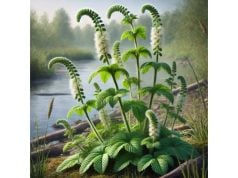
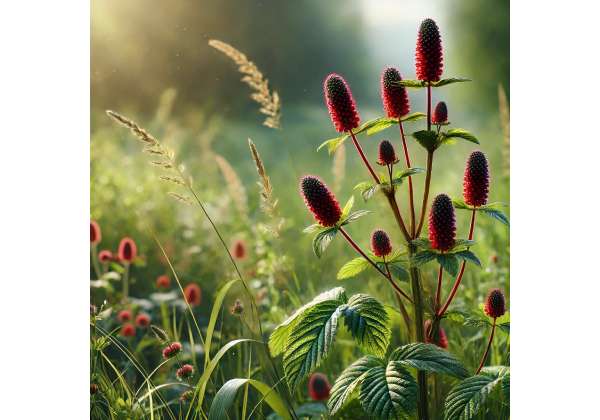
Great burnet is a perennial flowering herb in the rose family, Rosaceae. It grows across parts of Europe and Asia and has also naturalized in other temperate regions. In the wild, it is often found in meadows, wet grasslands, and cool open habitats. The plant produces dark red, cylindrical flower heads on upright stems, while the medicinal part used most often is the root, sometimes sold as burnet root, great burnet root, or Sanguisorbae radix.
Traditional systems value the root for one main reason: it is markedly astringent. Astringent herbs create a tightening, drying, and consolidating effect on tissue. In practical terms, that is why great burnet has been used historically for minor bleeding, oozing skin problems, loose stools, hemorrhoidal discomfort, and mild inflammatory states where tissue feels irritated or overly moist. In Chinese herbal tradition, the herb is known as Di Yu and is classically associated with cooling blood, stopping bleeding, and helping sores or burns.
It helps to separate culinary and medicinal uses. Some Sanguisorba species have edible young leaves, but medicinal great burnet is usually discussed for its root rather than as a salad green or kitchen herb. When people shop for it, they are more likely to encounter dried sliced root, powdered root, concentrated extracts, tinctures, or an ingredient in topical preparations than fresh whole plant material.
Another important point is that great burnet is not usually taken in the same casual way as chamomile or peppermint. It is stronger, more tannic, and more targeted. That means it is better viewed as a situational herb rather than a daily wellness tea for everyone. Its best fit is for short-term, purpose-driven use, especially when the goal is to calm irritated tissue, reduce excess secretions, or support topical healing.
Because the herb has a long history but limited modern clinical standardization, the most sensible way to think about it is this: great burnet is a traditional astringent medicine with credible phytochemical activity, but it still needs more rigorous human research before broad health claims can be made with confidence.
Active compounds and actions
Great burnet’s reputation depends largely on its chemistry. The root contains several classes of compounds, but the most important are tannins, triterpenoid saponins, phenolic acids, and flavonoids. Together, these help explain why the herb has been studied for bleeding control, tissue protection, antioxidant effects, skin support, and inflammatory balance.
Tannins are the headline compounds. They are responsible for the dry, puckering taste that appears when you sip a strong decoction. Tannins can bind proteins on the surface of tissues, which helps explain the herb’s classic astringent effect. This is why great burnet has been used for minor diarrhea, weepy skin eruptions, irritated mucosa, and small-scale bleeding. If you have ever used another tannin-rich botanical such as oak bark, the functional logic is similar, even though the full chemistry is not identical.
The tannin profile in great burnet includes ellagitannins and related polyphenols such as sanguiin derivatives. These are of special interest because they do more than just tighten tissue. Researchers have also explored their antioxidant activity, metabolic breakdown, and possible anti-inflammatory signaling effects. That matters because an herb can feel astringent right away, but its deeper biological activity often depends on what happens to those compounds after digestion and metabolism.
The second major group is triterpenoid saponins, especially ziyuglycosides. These are among the best-known named constituents in the plant and are frequently discussed in mechanistic studies. They have been investigated for anti-inflammatory, hematopoietic, metabolic, and skin-related effects. In simple terms, they may help explain why great burnet attracts interest beyond traditional bleeding support.
Phenolic acids add another layer. Studies have identified gallic acid, vanillic acid, caffeic acid, chlorogenic acid, and related compounds in extracts of the herb. These compounds contribute antioxidant and antimicrobial activity and may be especially relevant in topical formulas, where researchers have also looked at skin permeation and local accumulation.
Flavonoids are present too, although they are not usually the first compounds mentioned. Their role is mostly supportive: helping expand the herb’s antioxidant and anti-inflammatory profile rather than defining its identity on their own.
The most useful takeaway is that great burnet is not a one-molecule herb. Its traditional effects likely come from synergy. Tannins provide the immediate astringent action, triterpenoids contribute broader signaling effects, and phenolic compounds support antioxidant and antimicrobial functions. That combination is the reason great burnet remains medically interesting even though its clinical evidence is still catching up with its laboratory research.
Benefits and common uses
The most realistic benefits of great burnet are the ones that line up with its traditional identity as an astringent and hemostatic herb. In plain language, it is most often considered when tissues are irritated, inflamed, damp, or prone to minor bleeding. That does not make it a cure-all, but it does give it a clear practical profile.
One of its classic uses is support for minor bleeding. Traditionally, great burnet root has been used for hemorrhoidal bleeding, blood in stools from irritated lower bowel conditions, prolonged spotting, and topical bleeding from irritated skin. This does not mean it should be used in place of urgent medical care for significant bleeding. Instead, it has a role as a traditional herbal support when the issue is mild, recurrent, and already medically understood.
Another strong traditional use is for loose stools and bowel irritation. The same tannins that tighten external tissue can also create a drying, binding effect in the gut. That is why great burnet is often described as useful for mild diarrhea or a post-infectious irritated bowel pattern where excess fluid is part of the picture. It is less suitable when constipation, dryness, or sluggish digestion are already present.
Topical use is also important. Great burnet has been used in washes, compresses, ointments, and skin-focused extracts for burns, damp eczema-like irritation, superficial sores, and inflamed skin. Its appeal here is not only the astringent effect but also the combination of antioxidant and antimicrobial activity. In that sense, it overlaps somewhat with other topical astringents such as witch hazel, though great burnet is usually approached more as a medicinal herb than as a general skin toner.
There are also broader, more experimental areas of interest. Researchers have explored great burnet for anti-inflammatory effects in intestinal and airway models, antimicrobial action against several microbes, skin aging support, metabolic balance, and even hematopoietic activity. These findings are promising, but most remain early-stage and should not be read as proof that the herb will reliably produce those outcomes in everyday users.
In practical use, the most credible benefits are these:
- Short-term support for mild loose stools
- Traditional support for minor bleeding and hemorrhoidal irritation
- Topical support for irritated, moist, or inflamed skin
- General antioxidant and tissue-protective activity in extracts
The key is expectation management. Great burnet is best used as a focused herbal tool, not as a trendy multitasking supplement. When used with that mindset, its traditional strengths make sense and its limitations stay clear.
Does it really work
The honest answer is yes in some ways, but the evidence is uneven. Great burnet clearly contains active compounds, and lab research strongly suggests that those compounds do biologically meaningful things. The harder question is whether that translates into well-proven benefits for people using the herb at home. On that point, the answer is still only partly.
The strongest evidence sits in phytochemistry, in vitro work, animal studies, and traditional use history. Researchers have repeatedly found antioxidant, antimicrobial, anti-inflammatory, hemostatic, metabolic, and tissue-protective activity in different extracts or compounds from the plant. The chemistry is not speculative. Great burnet is genuinely rich in active constituents, and some of those compounds have been studied in detail.
Human evidence exists, but it is limited and not strong enough to support sweeping claims. Some clinical reports involve formulas that include great burnet rather than great burnet alone, which makes it hard to know how much credit the herb deserves by itself. Small studies and cosmetic applications suggest potential benefits for skin appearance and wrinkle-related outcomes, and traditional formula-based use has been explored for ulcerative colitis and hemorrhoidal bleeding. Even so, these data do not reach the standard that would justify calling great burnet a proven first-line therapy.
This matters because many herbal articles blur the line between plausible and proven. Great burnet is plausible for astringent, topical, and gut-soothing uses. It is promising for inflammation, skin support, and certain metabolic pathways. But it is not yet backed by the kind of large, independent, dose-standardized clinical trials that would settle dosage, long-term safety, or condition-specific effectiveness.
A sensible evidence ranking looks like this:
- Most plausible: mild diarrhea support, topical irritation support, traditional hemostatic use
- Promising but preliminary: skin-aging support, inflammatory bowel support, antimicrobial use, metabolic support
- Not established enough for self-treatment claims: cancer care, serious gastrointestinal disease, major bleeding, immune disorders, or chronic metabolic disease
So, does it work? It probably can be useful within a narrow traditional lane, especially where astringency is genuinely needed. It is much less convincing as a broad modern supplement for everything from weight control to chronic inflammatory disease. Its best use is careful, targeted, and realistic.
How to use Great Burnet
How you use great burnet depends on the goal. For digestive or traditional hemostatic use, the dried root is the main form. For skin problems, topical preparations often make more sense. The root is the classic medicinal material, and it is generally the best place to start if you want the herb in a traditional form.
A decoction is the most common traditional method. Because the root is dense and tannin-rich, simmering works better than a light infusion. A practical approach is to simmer the cut or powdered dried root in water, strain it, and use the liquid either internally or externally depending on the purpose. The taste is distinctly bitter, dry, and astringent, so many people prefer capsules or blended formulas for internal use.
You may also see tinctures, powdered root capsules, and standardized extracts. These are more convenient than a decoction, but they introduce a problem: the actual strength can vary widely from product to product. With extracts, the label matters more than the herb name alone. You want to know whether it is a raw powder, a concentrated extract, or a standardized preparation aimed at specific compounds.
Topically, cooled decoctions can be used as washes or compresses for irritated skin, minor burns, or oozing rashes. Some modern products incorporate great burnet into gels, creams, or cosmetic serums. In skincare formulas, the herb is usually being used for antioxidant, calming, and skin-conditioning purposes rather than for its traditional hemostatic role.
Good practical uses include:
- Short-term internal use for mild loose stools
- Topical wash or compress for irritated skin
- Formula-based use under practitioner guidance for hemorrhoidal or bowel-related complaints
- Inclusion in skin-support products where antioxidant and polyphenol content is the goal
The best quality tip is simple: buy from a supplier that clearly identifies the plant part and botanical name. Great burnet should be labeled as Sanguisorba officinalis, ideally with the root specified. If you have used tannin-rich herbal preparations such as tormentil, the preparation style and taste profile will feel familiar.
As a rule, internal use should be short term unless a qualified practitioner recommends otherwise. Great burnet is a targeted herb, and it usually works best when used for a defined reason rather than as an open-ended daily tonic.
How much per day
There is no universally accepted modern clinical dose for great burnet, and that is one of the herb’s main limitations. Most practical dosing advice still comes from traditional use rather than large human trials. For that reason, dosage should be approached as customary guidance, not as a fully validated medical standard.
The traditional oral range for dried great burnet root is commonly 6 to 15 g per day, usually prepared as a decoction. That range fits the herb’s long-standing use in East Asian materia medica and is the most useful starting point for adults who are working with the plain root rather than a concentrated extract. Lower amounts are usually better when you are trying the herb for the first time or when your digestion is sensitive.
For internal use, many people divide the day’s amount into two or three servings rather than taking it all at once. Taking it after food may reduce stomach discomfort in people who react strongly to tannic herbs. If the herb is being used for an acute issue such as mild loose stools, a short course of a few days is more sensible than indefinite daily use.
Concentrated products need separate handling. A capsule labeled as a 10:1 extract is not interchangeable gram for gram with crude dried root. In those cases, the label instructions matter, and the safest rule is to stay within the manufacturer’s guidance unless a trained practitioner gives a more specific plan.
Topical use is different. A decoction for washing, compressing, or dabbing on the skin can be used once or several times daily depending on the product strength and skin response. With topical use, skin tolerance matters more than gram-equivalent dosing.
A few practical dosage rules help keep use sensible:
- Start at the low end of the traditional range
- Use short courses for short-term complaints
- Do not stack multiple strong astringent herbs unless you know why
- Separate it from oral medicines and mineral supplements by at least two hours as a cautious step
- Reassess if symptoms last more than several days
If you need a very precise dose because you are older, medically complex, taking many medications, or buying a concentrated extract, practitioner guidance is the better choice.
Safety and who should avoid it
Great burnet appears relatively low in toxicity based on available reports, but “appears” is the important word. The herb has not been studied in enough large, modern human trials to call it thoroughly established for long-term safety. That means the right approach is careful use with realistic limits.
The most likely side effects come from its astringency. Some users may experience stomach upset, nausea, digestive tightness, dryness, or constipation, especially if the dose is high or the herb is used longer than needed. A strongly tannic herb can feel helpful when tissues are too loose or weepy, but the same chemistry can be uncomfortable when the body already runs dry, tight, or sluggish.
Topical use can also irritate some people. Even when a plant has soothing potential, concentrated extracts may sting damaged skin or cause a rash in sensitive users. Patch testing is sensible before broad application.
Interaction data are limited, but caution still matters. Because great burnet is traditionally used for bleeding-related conditions, people taking anticoagulants or antiplatelet drugs should not use it casually. There is not enough clear interaction research to predict the outcome reliably. The same goes for people preparing for surgery, those with clotting disorders, and anyone using prescription medicines where timing and absorption matter. Its tannins may also interfere with the absorption of iron and some oral drugs, so spacing doses apart is a prudent step.
The people most likely to avoid unsupervised use are:
- Pregnant or breastfeeding people, because safety data are insufficient
- Children, unless a qualified clinician recommends it
- People with constipation or very dry, weak digestion
- People on anticoagulants, antiplatelet drugs, or complex medication regimens
- Anyone with unexplained bleeding, blood in stool, or severe bowel symptoms
- Anyone planning surgery in the near future
The most important safety point is this: great burnet is not a substitute for medical care in serious conditions. Rectal bleeding, persistent diarrhea, worsening hemorrhoids, suspected ulcerative colitis, severe burns, and infected skin lesions need proper evaluation. The herb may have a role as support, but not as a way to delay diagnosis.
Used briefly, in an appropriate form, and for the right kind of problem, great burnet is often discussed as a reasonable traditional herbal tool. Used casually for major symptoms, it is much easier to misuse.
References
- Ethnomedicinal, ecological, phytochemical, nutritional and pharmacological aspects of Sanguisorba officinalis L. (Rosaceae): A comprehensive review 2025 (Comprehensive Review)
- Sanguisorba officinalis L. ethanolic extracts and essential oil – chemical composition, antioxidant potential, antibacterial activity, and ex vivo skin permeation study 2024
- A Comprehensive Review of Genus Sanguisorba: Traditional Uses, Chemical Constituents and Medical Applications 2021 (Review)
- The Tannins from Sanguisorba officinalis L. (Rosaceae): A Systematic Study on the Metabolites of Rats Based on HPLC-LTQ-Orbitrap MS2 Analysis 2021
- 地榆 2019 (Traditional Materia Medica Entry)
Disclaimer
This article is for educational purposes only and is not medical advice. Great burnet may affect symptoms related to digestion, bleeding, skin irritation, and medication use, so it should not replace diagnosis or treatment from a qualified healthcare professional. Seek prompt medical care for unexplained bleeding, persistent diarrhea, severe skin injury, suspected infection, or worsening gastrointestinal symptoms. If you are pregnant, breastfeeding, managing a chronic condition, or taking prescription medicines, get personalized guidance before using this herb.
If you found this article useful, please share it on Facebook, X, or your preferred platform so more readers can find it.