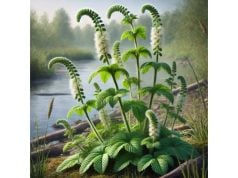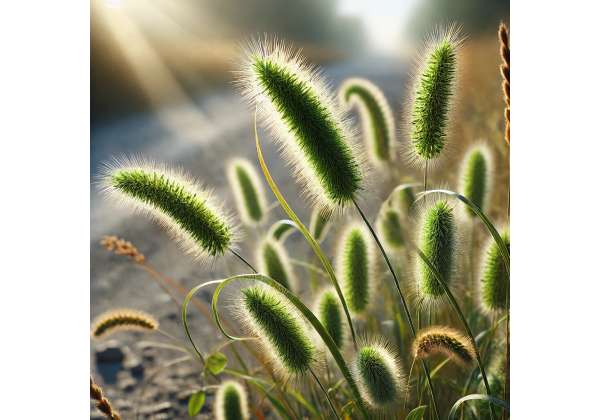
Green bristlegrass, Setaria viridis, is an annual grass better known to botanists and farmers than to mainstream herbal readers. It grows widely across temperate regions, often as a volunteer grass in fields, roadsides, and disturbed soils, and it is closely related to foxtail millet. In traditional settings, however, it has not been only a weed. Local communities in parts of Asia have used the seeds, aerial parts, or crushed fresh plant for mild digestive complaints, fever, constipation, kidney stone support, bruises, and other everyday problems.
That said, green bristlegrass sits in an unusual category. It is not a well-established modern medicinal herb with standardized extracts and human trials. Most of what is known comes from ethnobotanical records, nutritional studies, and laboratory work on its phenolic compounds and flavonoids. Those studies suggest antioxidant and possibly metabolic potential, but they do not yet justify broad therapeutic claims. The most useful way to understand green bristlegrass is as a wild edible and folk medicinal grass with intriguing chemistry, modest traditional uses, and limited clinical evidence. That balance of promise and restraint matters more here than hype.
Core Points
- Green bristlegrass has local folk uses for mild digestive complaints, fever, constipation, bruises, and some urinary complaints, but human clinical evidence is very limited.
- Its best-studied compounds include tricin, luteolin 7-O-glucoside, vitexin derivatives, orientin derivatives, and other phenolic antioxidants.
- No standardized medicinal human dose exists, and it is better approached as a cautiously used wild food or folk herb than as a precision supplement.
- Avoid self-treatment if you are pregnant, breastfeeding, highly grass-allergic, immunocompromised, or harvesting from polluted ground.
Table of Contents
- What is Green Bristlegrass
- Key ingredients and actions
- Benefits and traditional uses
- What the evidence actually says
- How to use Green Bristlegrass
- How much per day
- Safety and who should avoid it
What is Green Bristlegrass
Green bristlegrass is an annual member of the grass family, Poaceae. It is also called green foxtail, green millet, or wild foxtail millet, and in agricultural literature it is often treated mainly as a weed or a wild relative of cultivated foxtail millet. That background matters because it shapes how the plant is viewed. Modern science has paid far more attention to Setaria viridis as a model grass for crop genetics and stress tolerance than as a formal medicinal herb.
Still, traditional use gives it a second identity. Ethnobotanical records from Pakistan and nearby regions describe the plant as more than an agricultural nuisance. Depending on the community, the seeds have been used as a powder or infusion for fever, constipation, and respiratory complaints, while leaves and stems have been used in digestive remedies. Other records describe crushed plant material applied externally for bruises, wounds, and skin irritation, and there are also reports of infusions used for kidney stone complaints. These uses do not prove medical effectiveness, but they do show that the grass has entered local healing practices in several distinct ways.
It also helps to distinguish green bristlegrass from cultivated foxtail millet. The two plants are closely related, and green bristlegrass is widely considered the wild ancestor of foxtail millet, but they are not functionally identical in daily use. Cultivated millet has been selected for grain quality, easier harvest, and safer food use. Green bristlegrass is rougher, less standardized, and more dependent on proper identification and careful preparation.
The plant itself is easy to recognize once mature. It has narrow leaves and a soft, bottlebrush-like green seed head made distinctive by fine bristles. Those bristles are part of the reason the plant can be annoying in clothing, fur, and harvested materials. For herbal use, that practical detail matters. A wild grass with irritating seed heads is not handled the same way as a clean, professionally prepared medicinal leaf or root.
The most accurate modern description is this: green bristlegrass is a wild edible and folk medicinal grass with region-specific traditional uses, interesting antioxidant chemistry, and almost no standardized place in clinical herbal medicine. It is not a classic apothecary herb, but it is also not an empty weed. Its value lies in that middle ground, where traditional knowledge and early phytochemistry point to potential, while modern evidence remains cautious.
Key ingredients and actions
The best-studied bioactive profile of green bristlegrass comes from its aerial parts rather than from a long history of standardized medicinal extracts. Researchers have isolated several phenolic and flavonoid compounds from the plant and found meaningful antioxidant activity in laboratory models. Among the most frequently mentioned compounds are tricin, tricin-7-O-glucoside, p-hydroxycinnamic acid, vitexin derivatives, orientin derivatives, and luteolin 7-O-glucoside.
These compounds help explain why the plant attracts scientific attention even though it is not a mainstream herb. Flavonoids and related phenolics often show free-radical-scavenging behavior, membrane-protective effects, and mild anti-inflammatory potential in preclinical work. In green bristlegrass, the strongest evidence so far points toward antioxidant actions. That does not automatically translate into a clear human health outcome, but it does mean the plant contains more than simple grass fiber and starch.
Tricin deserves special mention because it is a recurring compound in grasses and cereals with growing interest in antioxidant and cell-signaling research. Luteolin 7-O-glucoside also stands out because a recent animal study on Setaria viridis extract linked its flavonoid fraction with AMPK-related metabolic signaling. That finding is intriguing, especially for metabolic health and muscle preservation research, but it remains early and should not be treated as proof of clinical benefit in people.
In practical herbal terms, the plant’s probable actions can be described this way:
- Mild antioxidant support from its phenolic and flavonoid content
- Possible digestive support in folk use, especially when the preparation is taken as a light infusion or seed powder
- Possible anti-inflammatory or tissue-support effects in topical folk applications
- Early metabolic interest based on animal data, not established human evidence
What is notable is what is missing. Green bristlegrass does not have a clearly defined signature compound comparable to curcumin in turmeric or menthol in peppermint. Its activity seems broader and more modest, arising from a mixture of phenolics, flavonoids, and food-like plant constituents rather than from one dominant medicinal molecule.
That makes green bristlegrass chemically interesting but therapeutically hard to standardize. Two samples harvested from different soils or stages of growth may not behave exactly the same way. A wild seed preparation, an aerial-part extract, and a laboratory ethanol extract are not interchangeable. For readers interested in herbal precision, that is one of the plant’s main limitations. It may have useful chemistry, but it does not yet have the kind of stable medicinal profile that supports confident, product-like recommendations.
Benefits and traditional uses
Green bristlegrass has a modest but varied folk record. Unlike famous herbs with one defining traditional role, it appears in community medicine as a flexible, small-scale remedy. Reported uses include digestive support, fever care, mild constipation support, lung-related complaints, kidney stone support, and external application for bruises or irritated tissue. The challenge is that these uses come from ethnobotanical observation, not from a unified medical tradition with standardized formulas and doses.
The clearest traditional pattern is everyday practicality. This is the sort of plant people turn to when a common local species is available, edible, and familiar. Seeds have been prepared as powder or infusion for oral use. In some reports, leaves and stems are prepared as decoctions for stimulating digestion. In others, the whole plant is crushed with water and applied externally to bruises or skin problems. That wide variation suggests local experimentation and practical household medicine more than a tightly defined herbal doctrine.
The realistic health benefits that may fit this traditional pattern are limited but understandable:
- Mild digestive comfort in folk use
- Light bowel-moving support when taken as a seed preparation
- General food-based antioxidant value
- External use for minor bruises or irritated skin in traditional practice
- Very early interest in metabolic and muscle-support pathways from experimental extracts
Even here, realism matters. Green bristlegrass is not well positioned as a first-choice herb for strong digestive symptoms, infections, or chronic inflammatory disease. For example, if the goal is dependable support for nausea, bloating, or cramping, ginger for digestive comfort is backed by a much clearer tradition and stronger modern evidence. Green bristlegrass belongs more in the category of local folk remedy than evidence-led herbal mainstay.
Its seed use is also important because it changes how the plant should be viewed. Some benefits may come less from “medicine” in the narrow sense and more from its use as a minor wild grain or food adjunct. In that context, the plant may contribute small amounts of energy, fiber, and phytochemicals while also carrying the symbolic value of a locally known edible plant. That is very different from taking a concentrated capsule for a targeted medical effect.
A careful reader should come away with this conclusion: green bristlegrass may help in small, traditional, context-dependent ways, but the realistic outcomes are likely to be mild. It is better seen as a wild grass with medicinal uses than as a medicinal herb with strong proof. That distinction keeps expectations grounded and makes the plant more useful to discuss honestly.
What the evidence actually says
The evidence for green bristlegrass is thin in the places readers usually care about most. There are no meaningful human clinical trials showing that Setaria viridis reliably improves constipation, fever, bruising, kidney stones, or lung infections. That is the central fact that should guide the whole article. The plant has interesting data, but not strong clinical proof.
What it does have is a layered evidence base. First, there are ethnobotanical reports. These are valuable because they document how communities actually use the plant. They show recurring patterns, such as seed-based preparations for fever and constipation or aerial-part infusions for urinary complaints. That tells us the plant has medicinal relevance in local knowledge systems. What these records do not tell us is whether the results were consistent, how strong the effects were, or what the safest dose might be.
Second, there are laboratory phytochemical studies. These show that green bristlegrass contains genuine antioxidant compounds, especially flavonoids and related phenolics. That supports the idea that its traditional uses are at least biologically plausible rather than purely symbolic.
Third, there is emerging animal research. A recent mouse study using an ethanol extract found that Setaria viridis improved body composition, muscle-related signaling, inflammatory markers, and antioxidant status in a high-fat-diet model of sarcopenic obesity. That is the strongest modern health signal around the plant so far. It is promising, but it is still only animal data. It does not establish a human dose, a human safety profile, or a clinically useful supplement.
This leads to a balanced evidence ranking:
- Well supported: the plant contains antioxidant flavonoids and phenolic compounds
- Moderately supported: it has credible ethnobotanical use in digestive, urinary, and topical folk medicine
- Early but interesting: metabolic and muscle-related effects in animal models
- Not established: clear human benefits for any medical condition
That matters because wild grasses are sometimes marketed with the halo effect of more familiar products. Unlike wheatgrass products with broader wellness use, green bristlegrass has not developed a meaningful human evidence base or a standardized supplement culture. It is still largely a plant of ethnobotany, phytochemistry, and preclinical exploration.
So, what does the evidence actually say? It says green bristlegrass is worth scientific curiosity, especially for antioxidant and metabolic research, but it is not yet a proven herbal therapy. The most responsible conclusion is not that it works broadly, but that it may hold modest food-and-herb value while waiting for better evidence.
How to use Green Bristlegrass
If someone chooses to use green bristlegrass, the method matters more than it does for many established herbs because the plant is so lightly standardized. Traditional use points to three main forms: seed preparations for oral use, aerial-part infusions or decoctions, and external applications made from crushed fresh plant material.
Seed-based use is the most food-like approach. The seeds have been used as powder and infusion in some ethnobotanical settings, especially for mild fever, constipation, and lung-related complaints. In practical terms, that means the seed is usually cleaned, dried, and prepared rather than eaten straight from the wild plant. This is important because the bristled seed head can carry debris and is unpleasant to handle. Proper cleaning is not optional.
Aerial-part use is more herbal. Leaves and stems have been prepared as light decoctions or infusions, mainly for digestive stimulation or urinary support in folk practice. Because the plant is a grass, these preparations are usually milder and less aromatic than what people expect from classic medicinal herbs. The goal is subtle support, not a dramatic effect.
Topical use involves crushing fresh plant material with water and applying it to bruises or irritated tissue. This is probably the most directly traditional form, especially where the plant is abundant and fresh material is easy to obtain. Even here, however, there is a clear limit: use belongs only on small, superficial problems, never on deep wounds, infected skin, or lesions that need medical diagnosis.
A practical use hierarchy looks like this:
- Use it first as a carefully identified wild food or mild folk plant, not as a concentrated supplement.
- Prefer cleaned seed or simple aerial-part infusions over improvised extracts.
- Keep external use local and limited.
- Stop quickly if irritation, allergy, or digestive upset develops.
Because the plant is not standardized, wild harvesting adds another variable. Identification mistakes, mixed grasses, and polluted collection sites can all turn a mild folk herb into a poor choice. For that reason, green bristlegrass is better suited to experienced foragers or ethnobotanical interest than to casual herbal experimentation.
The best use case is modest and specific: a properly identified plant, harvested from a clean site, prepared simply, and used for a traditional low-risk purpose. Once the plan becomes more concentrated, more frequent, or more therapeutic in ambition, the gap between tradition and evidence becomes too large to ignore.
How much per day
There is no clinically established medicinal dose for green bristlegrass in humans. That is the clearest and most important dosing fact. Ethnobotanical reports tell us what forms people used, but they do not provide the kind of repeatable, evidence-based dosing range that modern herbal readers usually want. This makes dosage the weakest part of the plant’s profile.
Because the traditional record involves seeds as powder or infusion, and sometimes leaves or stems as decoction, any amount used in household practice is better understood as a food-and-folk range rather than as a verified therapeutic dose. In other words, green bristlegrass is not a plant where one can responsibly say, “Take this exact number of milligrams for this exact result.”
The only precise contemporary dosing figure comes from animal research, not from human use. In the recent mouse study on sarcopenic obesity, the ethanol extract was supplied at 0.3% of the diet, which the authors related to an experimental intake of about 420 mg/kg/day in mice. That is useful for research context, but it is not a safe or direct human conversion guide.
For practical human use, the most responsible dosing principles are these:
- Keep oral use small and food-like rather than medicinally aggressive.
- Start low when trying a cleaned seed preparation or light infusion.
- Use short-term only.
- Avoid concentrated extracts unless they are part of formal research or professional guidance.
- Do not assume that a stronger dose will produce a better result.
A cautious folk-use framework may look like this:
- A small trial amount of cleaned seed or a weak seed infusion
- One or two brief uses in a day rather than continuous intake
- Only a few days of use for a simple, self-limiting complaint
That still leaves uncertainty, and that uncertainty should not be hidden. Green bristlegrass is not like peppermint tea, where informal use is relatively easy to discuss. Here, the lack of standardization is part of the dosage answer itself.
The safest bottom line is simple. There is no validated daily medicinal dose. If used orally at all, green bristlegrass should be approached in the smallest practical traditional form, for the shortest reasonable duration, and more as a cautiously tried wild edible preparation than as a supplement with a dependable dose-response pattern.
Safety and who should avoid it
Green bristlegrass does not have a strong record of serious human medicinal toxicity, but that is not the same as having a well-studied safety profile. In truth, safety data are sparse. The plant’s main risk is uncertainty: uncertain identification, uncertain contamination, uncertain dosing, and uncertain individual tolerance.
The first safety issue is harvest quality. Green bristlegrass commonly grows in disturbed soils, roadsides, field edges, and waste areas. That matters because recent research shows the plant can tolerate and enrich heavy metals under contaminated conditions. For a wild edible or folk herb, this creates an obvious rule: never collect it from polluted, industrial, mining, roadside, or chemically treated ground. A plant that survives harsh soil is not automatically a plant you want to ingest.
The second issue is mechanical irritation. The bristled seed heads can be rough, and poorly cleaned material may irritate the mouth, throat, or skin. Proper cleaning and handling are part of safety, not just convenience.
The third issue is allergy. As a grass, green bristlegrass may be a poor choice for people with significant grass pollen allergy or highly reactive skin. Not everyone will react, but the risk is more plausible here than with many non-grass herbs.
The fourth issue is evidence gap. There is no reliable safety record for pregnancy, breastfeeding, infancy, serious kidney disease, or long-term concentrated use. When evidence is this limited, the cautious advice is straightforward.
People who should avoid self-treatment with green bristlegrass include:
- Pregnant or breastfeeding people
- Children, unless a clinician with regional botanical expertise advises it
- People with strong grass allergies
- People with serious kidney, lung, or digestive symptoms
- Anyone with a weakened immune system
- Anyone foraging from uncertain or contaminated ground
The plant is also a poor choice when the symptom itself deserves proper diagnosis. Fever, persistent constipation, blood in urine, suspected kidney stones, infected wounds, and chronic cough are not good reasons to experiment with a lightly studied wild grass.
This is one of those herbs where modesty is protective. Green bristlegrass may be safe for some adults when correctly identified, cleanly harvested, and used briefly in food-like or simple folk ways. It becomes much less reassuring when gathered casually, taken in concentrated form, or used to manage symptoms that call for medical evaluation. The best safety principle is to treat it as a cautious ethnobotanical plant, not as a fully validated supplement.
References
- Setaria viridis Ethanol Extract Attenuates Muscle Loss and Body Fat Reduction in Sarcopenic Obesity by Regulating AMPK in High‐Fat Diet‐Induced Obese Mice 2025
- Cultural Use and the Knowledge of Ethnomedicinal Plants in the Pülümür (Dersim-Tunceli) Region 2024
- Exploration of the Wild Edible Plants Used for Basic Health Care by Local People of Bahawalpur and Adjacent Regions, Pakistan 2023
- Connecting nutritional facts with the traditional ranking of ethnobotanically used fodder grasses by local farmers in Central Punjab of Pakistan 2022
- Antioxidant constituents from Setaria viridis 2002
Disclaimer
This article is for educational purposes only and is not medical advice. Green bristlegrass is a lightly studied wild grass with ethnobotanical uses, not a proven clinical treatment. It should not replace medical care for fever, kidney stones, constipation that does not improve, breathing symptoms, infected wounds, or any persistent condition. Wild plant identification errors, environmental contamination, and individual allergic reactions can all create avoidable harm. Speak with a qualified healthcare professional before using wild plants medicinally, especially during pregnancy, breastfeeding, or when managing chronic illness.
If you found this article useful, please share it on Facebook, X, or any platform your readers prefer.