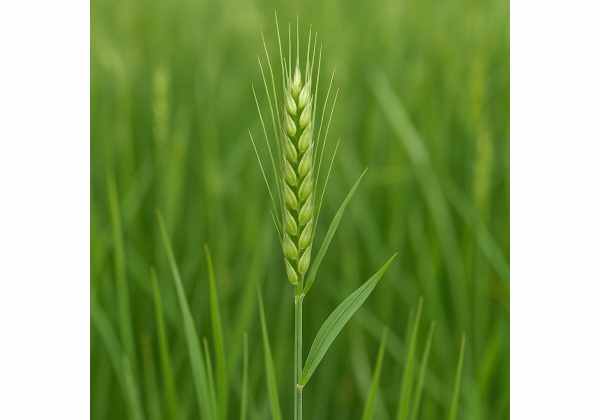
Wheatgrass is the young green shoot of common wheat, usually harvested before the grain forms. At this stage, the plant is prized not for flour or fiber-rich bran, but for its concentrated green pigments, vitamins, minerals, polyphenols, and fresh grassy flavor. It is most often consumed as juice, frozen shots, powders, tablets, or blended “greens” products.
Its popularity comes from a simple promise: a small serving may deliver a dense package of plant nutrients and antioxidant compounds. That promise is partly reasonable. Wheatgrass can contribute chlorophyll-rich plant matter, carotenoids, flavonoids, certain vitamins, and trace minerals. It also has a modest but real clinical footprint, especially in small studies involving ulcerative colitis and supportive use during chemotherapy. At the same time, many of the biggest claims around wheatgrass, especially “detox” language, move faster than the evidence.
A useful article on wheatgrass has to separate practical value from exaggerated marketing. The sections below explain what wheatgrass contains, which benefits are plausible, what human studies actually suggest, how to use it sensibly, what doses are common, and where safety and product quality matter most.
Key Takeaways
- Wheatgrass can help raise intake of plant antioxidants, chlorophyll-rich compounds, and certain vitamins and minerals.
- Small human studies suggest possible supportive benefits in ulcerative colitis and during some chemotherapy regimens, but the evidence is still limited.
- A practical starting range is about 30 to 60 mL of fresh juice or 3 to 5 g of powder daily, adjusted to tolerance and product type.
- People with wheat allergy, severe grass allergy, or a need for strict gluten avoidance should choose products very carefully or avoid it altogether.
Table of Contents
- What Wheatgrass Is and What It Contains
- Key Ingredients and Medicinal Properties
- Wheatgrass Health Benefits and What Research Actually Shows
- How to Use Wheatgrass in Real Life
- Dosage Timing and Duration
- Wheatgrass Safety Side Effects and Interactions
- When Wheatgrass Makes Sense and When Other Options May Fit Better
What Wheatgrass Is and What It Contains
Wheatgrass is made from the young leaves of Triticum aestivum, the same species that later produces common wheat grain. The difference is timing. Wheatgrass is harvested early, often within about a week to ten days of sprouting, before the seed head develops. That early stage changes both how the plant is used and what people expect from it. In practical terms, wheatgrass is treated more like a concentrated leafy green than like a cereal grain.
This distinction matters because many readers hear “wheat” and immediately think of bread, gluten, bran, starch, or whole grain benefits. Wheatgrass is different. It is valued for its fresh leaf chemistry, not for flour-making qualities. It is usually sold in one of several forms:
- Fresh juice
- Frozen juice shots
- Juice powder
- Whole-leaf powder
- Tablets and capsules
- Greens blends mixed with other plant powders
The form changes the experience. Fresh juice is often stronger in taste and lower in fiber. Whole-leaf powder may keep more fibrous material and feels more food-like. Tablets are convenient but can require several capsules to equal a meaningful serving. Blends are easy to use, though they make it harder to know how much actual wheatgrass you are getting.
Nutritionally, wheatgrass is interesting because it combines several categories of plant constituents in a small serving. Depending on the product and processing, it may provide chlorophyll-rich green pigments, carotenoids, phenolic compounds, vitamins such as vitamin C, vitamin E, and some B vitamins, along with minerals including iron, magnesium, potassium, and trace elements. Protein and amino acids are also part of the picture, though wheatgrass is not a high-protein supplement in the way some algae products are.
The honest way to think about wheatgrass is as a concentrated green plant food with supportive nutritional value. It may help fill gaps when vegetable intake is inconsistent, and it can be a convenient way to increase plant-pigment intake. But it is not a complete multivitamin, not a fiber powerhouse in every form, and not a magical cleanser.
It is also often compared with similar “green” products. For readers deciding between young cereal grasses, barley grass is the closest practical comparison, since both are harvested young, sold as powders or juice products, and used for micronutrient and antioxidant support rather than for classic herbal-drug effects.
In short, wheatgrass is best understood as a functional green food. That framing is more accurate than treating it like either a miracle cure or an ordinary salad leaf.
Key Ingredients and Medicinal Properties
Wheatgrass has attracted interest because its chemistry looks broader and more biologically active than its simple appearance suggests. Several classes of compounds likely contribute to its medicinal reputation, but it is important to separate real phytochemistry from wellness mythology.
One of the first things people associate with wheatgrass is chlorophyll. Its intense green color reflects a high concentration of plant pigments, and chlorophyll is often used as a marketing shorthand for cleansing or “green blood” effects. That language can be misleading. Chlorophyll is a meaningful plant pigment with possible antioxidant and deodorizing relevance, but it should not be presented as a direct substitute for hemoglobin or as proof of special blood-building powers on its own.
A more useful place to look is polyphenols and flavonoids. Wheatgrass contains antioxidant compounds that may help explain many of its most plausible biological effects. These include radical-scavenging activity, support against oxidative stress, and indirect anti-inflammatory potential. In lab and animal work, these compounds are often central to wheatgrass discussions.
Carotenoids and related pigments also matter. These support the plant’s antioxidant profile and contribute to the broader idea that wheatgrass is more than a basic juice shot. Vitamins such as vitamin C and vitamin E further reinforce this antioxidant story, though their amounts can vary substantially by growing conditions, harvest timing, and product processing.
Minerals are another part of the profile. Iron, potassium, magnesium, phosphorus, and trace elements are commonly discussed in wheatgrass composition research. That does not mean every powder is rich in every mineral. Still, the young shoots can offer micronutrient density that fits the general “supportive green food” model.
Wheatgrass is also often marketed around enzymes and amino acids. Some of that language has a factual base, but it is often overstretched. Enzymes in fresh plant material do not automatically translate into dramatic medicinal effects after digestion. Amino acids are present, but wheatgrass is not best approached as an amino-acid supplement.
From a medicinal-properties standpoint, the most defensible descriptors are these:
- Antioxidant
- Mild anti-inflammatory
- Nutrient-dense functional food
- Possible adjunctive supportive agent in selected settings
- Gentle digestive-supportive food in some forms
Those descriptors are more reliable than dramatic claims such as detoxifying, alkalizing the whole body, reversing chronic disease, or curing anemia. Some of the ingredients may help explain why people report better energy, improved tolerance to a healthier diet, or easier recovery from periods of low vegetable intake. But those are supportive effects, not proof of a powerful stand-alone remedy.
If you compare wheatgrass with a more protein-oriented green such as spirulina, the difference becomes clearer. Spirulina is often used for protein, pigments, and some immune-oriented claims. Wheatgrass is more about chlorophyll-rich plant compounds, trace nutrients, and antioxidant density. Both can fit inside a nutrition-first routine, but they do different jobs.
So the best summary is this: wheatgrass contains meaningful bioactive plant compounds, yet its medicinal properties are strongest when described as supportive and adjunctive rather than as highly targeted or curative.
Wheatgrass Health Benefits and What Research Actually Shows
Wheatgrass has more human research than many trendy green powders, but the evidence is still narrower than the marketing suggests. A fair reading of the literature shows several promising areas, especially antioxidant support and adjunctive clinical use, but also clear limits: many trials are small, short, or preliminary.
The most straightforward benefit is nutritional support. Wheatgrass can add plant pigments, phenolic compounds, vitamins, and minerals to the diet in a concentrated form. That does not sound dramatic, but it is probably the most dependable real-world benefit. Someone who struggles to eat enough vegetables may find that a daily wheatgrass shot or powder improves overall diet quality more through consistency than through any single “active ingredient.”
A second plausible area is oxidative stress and inflammation. Laboratory and animal studies consistently point toward antioxidant and anti-inflammatory activity. That helps explain why wheatgrass is often discussed in relation to general wellness, recovery, or inflammatory conditions. Still, a laboratory signal is not the same as a proven clinical outcome.
The most cited human evidence involves ulcerative colitis. In a small randomized, double-blind, placebo-controlled trial, wheatgrass juice was associated with improvement in disease activity and rectal bleeding in active distal ulcerative colitis. This is one of the strongest reasons wheatgrass remains more than just a nutrition fad. Even so, it was a small study, and wheatgrass should not be framed as a replacement for standard inflammatory bowel disease care.
Another area is supportive use during chemotherapy. Small studies suggest that wheatgrass juice may help reduce some treatment-related hematologic changes or support immune-related markers during chemotherapy. These results are interesting because they place wheatgrass in an adjunctive role rather than a cure-oriented one. That is the right frame: supportive, not substitutive.
There is also longstanding interest in thalassemia and blood-related support, but the evidence remains mixed and not strong enough for routine recommendation. This is where many articles go too far. Wheatgrass is often praised for blood-building or anemia relief, but the clinical base is still modest, and the chlorophyll-to-hemoglobin comparison is often exaggerated.
Cancer-related claims also need restraint. Wheatgrass has been studied for anti-inflammatory and anticancer-related pathways, especially in laboratory work and reviews on colorectal cancer support. That is not the same as proven anticancer therapy. The safest phrasing is that wheatgrass may have future value as a supportive nutraceutical, but evidence is still limited.
For readers mainly interested in daily antioxidant support, the comparison with green tea is useful. Green tea has a much stronger evidence base for everyday cardiometabolic and antioxidant discussion. Wheatgrass can still fit into the picture, but it should not be treated as the better-proven option just because it looks greener or more concentrated.
So what does research actually support? It supports wheatgrass as a nutrient-dense plant food with plausible antioxidant and anti-inflammatory value, plus a few promising but still limited clinical uses. That is a meaningful profile, but it is not the same as universal proof.
How to Use Wheatgrass in Real Life
Wheatgrass is easy to buy but less straightforward to use well. Many people try one large shot, dislike the taste, feel mildly nauseated, and decide it is not for them. In practice, the best results usually come from matching the form to the goal and starting more gently than the marketing suggests.
Fresh juice is the classic form. It is often sold in small “shots” or made at home from fresh-grown trays. This format appeals to people who want a concentrated, low-fiber option. The taste is strong, earthy, and intensely grassy. Some people tolerate it best chilled and taken quickly. Others do better mixing it into lemon water, cucumber blends, or smoothies.
Whole-leaf powder is more flexible. It can be stirred into water, blended into smoothies, or added to yogurt-based drinks. This form may retain more fibrous material, which can help people who want a more food-like supplement. Juice powder, by contrast, tends to be more concentrated and lower in fiber.
Capsules and tablets are practical for travel or for anyone who dislikes the flavor. The drawback is dose size. A serving that looks easy on the label may require several tablets, and some products combine wheatgrass with many other ingredients, which makes it harder to judge what is doing what.
A practical way to use wheatgrass is to match it to one main purpose:
- For general nutrition support, use powder or a modest juice serving daily.
- For convenience, use tablets only if the label clearly states the actual gram amount.
- For smoothie routines, pair it with fruit, yogurt, or ginger to soften the grassy taste.
- For people sensitive to digestive upset, take it with or after food rather than on an empty stomach.
Simple pairings often improve both taste and tolerance. Citrus, pineapple, cucumber, apple, mint, and yogurt all work better than plain water for many users. Cold blending also improves texture.
People often buy wheatgrass for “detox.” A more grounded use is to treat it as a daily green booster, not a cleansing event. If you are using it in a morning routine, think in terms of regularity and sustainability. A small serving used consistently will usually be more useful than a large serving used for three days and then abandoned.
One more important point is source quality. Wheatgrass is a fresh plant product, and quality varies. Look for clear labeling, storage guidance, and product testing when possible. Raw juice from poorly handled growing trays is a different safety proposition from a reputable dried powder.
For people who mainly want digestive movement rather than green-powder nutrition, it is worth remembering that a targeted fiber like psyllium husk often produces more predictable results than wheatgrass. Wheatgrass is most useful when your goal is “more nutrient-dense greens in a practical form,” not when you are secretly hoping it will solve every gut complaint.
Dosage Timing and Duration
Wheatgrass dosing depends on the form, the product, and the reason for use. Human trials have not produced one universal daily amount, so the best approach is to combine trial evidence with practical supplement use and then adjust according to tolerance.
For fresh juice, a reasonable everyday range is about 30 to 60 mL daily. This is a common practical dose and is also in the neighborhood of what has been used in supportive chemotherapy research. In the ulcerative colitis trial, the amount used was higher, around 100 mL daily for a month. That study is important, but it should not automatically become the default amount for everyone.
For powders, many people begin around 3 to 5 g daily. Some products go higher, especially if the powder is less concentrated or is meant as a general food supplement rather than a juice-equivalent extract. If using tablets or capsules, convert the serving back to grams whenever possible, because pill count alone can be misleading.
A sensible step-up pattern looks like this:
- Start low for several days.
- Watch for nausea, bloating, or loose stool.
- Increase only if you tolerate it well.
- Stay with the smallest amount that fits your goal.
Timing matters mostly for comfort. Wheatgrass can be taken on an empty stomach, but many people do better with food, especially if they are prone to nausea. Morning or midday use is most common. Some people split the dose between two smaller servings to improve tolerance.
Duration depends on the reason for use. For basic nutrition support, wheatgrass can be used daily if tolerated and if the product is clean and consistent. For a targeted self-test, such as seeing whether it improves overall diet quality, energy, or bowel comfort, an eight- to twelve-week trial is a realistic window. That is long enough to judge habit fit without assuming it must become permanent.
It is also useful to match dose to form. A tablespoon of whole-leaf powder is not the same as a small shot of fresh juice. A juice powder capsule is not the same as home-pressed grass juice. The more concentrated the product, the more cautious the starting dose should be.
Another good rule is not to chase effects by doubling the amount quickly. Wheatgrass is not usually better because it is larger in quantity. If you mainly want digestive regularity, more of it may simply cause stomach upset rather than better results. If you want liver-focused support rather than general green nutrition, a better-defined herb such as milk thistle may fit the goal more directly.
In practice, wheatgrass dosing works best when it is conservative, consistent, and tied to a clear purpose. The right dose is not the biggest one you can swallow. It is the one you can use comfortably and realistically.
Wheatgrass Safety Side Effects and Interactions
Wheatgrass is often marketed as universally gentle, but that is too simplistic. Most people tolerate it reasonably well, especially in modest amounts, yet side effects and practical risks do exist. The safety discussion is less about dramatic toxicity and more about tolerance, contamination, allergy, and the mismatch between product claims and individual health needs.
The most common side effects are digestive. These may include:
- Nausea
- Mild stomach upset
- Bloating
- Loose stool
- Aversion to taste leading to queasiness
Fresh juice can be the hardest form for some people to tolerate, especially when taken quickly on an empty stomach. In clinical work, tolerability has generally been acceptable, but nausea has still shown up in some settings.
Allergy is another important concern. People with true wheat allergy should avoid wheatgrass unless a qualified clinician advises otherwise. Severe grass allergy may also make wheatgrass less appealing or less well tolerated. Even though the young shoots are different from mature grain products, allergy risk should not be treated casually.
Gluten is a more nuanced issue. Properly harvested young leaves may contain little to no gluten from the grain itself, but contamination can happen during growing, harvesting, processing, or packaging. For someone with celiac disease or medically necessary strict gluten avoidance, product testing and labeling matter. “Natural” is not a substitute for contamination control.
Product hygiene also deserves attention. Raw juices and home-grown trays can develop microbial contamination if handled poorly. For that reason, raw wheatgrass juice is not an ideal choice for everyone. People who are pregnant, severely immunocompromised, or highly infection-sensitive may prefer products with stronger quality control rather than homemade raw preparations.
Interaction concerns are usually practical rather than dramatic, but they matter. Use caution with:
- Blood thinners, because green plant products may contribute vitamin K
- Diabetes medicines, because improved diet routines plus green supplements can shift glucose patterns
- Other supplements that already cause nausea or loose stool
- Raw product use during periods of chemotherapy or severe immune suppression
Another mistake is assuming wheatgrass must be safe because it is “just food.” Dose, preparation, and product quality still matter. A concentrated powder taken daily is not quite the same thing as a handful of leafy greens on a plate.
If the main goal is general nutrition support, wheatgrass can be a sensible option for many people. If the main goal is treating a medical condition, safety thinking needs to become more conservative. It should support care, not replace it.
The short version is this: wheatgrass is often tolerable, but not automatically right for everyone. Start low, pay attention to product quality, and take special care if allergy, celiac disease, anticoagulant use, or immune vulnerability is part of the picture.
When Wheatgrass Makes Sense and When Other Options May Fit Better
Wheatgrass makes the most sense when the goal is broad nutritional support rather than a single dramatic therapeutic effect. It can be a helpful fit for people who want an easy, repeatable way to add a concentrated green food to a busy routine. It may also make sense for readers who are already eating reasonably well and want a small supportive extra rather than a nutritional rescue plan.
It is especially appealing when you want:
- A daily green supplement that is more food-like than drug-like
- A convenient way to raise plant-pigment and antioxidant intake
- A supplement with some human research, even if the evidence is still modest
- An adjunctive option to discuss with a clinician in selected settings such as inflammatory bowel disease or supportive cancer care
Where wheatgrass often makes less sense is when people are really seeking something more specific. If your main issue is constipation, a dedicated fiber strategy is often more direct. If your goal is cholesterol or blood-sugar control, other tools usually have stronger evidence. If your hope is “detox,” the better question is whether you need more sleep, more fiber, less alcohol, fewer ultra-processed foods, or actual medical evaluation.
Wheatgrass also may not be the best fit for people who dislike strong tastes, have sensitive stomachs, or need strict assurance around gluten handling. In those cases, the product may create more hassle than benefit.
There is also a financial question. Wheatgrass is easy to romanticize because it looks vivid, fresh, and intensely healthy. But a supplement should earn its place. If a person is not going to use it consistently, or if it displaces more basic priorities like protein, vegetables, legumes, fruit, sleep, or medication adherence, then it is not really helping.
For some readers, other options may align more cleanly with the goal. Barley grass may suit those who want a similar young-grass supplement. Psyllium may fit better for regularity. Green tea may be the stronger evidence-based choice for daily antioxidant support. And for people who simply need more nutrient-dense foods, improving the diet itself will outperform any powder.
That does not make wheatgrass overrated. It makes it specific. Wheatgrass is best for the reader who wants a convenient green booster, understands that the evidence is supportive rather than spectacular, and is willing to choose a quality product and use it consistently.
In the end, wheatgrass deserves neither hype nor dismissal. It deserves a realistic role: a potentially useful functional food, a promising adjunct in a few clinical contexts, and a supplement that works best when it is part of a broader, grounded health plan.
References
- Therapeutic Potential of Wheatgrass Juice: A Comprehensive Narrative Review 2025. (Narrative Review)
- Wheatgrass (Triticum aestivum) growth and nutrient composition in Aquaponics with African catfish (Clarias gariepinus) using Einheitserde and coconut: vermiculite substrates 2025.
- The Role of Wheatgrass in Colorectal Cancer: A Review of the Current Evidence 2024. (Review)
- Wheatgrass Juice Administration and Immune Measures during Adjuvant Chemotherapy in Colon Cancer Patients: Preliminary Results 2020. (Clinical Study)
- Wheat grass juice in the treatment of active distal ulcerative colitis: a randomized double-blind placebo-controlled trial 2002. (Randomized Controlled Trial)
Disclaimer
This article is for educational purposes only and does not replace medical advice, diagnosis, or treatment. Wheatgrass is a functional food and supplement, not a proven cure for chronic disease. Its clinical evidence is still limited, and product quality varies. Speak with a qualified healthcare professional before using wheatgrass therapeutically, especially if you have ulcerative colitis, celiac disease, wheat allergy, cancer, diabetes, immune suppression, or if you take prescription medicines such as anticoagulants.
If this article helped you, please share it on Facebook, X, or your preferred platform so more readers can make informed, evidence-aware decisions about wheatgrass and other green supplements.