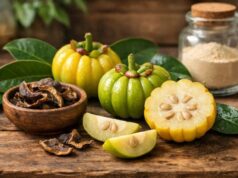
Griffonia, botanically known as Griffonia simplicifolia, is a West African climbing shrub that has become globally known for one reason above all others: its seeds are a rich natural source of 5-hydroxytryptophan, or 5-HTP. Because 5-HTP is a direct precursor to serotonin and, indirectly, melatonin, griffonia is often discussed for mood balance, sleep support, appetite control, and broader nervous system regulation. That modern supplement identity, however, only tells part of the story. In traditional African use, different parts of the plant were used more broadly for digestive complaints, wound care, urinary issues, and general household medicine.
Today, griffonia sits at the meeting point of herbalism and neurochemistry. It is not mainly valued as a culinary herb or a classic tonic plant. It is prized as a targeted seed extract with a fairly specific physiological pathway. That also means it deserves more caution than many “natural mood” products imply. The most useful way to understand griffonia is as a potent, 5-HTP-rich botanical with selective benefits, real interaction risks, and a stronger case for careful short-term use than for casual daily self-medication.
Quick Overview
- Griffonia is most commonly used for mood support, sleep quality, and appetite regulation because its seeds naturally supply 5-HTP.
- The main active focus is 5-HTP, though the plant also contains alkaloids, tannins, flavonoids, and other secondary compounds.
- Standardized products are often used in the range of 50 to 300 mg of 5-HTP per day, depending on the goal and the formula.
- Griffonia can interact dangerously with antidepressants, migraine medicines, and other serotonergic products.
- Pregnant or breastfeeding people, children, and anyone taking SSRIs, SNRIs, MAOIs, or other serotonin-raising medicines should avoid self-prescribing it.
Table of Contents
- What is griffonia
- Key compounds and medicinal properties
- What benefits are most plausible
- How is griffonia used
- How much should you take
- Side effects and who should avoid it
- What the evidence actually says
What is griffonia
Griffonia simplicifolia is a woody climbing shrub native to West Africa, especially in countries such as Ghana, Côte d’Ivoire, Togo, and Liberia. It belongs to the legume family, yet its modern medicinal identity is far less about protein-rich seeds or culinary use and far more about neuroactive supplementation. The seed is the commercially important part because it contains unusually high levels of 5-hydroxytryptophan, better known as 5-HTP, the immediate precursor to serotonin.
That single fact explains most of griffonia’s global reputation. Many herbs are valued because they contain complex mixtures of essential oils, bitter compounds, or polysaccharides. Griffonia is different. Its market identity is focused on one compound that people already recognize from mood and sleep discussions. In practice, many supplements labeled “griffonia” are really shorthand for “a botanical source of 5-HTP.”
Traditional use was broader than that. Older ethnobotanical descriptions report that the leaves, roots, stems, bark, and sap were used for problems such as vomiting, skin injuries, urinary complaints, pediatric fever, and wound care. This matters because it reminds readers that griffonia was not historically just a serotonin plant. It had a fuller medicinal role before the supplement industry narrowed attention almost entirely to the seed.
The modern supplement version, however, is what most readers are actually asking about. Griffonia seed extract is typically standardized or marketed according to its 5-HTP content, not according to whole-plant traditional actions. That means this herb behaves more like a targeted neurochemical support product than like a broad everyday botanical. It is closer in practical use to a precursor supplement than to a classic tea herb.
This difference also shapes expectations. Griffonia is often grouped with mood-support plants, but it does not work like a calming herb such as passionflower for stress and sleep support. Passionflower is usually discussed as a soothing nervous-system herb with broad calming effects. Griffonia is more specific and more pharmacologically direct because it feeds into serotonin production.
Another useful distinction is between the whole plant and the standardized product. A seed extract can be marketed for mood, sleep, appetite, or cravings, while a traditional root or leaf preparation may have been used for entirely different reasons. That is why serious articles about griffonia have to keep the plant’s ethnobotanical background and its modern supplement identity separate.
So what is griffonia, in practical terms? It is a West African medicinal plant whose seeds became globally important because they provide a natural source of 5-HTP. That makes it a real herb, but also a very modern one in the way people actually use it.
Key compounds and medicinal properties
The dominant active compound in griffonia seed is 5-hydroxytryptophan, or 5-HTP. That is the compound most people are really taking when they choose a griffonia supplement. 5-HTP sits in the biochemical pathway between the amino acid tryptophan and the neurotransmitter serotonin. Because serotonin also contributes to melatonin production, 5-HTP is relevant not only to mood and appetite but also to sleep rhythms.
This direct biochemical pathway is why griffonia attracts so much interest. Many herbs influence mood indirectly through inflammation, stress pathways, or sedation. Griffonia is more direct. It supplies a precursor molecule that can cross the blood-brain barrier and contribute to serotonin synthesis. That is a powerful trait, but it is also why the herb carries more interaction risk than many people expect from a plant product.
Even so, griffonia is not chemically limited to 5-HTP alone. Reviews and metabolomic studies have also described the presence of tannins, flavonols, phenolic compounds, lectins, fatty acids, alkaloids, and beta-carboline-related constituents. These additional compounds may contribute to antioxidant, anti-inflammatory, and antimicrobial findings in non-seed extracts, especially from leaves and whole-plant material. That broader chemistry helps explain the gap between traditional African uses and modern supplement marketing.
From a medicinal standpoint, griffonia’s main properties can be grouped into four areas:
- Serotonergic support: through 5-HTP as a serotonin precursor
- Sleep-related potential: because serotonin is upstream of melatonin
- Appetite and satiety effects: likely related to serotonin’s role in carbohydrate craving and fullness signaling
- Broader antioxidant and anti-inflammatory effects: suggested in experimental studies of extracts
The first of these is by far the most important. If you remove 5-HTP from the story, griffonia would be a much more obscure herbal medicine in global supplement markets. That is not a criticism. It is simply the central truth about how the plant is used today.
This also makes griffonia chemically and functionally different from mood herbs such as Saint John’s wort. Saint John’s wort acts through neurotransmitter reuptake and enzyme effects involving compounds like hyperforin and hypericin. Griffonia, by contrast, acts earlier in the serotonin pathway by supplying a precursor. The result can sound similar on a label, but the mechanisms and interaction profiles are not the same.
Because the 5-HTP content of products can vary, extract quality matters. Whole seed powder, semi-purified seed extract, and standardized 5-HTP formulas are not interchangeable. This is one reason why dosing confusion is common. One capsule may represent mostly raw seed material, while another may provide a much more concentrated serotonergic load.
The best way to summarize griffonia’s medicinal properties is this: it is a seed-based herbal source of a neuroactive precursor with secondary antioxidant and phytochemical features. Its main relevance is not general herbal nourishment. It is targeted biochemical support, and that fact should shape how it is used.
What benefits are most plausible
The most plausible benefits of griffonia come from what 5-HTP can realistically do, not from every traditional or commercial claim attached to the plant. A good ranking helps here because the internet often presents griffonia as if it reliably treats depression, insomnia, appetite problems, headaches, and fibromyalgia all at once. The evidence is more mixed than that.
The strongest area is sleep support, especially for people with poor sleep quality rather than severe clinical insomnia. Recent randomized research in older adults suggests that 5-HTP supplementation can improve some components of sleep quality, particularly in poor sleepers. The observed benefit was not universal across every sleep measure, but it was real enough to keep sleep near the top of griffonia’s plausible-use list. This is biologically coherent, too, because serotonin is upstream of melatonin production.
The second area is mood support, but with an important warning about overstatement. Systematic review data suggest that 5-HTP may have antidepressant potential, yet the studies are methodologically weak and heterogeneous. That means it is fair to say griffonia may support mood in selected contexts, but not fair to present it as a proven natural antidepressant. It is better viewed as a candidate adjunct than a primary treatment.
The third plausible area is appetite regulation and satiety. Older human studies and later reviews suggest 5-HTP may help some people feel fuller earlier and reduce carbohydrate-heavy intake. That makes griffonia relevant to appetite control conversations, but not as a magic weight-loss herb. The likely effect, if present, is modest and context-dependent.
A fourth area is pain-related syndromes such as fibromyalgia or headache, but the evidence is older and less robust. Some earlier trials reported symptom improvement in fibromyalgia and migraine-type headache settings. These findings are interesting, yet they do not rise to the level of modern, confident recommendation. They are best described as signals worth knowing about rather than reasons to self-treat chronic pain.
There are also broader claims about anxiety, cognitive performance, and stress resilience. Some of these make mechanistic sense, but the clinical evidence is still too thin to elevate them into headline benefits. Readers comparing griffonia with other mood-support botanicals such as saffron should notice an important difference. Saffron’s modern evidence is often discussed in terms of direct symptom trials. Griffonia’s story is more pathway-based and more dependent on 5-HTP pharmacology than on a large body of strong herb-specific clinical trials.
So the most defensible ranking looks like this:
- Sleep quality support in selected users
- Mood support with important evidence limits
- Appetite and satiety support
- Older, less certain evidence for headache and fibromyalgia
- Broader possible nervous-system support that still needs better trials
That is a narrower and more useful list than the marketing version. Griffonia is promising, but its realistic value lies in selected outcomes, not universal serotonin-centered wellness claims.
How is griffonia used
Griffonia is used very differently from many other herbs. People do not usually reach for it as a tea, a culinary spice, or a traditional household decoction. In modern practice it is overwhelmingly used as a seed extract, often standardized or marketed by its 5-HTP content. That makes griffonia feel more like a supplement ingredient than a classic whole-herb remedy.
The most common forms include:
- Standardized 5-HTP capsules derived from griffonia seed
- Griffonia seed extract capsules with a stated percentage of 5-HTP
- Tablets combined with other ingredients for sleep, satiety, or mood support
- Multi-ingredient products that pair griffonia with magnesium, B vitamins, melatonin, or calming herbs
This matters because “griffonia” on the front label may not tell you enough. The most meaningful question is usually: How much 5-HTP does the product provide, and what else is included? One formula may contain plain seed extract. Another may combine griffonia with melatonin, magnesium, valerian, or L-tryptophan. These products can behave very differently.
Timing depends on the intended use. When griffonia is used for sleep support, people usually take it in the evening. When it is used for appetite or satiety, it may be taken earlier in the day or before meals. For general mood support, some split the dose. However, these patterns are product-driven and not fully standardized across the literature.
A practical way to think about use is:
- For sleep: later in the day or before bedtime
- For appetite control: before meals, if tolerated
- For mood support: sometimes divided across the day
- For combination formulas: according to the most active ingredient, not griffonia alone
Griffonia is also sometimes blended with other sleep-support products. It is not unusual to see it in formulas alongside valerian for nighttime calming, melatonin, or magnesium. These combinations may make commercial sense, but they also complicate both tolerance and interpretation. If you feel sleepy, nauseated, or overstimulated, it becomes harder to know which ingredient is responsible.
Traditional whole-plant uses still exist in ethnobotanical literature, especially for leaves, roots, and bark, but those are not the forms most international readers encounter. This is one reason why griffonia articles should not pretend the modern consumer is choosing between a tea and a tincture the way they might with chamomile or ginger. Most readers are choosing between one standardized capsule and another.
That also affects how the herb should be judged. The more griffonia is purified toward 5-HTP delivery, the more it behaves like a serotonin-related supplement rather than a gentle whole-herb tonic. This is why interactions, dosing, and duration matter so much. The plant may be natural, but the way it is commonly used is pharmacologically quite focused.
How much should you take
Griffonia dosage is usually discussed in terms of 5-HTP content, not simply raw herb weight. That is the most important starting point. A capsule may say “griffonia seed extract,” but what usually matters is how many milligrams of 5-HTP it supplies.
In modern products and human studies, a practical range often falls between 50 and 300 mg of 5-HTP per day, depending on the intended purpose and the formula. Lower amounts, such as 50 to 100 mg daily, appear in some sleep-related trials. Older pain and mood studies have sometimes used higher divided doses, including 100 mg three times daily. That does not mean higher is better. It only shows how variable the literature has been.
A sensible framework looks like this:
- 50 to 100 mg per day: often used as a cautious starting range
- 100 mg per day: studied in some older-adult sleep research
- 50 mg per day: used in a Parkinson’s sleep-related crossover study
- Up to 300 mg per day: seen in older clinical contexts, usually divided
There are several reasons to stay conservative. First, side effects often become more noticeable as the dose rises. Second, griffonia products differ in how standardized they are. Third, the herb has meaningful interaction potential with serotonergic medicines and related supplements.
Timing can change the experience:
- For sleep support, the dose is commonly taken in the evening.
- For appetite-related use, it may be taken before meals.
- For mood support, some products divide the dose across the day.
- If stomach upset occurs, taking it with a small amount of food may help, though this can slightly change how quickly it feels active.
The biggest dosing mistake is treating griffonia like a harmless more-is-better supplement. A second common mistake is confusing raw griffonia extract weight with actual 5-HTP content. A capsule containing 400 mg of griffonia extract is not the same thing as 400 mg of pure 5-HTP. Readers need the label to be specific.
Duration also matters. Griffonia is better suited to a defined trial period than to indefinite, unmonitored daily use. If someone uses it for sleep or mood support, it makes sense to reassess after a few weeks rather than assume it should become permanent. This is especially important if the person is also using antidepressants, migraine medicines, or other supplements aimed at neurotransmitters.
The safest dosing conclusion is this: start low, use a clearly labeled product, think in milligrams of 5-HTP, and treat griffonia as a targeted serotonergic supplement rather than an ordinary herb. With this plant, dose clarity is part of safe use.
Side effects and who should avoid it
Griffonia’s side effects are usually driven by 5-HTP, and that means the main risks are predictable but important. The most common short-term problems are gastrointestinal:
- Nausea
- Vomiting
- Heartburn
- Abdominal discomfort
- Loss of appetite or a strange full feeling
- Occasionally loose stools
These are often dose-related, which is one reason low starting doses are sensible. Some people tolerate griffonia well at 50 mg of 5-HTP and feel distinctly worse at 150 or 200 mg. That is not unusual.
The bigger safety issue is serotonergic interaction risk. Because 5-HTP feeds directly into serotonin synthesis, combining griffonia with other serotonin-raising agents can be dangerous. This includes:
- SSRIs
- SNRIs
- MAOIs
- Certain migraine medicines such as triptans
- Tramadol
- Dextromethorphan
- Some stimulant or pre-workout combinations
- Other mood-related supplements such as Saint John’s wort
This is where the herb moves far away from the “just a plant” category. Serotonin syndrome is uncommon, but it is potentially serious and sometimes life-threatening. Symptoms can include agitation, sweating, tremor, diarrhea, rapid heart rate, flushing, confusion, and in severe cases high fever, rigidity, or collapse.
Older safety discussions also mention the historical concern around eosinophilia-myalgia syndrome that became associated with contaminated tryptophan products decades ago. The current evidence suggests 5-HTP itself has not shown the same widespread confirmed contamination problem, but quality control still matters. Poorly made supplements are never a trivial issue with neuroactive ingredients.
People who should avoid self-prescribing griffonia include:
- Pregnant people
- Breastfeeding people
- Children
- Anyone taking antidepressants or other serotonergic medicines
- Anyone with bipolar disorder or a history of mania
- Anyone preparing for surgery
- Anyone already using multiple sleep or mood supplements
That bipolar point deserves emphasis. A serotonin precursor can affect mood state in ways that are not universally helpful, especially when mood instability is part of the clinical picture.
For most healthy adults not using interacting medicines, griffonia may be reasonably tolerated in modest short-term doses. But the line between “helpful” and “too much serotonergic pressure” is not imaginary. That is why the herb needs to be treated more like a targeted nervous-system supplement than like a harmless botanical tea.
In practice, if side effects appear, the best response is not to push through them. It is to reduce the dose or stop. Griffonia works best when caution stays part of the plan.
What the evidence actually says
The evidence for griffonia is stronger than pure folklore, but weaker than many supplement claims suggest. The first thing to understand is that much of the clinical discussion is really about 5-HTP, not always about whole-plant griffonia extracts as such. Since griffonia is mainly used as a botanical source of 5-HTP, that distinction is reasonable, but it still matters. Evidence for isolated 5-HTP does not automatically validate every griffonia product on the market.
The strongest modern evidence sits in sleep-related outcomes and selected mood outcomes, but even there the results are modest rather than dramatic. Recent randomized research in older adults suggests a favorable effect on certain sleep-quality components, especially in poor sleepers. That is encouraging, but it does not show griffonia reliably treats chronic insomnia across broad populations.
Mood evidence is more complicated. A systematic review and meta-analysis found possible antidepressant effects for 5-HTP, but also concluded that the existing studies are weak, heterogeneous, and often lacking strong placebo-controlled design. This is a classic sign that a compound may be genuinely active while still falling short of modern proof. It supports cautious interest, not confident medical claims.
Older trials and observational work suggest possible benefit in fibromyalgia, appetite control, migraine-related complaints, and certain emotionally stressful conditions. These data are worth mentioning because they help explain why griffonia keeps resurfacing in supplement markets. Still, they are not strong enough to make the herb a clearly established treatment for those conditions.
What the evidence supports best:
- Griffonia seeds are a meaningful natural source of 5-HTP
- 5-HTP can influence serotonin-related pathways in humans
- Some sleep-quality measures may improve in selected users
- Mood-related benefit is plausible but not firmly established
- Appetite and satiety effects may occur in some people
What the evidence does not support well:
- That griffonia is a proven antidepressant
- That it should replace standard mental health or sleep care
- That every griffonia supplement has the same potency or evidence base
- That “natural serotonin support” is automatically safe in everyone
A broader plant review also shows that griffonia has interesting antioxidant, antimicrobial, and traditional medicinal features beyond 5-HTP. But those aspects are still secondary in real-world supplement use. Most people are not buying griffonia for leaf tannins or wound-healing folklore. They are buying it for 5-HTP.
So the most balanced conclusion is this: griffonia is a legitimate, biologically active botanical whose seeds have a clear supplement role, especially around serotonin-related functions. It has enough evidence to justify targeted use in some people, but not enough to support broad, casual, long-term use without thinking carefully about drug interactions, dose, and purpose. It is promising, but it is not simple.
References
- Biological Activity and Metabolomics of Griffonia simplicifolia Seeds Extracted with Different Methodologies 2023 (Review and Experimental Study)
- Beneficial Properties and Sustainable Use of a Traditional Medicinal Plant: Griffonia simplicifolia 2024 (Review)
- The impact of 5-hydroxytryptophan supplementation on sleep quality and gut microbiota composition in older adults: A randomized controlled trial 2024 (RCT)
- Effects of 5-hydroxytryptophan on distinct types of depression: a systematic review and meta-analysis 2020 (Systematic Review and Meta-Analysis)
- 5-Hydroxytryptophan (5-HTP): Natural Occurrence, Analysis, Biosynthesis, Biotechnology, Physiology and Toxicology 2020 (Review)
Disclaimer
This article is for educational purposes only and is not medical advice. Griffonia is mainly used as a source of 5-HTP, a serotonin precursor with meaningful physiological effects and important interaction risks. It should not be used to diagnose, treat, or replace care for depression, anxiety, insomnia, migraine, or any other medical condition. Anyone who is pregnant, breastfeeding, taking antidepressants, using migraine medicines, or managing a psychiatric, neurological, or metabolic condition should speak with a qualified healthcare professional before using griffonia or 5-HTP supplements.
If this article helped you, please share it on Facebook, X, or any platform where others might benefit from it.