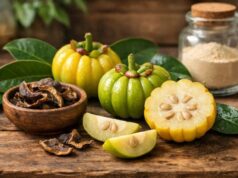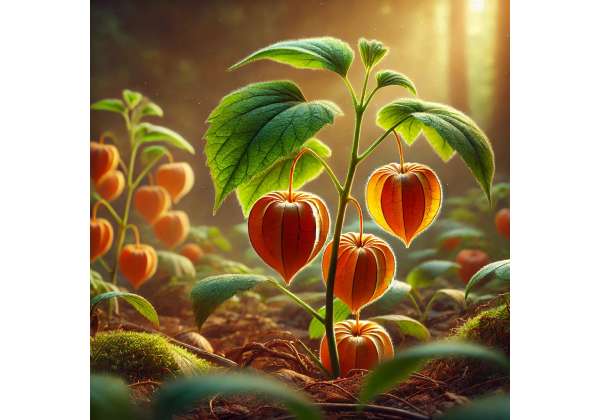
Ground cherry, when the species is Physalis peruviana, sits in an unusual space between fruit, functional food, and traditional medicine. Many readers know it better as cape gooseberry or goldenberry: a small orange berry wrapped in a papery husk, tart-sweet in flavor, and rich in color. It is often grouped with “superfruits,” yet its real value is more interesting than a label. Ground cherry offers fiber, vitamin C, carotenoids, tocopherols, potassium, and a group of plant compounds that help explain its antioxidant and anti-inflammatory reputation.
At the same time, this is a fruit that benefits from careful framing. The ripe berry is edible and increasingly studied as a nutrient-dense food, but the leaves, stems, and unripe fruit are not the same thing and should not be treated casually. Research on Physalis peruviana also spans food science, preclinical pharmacology, and a small amount of human data, so the evidence is uneven. The clearest way to approach ground cherry is as a promising fruit with real nutritional and medicinal potential, practical culinary uses, and important safety boundaries that matter just as much as its benefits.
Key Facts
- Ground cherry is best viewed as a nutrient-dense fruit with antioxidant, anti-inflammatory, and possible metabolic-supportive properties.
- The strongest evidence supports ripe fruit as food, not unripe fruit, leaves, stems, or unsupervised medicinal extracts.
- Human studies have used about 50 to 150 g of ripe fresh fruit daily, with one short-term acute study using 250 g.
- Unripe fruit and other green plant parts should not be eaten because nightshade-type glycoalkaloids may cause toxicity.
- People who are pregnant, breastfeeding, highly sensitive to nightshades, or using blood sugar medication should avoid self-treating with concentrated preparations.
Table of Contents
- What Is Ground Cherry
- Key Ingredients and Medicinal Properties
- What Benefits May Ground Cherry Offer
- Does It Help with Blood Sugar and Inflammation
- How to Use Ground Cherry
- How Much Ground Cherry per Day
- Side Effects, Interactions, and Who Should Avoid It
- What the Evidence Actually Says
What Is Ground Cherry
Ground cherry can mean different plants depending on the context, which is one reason this topic often becomes confusing. In home gardening, “ground cherry” often refers to smaller North American Physalis species such as Physalis pruinosa or Physalis pubescens. In food commerce and much of the research literature, however, Physalis peruviana is the better-known species, and it is more commonly sold as cape gooseberry or goldenberry. Since your title specifies Physalis peruviana, this article focuses on that plant.
Physalis peruviana belongs to the Solanaceae family, the same broad family as tomato, pepper, and eggplant. Its fruit is enclosed in a papery calyx that dries as the berry matures. When ripe, the berry is usually golden orange, glossy, and aromatic, with a flavor that falls somewhere between pineapple, tomato, citrus, and apricot. That unusual flavor profile is part of why the fruit works equally well in sweet and savory dishes.
Its traditional and modern roles overlap but are not identical. Traditionally, different parts of the plant have been used in regional medicine for throat irritation, inflammation, urinary complaints, parasitic conditions, and digestive discomfort. Modern food use is more focused on the ripe fruit itself, eaten fresh, dried, juiced, or made into jams, sauces, compotes, and snack products. Research increasingly treats Physalis peruviana as a functional food rather than only a folk remedy.
That distinction matters because the ripe berry is not the same as the whole plant. Many of the strongest pharmacologic compounds discussed in reviews, including withanolides and physalin-related compounds, are often studied in extracts, calyces, or non-fruit tissues. Those findings can be fascinating, but they do not mean the average serving of ripe fruit acts like a drug. A bowl of ground cherries and a concentrated plant extract live in different categories.
The best way to think about ground cherry is as a layered plant:
- As a food, it is a nutrient-rich fruit with fiber, carotenoids, and vitamin C.
- As a functional food, it has plausible antioxidant and metabolic benefits.
- As a medicinal plant, it is promising but not yet firmly standardized.
- As a nightshade, it comes with important ripeness and plant-part safety rules.
This is also a fruit where naming shapes expectations. People searching for “ground cherry benefits” are often really looking for information about cape gooseberry or goldenberry. Recognizing that overlap helps explain why the plant shows up in nutrition articles, herbal reviews, and specialty produce markets at the same time.
Key Ingredients and Medicinal Properties
Physalis peruviana earns its reputation from a mix of nutrients and secondary plant compounds rather than from one single standout molecule. The ripe fruit contains fiber, vitamin C, vitamin E compounds such as tocopherols, carotenoids, minerals, sugars, organic acids, and smaller amounts of phenolics and phytosterols. Newer composition work has also shown that a 100 g serving can provide useful amounts of ascorbic acid, potassium, phosphorus, and magnesium while remaining relatively low in fat. That combination helps explain why the fruit is often described as nutrient-dense despite its small size.
Carotenoids are one of the most important groups in ground cherry. These include beta-carotene, lutein, and related pigments that give the fruit its warm orange color. Carotenoids matter because they contribute antioxidant activity and may support eye, skin, and immune health as part of a broader diet. Tocopherols add another antioxidant layer, while phenolic compounds contribute to the fruit’s overall free-radical-scavenging potential.
The fruit also contains phytosterols and fatty acids, especially in seed and oil fractions, which is one reason researchers sometimes discuss ground cherry in relation to cardiometabolic health. The ripe fruit is not unusually high in fat overall, but the compounds present in its lipid fraction are chemically interesting.
When people talk about ground cherry’s “medicinal properties,” the picture becomes broader. Reviews and extract studies describe several compound families beyond basic nutrients:
- Carotenoids and tocopherols for antioxidant activity
- Flavonoids and phenolic acids for oxidative and inflammatory balance
- Phytosterols for possible metabolic support
- Withanolides and physalin-related compounds, especially in non-fruit tissues and specialized extracts
- Fiber and organic acids that support its role as a functional food
These ingredients support several plausible medicinal properties:
- Antioxidant
- Mildly anti-inflammatory
- Potential glucose-modulating
- Potential lipid-modulating
- Mild antimicrobial or antiproliferative activity in laboratory settings
That last point needs context. Some of the most exciting findings around Physalis peruviana come from cell and extract studies, especially involving withanolides, calyx preparations, or concentrated fractions. Those are important for research, but they are not interchangeable with eating ripe fruit. A food and an extract may share a botanical name while acting very differently in the body.
One useful comparison is with goji berry in antioxidant-rich fruit discussions. Both fruits are colorful, nutrient-dense, and supported by a mix of food chemistry and functional-food interest. But ground cherry stands out for its combination of carotenoids, vitamin C, and nightshade-derived secondary compounds that push it slightly closer to the medicinal-plant category than many ordinary berries.
In practical terms, the fruit’s chemistry suggests real health potential, but it supports moderation rather than exaggeration. Ground cherry is chemically rich enough to matter, yet not so clinically proven that it should be framed as a cure-all. That balance is the key to understanding the rest of the evidence.
What Benefits May Ground Cherry Offer
The most believable benefits of ground cherry begin with what it is: a fruit, not a miracle remedy. Ripe Physalis peruviana can contribute valuable nutrients and bioactive compounds to the diet, and the best-supported health benefits flow naturally from that role. Its strongest practical case is for antioxidant support, modest anti-inflammatory potential, and contribution to a fruit-rich dietary pattern that may support metabolic health over time.
One of its clearest strengths is nutrient density. Ground cherry supplies vitamin C, carotenoids, and small but meaningful amounts of minerals in a compact serving. This does not make it nutritionally superior to every other fruit, but it does make it a worthwhile addition to a varied plant-rich diet. In that sense, it belongs in the same conversation as guava as another vitamin C-rich tropical fruit: a food that offers more than sweetness alone.
Antioxidant support is probably the most realistic everyday benefit. The combination of carotenoids, tocopherols, phenolics, and vitamin C gives ground cherry good theoretical and experimental support as a fruit that helps the body manage oxidative stress. In real life, that benefit is likely gradual and dietary rather than dramatic and immediate.
Digestive usefulness is another understated advantage. Because the fruit provides fiber and organic acids, it can work well in diets that emphasize whole produce, especially when eaten fresh rather than heavily sweetened or processed. It is not a laxative herb, but it can support digestive regularity in the ordinary food-based way that many intact fruits do.
Potential benefits that people are most likely to notice or seek include:
- A convenient source of antioxidants in the daily diet
- Support for fruit intake in people who want variety beyond apples and citrus
- Mild digestive support through fiber and whole-fruit use
- Possible support for skin and eye health through carotenoids
- A functional-food role in metabolic wellness plans
There is also growing interest in anti-inflammatory and immune-supportive effects. These are plausible, but they should be described carefully. Ground cherry is best seen as one helpful food within an anti-inflammatory pattern, not as a stand-alone anti-inflammatory treatment.
Another practical benefit is culinary versatility. Many highly nutritious foods fail in real life because people do not enjoy eating them. Ground cherry has an advantage here: it is easy to snack on, easy to preserve, and useful in both fresh and cooked recipes. That makes consistent intake more realistic than with many niche “health foods.”
What ground cherry probably does not do is deliver large disease-specific benefits in the absence of broader lifestyle changes. It may support health, but it is not well proven as a direct treatment for diabetes, obesity, fatty liver disease, or cancer in humans. That difference matters. A food can be valuable without being medicinal in the strongest sense.
The fairest summary is that ground cherry offers credible benefits as a colorful, bioactive fruit with functional-food potential. Its value is most convincing when it is used regularly and sensibly, not when it is marketed as a shortcut.
Does It Help with Blood Sugar and Inflammation
This is where Physalis peruviana becomes especially interesting, because the preclinical evidence is better than the clinical evidence. Animal studies, extract studies, and compound analyses repeatedly suggest that ground cherry may help modulate oxidative stress, inflammatory signaling, glucose metabolism, and lipid balance. But when the question shifts from “is this biologically active?” to “does it reliably help people?” the answer becomes more cautious.
Several studies and reviews point to potential blood-sugar support through different mechanisms. These include antioxidant effects that may reduce oxidative damage linked to metabolic dysfunction, possible enzyme inhibition relevant to carbohydrate metabolism, and changes in signaling pathways related to insulin response. Some experimental models have also shown reductions in glucose, lipid peroxidation, or inflammatory markers after ground cherry preparations were used.
This is a strong enough pattern to justify research interest, especially alongside other functional foods aimed at metabolic support, such as bitter melon for glucose-focused dietary support. But it is not yet strong enough to treat ripe fruit or supplements as proven glucose-lowering tools in daily practice.
Human evidence remains limited. Recent reviews identify only a very small number of clinical studies. In one line of research, fresh fruit intake appeared to influence plasma metabolites related to insulin signaling pathways. In another, a lower daily amount of fruit did not produce a significant extra glucose-lowering effect beyond the diet already being followed. That mixed picture is exactly what one would expect when clinical evidence is still young: promising signals, but not enough consistency for firm conclusions.
Inflammation is similar. Ground cherry contains compounds that plausibly support inflammatory balance, and laboratory work on the fruit and calyx suggests anti-inflammatory potential. The fruit’s carotenoids, tocopherols, and phenolic compounds give it a reasonable biochemical basis for that effect. But again, the best current interpretation is “supportive potential,” not “proven therapeutic effect.”
A realistic way to frame the metabolic question is:
- Preclinical evidence is encouraging.
- Human evidence is limited and methodologically weak.
- Fresh fruit looks more promising as part of a whole dietary pattern than as a stand-alone intervention.
- Extracts, calyx preparations, and ripe fruit should not be treated as equivalent.
This distinction matters for dosage too. Studies often use very different forms, including fresh fruit, juice, powder, and extracts, which makes it hard to compare outcomes directly. A helpful result seen with an extract in an animal model does not automatically translate to a kitchen serving of ripe berries.
That does not make the research unimportant. It means ground cherry is best understood as a fruit with metabolic promise, not metabolic proof. In practice, it may fit well in a diet built around fiber, varied fruits, legumes, and unsaturated fats. That is where its strengths make the most sense: as a supportive food, not as a replacement for medical management of diabetes, obesity, or inflammatory disease.
How to Use Ground Cherry
Ground cherry is easiest to use when you treat it first as a ripe fruit and only second as a medicinal plant. That keeps its strengths aligned with the best evidence. The ripe berry can be eaten raw, dried, blended, cooked, or incorporated into both sweet and savory foods. Because the fruit is naturally tart-sweet, it adapts well to recipes where citrus, pineapple, or tomato might also work.
The simplest use is fresh. Remove the papery husk, wash the ripe berry, and eat it as a snack. Fully ripe berries tend to be sweeter, softer, and more aromatic than underripe ones. In many cases, the husk becomes dry and tan while the fruit turns golden to deep orange. That visual cue matters because unripe fruit should not be eaten.
Ground cherry also works well in:
- Fruit salads
- Smoothies
- Yogurt bowls
- Jam, chutney, and compote
- Salsas and relishes
- Dehydrated fruit snacks
- Pastry fillings and baked desserts
Its flavor also pairs well with herbs, chili, ginger, lime, and mild cheese. That makes it more versatile than many niche fruits. If you like using tropical fruit in breakfast bowls or sauces, it can fit into similar routines as papaya in fruit-forward meals and blended drinks, though ground cherry is usually more tart and concentrated in flavor.
For medicinal-style use, caution increases. The ripe fruit is the normal edible part. Calyx extracts, teas, and concentrated supplements appear in research, but these are not standard household forms with clear, established dosing. A consumer should not assume that because a calyx extract performed well in a lab, home use of husks or plant parts is equally safe or useful.
A practical everyday approach looks like this:
- Choose fully ripe fruit only.
- Remove the husk before eating.
- Start with small portions to assess taste and tolerance.
- Use fresh fruit in meals or snacks rather than chasing concentrated forms.
- Reserve extracts and powders for cases where quality, purpose, and safety are clear.
Dried fruit is another reasonable option, especially for people who cannot find fresh fruit consistently. But dried products can be more concentrated in sugar per serving, and they are easy to overeat. For health-focused use, they work best in modest portions rather than handful after handful.
Ground cherry also makes sense in a culinary-medicinal middle zone. That means using it often enough to benefit from its nutrients and phytochemicals without turning it into a supplement obsession. It performs best when it remains part of a food pattern: breakfast, snacks, sauces, desserts, and occasional preserved products. That is where the fruit is most enjoyable and most believable.
How Much Ground Cherry per Day
There is no official medically established daily dose for ripe ground cherry, because Physalis peruviana is primarily a food rather than a standardized herbal medicine. That means dosage is best discussed in food servings and study amounts, not in the same way one would dose a capsule or prescription drug.
For everyday eating, a practical serving is about 50 to 150 g of ripe fresh fruit. That range aligns well with both ordinary fruit intake and the small amount of human research currently available. One clinical line of study used 50 g daily over a few weeks, while another used 150 g daily and also examined an acute 250 g intake. Those numbers are useful because they show what has actually been explored in people, even though they do not create a formal recommended dose.
A simple way to think about daily intake is:
- 50 to 75 g for a small snack or mixed fruit serving
- 100 to 150 g for a fuller functional-food portion
- 250 g as a larger short-term study amount, not a necessary daily target
In household terms, that often works out to roughly one-half to 1 cup of ripe berries, depending on size. Since the fruit is tart and distinctive, most people naturally stay within that range anyway.
For dried fruit, a smaller portion makes more sense because drying removes water and concentrates sugars and calories. A practical serving is often around 20 to 30 g, especially if the dried fruit is sweetened or part of a snack mix. There is much less clinical evidence for dried-fruit dosing, so moderation is the better rule.
For juice or blended preparations, dosage becomes less precise. A reasonable food-like amount is about 100 to 200 mL of juice or smoothie built around ripe fruit, but this is more of a culinary estimate than a research-backed therapeutic range. Juice also removes some of the intact structure of the fruit, which may matter if your main goal is satiety or fiber intake.
What about extracts, calyx products, and supplements? This is where the answer becomes much firmer: there is not enough standardized human evidence to recommend a reliable daily dose. If a product label offers a number, that number reflects the manufacturer’s formulation rather than a broadly accepted clinical standard. This is especially important because the pharmacology of fruit, calyx, and non-fruit plant parts is not the same.
A cautious dosing mindset looks like this:
- Use ripe fruit as food first
- Stay within ordinary fruit-serving ranges
- Avoid experimental high intake just because the fruit is “healthy”
- Be skeptical of concentrated products with vague standardization
- Monitor tolerance if you have digestive sensitivity or glucose issues
The best ground cherry dosage is the one that remains clearly within the food category. Once use moves beyond that, the evidence becomes much thinner and the margin for error becomes less clear.
Side Effects, Interactions, and Who Should Avoid It
Ground cherry is generally safest when fully ripe and eaten as a food. Most problems arise when people blur the line between ripe fruit and the rest of the plant, or between food use and concentrated medicinal use. That is why safety begins with plant part, ripeness, and preparation.
The most important rule is simple: only the ripe fruit is edible. Unripe fruit and other green plant parts contain nightshade-family glycoalkaloids and should not be consumed. These compounds are associated with gastrointestinal and neurologic toxicity concerns, especially when intake is large or the plant part is clearly immature. Leaves, stems, and nonfood experimentation should be off the menu.
Possible side effects from ripe fruit are usually mild and food-like:
- Stomach upset if eaten in large amounts
- Bloating or loose stools in sensitive people
- Mouth irritation in very tart or underripe fruit
- Allergy-like reactions in people sensitive to nightshades or unusual fruits
More serious issues have been reported mainly in relation to concentrated products or unusual use patterns, not normal ripe-fruit intake. This matters because online health culture often skips directly to pills, extracts, and “detox” messaging. With Physalis peruviana, that jump is not justified by strong clinical evidence.
Who should be especially cautious?
- Pregnant or breastfeeding people using more than normal food amounts
- People with nightshade sensitivity
- People taking glucose-lowering medications
- People who react strongly to acidic or high-fiber fruits
- Anyone considering leaf, calyx, or extract use without clear guidance
Potential interactions are not well mapped, but blood-sugar caution is the most reasonable one. Since preclinical work and a small amount of human research suggest possible metabolic effects, people taking diabetes medication should not assume concentrated ground cherry products are neutral. The ripe fruit as part of meals is one thing; supplements or large quantities are another.
Another important safety point is that the fruit’s medicinal reputation can tempt people to use the husk or calyx casually because it “looks herbal.” That is not a good idea. Research on calyx extracts is interesting, but it does not automatically support do-it-yourself calyx teas or random homemade preparations.
The safest framework is:
- Eat only ripe berries
- Remove the husk
- Avoid unripe fruit and green plant parts
- Treat extracts more cautiously than food
- Use extra care if you already manage blood sugar medically
This is one area where being conservative is smart. Ground cherry is a valuable fruit, but it is still a member of the nightshade family with a meaningful difference between edible and non-edible stages. Respecting that difference prevents most avoidable problems.
What the Evidence Actually Says
Ground cherry has a stronger evidence base than many obscure fruits, but it still falls short of the level needed for confident medical claims. The research is strongest in food chemistry, phytochemical analysis, laboratory bioactivity, and animal models. It is much weaker in human intervention studies, long-term outcomes, and standardized therapeutic use.
What is well supported? First, Physalis peruviana is a nutrient-rich fruit with meaningful amounts of vitamin C, carotenoids, tocopherols, fiber, potassium, and several other bioactive compounds. Second, its extracts and fractions show antioxidant, anti-inflammatory, antimicrobial, antiproliferative, and metabolic activities in laboratory settings. Third, reviews consistently identify the fruit as a promising functional food, especially in the context of oxidative stress and metabolic health.
What is only partly supported? The idea that ground cherry can improve glucose regulation, reduce inflammation, or support lipid balance in people. There are signals pointing in that direction, and they are interesting enough to justify more research. But the number of human studies remains very small, study designs vary, doses vary, and outcomes are not consistent enough to turn possibility into certainty.
What is not supported well enough? Claims that ground cherry is a proven treatment for diabetes, obesity, liver disease, infection, or cancer. Some of these claims borrow credibility from cell studies, animal studies, or research on isolated compounds. That is not the same as demonstrating reliable benefit in real people eating realistic amounts of fruit.
The clearest evidence summary looks like this:
- Strong for nutrient density and phytochemical richness
- Strong for preclinical antioxidant and anti-inflammatory interest
- Moderate for functional-food potential
- Limited for direct human metabolic benefit
- Weak for disease-treatment claims
This puts ground cherry in a category with several other attractive plant foods: more impressive than an ordinary snack, but not yet established as a therapeutic food in the strict clinical sense. Compared with green tea as a more deeply studied functional food, Physalis peruviana has promising biology but a much smaller and less mature human evidence base.
That should not be read as a disappointment. It is actually useful. It tells readers how to use the fruit honestly: enjoy it, benefit from its nutrients, include it in a plant-rich diet, and stay skeptical of oversized promises. The fruit does not need to be a miracle to be worthwhile.
If future trials improve in size, duration, and formulation control, ground cherry may eventually earn a stronger role in metabolic-health discussions. For now, the most evidence-based position is this: ripe Physalis peruviana is a valuable functional fruit with genuine promise, especially for antioxidant and metabolic support, but its clinical story is still being written.
References
- Physalis peruwiana Fruits and Their Food Products as New Important Components of Functional Foods 2025 (Review)
- Nutrients, Phytochemicals, and In Vitro Biological Activities of Goldenberry (Physalis peruviana L.) Fruit and Calyx 2025 (Original Research)
- Cape gooseberry (Physalis peruviana L.) as a functional food for metabolic health: A narrative review of glucose and lipid regulatory effects 2026 (Narrative Review)
- Chemical constituents and evidence-based pharmacological properties of Physalis peruviana L.: An overview 2022 (Review)
- Acute and Subchronic Toxic Effects of the Fruits of Physalis peruviana L. 2013 (Toxicology Study)
Disclaimer
This article is for educational purposes only and is not medical advice. Ground cherry, cape gooseberry, or goldenberry should not be used as a substitute for diagnosis, prescription treatment, or professional nutritional counseling. Only ripe fruit should be eaten, and concentrated extracts or non-fruit plant parts are not equivalent to normal food use. Speak with a qualified healthcare professional before using Physalis peruviana medicinally if you are pregnant, breastfeeding, managing blood sugar, taking regular medication, or considering supplements rather than food use.
Please share this article on Facebook, X, or any platform where thoughtful plant and nutrition writing is appreciated.