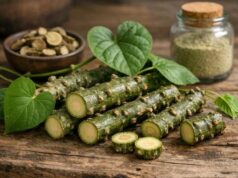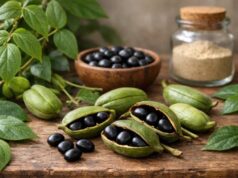
Guaco is a climbing medicinal vine native to South America and especially well known in Brazilian herbal practice. Its leaves, rather than its stems or roots, are the main medicinal part. Traditionally, guaco has been used for cough, chest congestion, hoarseness, and other upper respiratory complaints where mucus is present and the airways feel tight or irritated. That history has kept the plant popular in teas, syrups, tinctures, and oral solutions.
What makes guaco interesting is its blend of aromatic coumarin-like fragrance and a phytochemical profile linked to anti-inflammatory and smooth-muscle effects in preclinical research. The herb is most often discussed for its expectorant, cough-soothing, and bronchodilator potential, but modern readers should approach those claims with some nuance. The strongest human data support short-term use and short-term safety more clearly than dramatic clinical efficacy.
Used carefully, guaco can be a focused herb for brief respiratory support. Used casually, especially alongside certain medicines, it can create avoidable risks. The details of form, dose, timing, and who should avoid it matter more than the folklore alone.
Quick Facts
- Guaco is traditionally used for productive cough, upper airway congestion, and hoarseness rather than as a general daily tonic.
- Its best-known compounds include coumarin and kaurane-type diterpenes that may contribute to anti-inflammatory and airway-relaxing effects.
- A common adult tea range is 2 to 3 g dried leaves in 150 mL water, taken three times daily.
- Avoid guaco with anticoagulants, many NSAIDs, pregnancy, lactation, and in children under 12 years.
- Overuse or prolonged use may lead to vomiting, diarrhea, or tachycardia.
Table of Contents
- What is guaco
- Key compounds and medicinal actions
- What does guaco help with
- How guaco is used
- How much guaco per day
- Safety, interactions, and who should avoid it
- What the evidence really says
What is guaco
Guaco refers most specifically here to Mikania glomerata, a fast-growing vine in the daisy family. It is native to Brazil and nearby regions and has long been used in folk and formal herbal practice for respiratory complaints. The medicinal part is the leaf. When crushed, the leaves release a characteristic fragrant note that hints at one of the plant’s best-known chemical markers: coumarin.
One of the first practical things readers should know is that guaco is not always botanically simple in commerce. In Brazil, Mikania glomerata and Mikania laevigata are often both called guaco and sometimes used interchangeably. They are related but not identical species, and their chemical profiles can differ. That matters because a bottle labeled guaco may not always reflect the same plant material or the same level of marker compounds from one product to another.
Traditionally, guaco has been used when the respiratory picture includes mucus, throat irritation, or a sense of bronchial tightness. It appears in home infusions, pharmacy syrups, and standardized oral preparations. In public health settings in Brazil, it has also been included among herbal options for symptomatic respiratory relief. This official recognition gives guaco more structure than many folk herbs have, but it does not turn it into a cure-all.
A useful way to understand guaco is to place it among classic respiratory herbs. It is not mainly a demulcent like marshmallow, and it is not mainly an aromatic culinary herb like thyme. It sits closer to the group of herbs used for cough, mucus, and airway comfort. Readers familiar with mullein as a traditional respiratory herb may find guaco easier to place in that broader respiratory-support category, though guaco is chemically different and more associated with coumarin and Brazilian phytotherapy.
In practical use, guaco is best thought of as a short-term herb for symptom relief rather than a long-term tonic. It is usually chosen for temporary respiratory complaints, not for daily, indefinite use. This is important because its safety guidance is more structured than many people realize.
Common preparations include:
- Dried leaves for infusion or decoction.
- Tinctures made with hydroalcoholic extraction.
- Syrups and oral liquids.
- Standardized liquid preparations distributed in clinical or public health settings.
Its reputation often centers on cough and bronchial symptoms, but that reputation can mislead people into thinking guaco is a substitute for proven asthma therapy, antibiotics when they are truly needed, or urgent evaluation in serious breathing problems. It is none of those things.
So what is guaco, in the clearest sense? It is a recognized South American respiratory herb with a strong traditional background, a defined leaf-based medicinal use, and a narrower real-world purpose than marketing language often suggests.
Key compounds and medicinal actions
Guaco’s medicinal identity is shaped by a handful of compounds and compound families rather than by one isolated substance alone. Even so, one molecule stands out immediately: coumarin. In Mikania glomerata, coumarin is treated as an important chemical marker and is often used in quality control. It contributes to the plant’s aroma and is closely tied to how guaco products are standardized and discussed.
Beyond coumarin, guaco also contains several kaurane-type diterpenes and related constituents. These include kaurenoic acid and grandifloric-type compounds, along with triterpenes and plant sterols such as lupeol, beta-sitosterol, friedelin, and stigmasterol. Together, these compounds help explain why guaco has drawn attention for anti-inflammatory, antimicrobial, and airway-related effects in laboratory and animal studies.
The main compounds often discussed in guaco include:
- Coumarin.
- Kaurenoic acid.
- Grandifloric and related diterpenes.
- Lupeol.
- Beta-sitosterol.
- Friedelin.
- Stigmasterol.
What do these compounds seem to do? The most relevant actions in preclinical work appear to be:
- Relaxation of airway smooth muscle under certain experimental conditions.
- Anti-inflammatory activity.
- Modulation of secretions and mucus handling in traditional respiratory use.
- Mild antimicrobial or antifungal effects in laboratory settings.
- Potential vascular and smooth-muscle effects beyond the respiratory tract.
That sounds broad, but the key is context. Guaco’s chemistry is promising, yet most of its strongest mechanistic claims still come from preclinical rather than large clinical studies. In other words, the plant clearly does things in the lab, but the size and reliability of those effects in real patients remain more limited.
Another nuance matters here. Guaco’s reputation as a bronchodilator is partly driven by experimental findings, especially smooth-muscle relaxation in airway models. That is useful background, but it should not be confused with proof that guaco syrup works like an inhaled bronchodilator in people. Human evidence is more restrained, and that difference becomes important later in the article.
Compared with herbs whose respiratory action depends more on volatile oils, guaco has a different character. For example, thyme’s respiratory profile is largely essential-oil driven, while guaco’s better-known markers are coumarin and diterpene based. That does not make one herb better than the other. It simply explains why they are often used differently and why their safety profiles are not interchangeable.
Product quality also matters because coumarin content can vary with species, plant part, growing conditions, and manufacturing method. This is especially relevant because Mikania glomerata and Mikania laevigata are sometimes both sold as guaco. A consumer may assume they are buying one consistent herb when the chemical balance may actually differ.
The safest summary is this: guaco’s medicinal actions are plausible and partly supported by chemistry and preclinical work, especially around inflammation and airway behavior. But the presence of active compounds does not automatically guarantee strong clinical effects. In guaco, chemistry is important, but it is not the whole story.
What does guaco help with
Guaco is most sensibly used for short-term respiratory complaints, especially when mucus is present. Its traditional and official use centers on symptomatic relief of productive upper airway conditions. That wording is more precise than many wellness articles use, and it matters. Guaco is not mainly a broad immunity herb, nor is it best understood as a universal cough solution.
The most realistic areas where guaco may help are:
- Productive cough with mucus.
- Hoarseness or throat irritation tied to respiratory infection.
- Mild upper airway congestion.
- Chest discomfort linked to thick secretions.
- Temporary respiratory irritation where expectoration is part of the goal.
This profile suggests that guaco is better matched to a wet, congested pattern than to a dry, irritated cough with no mucus. It also suggests that the herb belongs more in the short-term supportive care category than in chronic disease management.
Many people first hear that guaco is used for asthma or bronchitis. That is partly true historically, but it can be misunderstood. Guaco has long been used in Brazilian practice for these kinds of complaints, yet modern readers should not leap from that tradition to the conclusion that it replaces inhalers, controller medication, or medical assessment. One randomized clinical trial failed to show a significant bronchodilator effect compared with placebo, so any asthma-related language needs caution.
A better way to frame its likely value is to focus on symptom pattern rather than disease label. Guaco may be most useful when someone has an upper respiratory infection or lingering congestion and wants short-term herbal support for mucus clearance and airway comfort. It is less convincing as a stand-alone option for chronic asthma, major bronchospasm, pneumonia, or severe lower airway disease.
Some respiratory herbs are compared because they occupy nearby territory. ivy’s expectorant tradition overlaps with guaco in broad theme, especially around cough and secretions, but the plants differ in phytochemistry, dosing traditions, and safety considerations. Guaco’s coumarin-related interaction profile gives it a distinct set of precautions.
A useful expectation list is fairly modest:
- It may make secretions feel easier to move.
- It may slightly ease the sense of congestion in some short-term respiratory complaints.
- It may help the throat feel less burdened by repeated coughing.
- It is unlikely to create fast, inhaler-like bronchodilation.
This is also where false expectations can create problems. Guaco is not a rescue remedy for wheezing with shortness of breath, blue lips, chest pain, or rapidly worsening asthma. Those situations call for medical care, not stronger tea or more syrup.
For many adults, guaco’s true place is narrower and more practical than promotional language suggests. It is a traditional respiratory herb for brief symptomatic support, especially where mucus and irritation are present. That may sound less exciting than the stronger claims online, but it is a better match to what the evidence and official use pattern actually support.
How guaco is used
Guaco is usually taken orally, and the leaf is the central medicinal material. The most traditional preparations are tea and syrup, but tinctures and liquid extracts are also common. The form matters because it changes dose, convenience, and sometimes tolerability.
The basic forms include:
- Leaf infusion or decoction.
- Oral liquid extract.
- Hydroalcoholic tincture.
- Syrup or sweetened oral solution.
- Standardized liquid herbal medicines.
Tea remains one of the simplest ways to use guaco. In this form, dried leaves are steeped or decocted and then taken while fresh. This suits short-term household use, especially when the goal is a brief trial during an uncomplicated productive cough or throat-chest irritation. The drawback is variability. Home preparations are rarely standardized, which means strength can vary from one batch to another.
Oral liquids and syrups are often easier for people who dislike herbal teas or need more consistent dosing. These are especially common in Brazil, where guaco syrup has a long history of public and commercial use. That said, syrups are not all the same. Some are based on fluid extract, some on tincture-like preparations, and coumarin content can vary. This is one reason label quality matters more than many consumers realize.
A good real-world pattern of use looks like this:
- Choose guaco for short-term respiratory symptoms rather than chronic daily use.
- Match the form to the situation, using tea for simple home use and standardized liquids when consistency matters.
- Use it for a limited period and reassess if symptoms do not improve.
- Stop self-treatment and seek care if breathing difficulty, fever, or chest symptoms escalate.
Timing is not especially complicated. Guaco is usually taken divided across the day rather than in a single daily dose. Many adults find it easiest to use after meals or spaced through the day so the throat and upper airway get repeated exposure. The goal is not a sudden effect but a steady supportive one.
Some people compare guaco with other traditional herbs for sticky cough and airway irritation. grindelia’s respiratory use is a useful example of a different herb chosen for a somewhat overlapping picture, though grindelia is resin-rich and feels quite different in practice. Guaco is generally lighter in feel and more tied to Brazilian syrup and tea traditions.
One more point deserves emphasis: guaco is not a general immune tonic. People sometimes continue it long after the original cough has passed simply because it is “natural.” That is not how it is best used. Guaco makes more sense as a focused herb used for a defined symptom window.
In practical terms, the best user is an adult with a short-term productive respiratory complaint, a reliable product, and a willingness to stop if the picture becomes more serious or does not improve. That kind of disciplined use fits guaco much better than casual, indefinite supplementation.
How much guaco per day
Guaco dosage depends on the preparation, and that detail matters more than people often think. A dried-leaf tea, a tincture, and a syrup cannot be treated as interchangeable by volume or weight alone. The most practical dosing guidance comes from official monograph-style sources rather than from broad internet summaries.
For traditional oral use in adults and older adults, one common dried-leaf method is:
- 2 to 3 g of dried cut leaves in 150 mL of boiling water.
- Prepared as an infusion or decoction.
- Taken three times daily.
- Used shortly after preparation.
For liquid preparations, a practical official range is:
- 1 to 3 mL of the liquid preparation.
- Diluted in 50 mL of water.
- Taken three times daily.
These numbers are useful because they anchor the herb in measured, short-term use rather than guesswork. They also help correct a common problem: many people use far more syrup or much stronger tea than they need, assuming more herbal intensity means more benefit. With guaco, that can backfire.
Duration is just as important as dose. Guaco is generally not meant for continuous use. A sensible upper limit for self-care is about 15 consecutive days, with a break before repeating if needed. If symptoms persist during use, the better move is reassessment, not indefinite continuation.
A practical checklist for dosing looks like this:
- Start with a standard range, not an aggressive one.
- Respect the product form.
- Avoid stacking several guaco products at once.
- Do not continue past the short-term window without a clear reason.
One of the trickier parts of guaco dosing is product standardization. Commercial syrups and liquids may differ in extract concentration and coumarin content. Some products also contain other herbs or flavoring agents, which makes comparison harder. This is why label instructions should not be treated casually, especially if the product is standardized and meant to reflect a specific pharmacopoeial approach.
Children require special caution. Because adequate safety data are lacking, use is not recommended for children under 12 years in current official guidance. That may surprise readers who know guaco as a household cough syrup, but it is an important modern safety boundary.
It also helps to remember that guaco is not the only herb used in short-term respiratory formulas. Some adults who want a gentler demulcent-supportive profile may look at licorice in broader respiratory herbal formulas, though licorice carries a very different safety profile and should not be treated as a direct substitute.
The best dose is the one that stays within a defined, short-term range and fits the preparation in hand. With guaco, disciplined dosing is part of safe use, not an optional detail.
Safety, interactions, and who should avoid it
Guaco is often described as safe, and in short-term adult use that is often true. Still, safe does not mean casual. The herb contains coumarin-related constituents, and official guidance places several important limits on who should use it and with what medicines.
The clearest groups who should avoid self-prescribed guaco include:
- Pregnant people.
- Breastfeeding people.
- Children under 12 years.
- Anyone with known hypersensitivity to the plant or formulation.
- People using medications where guaco interactions are a concern.
The most important interaction categories are:
- Anticoagulants.
- Many nonsteroidal anti-inflammatory drugs.
- Certain antibiotics.
- Doxorubicin and other situations where mutagenic interaction concerns have been raised.
- Products where ethanol content itself is a concern.
Why do these interactions matter? The answer comes back to coumarin and related constituents. Official guidance warns that guaco may potentiate the effects of anticoagulants and certain anti-inflammatory drugs and may antagonize vitamin K activity. That makes the herb a poor choice for people on warfarin-like regimens or others with bleeding-risk concerns. It is also a reason not to assume that a cough herb is harmless just because it is plant-based.
At recommended doses, undesirable effects are not well established and may be absent in many users. But overuse or prolonged use can cause:
- Vomiting.
- Diarrhea.
- Tachycardia.
These are not minor details. They signal that guaco does have a dose-related downside when pushed too far or used too long.
The 2024 phase I clinical trial in healthy volunteers is reassuring in one narrow sense: short-term oral use of Mikania glomerata under the tested regimen appeared safe, with monitored changes remaining within normal ranges. But that should be interpreted properly. It does not prove safety in pregnancy, in children, in people on blood thinners, or in long-term daily use.
Another practical issue is formulation. Some guaco liquids contain ethanol. This matters for people who avoid alcohol, take interacting medicines, or need special caution for other medical reasons. It is easy to focus on the herb and forget the preparation.
When people want a respiratory herb with a different risk pattern, they sometimes compare guaco with plants that are more soothing and less coumarin-linked. That does not mean those herbs are automatically safer, only that guaco’s interaction profile is distinct enough to deserve real attention.
The best rule is simple: guaco is a short-term adult herb, not a casual household staple for everyone. If you are pregnant, breastfeeding, under 12, on anticoagulants, regularly using NSAIDs, or taking complex medicines, guaco should not be a do-it-yourself experiment.
What the evidence really says
Guaco has a stronger traditional reputation than human clinical evidence. That is the most honest summary. The plant is pharmacologically interesting, officially recognized in Brazil, and supported by substantial preclinical research. But when the question shifts from “does it have plausible activity?” to “does it clearly work in people for respiratory symptoms?” the picture becomes more mixed.
Here is what the evidence supports most clearly:
- Guaco has a long traditional history for respiratory complaints.
- Preclinical studies support anti-inflammatory and airway-smooth-muscle effects.
- Short-term oral use in healthy adults appears reasonably safe under tested conditions.
- Official herbal monographs allow traditional use for symptomatic relief of productive upper airway complaints.
Here is what the evidence does not support as strongly:
- A strong, clinically confirmed bronchodilator effect in people.
- Broad proof for every popular claim, including expectorant action as a fully settled clinical fact.
- Long-term safety across all populations.
- Use as a substitute for established asthma or lower-airway treatment.
One modern trial is especially important because it tempers the folklore. In a randomized, double-blind, crossover clinical trial, guaco syrup was not significantly different from placebo for bronchodilator effect and was clearly different from salbutamol. That matters because it shows the plant should not be described as though it works like a rescue bronchodilator in real patients.
At the same time, it would be unfair to dismiss guaco altogether. The 2025 scoping review found that guaco species have substantial preclinical evidence for anti-inflammatory activity, and that this may partly relate to their popular use in bronchoconstriction-related settings. But the same review also highlights major evidence gaps for several of guaco’s traditional uses, including expectorant-style claims, and calls for more clinical research.
This places guaco in a very recognizable herbal category: a plant with plausible mechanisms, long cultural legitimacy, official traditional use status, and still-incomplete human proof. That does not make it useless. It makes it a herb that should be matched carefully to mild symptoms and realistic expectations.
The most accurate evidence-based conclusion is this:
- Guaco may be reasonable for short-term traditional support in productive upper-airway complaints.
- It should not be oversold as a proven bronchodilator.
- It should not replace standard care for asthma, pneumonia, or significant breathing difficulty.
- Its safety profile is acceptable in short-term adult use but not broad enough to ignore interactions and contraindications.
That middle ground is where guaco becomes most useful. Not as a miracle vine, and not as a myth, but as a traditional respiratory herb whose best modern interpretation is modest, targeted, and safety-aware.
References
- Mikania glomerata Spreng., folium 2025 (Official Monograph)
- Biological Activities of Mikania glomerata and Mikania laevigata: A Scoping Review and Evidence Gap Mapping 2025 (Scoping Review)
- Safety evaluation of Mikania glomerata and Mikania laevigata in healthy volunteers: A randomized, open label and multiple dose phase I clinical trial 2024 (Clinical Trial)
- Evaluation of the Bronchodilator Effect of Guaco Syrup: a Randomized, Double-blind, Crossover Clinical Trial 2020 (Clinical Trial)
- MONOGRAFIA DA ESPÉCIE Mikania glomerata (GUACO) 2014 (Official Monograph)
Disclaimer
This article is for educational purposes only and is not a substitute for medical advice, diagnosis, or treatment. Guaco can interact with medicines and is not appropriate for everyone, especially people who are pregnant, breastfeeding, under 12 years old, or using anticoagulants and certain anti-inflammatory drugs. Cough with high fever, chest pain, shortness of breath, wheezing that is worsening, coughing up blood, or symptoms lasting longer than a short self-care window should be evaluated by a qualified healthcare professional.
If this article was helpful, please share it on Facebook, X, or any other platform you prefer so more readers can find balanced, practical information.