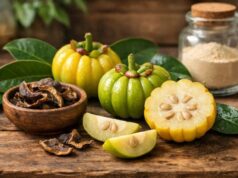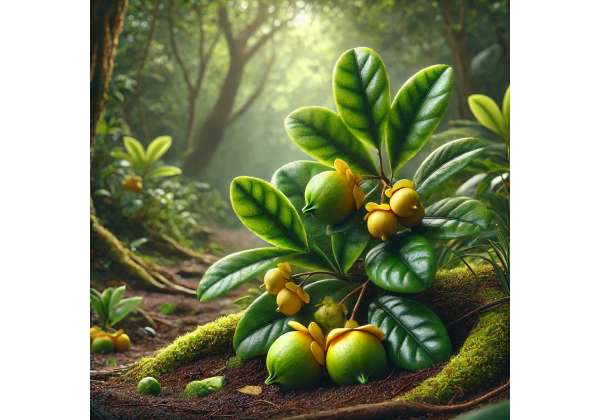
Guavira, botanically known as Campomanesia xanthocarpa, is a native South American fruit tree whose leaves, seeds, and fruit occupy an intriguing middle ground between food and herbal medicine. It is also called guabiroba or guavirova in different regions, and it has long been used in traditional practice for digestive discomfort, urinary complaints, fever, inflammation, and cardiometabolic concerns. Modern research has not fully caught up with that long reputation, but it has revealed a plant rich in phenolic compounds, flavonoids, tannins, and aromatic constituents that may help explain its antioxidant, anti-inflammatory, and metabolic effects.
What makes guavira especially interesting is that it is not only a medicinal leaf tea or experimental extract. It is also an edible fruit with functional-food potential. That gives it a more approachable identity than many herbs. At the same time, most of the strongest evidence still comes from preclinical work, with only limited human research. So guavira is best viewed as a promising traditional fruit-herb with real biological activity, modest but encouraging clinical signals, and a need for careful, evidence-aware use rather than exaggerated claims.
Essential Insights
- Guavira is most promising for antioxidant, anti-inflammatory, and cardiometabolic support rather than as a stand-alone treatment.
- Its best-known compounds include chlorogenic acid, gallic acid, quercetin, ellagic acid, tannins, and seed volatiles such as beta-caryophyllene.
- Human research has used about 500 to 1000 mg per day of encapsulated extract for 90 days, but no standard dose has been established.
- Leaf teas, fruit infusions, and seed extracts are not interchangeable in strength or effect.
- Pregnant or breastfeeding people, children, and anyone using blood thinners, glucose-lowering medicines, or multiple cardiometabolic drugs should avoid self-prescribing concentrated extracts.
Table of Contents
- What is guavira
- Key compounds and medicinal properties
- What benefits are most plausible
- How is guavira used
- How much should you take
- Side effects and who should avoid it
- What the evidence actually says
What is guavira
Guavira is the common name used for Campomanesia xanthocarpa, a species in the Myrtaceae family. That puts it in the same broader botanical group as several aromatic and polyphenol-rich fruits, including guava-family fruits valued for both nutrition and phytochemicals. Native to Brazil and neighboring parts of South America, guavira has been appreciated not only as a wild or semi-cultivated fruit, but also as a medicinal plant whose leaves are commonly prepared as teas or infusions.
The plant has a strong traditional profile. Folk use has included support for fever, digestive discomfort, urinary complaints, inflammation, high cholesterol, obesity-related concerns, and general metabolic imbalance. In daily practice, this often meant leaf tea rather than capsules or extracts. That distinction matters because modern readers can easily assume that a traditional tea and a concentrated seed extract are interchangeable. They are not. Guavira is one of those plants where the part used and the preparation method strongly shape the expected effect.
The fruit itself is another reason the plant stands out. Many herbs are bitter, resinous, or medicinal in a narrow sense. Guavira is different because it also belongs to the world of edible native fruits. The fruit is aromatic and nutritionally interesting, while the leaves and seeds have attracted pharmacological interest. That gives the species a dual identity: part functional food, part medicinal plant.
This dual role is helpful, but it can also create confusion. A fruit eaten fresh or used in preserves is not the same as a laboratory-tested seed extract. A household infusion is not the same as a standardized encapsulated preparation. A good guavira article has to keep those identities separate so the reader does not confuse promising biology with proven therapy.
A second important point is naming. Depending on region and language, readers may encounter guavira, guabiroba, gabiroba, or guavirova. These names often refer to the same plant or closely related vernacular usage, which can complicate product labels and online searches. The scientific name is the most reliable anchor.
So what is guavira in practical terms? It is a native fruit-bearing medicinal plant with a meaningful tradition, edible value, and a developing research profile. It is not merely a fruit, and it is not yet a fully standardized herbal medicine. It sits between those two worlds, which is exactly what makes it useful and worth studying.
Key compounds and medicinal properties
Guavira’s medicinal interest begins with its phenolic profile. Across leaves, fruits, and extracts, researchers have identified phenolic acids, flavonoids, tannins, and other antioxidant constituents that help explain why the plant repeatedly appears in discussions of inflammation, oxidative stress, vascular function, and metabolic health. The leaf appears especially rich in phenolics, while the fruit offers a somewhat different but still valuable composition.
Among the compounds most often highlighted are chlorogenic acid, gallic acid, quercetin, ellagic acid, and related flavonoids and tannin-like constituents. These are widely studied plant molecules, and their presence in guavira is one reason the species is frequently described as a promising functional ingredient rather than only a folk remedy. Some seed extracts also contain volatile compounds, with beta-caryophyllene standing out in supercritical seed extracts as a major component. That matters because beta-caryophyllene is often discussed for anti-inflammatory potential and interaction with cell-signaling pathways.
A useful way to understand guavira is to divide its chemistry by likely function:
- Phenolic acids such as chlorogenic and gallic acids, which support antioxidant and metabolic discussions
- Flavonoids such as quercetin-related compounds, often linked with inflammation and vascular protection
- Tannins and other polyphenols, which may contribute to astringency, antioxidant activity, and enzyme modulation
- Volatile seed constituents, especially beta-caryophyllene in certain extracts, which may help explain anti-inflammatory findings
- Minor alkaloid-like and methylxanthine-related compounds, with some reports suggesting theobromine among leaf constituents
These compounds translate into several medicinal properties that seem plausible:
- Antioxidant activity
- Anti-inflammatory effects
- Mild hypolipidemic potential
- Support for glycemic regulation
- Possible vascular or hypotensive effects
- Antiplatelet and thrombotic pathway interest in experimental settings
That last point should be handled carefully. Guavira is not a replacement for cardiovascular medication, but some experimental work suggests effects on platelet function and vascular markers. This helps explain why the plant keeps attracting research attention in metabolic and cardiovascular contexts.
Its chemistry also makes guavira comparable to other polyphenol-rich plants, though not identical to them. Readers who are familiar with other antioxidant-dense fruit botanicals may recognize the general pattern: high phenolic diversity, interesting oxidative-stress data, and a wide gap between promising mechanisms and fully standardized clinical use.
Another subtle but important point is that the leaf, fruit, and seed do not perform the same way. Leaves often show higher phenolic density and stronger infusion-based functional activity. Seeds can yield more concentrated extracts with distinct volatile components. Fruits contribute edible value and a gentler functional-food identity. This means the phrase “guavira extract” is incomplete unless the plant part is specified.
The best summary is this: guavira is chemically rich, especially in polyphenols and antioxidant compounds, with enough evidence to support real pharmacological interest. But the chemistry is varied by plant part, and that variation helps explain why the plant can be discussed as a tea herb, a native fruit, and an extract source all at once.
What benefits are most plausible
The most plausible benefits of guavira are not all equally strong. Some have limited human evidence, while others remain mostly preclinical. The clearest way to present them is to rank them by credibility rather than list every traditional claim as if it were equally proven.
The strongest area is cardiometabolic support. A human study in hypercholesterolemic individuals found improvements in total cholesterol, LDL, oxidative-stress markers, inflammatory markers, and nitric oxide-related endothelial function after 90 days of encapsulated Campomanesia xanthocarpa. That does not make guavira a cholesterol drug, but it does move the plant beyond folklore. It suggests a measurable, clinically relevant direction, even if replication is still needed.
The second strong area is anti-inflammatory support. Seed extracts have shown anti-inflammatory activity in animal and in vitro models, including effects on edema, nociceptive behavior, and neutrophil migration. This lines up well with traditional uses for inflammatory discomfort and with the plant’s volatile and phenolic composition.
The third plausible area is glycemic and metabolic support. Recent infusion research suggests that guavira leaf infusions have stronger phenolic content and enzyme inhibitory activity than fruit infusions, with early functional-food implications for glycemic regulation. Animal work with seed extracts also points toward lower glucose and improved lipid-related measures. These are encouraging signals, but they still fall short of proving that guavira is a diabetes treatment.
A fourth area is vascular support, including mild hypotensive potential and platelet-related effects. Experimental studies suggest the plant may influence the renin-angiotensin system and platelet aggregation pathways. That makes guavira scientifically interesting for vascular health, though still too preliminary for strong clinical promises.
Traditional use also points toward digestive and urinary support. These are common in folk medicine descriptions, and they are not implausible. The plant’s astringency, antioxidant profile, and historical use all make them reasonable areas of interest. Still, the modern evidence here is weaker than for cardiometabolic and anti-inflammatory pathways. Readers looking specifically for urinary support may still find more clearly established urinary-health traditions in other fruit-based botanicals.
What guavira does not support well is exaggerated marketing. It is not proven to reverse diabetes, replace statins, cure obesity, or serve as a universal detox herb. The better framing is more modest and more helpful:
- A traditional fruit-herb with antioxidant depth
- A plant with promising metabolic and inflammatory data
- A candidate functional ingredient for future food and supplement development
- A poor substitute for proven medical care when disease is established
That middle ground matters. Guavira seems genuinely useful, especially for people interested in plant-based cardiometabolic support, but its benefits are likely to be supportive rather than dramatic. It works best as an adjunct, not a cure.
How is guavira used
Guavira is used in three main ways: as a fruit, as a leaf infusion, and as a more concentrated extract from leaves or seeds. Each form belongs to a different practical category, and confusing them is one of the most common mistakes readers make.
The fruit is the gentlest form. It can be eaten fresh or used in preserves, pulps, juices, and other functional-food applications. In this form, guavira behaves more like a native fruit with phytochemical benefits than like a classic medicinal herb. It offers a food-first entry point that may suit people who want a broader dietary relationship with the plant rather than a supplement protocol.
Leaf use is more traditionally medicinal. In several regions, the leaves are prepared as tea or infusion. This is probably the most familiar folk-medicine form of guavira. The leaf has also attracted scientific interest because it tends to contain a dense phenolic profile and may show stronger antioxidant and enzyme-related activity than the fruit. Recent work on leaf and fruit infusions suggests steeping time affects phenolic yield, with infusion conditions altering the final functional profile.
Seed extracts are the most specialized form. Supercritical seed extracts are not folk teas. They are research-driven preparations with a different composition, often richer in volatile compounds such as beta-caryophyllene. These preparations are the basis of several anti-inflammatory, metabolic, and mood-related animal studies. That means they may be biologically powerful, but they are also further from everyday household use.
A practical way to think about use is this:
- Fruit: food, flavor, and gentle functional value
- Leaf infusion: traditional herbal use and the most realistic home preparation
- Seed extract: experimental supplement territory, not a casual kitchen remedy
For day-to-day use, leaf tea is probably the easiest bridge between tradition and modern practice. The problem is that “tea” still does not mean “standardized.” Different leaf amounts, steeping times, drying methods, and plant quality can change the outcome. That is why functional-food research on guavira infusions is so useful: it begins to show how preparation affects real phytochemical delivery.
Guavira also fits naturally into the broader idea of antioxidant-rich native fruit plants. Readers who already use functional Amazonian or South American fruits may find guavira appealing for similar reasons: phytochemical density, food-medicine overlap, and the potential to move from folk tradition into evidence-based functional nutrition.
The most responsible modern use is still moderate. Fruit use is the lowest-risk entry point. Leaf infusion is the most traditional. Concentrated seed extracts are the most experimental. That order matters because it helps the reader match curiosity with caution rather than assuming the strongest form is always the best one.
How much should you take
Guavira does not yet have one universally accepted dose. The best available numbers come from a limited human trial and several animal or experimental studies, but those do not form a fully standardized dosing system. That means dosage has to be framed with both specificity and restraint.
The clearest human data come from a 90-day study in hypercholesterolemic individuals. In that trial, participants received 500 mg, 750 mg, or 1000 mg per day of encapsulated Campomanesia xanthocarpa. The lower and higher ends of that range appeared to influence different markers, but this does not yet create a firm daily recommendation for the general public. It gives a useful research range, not a definitive standard.
Beyond that, things become less certain. Leaf teas and fruit infusions are common in traditional use, but they are not standardized by clinical dose. Recent infusion research used different steeping times rather than a fixed therapeutic human dose. Animal work on seed extracts has used much higher body-weight-based doses that should not be converted directly into a personal regimen.
A practical framework looks like this:
- Food use: fruit servings belong more to normal diet than to medicinal dose
- Tea or infusion use: traditional but unstandardized
- Encapsulated extract: the most specific human evidence currently sits in the 500 to 1000 mg per day range
- Seed extracts: experimental and not appropriate for self-converted dosing from animal studies
If someone does use a commercial guavira supplement, a few rules make sense:
- Prefer clearly labeled products that identify the plant part
- Stay close to the product’s serving size rather than improvising
- Use meals as the anchor point, since many cardiometabolic botanicals are better tolerated with food
- Reassess after 8 to 12 weeks rather than assuming indefinite use
- Do not stack it casually with multiple lipid, glucose, or circulation supplements
Timing matters less than consistency. Since the best-supported areas involve lipids, inflammation, and glycemic markers, daily use with meals is more logical than sporadic use. For tea or infusion, morning or midday use may be preferable if the goal is steady dietary inclusion rather than nighttime experimentation.
The biggest dosing mistake is pretending that all guavira products are equivalent. A leaf capsule, a fruit preparation, and a supercritical seed extract are not interchangeable. A second mistake is assuming that the highest dose from a study is automatically the best choice. That is rarely true with plant products, especially when the evidence base is still small.
So the most useful dosage conclusion is straightforward: guavira has early human evidence in the 500 to 1000 mg per day range for encapsulated preparations, but no universally accepted medicinal dose has been established. That makes moderate, form-specific use the most sensible approach.
Side effects and who should avoid it
Guavira appears to have a relatively favorable safety profile in the short term, but “relatively favorable” is not the same as “proven safe in every form.” The available toxicology data are encouraging, especially for short-term leaf and seed extracts in animal settings, yet long-term human safety is still not thoroughly defined.
The most likely mild side effects are digestive:
- Stomach discomfort
- Loose stools
- Mild nausea
- Astringent mouthfeel or throat dryness with strong leaf preparations
These effects are more likely with concentrated extracts than with the fruit itself. The fruit fits into ordinary dietary exposure. The leaf tea and especially the seed extract move into more active territory.
Short-term toxicology studies have not shown alarming results at ordinary experimental levels, and some data suggest low short-term toxic hazard for leaf extracts. Seed extracts also showed no acute mortality in animal testing at high single doses. Still, those are not reasons to treat the plant as risk-free. Animal safety data reduce uncertainty, but they do not erase it.
There are a few specific cautions worth taking seriously.
First, guavira may affect platelet function and vascular pathways in experimental work. That means caution is reasonable for anyone taking anticoagulants, antiplatelet drugs, or preparing for surgery. It does not mean the fruit itself is dangerous in normal amounts, but concentrated extracts are a different question.
Second, guavira has shown glucose-related and lipid-related effects in experimental and limited clinical contexts. That makes caution sensible with glucose-lowering medicines, insulin, and cholesterol-lowering regimens. A plant that helps shift biomarkers may also amplify medication effects in sensitive people.
Third, pregnancy and breastfeeding should be treated conservatively. Food-level fruit intake is one thing. Concentrated leaf or seed extracts are another. There is not enough robust safety data to justify self-prescribing these forms during pregnancy or lactation.
Groups who should avoid concentrated guavira preparations unless guided by a qualified clinician include:
- Pregnant people
- Breastfeeding people
- Children and adolescents
- People using blood thinners or antiplatelet medicines
- People using glucose-lowering medicines
- People with complex cardiovascular medication regimens
- Anyone with a history of strong reactions to concentrated botanical extracts
Quality control is another overlooked safety issue. With guavira, the plant part matters. A vague label that says only “Campomanesia xanthocarpa extract” is less reassuring than one that specifies leaf, fruit, or seed and gives a clear dose.
The simplest safety rule is this: guavira fruit is the lowest-risk form, leaf preparations come next, and concentrated seed or multi-part extracts deserve the most caution. That hierarchy helps keep curiosity aligned with safety.
What the evidence actually says
The evidence for guavira is promising, but it is not evenly distributed. This is not a case where every traditional use has been tested in people. The research is strongest in four areas: phytochemical characterization, anti-inflammatory activity, metabolic and lipid-related effects, and early functional-food applications. Human evidence exists, but it is still limited.
The most important human signal comes from hypercholesterolemic individuals treated with encapsulated Campomanesia xanthocarpa for 90 days. That study found improvements in cholesterol-related markers and changes in oxidative stress, inflammation, and endothelial function. This is meaningful because it shows the plant is not only biochemically active in a dish or in a cell model. It can affect measurable human biomarkers. But one encouraging trial is not the same as broad clinical confirmation.
A second strong line of evidence comes from anti-inflammatory seed extract studies. These support the traditional view that guavira is not just nutritious, but pharmacologically active. Animal and in vitro work shows reductions in inflammatory behaviors and cell migration responses, which strengthens the case for seed-derived bioactives such as beta-caryophyllene and related compounds.
A third research stream comes from functional-food and infusion studies. These are especially interesting because they bring guavira closer to realistic use. Rather than treating it only as a pharmaceutical-style extract, these studies ask what happens when leaf or fruit infusions are prepared and consumed in food contexts. The answer seems to be that leaf infusions are often richer in bioaccessible phenolics and may influence enzyme pathways relevant to glycemic control.
The limits of the evidence matter just as much as the positive findings:
- Most studies are still preclinical
- Plant part and extract type vary widely
- Human data are limited and not yet deeply replicated
- Dose standardization remains incomplete
- Some promising areas, such as platelet or mood-related effects, are still far from practical recommendation
That means the fairest conclusion is neither dismissive nor overenthusiastic. Guavira is more than a folk fruit. It has a credible scientific profile and enough human evidence to justify attention in cardiometabolic discussions. At the same time, it is not yet a fully established medicinal standard with consensus dosing and guideline-level evidence.
So what should readers do with the evidence? Use it to calibrate expectations. Guavira makes sense as:
- A native fruit with functional-food value
- A traditional leaf herb with promising metabolic and inflammatory relevance
- A plant worth studying further for cardiometabolic support
It does not yet make sense as:
- A replacement for lipid or glucose medication
- A proven treatment for obesity, diabetes, or vascular disease
- A reason to ignore product form, dose, or safety context
In short, the evidence supports interest, moderate optimism, and careful use. That is usually the most useful position for a plant that is moving from regional tradition into broader scientific recognition.
References
- The Brazilian Native Fruits Araçá, Guabijú, and Guabiroba: A Brief and Integrative Review on Their Phenolic Composition and Analytical Methods 2025 (Review)
- Functional Properties of Campomanesia xanthocarpa Infusions: Phenolic Profile, Digestive Stability, Enzyme Inhibition, and Glycemic Effects 2025 (Functional Food Study)
- Anti-Inflammatory Effects of Campomanesia xanthocarpa Seed Extract Obtained from Supercritical CO2 2021 (Preclinical Study)
- Toxicological aspects of Campomanesia xanthocarpa Berg. associated with its phytochemical profile 2019 (Toxicology Study)
- Effects of Campomanesia xanthocarpa on inflammatory processes, oxidative stress, endothelial dysfunction and lipid biomarkers in hypercholesterolemic individuals 2014 (Randomized Controlled Trial)
Disclaimer
This article is for educational purposes only and is not medical advice. Guavira shows promising nutritional and pharmacological activity, but its research base is still developing and it does not have a universally accepted therapeutic dose. Do not use it to diagnose, treat, or replace care for diabetes, high cholesterol, hypertension, urinary disease, or any other medical condition. Anyone who is pregnant, breastfeeding, taking prescription medicines, or managing cardiometabolic disease should speak with a qualified healthcare professional before using concentrated guavira extracts or long-term herbal preparations.
If this article was useful, please consider sharing it on Facebook, X, or another platform you prefer.