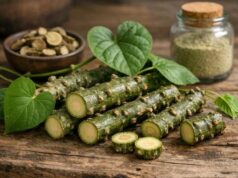
Gumweed, Grindelia camporum, is a resinous yellow-flowered herb traditionally used for stubborn coughs, irritated airways, and certain itchy or inflamed skin conditions. Native to western North America, it belongs to a group of Grindelia species whose sticky flowering tops have long been valued in herbal medicine as expectorant, soothing, and mildly antispasmodic remedies. The plant’s medicinal reputation rests on its resin acids, diterpenes, essential oil, tannins, flavonoids, and phenolic acids, compounds that help explain its classic role in coughs with thick mucus, bronchial irritation, and cold-related chest discomfort.
What makes gumweed especially worth understanding is that its tradition is clearer than its clinical evidence. It appears in respected herbal monographs and has a well-defined respiratory use, yet modern controlled human trials are still sparse. That means gumweed is best approached as a targeted traditional herb rather than a broadly proven respiratory cure. For most readers, the practical questions are the important ones: what it may help with, how it is usually prepared, how much is customary, and where its safety limits begin.
Quick Summary
- Gumweed is used mainly for cough associated with cold, thick mucus, and irritable bronchial congestion.
- Its key constituents include resin acids such as grindelic acid, plus tannins, flavonoids, phenolic acids, saponins, and small amounts of essential oil.
- A traditional adult infusion often uses 2 to 3 g in 150 mL hot water up to three times daily, while tincture ranges commonly fall around 0.5 to 1 mL three times daily.
- Avoid use if you are allergic to Asteraceae plants, pregnant or breastfeeding, or treating significant shortness of breath without medical guidance.
- High doses may irritate the stomach, and older sources also note possible kidney irritation with excessive use.
Table of Contents
- What is Gumweed
- Key ingredients and actions
- Benefits and traditional uses
- How to use Gumweed
- How much per day
- Safety and who should avoid it
- What the evidence says
What is Gumweed
Gumweed is the common name for several medicinal Grindelia species, but Grindelia camporum is one of the better-known North American representatives. It is a strongly resinous herbaceous plant with sticky flower heads, toothed leaves, and bright yellow daisy-like blooms. If you touch the flowering tops, the tacky coating is impossible to miss. That resin is one of the reasons the plant developed a medicinal reputation in the first place.
The herb belongs to the Asteraceae family, which also includes chamomile, calendula, and ragweed. That botanical relationship matters not only for identification but also for safety, because people sensitive to Asteraceae plants may react to gumweed as well. Traditionally, the medicinal part is the aerial herb, especially the flowering tops gathered before or during blooming.
One important point often missed in articles about gumweed is that modern herbal monographs frequently treat several Grindelia species together. Regulatory and traditional references often group Grindelia camporum with G. robusta, G. squarrosa, and G. humilis under the broader concept of gumweed herb, or Grindeliae herba. That means some data applied to “gumweed” are species-pooled rather than unique to G. camporum alone. For a reader, this is not a reason to dismiss the herb, but it is a reason to be careful with specificity.
Historically, Native American communities used Grindelia species for bronchial complaints, skin eruptions, poison oak or poison ivy reactions, and inflammatory irritation. Later Western herbal medicine adopted gumweed mainly for catarrh of the upper respiratory tract, cough, bronchitis, and certain asthma-like states where mucus was sticky and difficult to move. Older herbals also described it as both expectorant and antispasmodic, which is a useful combination in cough remedies.
In practical modern terms, gumweed is not a general wellness herb. It is a situational herb, usually chosen when there is a defined respiratory or skin problem. That gives it a narrower but clearer identity than many trendy botanicals. It is less about “boosting immunity” or “cleansing the lungs” in vague marketing language and more about easing an irritated, mucus-heavy, cold-associated cough pattern.
That focused identity is part of gumweed’s appeal. It has a distinct traditional use, a recognizable chemistry, and a modest but credible pharmacologic rationale. It also has clear limits, especially because much of its evidence still rests on long-standing use and preclinical data rather than modern large-scale clinical trials.
Key ingredients and actions
Gumweed’s medicinal profile comes from a dense cluster of resinous and phenolic compounds. The best-known constituents include labdane-type diterpenes such as grindelic acid and related resin acids, along with tannins, flavonoids, phenolic acids, saponins, and a small amount of essential oil. Together, these compounds help explain why the herb developed a reputation for cough, irritated airways, and inflammatory skin problems.
The resin acids are especially important because they help define gumweed as a sticky, active respiratory herb rather than a bland plant infusion. Grindelic acid is one of the signature constituents repeatedly mentioned in chemical and pharmacologic work on Grindelia. It appears to contribute to the herb’s anti-inflammatory potential, especially in respiratory epithelial models. This is one reason gumweed is often described as more than just an expectorant. It may not only help move mucus but also quiet the inflammatory background that makes coughing persist.
Tannins add astringency and mild tissue-toning effects. These are not the main reason people reach for gumweed, but they may contribute to some of its traditional external uses, especially when the plant is used on weepy, irritated, or inflamed skin. Flavonoids and phenolic acids broaden the herb’s antioxidant and anti-inflammatory potential, while essential oil components such as borneol, alpha-pinene, limonene, and related terpenes may contribute to the herb’s aromatic and airway-supporting qualities.
Saponins are another useful part of the picture. In many respiratory herbs, saponins are valued for their expectorant behavior, helping loosen mucus and improve clearance. Gumweed is not usually thought of as a classic saponin herb in the same way as ivy leaf, but the presence of saponins still supports its traditional use in sticky, congestive respiratory states.
A practical summary of gumweed’s likely actions looks like this:
- Expectorant support for thick or difficult mucus
- Mild antispasmodic action in irritated airways
- Anti-inflammatory effects on respiratory tissues
- Mild soothing and drying effects on irritated skin
- Possible antioxidant support from phenolic compounds
The chemistry also helps explain why gumweed is often paired conceptually with other chest herbs. For example, it overlaps somewhat with thyme in respiratory herbal practice, though thyme leans more strongly aromatic and antimicrobial, while gumweed is more resinous and traditionally associated with sticky bronchial irritation.
Another useful insight is that gumweed is not mainly a mucilage herb. It is quite different from soothing demulcents such as marshmallow or slippery elm. Instead, it tends to act in a more resinous, stimulating, and mucus-moving way. That distinction matters when choosing the herb. A dry, hot, scratchy throat without congestion may call for something else. A cold-associated cough with sticky phlegm and irritated airways is much closer to gumweed’s classic lane.
Benefits and traditional uses
The most credible traditional benefit of gumweed is relief of cough associated with cold, especially when the cough is irritating, chesty, or accompanied by difficult mucus. This is the indication recognized in European herbal monographs, and it is the clearest place where gumweed’s history, chemistry, and modern pharmacology meet in a reasonably coherent way.
Herbalists have often described gumweed as especially useful when mucus feels thick, sticky, or trapped. In that setting, the plant is not expected to suppress the cough reflex in the same way as a pharmaceutical antitussive. Instead, it is used to make the cough more productive and less irritating. That difference matters because gumweed is traditionally about improving the quality of the cough rather than simply silencing it.
Bronchial irritation is the second major traditional use. Older texts placed gumweed in formulas for bronchitis, upper respiratory catarrh, and even asthma-like states. Modern writing has to be more careful here. The herb may have mild antispasmodic and anti-inflammatory value, but it is not a substitute for inhalers, urgent asthma care, or evaluation of shortness of breath. Still, in milder cold-related bronchial discomfort, its use remains plausible.
Traditional uses also extend to the skin. Fresh or tinctured gumweed has been used externally for poison ivy and poison oak rashes, itchy eruptions, burns, boils, and inflamed sores. The rationale is straightforward: astringent, resinous, and anti-inflammatory compounds may help reduce weeping, irritation, and itching. This is one of the more original aspects of gumweed, because relatively few respiratory herbs also have a substantial historical dermatologic role.
Common traditional uses include:
- Cough with cold, especially when mucus is hard to clear
- Mild bronchial congestion and throat irritation
- Catarrh of the upper respiratory tract
- Poison ivy or poison oak irritation
- Itchy, inflamed, or mildly weepy skin problems
In practical herbal comparison, gumweed occupies a middle ground. It is not as soft and soothing as marshmallow, and it is not as universally familiar as mullein for gentle respiratory support. Instead, it tends to be chosen when cough is sticky, restless, and slightly spasmodic.
What gumweed does not do especially well is support vague “immune health” or general daily wellness. It is not a broad tonic and not an everyday tea for most people. Its best use is short term, purpose specific, and tied to a recognizable symptom picture.
That narrowness is actually helpful. It keeps gumweed from being oversold. The herb may be quite useful for a cough-associated-cold pattern, and somewhat helpful externally for itchy inflammatory skin conditions, but it is far less convincing when stretched into claims about chronic lung disease, infection treatment, or major anti-allergy effects. Used in the right lane, it makes sense. Outside that lane, it is easier to exaggerate than to justify.
How to use Gumweed
Gumweed is usually used as an infusion, tincture, or liquid extract made from the dried flowering aerial parts. The form matters because the herb is resinous, and different preparations pull out its constituents in different proportions. A tea offers a traditional, accessible form, but tinctures and liquid extracts often feel more practical because they handle the sticky chemistry better and are easier to dose consistently.
For tea, the herb is prepared as an infusion from the comminuted aerial parts. This is the classic approach recognized in monographs. The taste is somewhat bitter, resinous, and aromatic rather than pleasant or neutral. Many people do not use gumweed as a daily tea simply because it is too targeted and too sticky in character for that kind of casual use.
Tinctures and liquid extracts are often more convenient for short-term cough support. They allow smaller volumes and easier repeat dosing through the day. This fits the herb’s real-world use better, especially when someone wants relief during an active cold rather than a cup of tea they will sip for pleasure.
Topical use is different. Gumweed tincture or diluted preparations have been used for itchy, blistering, or inflamed rashes, particularly plant-contact irritation. For skin use, the main rule is to avoid broken or severely infected tissue unless guided by a clinician. Even a traditional topical herb should not distract from signs of infection, spreading redness, or severe allergic reaction.
A practical framework for use looks like this:
- Choose gumweed when the cough is cold-related and mucus feels sticky or hard to move.
- Use short-term forms such as infusion or tincture rather than taking it indefinitely.
- Consider external use only for mild, superficial, well-understood skin irritation.
- Stop and seek medical help if symptoms intensify, especially with wheezing, fever, or breathlessness.
Gumweed is often discussed alongside other cough herbs in compound formulas. For example, it may sit beside ivy leaf in expectorant-focused syrups or be blended with thyme, licorice, or plantain. That does not mean every combination is automatically better. It simply reflects the fact that gumweed often works as part of a pattern-based respiratory formula rather than as a stand-alone all-purpose herb.
Timing matters too. Because gumweed is traditionally used for acute respiratory symptoms, it is usually taken for several days rather than for weeks without reassessment. If the cough lasts beyond a week, becomes productive of discolored sputum, or is associated with chest pain or high fever, the herb should not be used as a reason to delay diagnosis.
The best use case is straightforward: a short, defined course during a cold-associated cough with chest irritation or sticky phlegm, using a clearly labeled product and realistic expectations. That is where gumweed tends to make the most sense.
How much per day
Gumweed dosage is based mostly on traditional monographs and older herbal references rather than large modern clinical trials. That means the customary ranges are useful, but they should be treated as practical guideposts rather than highly validated precision doses.
For infusion, a common adult range is 2 to 3 g of the dried comminuted herb in about 150 mL of boiling water, taken up to three times daily. This is the clearest traditional tea dosage and aligns with European monograph guidance for cough associated with cold. The herb is typically prepared fresh rather than made in large batches, because the aromatic and resinous components are better handled that way.
For tincture, the common range is about 0.5 to 1 mL three times daily. For a liquid extract, about 0.6 to 1.2 mL three times daily is a common monograph range, giving a daily total of about 1.8 to 3.6 mL. These numbers look neat on paper, but the product form matters enormously. A tincture and a liquid extract are not the same strength, and a modern concentrated product may differ from an old reference preparation.
This leads to one of the most useful dosage principles with gumweed: the label matters as much as the herb. A product that clearly identifies its extract ratio, plant part, and solvent is easier to use sensibly than a generic “gumweed formula” with vague standardization.
A practical dosing strategy is:
- Start at the lower end of the range
- Use divided doses during the day rather than one large dose
- Reassess after several days
- Do not keep escalating if symptoms are not clearly improving
Duration is also part of dosage. Traditional guidance usually limits unsupervised use to about one week. That is not because the herb is known to become toxic at day eight. It is because cough that persists longer than a week, worsens, or becomes more systemically significant deserves proper evaluation.
Adults and older adults are the main target population in official monograph-style guidance. Use in children and adolescents is generally not recommended because adequate data are lacking. Pregnancy and breastfeeding are also excluded from routine use because safety is not established.
Another practical point is that gumweed dosage should match the symptom picture. A little may be enough when the herb is correctly chosen. More is not always better, especially with resinous botanicals that can irritate the stomach. Readers interested in other short-term respiratory herbs may notice that gumweed dosing is more in line with concentrated herbal remedies than with food-like herbs such as licorice in soothing respiratory formulas.
The safest bottom line is simple. Gumweed has a recognizable traditional dose range, but it should be used conservatively, for short periods, and with attention to the product form. If a cough needs more than that, it likely needs more than self-treatment.
Safety and who should avoid it
Gumweed appears reasonably safe when used in customary amounts for short-term cough support, but that statement comes with several important limits. The herb has a traditional safety record, yet high-quality modern clinical safety data remain sparse. As with many traditional respiratory herbs, the bigger problem is often misuse rather than dramatic toxicity.
The clearest contraindication is allergy to Asteraceae plants. Anyone who reacts to ragweed, chamomile, calendula, yarrow, or other members of this family should approach gumweed cautiously or avoid it outright. A plant-family allergy can matter more than the specific herb name.
Pregnancy and breastfeeding are also areas of caution. Official monograph guidance does not recommend gumweed during pregnancy or lactation because sufficient safety data are lacking. The same caution applies to children and adolescents under 18, not because the plant is proven dangerous in these groups, but because adequate data are missing.
Digestive irritation is the most realistic side effect in ordinary use. Older references mention gastric irritation, and high doses have been associated with diarrhea and irritation of the stomach or kidneys. This makes sense given the herb’s resinous and somewhat stimulating chemistry. A person with a sensitive stomach is more likely to notice discomfort than a person taking a small, appropriate dose for a few days.
Medical evaluation should not be delayed when symptoms suggest something more serious. Seek proper care rather than relying on gumweed alone if there is:
- Shortness of breath
- High fever
- Purulent or bloody sputum
- Chest pain
- Wheezing that is worsening
- Cough lasting beyond a short self-care window
These are not “just herbal precautions.” They are basic markers that the symptom pattern may no longer fit simple cold-associated cough.
Topical use also has limits. While gumweed has a history in poison ivy and itchy eruptions, it can still irritate sensitive skin, especially when used in alcohol-rich tinctures. Patch testing is a sensible step for broad application.
People who should generally avoid unsupervised use include:
- Those allergic to Asteraceae plants
- Pregnant or breastfeeding people
- Children and teenagers
- Anyone with significant asthma or unexplained breathlessness
- Anyone using the herb at high doses for extended periods
- Anyone substituting it for evaluation of worsening respiratory illness
One useful comparison is that gumweed is often gentler than strong stimulant or endocrine-active herbs, but it still is not a casual all-purpose plant. A cough formula containing many herbs can create its own risk of confusion, especially when products also include eucalyptus-type respiratory ingredients or other active botanicals.
The safest way to think about gumweed is as a short-term traditional remedy with a narrow role, decent tolerance in the right setting, and a clear boundary beyond which medical care becomes more important than herbal persistence.
What the evidence says
The evidence for gumweed is respectable in traditional herbal terms, but limited by modern clinical standards. That balance is important. There is enough pharmacologic and monograph support to take the herb seriously, yet not enough high-quality controlled human research to present it as a proven respiratory therapy in the same league as well-studied modern medicines.
The strongest official support comes from herbal monographs rather than from randomized trials. European regulatory guidance recognizes gumweed herb, including Grindelia camporum among pooled species, as a traditional herbal medicinal product for relief of cough associated with cold. That wording is carefully chosen. It does not claim robust clinical proof. It says the use is plausible on the basis of long-standing traditional use and supportive nonclinical data.
The preclinical data are more encouraging. Modern studies on Grindelia extracts and grindelic acid suggest anti-inflammatory effects in respiratory epithelial models and macrophages, including reduced pro-inflammatory cytokine signaling. Other work has shown activity relevant to neutrophil-driven respiratory inflammation. These are meaningful findings because they fit the herb’s traditional role. A respiratory herb that calms inflammatory signaling while supporting mucus clearance makes coherent pharmacologic sense.
Phytochemical work also supports the broader picture. More recent papers describe essential oil fractions rich in alpha-pinene, limonene, borneol, and related compounds, while hydroalcoholic extracts have shown meaningful phenolic acid content and antioxidant behavior. These findings do not prove clinical benefit on their own, but they strengthen the case that gumweed is chemically active in ways relevant to airway irritation.
What is missing is equally important. There is a lack of strong controlled clinical trials using gumweed as a single herb in well-defined respiratory populations. Most claims for bronchitis, asthma, or broader respiratory disease still rest on traditional use, older animal work, case-level experience, or modern in vitro studies.
A balanced evidence summary looks like this:
- Strongest support: traditional use for cough associated with cold
- Good mechanistic support: anti-inflammatory and respiratory epithelium effects
- Plausible but less proven: mild expectorant and antispasmodic respiratory support
- Weak clinical support: strong claims for asthma, chronic bronchitis, or major skin disease treatment
This matters because gumweed is easy to oversell. A traditional herb with credible pharmacology can still lack the human trial base needed for bigger claims. In contrast, some herbs used in the same respiratory space, such as plantain in soothing cough formulas, may be chosen more for demulcent support than for resinous anti-inflammatory action. Gumweed has its own profile, but it remains better supported by plausibility and tradition than by modern clinical proof.
The most honest conclusion is that gumweed deserves a place in careful herbal respiratory practice, especially for short-term cough associated with cold. Its evidence is not empty. It is simply not as complete as marketing language often suggests. That is exactly why gumweed works best when used with precision, not hype.
References
- Community herbal monograph on Grindelia robusta Nutt., Grindelia squarrosa (Pursh) Dunal, Grindelia humilis Hook. et Arn., Grindelia camporum Greene, herba 2012 (Official Monograph)
- Phytochemical Profile and Antioxidant and Protective Activities of Various Types of Extracts from Hyssopus officinalis L. and Grindelia robusta Nutt. Herb Grown in Poland 2024
- Natural Products for the Prevention and Treatment of Common Cold and Viral Respiratory Infections 2023 (Review)
- Grindelia squarrosa Extract and Grindelic Acid Modulate Pro-inflammatory Functions of Respiratory Epithelium and Human Macrophages 2021
- Inula helenium and Grindelia squarrosa as a source of compounds with anti-inflammatory activity in human neutrophils and cultured human respiratory epithelium 2020
Disclaimer
This article is for educational purposes only and is not medical advice. Gumweed is a traditional herbal remedy for cough associated with cold, but it should not replace medical evaluation or treatment for worsening respiratory symptoms, asthma, pneumonia, allergic reactions, or chest pain. Safety data are limited in pregnancy, breastfeeding, and children, and the herb may irritate the stomach in some people. If your symptoms are severe, persistent, or accompanied by fever, wheezing, shortness of breath, or discolored sputum, seek medical care promptly.
If this article was useful, please share it on Facebook, X, or your preferred platform.