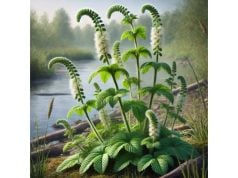
Gynostemma, better known in many wellness circles as jiaogulan, is a climbing vine from the cucumber family that has been used for centuries in parts of China and Southeast Asia as both a tea herb and a traditional medicinal plant. Its leaves are naturally sweet-bitter, easy to brew, and rich in a distinctive group of saponins called gypenosides, along with flavonoids, polysaccharides, sterols, and amino acids. That chemistry is why gynostemma is often described as an adaptogen and sometimes called “Southern Ginseng.”
What makes the herb especially compelling is the mix of tradition and modern research. Gynostemma is widely promoted for metabolic health, resilience under stress, lipid balance, and physical performance. Some of those claims now have meaningful scientific support, especially in areas such as body composition, blood lipids, and exercise-related outcomes. Others are still more promising than proven. The most useful way to understand gynostemma is not as a cure-all, but as a bioactive tea herb with interesting metabolic potential, a strong phytochemical profile, and practical safety rules that matter just as much as its benefits.
Essential Insights
- Gynostemma is best known for metabolic support, antioxidant activity, and its adaptogen-like reputation, with gypenosides as its signature compounds.
- The strongest human evidence supports possible benefits for body composition, lipid balance, and exercise performance rather than broad “anti-aging” claims.
- A practical range is about 2 to 3 g of dried herb per cup of tea, or about 225 to 450 mg per day of standardized extract in modern studies.
- The herb can interact with blood sugar, blood pressure, or anticoagulant strategies, so concentrated use is not a casual add-on.
- People who are pregnant, breastfeeding, preparing for surgery, or taking medicines for glucose, clotting, or blood pressure should avoid medicinal use unless supervised.
Table of Contents
- What Is Gynostemma
- Key Ingredients and Medicinal Properties
- What Benefits May Gynostemma Offer
- Does Gynostemma Help with Weight, Lipids, and Blood Sugar
- How to Use Gynostemma
- How Much Gynostemma per Day
- Side Effects, Interactions, and What Evidence Says
What Is Gynostemma
Gynostemma pentaphyllum is a perennial climbing vine native to China, Japan, Korea, Vietnam, Thailand, and other parts of East and Southeast Asia. In Chinese herbal practice it is usually called jiaogulan, and in English-language wellness writing it is often referred to as “Southern Ginseng.” That nickname is helpful in one sense and misleading in another. It is helpful because the plant does share some functional overlap with classic tonic herbs: it is used to support resilience, vitality, and metabolic balance. It is misleading because it is not a Panax species and does not contain ginsenosides in the same way true ginseng does.
The plant’s leaves and tender stems are the most commonly used parts. They are usually dried and brewed as a tea, though powders, capsules, tablets, and standardized extracts are also common in the supplement market. In many households, though, the herb is still experienced first as a tea. That matters because tea use generally carries a different intensity, rhythm, and safety profile than concentrated extracts.
In traditional use, gynostemma has been described as a tonic herb taken for fatigue, poor endurance, weakness, cough, heat, inflammation, and general recovery. It has also been associated with long-living communities in some regions of China, which helped shape its modern reputation as a longevity herb. That reputation is one reason people approach it expecting broad benefits that touch stress, immunity, metabolism, and aging all at once.
A clearer way to frame it is to think of gynostemma as a metabolically interesting tea herb with an adaptogen-like identity. It fits naturally beside discussions of ginseng’s classic tonic and adaptogen role, but its chemistry, flavor, and evidence base are its own. Gynostemma is generally sweeter, less root-heavy in feel, and more likely to be used daily as a leaf infusion rather than as a concentrated medicinal root product.
A practical botanical and use snapshot looks like this:
- Botanical name: Gynostemma pentaphyllum
- Common names: jiaogulan, Southern Ginseng, miracle grass
- Main parts used: leaves and stems
- Common forms: tea, extract, capsule, powder, tablet
- Main themes of use: tonic support, metabolic health, endurance, resilience
One reason readers get confused is that the herb is sold across very different markets. In one place it is a traditional tea. In another it is a “fat-burning” capsule. In another it is an adaptogen blend ingredient. Those are not equivalent use contexts, and they shape expectations. The tea form suggests steady, moderate use. The extract form suggests targeted, more pharmacologic use. That distinction becomes especially important when discussing dosage and safety later in the article.
Key Ingredients and Medicinal Properties
Gynostemma’s best-known compounds are gypenosides, a large family of dammarane-type saponins that drive much of the herb’s reputation. These are considered its signature actives and the main reason it is so often compared with ginseng. Researchers have identified a remarkably large number of these compounds, and some overlap structurally with compounds found in Panax species. That overlap explains why the plant earned the “Southern Ginseng” label, even though it belongs to a completely different botanical family.
Gypenosides are not the whole story, though. Gynostemma also contains flavonoids, polysaccharides, phytosterols, amino acids, and trace minerals. These likely contribute to the plant’s broader effect profile. In practical terms, the herb is not working through one single pathway. It appears to influence oxidative balance, metabolic signaling, and cellular stress responses through several overlapping compound groups.
The most important medicinal properties typically discussed for gynostemma are:
- Antioxidant
- Metabolic-supportive
- Lipid-modulating
- Glucose-supportive
- Anti-fatigue or endurance-supportive
- Mildly anti-inflammatory
A key proposed mechanism is AMPK activation. AMPK is a cellular energy-sensing pathway that becomes especially interesting in discussions of glucose regulation, fat metabolism, and exercise adaptation. This is one reason gynostemma has attracted attention in both traditional medicine and performance-nutrition research. It suggests a plausible bridge between the herb’s older tonic reputation and newer studies on body composition, blood markers, and endurance.
The herb is also notable for its polysaccharides, which have been studied for immune and gut-related effects, and its flavonoids, which likely contribute antioxidant and vascular benefits. That makes gynostemma more chemically broad than people often realize. It is not just a saponin herb. It is a multiphasic plant with several classes of biologically active compounds.
As a tea herb, its chemistry invites comparison with green tea as a daily polyphenol-rich drink. The two are not interchangeable, but the comparison is useful. Green tea is dominated by catechins and caffeine, while gynostemma is defined more by gypenosides and a broader tonic-herb identity. Green tea is more clearly a beverage with health benefits. Gynostemma sits closer to the boundary between beverage and medicinal plant.
That boundary matters because people often hear “natural” and assume gentle. Gynostemma is gentle in taste for many people, but not necessarily trivial in pharmacology. A leaf tea can still have real metabolic activity. Once the plant is concentrated into extracts, tablets, or standardized capsules, the gap between casual tea and targeted herbal intervention becomes wider.
The most grounded way to understand its medicinal properties is to keep three ideas together at once:
- It has unusually rich saponin chemistry
- It has plausible mechanisms relevant to metabolism and resilience
- It still needs to be judged by human outcomes, not phytochemistry alone
That final point is important. A chemically rich herb is not automatically a clinically proven one. Gynostemma’s compounds are interesting enough to justify serious attention, but their presence does not guarantee every marketed claim is true.
What Benefits May Gynostemma Offer
The most realistic benefits of gynostemma sit in the overlap between tonic use and metabolic support. People usually turn to it for one of four reasons: weight-related goals, blood lipids, blood sugar support, or the more general feeling that they want a “steadying” herb that supports energy without acting like a stimulant. Modern research gives the strongest backing to the first three, while the broader adaptogen narrative still remains partly plausible and partly oversized.
One likely benefit is support for body composition. Gynostemma has been studied in overweight adults, and standardized extracts have been linked with reductions in body weight and fat mass in placebo-controlled trials. That does not make it a stand-alone weight-loss solution, but it suggests the plant may have a useful role when paired with diet and lifestyle measures.
Lipid balance is another area where the evidence is worth paying attention to. A systematic review of randomized trials found that gynostemma used alone or alongside lipid-lowering agents may help improve total cholesterol, triglycerides, and HDL-related outcomes in some settings. The important word there is “may.” Many trials were older and varied in quality, but the overall pattern is still stronger than pure folklore.
There is also meaningful interest in glucose support. This is not surprising given the herb’s relationship with AMPK signaling and related metabolic pathways. Gynostemma is often discussed in the same broad problem-space as rhodiola as a stress-and-performance adaptogen, but the two herbs feel different in use. Rhodiola is usually discussed for mental and physical stress performance. Gynostemma is more often framed around long-view metabolic resilience and gradual systemic support.
Potential benefits people most often look for include:
- Support for body weight and fat-mass reduction
- Help with cholesterol and triglyceride management
- Mild support for glucose regulation
- Antioxidant support
- Better exercise tolerance or recovery in some settings
The antioxidant and anti-fatigue claims are reasonable, but they need context. Gynostemma is not a caffeine herb, so people looking for an immediate boost often misunderstand what it offers. Its “energy” effect, if present, is more likely to feel like improved recovery, steadier function, or better tolerance of stress rather than a quick surge in stimulation.
This is also where the herb’s reputation as a longevity plant can distort expectations. Longevity is a broad cultural and biological concept, not a single trial outcome. Gynostemma may support mechanisms that matter for healthy aging, such as oxidative balance and metabolic function, but it has not been proven to extend lifespan in humans.
The most honest conclusion is that gynostemma looks promising where metabolism, body composition, lipid balance, and tonic support overlap. It is less convincing when marketed as an all-purpose anti-aging or anti-disease herb. Used with those expectations in mind, it becomes much easier to appreciate its real strengths without projecting onto it more certainty than the evidence allows.
Does Gynostemma Help with Weight, Lipids, and Blood Sugar
This is the most clinically relevant question about gynostemma, and it is also where the evidence is strongest. Among the many claims attached to the herb, weight-related and cardiometabolic outcomes are the ones most supported by human data. Even here, though, the right tone is “encouraging but not definitive.”
For weight and body composition, one of the best-known placebo-controlled studies used a standardized Gynostemma pentaphyllum extract for 16 weeks in overweight adults. Participants receiving the extract showed reductions in body weight, body mass index, total fat mass, and gynoid fat mass compared with placebo. That is more than a vague wellness signal. It suggests the herb may have a real role in body-composition support when used consistently. Still, it does not prove the herb will create dramatic fat loss on its own, and it says nothing about long-term maintenance after stopping.
Blood lipids are similarly promising. The systematic review of randomized controlled trials on dyslipidemia found that gynostemma may help regulate total cholesterol, triglycerides, or HDL-related markers, especially when used for more than eight weeks. At the same time, the review also made clear that the overall evidence quality is limited and that better trials are needed. So while the herb deserves a place in conversations about natural lipid support, it should not be framed as a replacement for statins, clinical monitoring, or established cardiovascular risk management.
Blood sugar support is plausible and widely discussed, but it is the least clinically settled of the three major metabolic topics. The underlying biology makes sense. AMPK-related mechanisms, glucose uptake effects, and insulin-related pathways all create a reasonable research foundation. But the human evidence is not yet as robust or consistent as many marketing claims suggest. It is more accurate to describe gynostemma as a promising glucose-supportive herb than as a proven antihyperglycemic treatment.
This makes it a reasonable comparison point with gurmar in glucose-focused herbal strategies. Gurmar is more explicitly tied to blood sugar conversations. Gynostemma, by contrast, seems to sit at a broader metabolic crossroads that includes weight, lipids, endurance, and glucose.
A realistic interpretation of the evidence is:
- Best supported: body composition and fat-mass reduction with standardized extract
- Moderately supported: lipid regulation, especially triglycerides and HDL-related outcomes
- Plausible but less settled: glucose regulation and insulin-related effects
- Not established: using the herb alone to treat metabolic disease
The exercise-performance study adds another useful angle. Healthy men taking 450 mg per day of dried-leaf extract equivalent showed improved 20 km time-trial performance and changes in mitochondrial respiration and AMPK-related measures. This does not directly answer the weight or glucose question, but it strengthens the idea that the herb may influence energy metabolism in ways that matter beyond blood test markers.
The practical bottom line is that gynostemma appears most promising for people thinking in terms of metabolic support, not miracle outcomes. It may fit into a broader nutrition and exercise plan, especially when the goal is gradual improvement in body composition and cardiometabolic markers. That is a more realistic and ultimately more useful role than the exaggerated claims sometimes attached to the herb.
How to Use Gynostemma
Gynostemma can be used as a tea, powder, capsule, tablet, or standardized extract, but the tea remains the most natural starting point for most people. It is how the herb has long been consumed in everyday practice, and it offers a gentler way to learn how your body responds before moving to stronger or more concentrated forms.
Tea use is simple. Dried leaves and stems are steeped in hot water to make a mildly sweet, slightly bitter infusion. Many people are surprised by the taste because it is softer and more pleasant than they expect from an herb marketed for metabolic support. Some drink it once daily as a tonic tea. Others use it more intentionally during periods when they are focused on diet, exercise, or general recovery.
Common use forms include:
- Loose-leaf tea
- Tea bags
- Powder
- Standardized extract capsules
- Tablets and combination formulas
Tea works well when the goal is steady, moderate use. Extracts make more sense when someone wants a more defined dose aligned with research or clinical-style tracking. Powders and tablets vary widely in quality and may be harder to compare unless the product clearly states its standardization or leaf-equivalent amount.
A practical tea routine usually looks like this:
- Start with one cup daily.
- Use the same product for at least one to two weeks.
- Notice digestion, appetite, energy, sleep, and general tolerance.
- Add a second daily serving only if the first is clearly well tolerated.
- Keep other new supplements stable while testing it.
If you are mainly interested in daily herbal tea routines, gynostemma fits well beside green tea as a structured everyday beverage habit, but the experience is different. Green tea is more familiar, more studied, and more clearly a beverage. Gynostemma feels more medicinal, even when used as tea, because people often approach it with specific metabolic or tonic goals in mind.
One mistake people make is jumping straight to concentrated formulas because they assume “stronger” must mean “better.” With gynostemma, that is not always a wise first move. The herb has enough biological activity that tea can be quite meaningful on its own. Starting with the leaf also gives you more sensory feedback: taste, satiety, digestive feel, and ease of use all matter in deciding whether a herb belongs in your routine.
Another useful distinction is timing. Gynostemma is not usually taken for an immediate effect the way caffeine herbs are. Its best use is more cumulative. That means consistency matters more than dramatic timing tricks. Most people do better taking it with breakfast or lunch rather than late at night, especially if the herb seems to affect appetite, blood sugar stability, or general activation in subtle ways.
In short, use the tea first if you want a low-friction, traditional, and food-adjacent entry point. Use a standardized extract only when you want a more deliberate trial and can pay attention to dose, duration, and response.
How Much Gynostemma per Day
There is no single universal daily dose for gynostemma because the herb appears in very different forms. Tea, leaf powder, and standardized extract cannot be treated as interchangeable. The most practical dosing approach is to separate tea-style use from extract-style use.
For tea, a common and reasonable starting range is about 2 to 3 g of dried herb per 240 mL cup. That produces a meaningful infusion without pushing the herb into an overly strong or unpleasant range. Some clinical and comparative tea trials have used 3 g added to boiling water, often taken twice daily. This is a helpful real-world anchor because it reflects one way the herb has actually been studied in beverage form.
For extracts, one of the clearest modern ranges is 225 to 450 mg per day. In the body-composition study, participants took 450 mg daily split across two 225 mg capsules for 16 weeks. In the exercise-performance trial, 450 mg of dried-leaf extract equivalent to 2.25 g dry leaf per day was also used for four weeks. That makes 450 mg per day a sensible reference point for standardized extract use, even though not every product is equivalent.
A practical dosing framework looks like this:
- Tea: 2 to 3 g dried herb per cup
- Tea frequency: 1 to 2 cups daily
- Standardized extract: 225 to 450 mg per day
- Duration in research: roughly 4 to 16 weeks depending on the goal
This does not mean everyone should automatically take the top end. A better approach is to start with the lower end and assess tolerance. Since gynostemma may affect metabolism, appetite, digestion, and possibly blood pressure or glucose handling, escalating quickly does not make much sense.
Timing depends on the goal. For tea, morning or midday use is often easiest. For extracts, splitting the dose with meals can make tolerance easier and may align better with how the herb was used in some studies. If the goal is steady metabolic support, consistency matters more than taking the herb at an exact time. If the goal is exercise support, the broader daily pattern may matter more than a one-time pre-workout dose.
A few dosing rules help keep things simple:
- Do not combine tea and extract aggressively at the start.
- Do not switch brands and assume the same milligram number means the same effect.
- Do not keep increasing the amount because the herb feels mild.
- Do not treat old dyslipidemia trial doses of gypenoside tablets as universal guidance for every product.
This is also where readers sometimes compare it to ashwagandha as another standardized adaptogen-style supplement. That comparison can be useful structurally, because both herbs often appear as tea or extract and both reward steady use over time. But the dose logic is different. Ashwagandha is usually discussed in terms of withanolide-standardized root extract. Gynostemma is better understood through leaf tea, gypenoside-rich extract, and metabolic-goal-specific trials.
The best dose is the smallest amount that is easy to repeat, well tolerated, and actually fits the reason you are using the herb.
Side Effects, Interactions, and What Evidence Says
Gynostemma appears reasonably well tolerated in the doses used in modern research, but “well tolerated” should not be confused with “risk free.” Most of the reassuring safety data comes from controlled extract use, animal toxicity work, and relatively short- to medium-term human studies. That is helpful, but it still leaves important gaps around pregnancy, lactation, polypharmacy, and long-term unsupervised use.
The most likely issues are not dramatic toxicity events. They are practical problems that arise because the herb may influence metabolism, circulation, and possibly clotting or glucose regulation. That means it can matter more in people already taking medication or already managing metabolic disease than in healthy tea drinkers using it modestly.
Potential side effects or concerns may include:
- Digestive upset
- Lightheadedness
- Over-lowering of glucose in susceptible users
- Changes in blood pressure response
- Additive effects with herbs or medicines that influence clotting
The evidence around interactions is still thinner than many people realize. There are not many modern, detailed clinical interaction maps. But the herb’s known metabolic and circulatory activity is enough to justify caution with:
- Diabetes medications
- Blood pressure medications
- Anticoagulants or antiplatelet strategies
- Surgery preparation
- Multiple-herb metabolic stacks
Who should avoid medicinal use or be especially cautious?
- Pregnant or breastfeeding people
- People preparing for surgery
- People with unstable diabetes or frequent hypoglycemia
- People on clotting-related medication
- Anyone taking it in place of standard care for lipid or glucose disorders
One of the most useful lessons from the research is that gynostemma’s benefits are real enough to study seriously, but not strong enough to justify self-treatment of complex disease without supervision. The weight and body-fat trial is promising. The dyslipidemia review is promising. The exercise study is promising. But none of these prove that the herb should replace medical monitoring or medication in high-risk patients.
This is where the evidence actually says something important. It says gynostemma has moved beyond vague traditional reputation and into meaningful human research. It also says the clinical story is still incomplete. Many trials are small, older, or product-specific. Some outcomes look encouraging, but the field still needs better standardization, better blinding, and more modern endpoint design.
So the balanced verdict is this:
- The phytochemistry is strong.
- The metabolic story is promising.
- The human evidence is real but still limited.
- The herb deserves respect, not hype.
That makes gynostemma a good candidate for cautious, goal-specific use, especially when the goal is metabolic support rather than vague “wellness.” It is not a miracle vine. It is a serious tea herb with a better evidence base than many wellness plants, but still not strong enough to erase the need for judgment. In practice, the best users are usually the ones who stay closest to the herb’s real strengths and furthest from the inflated promises wrapped around its nickname.
References
- Progress in the Medicinal Value, Bioactive Compounds, and Pharmacological Activities of Gynostemma pentaphyllum 2021 (Review)
- Gynostemma pentaphyllum for dyslipidemia: A systematic review of randomized controlled trials 2022 (Systematic Review)
- The effect of an orally‐dosed Gynostemma pentaphyllum extract (ActivAMP®) on body composition in overweight, adult men and women: A double‐blind, randomised, placebo‐controlled study 2022 (RCT)
- Gynostemma Pentaphyllum Increases Exercise Performance and Alters Mitochondrial Respiration and AMPK in Healthy Males 2023 (RCT)
- Toxicity evaluation of standardized extract of Gynostemma pentaphyllum Makino 2013 (Toxicology Study)
Disclaimer
This article is for educational purposes only and is not medical advice. Gynostemma should not be used as a substitute for diagnosis, prescription treatment, or monitoring for cholesterol disorders, diabetes, obesity, cardiovascular disease, or any other medical condition. Because the herb may influence metabolism and circulation, concentrated use may not be appropriate for everyone. Speak with a qualified healthcare professional before using gynostemma if you are pregnant, breastfeeding, taking medicine for blood sugar, clotting, or blood pressure, or planning surgery.
Please share this article on Facebook, X, or any platform where careful, evidence-aware herbal education is valued.