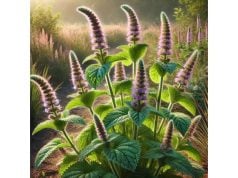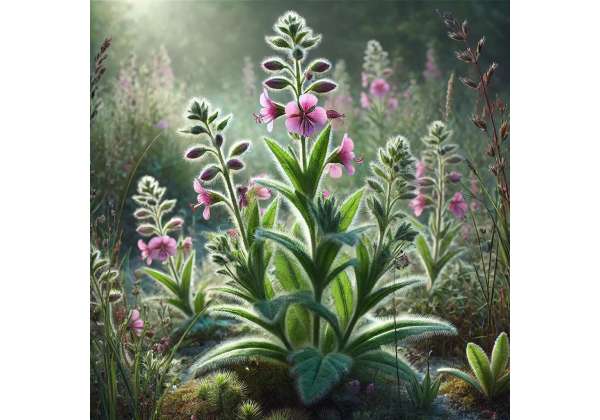
Hairy willowherb is a tall, pink-flowered wetland herb in the evening primrose family that has a long history in European folk medicine. Traditional use has focused mainly on urinary comfort, prostate-related complaints, mild inflammatory states, and occasional topical applications for irritated skin. Modern phytochemical work helps explain that reputation: the plant is rich in ellagitannins, flavonoids, and phenolic acids, with oenothein B standing out as a major marker compound. Those constituents appear to contribute antioxidant, anti-inflammatory, enzyme-modulating, and tissue-soothing effects in laboratory research.
Still, this is a herb best understood with some nuance. Hairy willowherb is promising, but it is not one of the best-studied medicinal plants in direct human trials. The strongest clinical evidence in the broader willowherb group comes from related Epilobium species rather than from Epilobium hirsutum itself. That means it may be reasonable for gentle, traditional support, especially in tea form, but it should not replace proper evaluation for urinary pain, blood in the urine, fever, or urinary retention.
Essential Insights
- Hairy willowherb is most often used for mild urinary and prostate-related support, not as a first-line treatment for serious disease.
- Its best-known compounds include oenothein B, flavonoids, and phenolic acids linked to antioxidant and anti-inflammatory activity.
- A practical tea range is 1.5 to 2 g dried herb in 250 mL hot water, up to 2 times daily.
- Avoid self-treating with it if you are pregnant, breastfeeding, under 18, or have unexplained urinary symptoms.
- Stop and seek medical care for fever, painful urination, blood in the urine, or urinary retention.
Table of Contents
- What is hairy willowherb
- Key compounds and actions
- Does hairy willowherb help
- Best ways to use it
- How much per day
- Safety, side effects, and interactions
- What the evidence says
What is hairy willowherb
Hairy willowherb, or Epilobium hirsutum, is a perennial herb that thrives in damp ground, ditch edges, wet meadows, and streambanks. It can grow surprisingly tall, often reaching shoulder height, with soft hairs on the stems and leaves and bright pink to purple flowers that make it easy to spot in summer. In traditional herbal practice, the aerial parts are the main material used, especially the leafy flowering herb collected around the blooming period.
One reason this plant can be confusing is that “willowherb” is not one single medicinal product. The Epilobium genus contains many species, and historical herbal use often groups them together. In Europe, the better-known medicinal willowherbs are Epilobium angustifolium and Epilobium parviflorum. Hairy willowherb belongs to the same genus and shares many of the same polyphenol families, but it is not interchangeable in a strict evidence-based sense. That distinction matters when people read dosage claims or product labels.
Traditionally, hairy willowherb has been used for:
- Mild lower urinary tract discomfort
- Prostate-related symptoms in older men
- Bladder irritation
- General inflammatory complaints
- Occasional topical care for irritated or damaged skin
Its traditional profile overlaps with other urinary herbs, but it is not used exactly the same way as uva ursi’s more targeted urinary approach, which is more often framed as a short-term urinary support herb. Hairy willowherb is usually thought of as gentler, more soothing, and more appropriate for ongoing herbal routines rather than sharp, short bursts.
A second useful point is quality. Recent phytochemical work suggests that the concentration of key compounds in E. hirsutum changes with habitat, plant part, and harvest timing. Leaves gathered during flowering, especially from moist habitats, tend to concentrate important marker compounds better than random late-season material. In plain language, the same herb name can cover products with very different potency.
That is why hairy willowherb is best viewed as a traditional herbal support rather than a uniform pharmaceutical substance. The plant has a credible historical role and a chemically interesting profile, but the exact effect depends on species identity, harvest quality, preparation method, and the condition being addressed.
Key compounds and actions
Hairy willowherb does not rely on one “magic” ingredient. Its activity appears to come from a network of polyphenols and related plant chemicals that can work together. The most important names to know are ellagitannins, flavonoids, and phenolic acids.
The standout compound is oenothein B, a large ellagitannin that repeatedly appears as a major marker across Epilobium research. In E. hirsutum, it is one of the best clues to why the herb shows antioxidant, anti-inflammatory, and enzyme-modulating effects in test systems. Seasonal analysis suggests that oenothein B levels in the leaves rise around flowering, which fits traditional harvesting logic.
Other important constituents include:
- Flavonoids, such as hyperoside and isoquercitrin, which may help with oxidative stress and inflammatory signaling
- Phenolic acids, including chlorogenic acid, which add antioxidant activity
- Myricetin-related compounds, highlighted in laboratory work on E. hirsutum
- Smaller amounts of other tannins and secondary metabolites that may shape the plant’s astringent and tissue-calming feel
What do these compounds actually seem to do?
First, they appear to moderate inflammatory pathways. In cell and animal studies, E. hirsutum extracts have been linked with lower expression of inflammatory mediators such as COX-2, TNF-alpha, IL-8, and NF-kB-related signaling. That does not prove the herb will relieve symptoms in a predictable way in every person, but it gives the traditional anti-inflammatory reputation a plausible biochemical base.
Second, they show antioxidant activity. That matters less as a marketing buzzword and more as a clue that the herb may help buffer tissues under oxidative stress, especially where irritation and low-grade inflammation overlap.
Third, the herb shows enzyme-inhibitory and antiproliferative effects in laboratory models, which is one reason willowherb species keep showing up in prostate-health discussions. That does not make hairy willowherb a cancer treatment, but it helps explain why researchers continue to study the genus in relation to prostate tissue and inflammatory urinary complaints. If you are comparing herbs in that space, saw palmetto’s prostate-support profile is more clinically familiar, while willowherb is often the more polyphenol-driven option.
The most practical takeaway is simple: hairy willowherb’s medicinal properties likely come from a broad chemical pattern, not a single isolated constituent. That is why tea, tincture, and standardized extract can feel different in real use, even when they come from the same plant.
Does hairy willowherb help
The most realistic answer is: it may help in a limited, supportive way, especially for mild urinary and inflammatory complaints, but the strength of evidence depends heavily on which benefit you mean.
Most plausible use: urinary and prostate support.
This is the classic willowherb use. Traditional European practice recognizes willowherb for relief of mild lower urinary tract symptoms connected to benign prostatic enlargement after serious causes have been ruled out. That does not prove E. hirsutum works identically, but it places hairy willowherb in a tradition that centers on urinary flow, frequency, and non-urgent prostate discomfort. In the wider Epilobium literature, purified extracts and oenothein B show activity against inflammatory targets, while a placebo-controlled trial in a related species found improvements in post-void residual volume, nocturia, and symptom score over several months.
Second plausible use: inflammation modulation.
Hairy willowherb looks more convincing in preclinical anti-inflammatory work than in direct human outcome trials. Animal and cell studies report meaningful effects on inflammatory signaling and oxidative stress. That does not automatically translate into reliable pain relief in day-to-day use, but it supports the traditional idea that the herb is more “settling” than stimulating.
Possible topical use: irritated skin and wound support.
Traditional use of the genus also includes skin and mucosal complaints. That makes sense chemically because tannins can feel astringent and protective, while polyphenols may help calm inflamed tissue. Still, topical use is much less standardized than urinary use.
What it probably does not do well:
- It does not treat acute urinary tract infections on its own.
- It is not a substitute for prescription treatment when urinary symptoms are moderate to severe.
- It should not be treated as an anticancer herb.
- It is unlikely to deliver dramatic results overnight.
For readers building a gentle urinary-support routine, hairy willowherb fits better beside herbs such as golden rod’s urinary support profile than beside aggressive symptom-suppression strategies. The likely best-case outcome is modest improvement in comfort, frequency, or irritation over time, not a dramatic clinical turnaround.
That makes it a reasonable herb for mild, non-urgent support, especially when paired with hydration, bladder-friendly habits, and medical evaluation where needed.
Best ways to use it
In practice, hairy willowherb is most often used as a tea or extract. The best format depends on what you want from it and how consistent you need the dose to be.
1. Herbal tea or infusion
This is the most traditional form. Tea fits the herb’s gentle reputation and is often the easiest place to start. It also makes sense when the goal is mild urinary support rather than a highly concentrated effect. Tea may suit people who want a daily routine and prefer to notice changes gradually over 1 to 3 weeks.
2. Tincture or liquid extract
This can be more convenient than tea, especially for people who dislike frequent brewing. A tincture may also offer broader extraction of certain compounds, though exact chemistry varies by alcohol strength and manufacturing method. Product quality matters a lot here.
3. Capsules or standardized extract
Capsules are the most practical option when you want dose consistency. They are also the closest match to the way clinical research in related willowherb species is often reported. The tradeoff is that capsule formulas may contain mixed Epilobium species or blends with other prostate herbs, so label reading matters.
4. Topical wash or compress
This is a less common use, but traditional wound and skin applications make a cooled infusion a reasonable low-risk option for minor irritation when the skin is intact.
A few practical tips improve the odds of a good experience:
- Choose products that clearly identify Epilobium hirsutum if that species matters to you.
- Prefer brands that disclose plant part, extraction ratio, or standardization markers.
- For tea, use the herb consistently rather than sporadically.
- Take urinary herbs earlier in the day if nighttime urination is already an issue.
Timing matters too. People using hairy willowherb for mild urinary irritation often do best with split doses rather than one large evening dose. If your main goal is soothing urinary tissues, you might also compare it with corn silk as a gentler urinary-soothing herb, which many people find softer and more demulcent.
The bigger picture is that form should match function. Tea is often enough for mild support. Extracts make more sense when you want portability or a more measurable routine. Neither format should be used to mask worsening urinary symptoms that deserve diagnosis.
How much per day
Dosage is the point where hairy willowherb needs the most honesty. There is no widely accepted, species-specific clinical dosing standard for Epilobium hirsutum itself. Most practical dosing guidance comes from the broader willowherb tradition and from research on related species, especially E. angustifolium and E. parviflorum. So the safest way to present dosage is as a careful working range, not a precision prescription.
A reasonable traditional tea range is:
- 1.5 to 2 g dried herb
- Infused in 250 mL boiling water
- 2 times daily
That tea pattern is the most grounded benchmark available for oral use in the willowherb tradition. For someone starting out, once daily for several days is a sensible way to assess tolerance before moving to twice daily.
For capsules or extract, the evidence is less transferable to E. hirsutum specifically, but a clinical trial in a related willowherb species used 500 mg daily of a chemically characterized extract for 6 months. That does not mean every hairy willowherb capsule should be taken at 500 mg, because extraction methods and active-compound levels vary widely. It does, however, suggest that commercial Epilobium products often fall into a few-hundred-milligram daily range rather than gram-heavy supplement dosing.
Useful timing and duration rules:
- Split doses are usually better than one large dose.
- Morning and late afternoon tend to work better than late evening.
- Reassess after 2 to 6 weeks.
- Do not keep escalating the dose just because the herb feels gentle.
What changes the “right” dose?
- The species used
- Whether it is tea, tincture, or standardized extract
- The amount of oenothein B or total polyphenols
- The reason for use
- Sensitivity to tannin-rich herbs
If you already use other urinary or prostate herbs, avoid stacking several formulas at once for the first 1 to 2 weeks. That makes it hard to judge what is helping and increases the chance of stomach upset or unnecessary overlap. Readers who already enjoy bitter or plant-rich tea routines sometimes find it easier to place hairy willowherb alongside dandelion tea routines, but hairy willowherb is generally used more for urinary and prostate comfort than for digestion.
The best rule is simple: start low, use a clearly labeled product, and judge success by symptom change, not by dose size.
Safety, side effects, and interactions
Hairy willowherb appears fairly well tolerated in traditional use, but “fairly safe” is not the same as risk-free. The main safety issues are less about dramatic toxicity and more about using the herb in the wrong situation.
Most likely side effects
- Mild stomach upset
- Nausea in sensitive people
- A dry or astringent mouthfeel from tannins
- Possible allergy in people sensitive to the plant
Published safety summaries for willowherb report limited formal interaction data and few serious adverse-event signals. That is reassuring, but it should not be over-read. “No reported interactions” means the data are sparse, not that every combination has been proven safe.
Who should avoid it or get advice first
- Pregnant or breastfeeding people, because direct safety data are lacking
- Children and adolescents under 18, since established use is not described
- Anyone with urinary retention
- Anyone with fever, blood in the urine, spasms, or painful urination
- Anyone with known plant allergy to the herb
- People with unexplained prostate or bladder symptoms
Those red-flag symptoms matter because herbs can blur the picture. A person who needs testing for infection, stone, obstruction, or another serious cause can lose time by self-treating too long.
Medication questions
Documented drug interactions are limited, but caution is reasonable with:
- Prescription medicines used for prostate symptoms
- Diuretics
- Anticoagulants or antiplatelet therapy
- Multi-herb prostate blends
- Drugs with a narrow therapeutic window
That caution is based more on prudent practice than on a long list of confirmed interactions. If you are already taking a prostate formula with nettle, saw palmetto, or pygeum, adding hairy willowherb may be redundant. For comparison, nettle’s traditional urinary and prostate use is often combined with other herbs, but combination plans are best kept deliberate rather than improvised.
One encouraging point is that a 6-month placebo-controlled trial of a related willowherb extract did not report a clear treatment-related toxicity signal. That supports the broader idea that willowherb preparations can be tolerated reasonably well, while still stopping short of proving long-term safety for every E. hirsutum product.
Use the herb conservatively, and do not let mild tradition-based confidence override common-sense medical red flags.
What the evidence says
Hairy willowherb sits in an interesting middle ground: stronger than a purely folkloric remedy, but not strong enough to claim robust, condition-specific clinical proof.
The evidence breaks down into three layers.
Layer one: phytochemistry and standardization
This is the strongest part of the E. hirsutum story. We have increasingly detailed work showing that the plant contains oenothein B, chlorogenic acid, hyperoside, isoquercitrin, and related polyphenols, and that their levels change with habitat and harvest stage. That matters because it tells us the herb is chemically active and gives manufacturers a better basis for quality control.
Layer two: cell and animal studies
This is where most direct E. hirsutum pharmacology currently lives. Laboratory research supports anti-inflammatory, antioxidant, enzyme-inhibitory, and antiproliferative effects. Animal data also suggest real biological activity, especially around inflammation and oxidative stress. These findings make the traditional uses plausible, but they are still one step removed from real-world symptom relief in humans.
Layer three: human outcomes
This is the weak point for E. hirsutum specifically. The clearer human evidence comes from related willowherb species, especially E. angustifolium, not from direct clinical trials of hairy willowherb itself. That related-species evidence is encouraging: one placebo-controlled trial found symptom improvements in men with benign prostatic enlargement, and European traditional-use guidance recognizes willowherb tea for mild lower urinary tract symptoms after serious causes are excluded. But that is not the same as saying E. hirsutum is clinically proven for the same outcome.
So where does that leave a careful reader?
A sensible conclusion is:
- Hairy willowherb has a credible traditional role.
- Its chemistry is well worth attention.
- Its preclinical anti-inflammatory profile is promising.
- Direct human evidence for E. hirsutum remains limited.
- It is best used as supportive herbal care, not as a stand-alone medical solution.
That makes hairy willowherb most appropriate for readers who value cautious phytotherapy: enough evidence to justify interest, not enough to justify hype.
References
- Investigation of Epilobium hirsutum L. Optimized Extract’s Anti-Inflammatory and Antitumor Potential 2024 (Animal Study)
- The phenology of Epilobium hirsutum L.: assessing marker compounds variability of a pharmaceutically important plant remedy 2025 (Open-Access Research)
- Shedding Light into the Connection between Chemical Components and Biological Effects of Extracts from Epilobium hirsutum: Is It a Potent Source of Bioactive Agents from Natural Treasure? 2021 (Mechanistic Study)
- Epilobium angustifolium L. extract with high content in oenothein B on benign prostatic hyperplasia: A monocentric, randomized, double-blind, placebo-controlled clinical trial 2021 (RCT)
- European Union herbal monograph on Epilobium angustifolium L. and/or Epilobium parviflorum Schreb., herba 2015 (Monograph)
Disclaimer
This article is for educational purposes only and does not diagnose, treat, or replace medical care. Hairy willowherb should not be used to self-manage severe urinary symptoms, persistent pelvic pain, blood in the urine, fever, or urinary retention. Herbal products vary in strength and purity, and people who are pregnant, breastfeeding, under 18, or taking prescription medicines should get individualized advice before use.
If you found this guide useful, please share it on Facebook, X, or your preferred platform.