A heart attack does not always look like a movie scene. Some men feel crushing chest pressure and know something is wrong. Others feel short of breath, sweaty, weak, nauseated, or strangely tired and try to explain it away as stress, indigestion, a pulled muscle, or getting older. That delay is dangerous because heart muscle starts to suffer when blood flow is blocked.
The safest rule is simple: new chest discomfort, unexplained shortness of breath, faintness, cold sweating, or pain spreading to the arm, jaw, neck, back, or shoulder deserves emergency care. Do not wait to see if it passes. Do not drive yourself. Call emergency services and let trained responders evaluate you.
This guide explains the most common symptoms in men, the quieter warning signs, what gets mistaken for something less serious, and what to do in the first minutes.
Table of Contents
- What a Heart Attack Usually Feels Like in Men
- Symptoms That Need Emergency Care
- Chest Pain vs Indigestion, Muscle Pain, or Anxiety
- Silent and Subtle Signs Men Often Miss
- Why Risk Factors Change How Seriously to Take Symptoms
- What to Do in the First Minutes
- What Happens After You Get Medical Help
- How to Lower Your Risk Before Symptoms Start
What a Heart Attack Usually Feels Like in Men
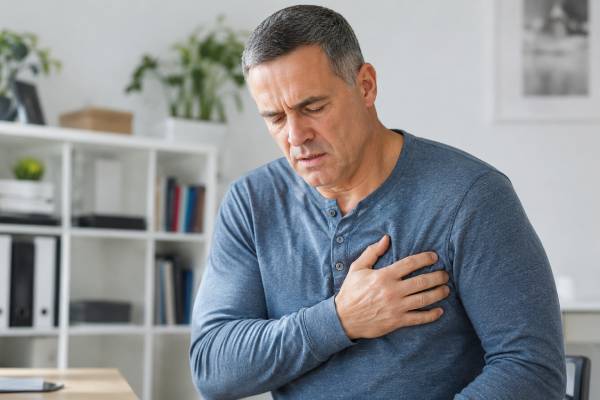
The classic symptom is discomfort in the center or left side of the chest. Men often describe it as pressure, squeezing, heaviness, tightness, burning, fullness, or a weight sitting on the chest. It is not always sharp pain. In fact, many men avoid the word “pain” because the feeling is more like intense pressure or deep discomfort.
The feeling often lasts more than a few minutes. It can also fade and return. That “comes and goes” pattern is one reason men delay calling for help. They feel better for a moment, assume the danger passed, then symptoms return stronger.
A heart attack happens when blood flow to part of the heart muscle is reduced or blocked. The heart muscle is not getting enough oxygen, so the body sends warning signals. The warning signal might be chest pressure, but it can also show up in nearby areas because pain signals from the heart and upper body share nerve pathways.
Common patterns include:
- Chest pressure that starts during activity and does not settle with rest
- Chest discomfort that wakes you from sleep
- Pain or pressure spreading to the left arm, both arms, shoulder, jaw, neck, upper back, or upper stomach
- Shortness of breath with or without chest discomfort
- Cold sweat, weakness, nausea, or light-headedness at the same time as chest symptoms
- A sudden feeling that something is very wrong, even without severe pain
Some men have a “stuttering” pattern. They notice mild chest tightness during a walk, while carrying groceries, climbing stairs, having sex, or shoveling snow. It eases when they stop, then returns with less effort later. That pattern can signal unstable blood flow to the heart and should be checked urgently.
Do not judge the seriousness by pain level alone. A mild but unusual pressure with sweating or breathlessness is more concerning than a brief pinprick pain that changes with posture. The key question is not “Is this the worst pain I have ever felt?” The better question is “Is this new, unexplained, persistent, or paired with other warning signs?”
Symptoms That Need Emergency Care
Call emergency services immediately for possible heart attack symptoms. Waiting at home, searching symptoms online, or asking someone to drive you wastes time when treatment works best early.
| Symptom | What it may feel like | Why it matters |
|---|---|---|
| Chest discomfort | Pressure, squeezing, fullness, heaviness, burning, or pain in the center or left chest | This is the most recognized warning sign and often lasts more than a few minutes or returns after easing. |
| Shortness of breath | Feeling winded at rest, unable to take a full breath, or suddenly breathless with light activity | Breathlessness can happen with chest discomfort or before it. |
| Arm, shoulder, jaw, neck, or back discomfort | Aching, pressure, tightness, numbness, or heaviness spreading away from the chest | Heart-related discomfort often radiates beyond the chest. |
| Cold sweat | Sweating suddenly without heat, exercise, fever, or obvious stress | Cold sweating with chest pressure or weakness is especially concerning. |
| Nausea, vomiting, or indigestion-like discomfort | Queasiness, upper stomach pressure, burping, or a burning feeling that seems unusual | Some heart attacks feel like stomach trouble, especially when symptoms are new or come with breathlessness. |
| Light-headedness or faintness | Feeling weak, unsteady, faint, clammy, or suddenly drained | This can happen when the heart is struggling to pump effectively. |
The most dangerous combination is chest discomfort plus another symptom: shortness of breath, sweating, nausea, faintness, or pain spreading to the arm, jaw, shoulder, neck, or back. That combination should be treated as an emergency until proven otherwise.
Symptoms during exertion deserve special attention. Chest pressure while climbing stairs is not “just being out of shape” if it is new, worsening, or paired with breathlessness. The same is true for symptoms during sex, heavy lifting, yard work, sports, or emotional stress.
Men sometimes wait because they are embarrassed to call emergency services and be wrong. That is the wrong calculation. Emergency teams would rather evaluate a false alarm than arrive too late. A heart attack can trigger a dangerous rhythm problem or cardiac arrest, and trained responders have equipment, medications, and defibrillators that a passenger car does not.
Chest Pain vs Indigestion, Muscle Pain, or Anxiety
Many non-heart problems cause chest discomfort. Acid reflux, strained chest muscles, panic attacks, lung irritation, gallbladder pain, and neck or shoulder problems can all mimic heart symptoms. The problem is that you cannot reliably sort them out at home when symptoms are new or intense.
Heart-related chest discomfort often feels deep, heavy, tight, or squeezing. It is less likely to be a pinpoint pain you can cover with one finger. It may spread to the arm, jaw, shoulder, back, or upper stomach. It often appears with effort or stress and improves with rest, although a heart attack can also happen at rest.
Indigestion usually links more clearly to meals, lying down, sour taste, burping, or burning behind the breastbone. Still, a heart attack can feel like indigestion. Be especially careful when “heartburn” is new, stronger than usual, not clearly tied to food, or comes with sweating, breathlessness, weakness, or pain spreading upward or outward.
Muscle pain often changes when you press the sore spot, twist, lift, cough, or move your arm. A pulled muscle usually has a clear trigger, such as a workout, fall, or heavy lifting. But chest wall tenderness does not fully rule out a heart problem, especially in men with risk factors.
Anxiety and panic can cause chest tightness, racing heartbeat, trembling, tingling, shortness of breath, and fear. Those symptoms are real and frightening. The hard part is that a heart attack can also cause fear, sweating, breathlessness, and chest pressure. If the symptoms are new, different from prior panic attacks, occur with exertion, or include spreading pain, get emergency care.
Use this practical rule: do not try to prove it is not your heart while symptoms are happening. Let medical professionals check an ECG and blood tests. This is especially important if you already know you have heart disease risk factors or a family history of early heart problems.
Silent and Subtle Signs Men Often Miss
A “silent” heart attack does not always mean there were no symptoms at all. Often, the symptoms were mild, vague, brief, or mistaken for something else. The damage happened, but the person did not recognize it as a heart attack at the time.
Silent or subtle symptoms can include:
- Unusual fatigue that feels out of proportion to the day
- Breathlessness during normal tasks
- Mild chest pressure that comes and goes
- Upper back, jaw, neck, shoulder, or arm discomfort without obvious chest pain
- Nausea, indigestion, or upper abdominal pressure
- Dizziness, weakness, or cold sweating
- A sudden drop in exercise tolerance
- Feeling “off” for hours or days without a clear reason
Men often explain these symptoms away. A busy father blames exhaustion. A man with reflux blames heartburn. A smoker blames breathlessness on his lungs. A man who works a physical job blames shoulder or upper back pain on strain. Those explanations might be right, but they become risky when the symptom is new, unusual, persistent, or paired with other warning signs.
Diabetes deserves special attention. Over time, high blood sugar can affect nerves, including nerves that carry pain signals. Some men with diabetes have less obvious chest pain during a heart attack. Instead, they notice breathlessness, sweating, weakness, nausea, or sudden fatigue. Men with long-standing diabetes, kidney disease, or previous heart disease should take vague symptoms seriously.
A silent heart attack may be discovered later during an ECG, imaging test, or evaluation for reduced stamina, shortness of breath, rhythm changes, or heart failure symptoms. That does not make it harmless. Unrecognized heart damage can increase the risk of future heart problems.
Subtle symptoms also matter when they change your normal pattern. A man who has always walked two miles but now gets chest tightness after two blocks needs evaluation. A man who suddenly feels breathless carrying laundry upstairs should not dismiss it as age. A man who develops unexplained fatigue along with jaw or shoulder aching should treat that as a warning sign.
Why Risk Factors Change How Seriously to Take Symptoms
The same symptom carries more concern when a man has risk factors for coronary artery disease. Risk factors do not prove chest pain is a heart attack, but they lower the threshold for urgent evaluation.
Important risk factors include:
- High blood pressure
- High LDL cholesterol or known plaque in the arteries
- Smoking or heavy past smoking
- Diabetes or prediabetes
- Obesity, especially excess belly fat
- Sleep apnea
- Chronic kidney disease
- A family history of early heart disease
- Previous heart attack, stent, bypass surgery, stroke, or peripheral artery disease
- Low fitness level or sudden drop in exercise tolerance
- Heavy cocaine or stimulant use
- Long-term inflammatory conditions, such as rheumatoid arthritis or lupus
High blood pressure damages artery walls over time and makes the heart work harder. Regular blood pressure checks are not just routine numbers; they help identify one of the most common drivers of heart and stroke risk.
Cholesterol matters because LDL particles contribute to plaque buildup inside arteries. Plaque can narrow blood flow gradually or rupture suddenly, causing a clot that blocks a coronary artery. Men with high cholesterol should not wait for symptoms before taking risk seriously.
Blood sugar is another major piece. Men with type 2 diabetes have higher risk for coronary artery disease and may have less typical symptoms. Prediabetes also matters because insulin resistance often travels with belly fat, high triglycerides, low HDL cholesterol, and high blood pressure.
Erectile dysfunction can sometimes be an early blood-flow clue. Not every erection problem is heart-related, but blood vessels in the penis are small, so circulation problems may show up there before chest symptoms. New or worsening ED, especially with low stamina or multiple risk factors, deserves a broader health check. It is worth understanding ED as a warning sign rather than treating it only as a sexual performance issue.
Smoking sharply raises risk because it damages blood vessels, increases clotting tendency, lowers oxygen delivery, and speeds plaque buildup. Vaping is not a clean workaround for cardiovascular risk, especially when nicotine is involved. Quitting is one of the strongest moves a man can make for his arteries.
Risk factors should change your response. A healthy 25-year-old with brief chest pain after a hard workout and clear muscle tenderness is different from a 55-year-old smoker with chest pressure, sweating, and breathlessness. But no risk profile makes dangerous symptoms safe. Young and fit men can still have heart attacks, especially with inherited cholesterol problems, stimulant use, smoking, high blood pressure, or a strong family history.
What to Do in the First Minutes
The first step is to stop what you are doing and call emergency services. Do this for yourself or for someone else if symptoms suggest a possible heart attack. Do not wait for chest discomfort to become severe.
Follow these steps:
- Call emergency services right away. Use your local emergency number. Say the person may be having a heart attack.
- Stop activity and sit or lie down. Keep the person as calm and still as possible.
- Do not drive yourself. An ambulance brings trained help, monitoring, and rapid routing to the right facility.
- Unlock the door if you are alone. This helps responders reach you quickly.
- Take prescribed nitroglycerin only as directed. Do not use someone else’s medication.
- Tell responders about medications, allergies, and recent erectile dysfunction pills if relevant.
- Be ready for CPR or an AED if the person becomes unresponsive and is not breathing normally.
Aspirin is a special case. Emergency dispatchers or medical professionals may advise an alert adult with non-traumatic chest pain to chew aspirin, unless there is an allergy, bleeding risk, or a doctor has said not to take it. Do not let aspirin delay the emergency call. Calling first matters most.
Nitroglycerin is also important to handle correctly. Men who have it prescribed for angina should follow their own instructions. Men who use medications for erectile dysfunction must be especially careful because nitrates and common ED pills can cause a dangerous blood pressure drop when combined. Learn the basics of ED meds and nitrates before an emergency, and always tell responders what you have taken.
Do not try to “walk it off.” Do not take a shower to relax. Do not eat a meal to settle your stomach. Do not drink alcohol to calm down. Do not wait for a spouse, friend, or coworker to finish what they are doing before seeking help.
If you are with someone who may be having a heart attack, stay with him. Watch his breathing and alertness. If he collapses, is unresponsive, and is not breathing normally, start CPR if you know how and use an automated external defibrillator if one is available. A heart attack and cardiac arrest are not the same thing, but a heart attack can lead to cardiac arrest.
What Happens After You Get Medical Help
Emergency evaluation usually starts fast because time matters. The medical team looks for signs that the heart muscle is under stress or being damaged. The first tests often include an ECG, blood pressure and oxygen checks, blood tests for cardiac troponin, and a focused exam.
An ECG records the heart’s electrical activity. It can show patterns that suggest a blocked artery or rhythm problem. Some dangerous heart attacks show clear ECG changes right away. Others do not, especially early on, so a normal first ECG does not always end the evaluation.
Troponin is a protein released into the blood when heart muscle is injured. Doctors often repeat troponin testing over time because levels can rise after symptoms begin. This is one reason you may be observed in the emergency department even if the first tests are not clearly positive.
Treatment depends on what the team finds. Some men need urgent catheterization, where doctors thread a thin tube through an artery to look at the coronary arteries and open a blockage with a balloon and stent. Others need clot-busting medication, blood thinners, antiplatelet drugs, oxygen in selected cases, rhythm treatment, or close monitoring.
If testing shows that symptoms are not from a heart attack, that still has value. Chest symptoms can come from lung problems, digestive disease, muscle strain, anxiety, gallbladder disease, aortic problems, or other conditions. The point of urgent care is to identify the dangerous causes first.
After a confirmed heart attack, the next phase is preventing another one. That usually includes medications, cardiac rehabilitation, follow-up visits, and aggressive control of blood pressure, cholesterol, blood sugar, smoking, sleep apnea, and weight. Cardiac rehab is especially useful because it combines supervised exercise, education, and confidence-building after a frightening event.
Men sometimes feel embarrassed, angry, or shaken after a heart scare. That reaction is normal. What matters is not returning to old habits as soon as symptoms fade. A heart attack is a signal to treat the whole risk picture, not only the blocked artery that caused the emergency.
How to Lower Your Risk Before Symptoms Start
The best heart attack plan is built before chest pain begins. Prevention is not about one perfect diet, one supplement, or one intense workout plan. It is about controlling the biggest risks consistently.
Start with the numbers that actually change medical decisions:
- Blood pressure
- LDL cholesterol and other lipid markers
- Fasting glucose or A1C
- Waist size and weight trend
- Smoking or nicotine exposure
- Family history
- Exercise capacity
- Sleep quality and possible sleep apnea symptoms
Men often avoid preventive care until symptoms interfere with work, sex, fitness, or daily life. That delay is costly. Routine visits help catch high blood pressure, cholesterol problems, diabetes, kidney issues, and abnormal symptoms before they become emergencies. A practical schedule for preventive screenings by age helps men know what to check and when.
Exercise is one of the strongest protective habits, but it should be built safely. Aim for regular aerobic activity, such as brisk walking, cycling, swimming, or jogging, plus strength training. Men who have chest pressure, unusual breathlessness, faintness, or a major risk profile should get medical guidance before pushing into intense exercise.
Food choices matter most when they are repeatable. Build meals around vegetables, beans, lentils, fruit, whole grains, nuts, fish, olive oil, and lean proteins. Cut back on processed meats, deep-fried foods, sugary drinks, and large portions of refined starches. The goal is better blood pressure, better cholesterol, better blood sugar, and less visceral fat.
Sleep deserves more respect in men’s heart health. Loud snoring, witnessed pauses in breathing, morning headaches, and daytime sleepiness can point to sleep apnea. Untreated sleep apnea raises blood pressure and strains the cardiovascular system. It also worsens fatigue, mood, and sexual function, which makes healthy habits harder to maintain.
Alcohol and stimulants matter too. Heavy drinking raises blood pressure and can trigger rhythm problems. Cocaine and methamphetamine sharply increase heart attack risk, even in younger men. High-caffeine energy drinks and stimulant-heavy pre-workouts can worsen palpitations, anxiety, blood pressure, and sleep in sensitive men.
Finally, know your personal warning pattern. If activity brings chest pressure, breathlessness, jaw discomfort, arm heaviness, or unusual fatigue, do not train through it. If symptoms happen at rest, wake you from sleep, or come with sweating, nausea, or faintness, treat it as urgent. Acting early is not overreacting. It is how heart muscle is saved.
References
- 2025 ACC/AHA/ACEP/NAEMSP/SCAI Guideline for the Management of Patients With Acute Coronary Syndromes: A Report of the American College of Cardiology/American Heart Association Joint Committee on Clinical Practice Guidelines 2025 (Guideline)
- 2023 ESC Guidelines for the management of acute coronary syndromes 2023 (Guideline)
- 2021 AHA/ACC/ASE/CHEST/SAEM/SCCT/SCMR Guideline for the Evaluation and Diagnosis of Chest Pain: A Report of the American College of Cardiology/American Heart Association Joint Committee on Clinical Practice Guidelines 2021 (Guideline)
- About Heart Attack Symptoms, Risk, and Recovery 2024 (Public Health Resource)
- Heart Disease Facts 2024 (Public Health Resource)
- 2024 American Heart Association and American Red Cross Guidelines for First Aid 2024 (Guideline)
Disclaimer
This article is for education and does not diagnose chest pain, shortness of breath, or other possible heart attack symptoms. New, severe, persistent, or unexplained symptoms should be treated as urgent, especially when they involve chest pressure, sweating, breathlessness, faintness, nausea, or pain spreading to the arm, jaw, neck, back, or shoulder. For personal risk assessment, testing, medications, or recovery planning, work with a qualified healthcare professional.