Hedge garlic, better known in many regions as garlic mustard, is a sharp-tasting biennial herb in the mustard family. Despite its name, it is not true garlic. When crushed, though, its leaves release a sulfurous, garlicky scent that makes the confusion easy to understand. Traditionally, it has been eaten as a spring green, a pungent seasoning, and a practical hedge-side herb long before it became notorious as an invasive woodland plant in parts of North America. Modern interest in hedge garlic centers on its mustard-family compounds, especially glucosinolates and their breakdown products, along with flavonoids and vitamin-rich young leaves.
From a health perspective, the most realistic benefits are modest and food-based: antioxidant support, mild digestive stimulation, and the value of adding another bitter, aromatic green to meals. What hedge garlic does not have is strong human clinical evidence for disease treatment. That makes it more useful as a culinary herb with plausible wellness value than as a proven medicinal supplement. Used thoughtfully, it can be flavorful, interesting, and useful, but it deserves the same respect you would give any potent wild plant.
Key Insights
- Hedge garlic offers mustard-family glucosinolates and polyphenols that may support antioxidant and antimicrobial defenses.
- Its strongest use is as a seasonal food herb, not as a clinically proven treatment for major health conditions.
- A practical food-level range is about 5 to 15 g of fresh young leaves per day, roughly 1/4 to 1/2 cup chopped.
- People who are pregnant, breastfeeding, taking anticoagulants, managing thyroid disease, or sensitive to mustard-family plants should avoid medicinal use.
Table of Contents
- What is hedge garlic?
- Which compounds matter most?
- Does hedge garlic help health?
- How can you use it?
- Hedge garlic dosage and timing
- Hedge garlic safety
- What does the research show?
What is hedge garlic?
Hedge garlic is the common English name for Alliaria petiolata, a member of the Brassicaceae, or mustard family. It is also widely called garlic mustard, jack-by-the-hedge, and sauce-alone. The plant is native to parts of Europe, western and central Asia, and North Africa, and it was historically valued as both a useful kitchen herb and a folk remedy. In North America, it later escaped cultivation and spread aggressively in shaded woods, paths, and hedgerows.
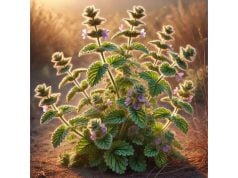
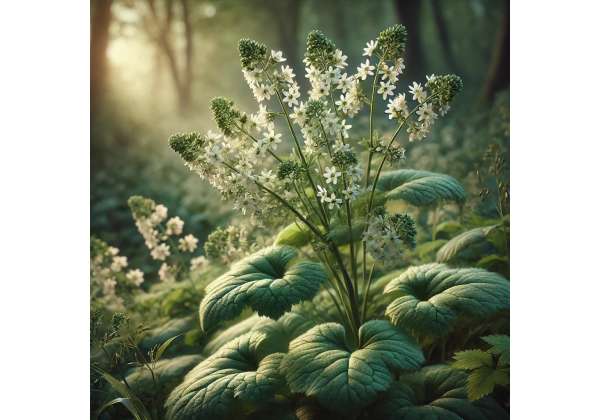
Botanically, hedge garlic is a biennial. In its first year it forms a low rosette of kidney- to heart-shaped leaves that stay green through winter. In the second year it sends up a flowering stalk, usually topped with clusters of small, white, four-petaled flowers. Crushing the leaves releases the sulfur-rich odor that gives the plant its name. The taste is usually easiest to describe as a cross between mild garlic, cress, and mustard greens, with a peppery finish similar to watercress.
One reason hedge garlic attracts so much interest is that it sits at the intersection of food and herbal tradition. It was introduced and carried around not only because it was edible, but because people treated it as useful. Young leaves could be added to salads or sauces, seeds could be used for a mustard-like kick, and the plant was seen as stimulating, cleansing, and warming.
Still, there is an important distinction between traditional usefulness and modern therapeutic proof. A plant can be historically valued without being clinically validated for disease treatment. That is especially true here. Hedge garlic is best understood as a pungent edible wild herb with a notable chemistry profile, rather than as a mainstream medicinal product with standardized extracts and established dosing.
Another point worth keeping clear is name confusion. Hedge garlic is not true garlic, and it is also not the same species as hedge mustard. Those similar names lead to mistaken assumptions about safety, flavor, and medicinal action. When used for food or wellness, accurate identification matters. With wild plants, that is never a small detail.
Which compounds matter most?
The most important chemistry in hedge garlic comes from its mustard-family defense system. That means glucosinolates, enzymes that break them down, and the pungent compounds created during that reaction. In plain language, the bite you taste and the sharp smell you notice are both clues that the plant is chemically active.
The standout glucosinolate in hedge garlic is sinigrin. When plant tissue is chopped, chewed, or crushed, enzymes help convert glucosinolates into products such as isothiocyanates and nitriles. These are the same broad families of compounds that make many cruciferous foods smell strong and taste lively. In laboratory settings, these compounds are often linked with antioxidant activity, antimicrobial effects, and cell-signaling actions relevant to inflammation.
Hedge garlic also contains alliarinoside, an unusual hydroxynitrile glucoside that gives the plant a more distinctive chemical profile than many everyday salad greens. Researchers have also identified related metabolites, including petiolatamide, which suggests the plant’s chemistry is more complex than its simple appearance would imply. That complexity helps explain why hedge garlic behaves like a strongly defended plant in the wild and why concentrated preparations deserve more caution than casual culinary use.
Beyond sulfur compounds, hedge garlic offers flavonoids and other polyphenols. These compounds are not unique to this herb, but they add to its overall antioxidant profile. Young leaves also contribute micronutrients, particularly vitamin-rich green leaf material typical of many spring herbs. That does not make hedge garlic a miracle food, but it does support its role as a useful seasonal green.
What matters most for practical use is not memorizing chemical names. It is understanding what those compounds mean in real life:
- The fresh, crushed plant is more chemically active than intact leaves.
- Young leaves are usually more palatable and easier to use than mature ones.
- Pungency is a clue to potency, not proof of medical benefit.
- Concentrating the plant into heavy homemade extracts is less predictable than adding modest amounts to food.
This is also why hedge garlic occupies an unusual middle ground. It is edible, but it is not bland. It is traditional, but not standardized. It contains promising compounds, but those compounds do not automatically translate into proven human outcomes. The chemistry is interesting and relevant, yet it supports a careful, food-first approach better than a supplement-style mindset.
Does hedge garlic help health?
Yes, but with realistic boundaries. Hedge garlic may support health in the same broad way many pungent, polyphenol-rich spring greens do, especially when used as part of a varied diet. The strongest case for it is not that it cures disease. The strongest case is that it adds biologically active flavor, bitterness, sulfur compounds, and nutrients to meals.
Several potential benefits make sense based on its chemistry.
First, hedge garlic may contribute antioxidant support. Its polyphenols and glucosinolate breakdown products can help counter oxidative stress in laboratory models. That does not mean eating the plant will produce dramatic measurable changes in a person, but it supports the idea that hedge garlic is more than a flavoring alone.
Second, it may offer mild antimicrobial and preservative-like effects. Pungent mustard-family compounds often show activity against bacteria and fungi in test systems. In traditional food cultures, strong herbs often served both culinary and practical purposes. That does not make hedge garlic an antibiotic replacement, but it may partly explain why it earned a place in sauces, condiments, and spring tonics.
Third, hedge garlic may gently stimulate digestion. Bitter, peppery, aromatic plants often increase salivation and make rich or fatty foods feel easier to digest. Many people find that a small amount of such herbs wakes up the palate, improves appetite, and makes meals feel lighter. Used this way, hedge garlic behaves more like a digestive herb than like a pharmaceutical agent.
Fourth, it can broaden dietary diversity. That benefit is often underestimated. Adding more distinct plant foods to the diet can increase exposure to varied fibers and phytochemicals. Like other seasonal greens such as stinging nettle, hedge garlic fits best as one useful plant within a larger pattern of nutrient-dense eating.
What hedge garlic probably does not do, based on current evidence, is deliver reliable disease-specific outcomes on its own. Claims about cholesterol, blood sugar, cancer prevention, or major immune enhancement are still too speculative when applied directly to this herb in humans. Those ideas often come from general Brassicaceae research, cell studies, or traditional accounts rather than direct clinical trials on hedge garlic itself.
So the most honest answer is this: hedge garlic can support health, but mainly as a flavorful wild food with plausible functional properties. Think support, not treatment. Think culinary value with wellness upside, not a substitute for established care.
How can you use it?
The best way to use hedge garlic is as a food herb. That approach respects both its strengths and its limits. The plant is easier to enjoy, easier to dose sensibly, and less likely to cause trouble when used in meals rather than in concentrated preparations.
Young leaves are the most popular part. They are tender in early growth, pleasantly sharp, and easy to mix into everyday dishes. As the plant matures and flowers, the flavor becomes stronger and sometimes more bitter. Older leaves can still be used, but they usually benefit from chopping finely or brief cooking.
Practical ways to use hedge garlic include:
- Finely chopped into green salads.
- Blended into pesto with nuts or seeds, olive oil, and lemon.
- Stirred into yogurt sauces, herb butter, or soft cheese spreads.
- Added at the end of soups, grains, or bean dishes.
- Scattered over eggs, potatoes, or roasted vegetables.
- Used with other spring leaves, including dandelion greens, for a more balanced bitter profile.
The flowers are edible too and make a mild garnish. Seeds can be used sparingly for a mustard-like note, though this is more of a niche kitchen practice than a daily habit.
If you are harvesting it yourself, a few habits matter:
- Choose young, healthy plants from clean ground.
- Avoid roadsides, sprayed areas, industrial edges, and polluted soils.
- Wash thoroughly.
- Use the plant fresh, because aroma and flavor fade with storage.
People sometimes ask whether hedge garlic should be made into tea, tincture, or capsules. It can be infused, but that is usually not the most practical or evidence-based route. The plant does not have a well-established medicinal preparation standard, and much of its appeal comes from its fresh flavor chemistry. A simple pesto, chopped herb paste, or warm-food finishing herb makes better sense for most people than a concentrated home extract.
A useful rule is to pair hedge garlic with fat, acid, or both. Olive oil, yogurt, lemon juice, or vinegar round off its pungency and make it easier to tolerate. That matters because hedge garlic is not a “more is better” herb. It tends to work best as a sharp accent, not the whole meal.
Hedge garlic dosage and timing
There is no established, clinically validated medicinal dose for hedge garlic. That is the most important sentence in this section. Unlike a more familiar household herb such as chamomile, hedge garlic does not come with well-settled dosing traditions backed by modern human trials. Because of that, the most sensible dose is a food-level dose.
For most healthy adults, a practical range is:
- 5 to 15 g of fresh young leaves per day.
- Roughly 1/4 to 1/2 cup chopped fresh leaves.
- Used with meals, not on an empty stomach if you are sensitive to bitter or pungent greens.
That range is not a medical prescription. It is a conservative culinary range that reflects the plant’s potency, flavor, and lack of supplement-grade evidence.
A simple way to think about timing is this:
- Start low the first few times, around 2 to 5 g fresh.
- Use it earlier in the day or with lunch or dinner, when it can be part of a mixed meal.
- Rotate it with other herbs instead of eating large amounts every day for long stretches.
If you are making pesto or green sauce, one serving might contain about 5 to 10 g of fresh hedge garlic mixed with milder herbs. That is often enough to get the flavor and likely enough to capture any practical food-based benefit without pushing into excess.
What should you avoid? Large raw bowls of mature leaves, strong homemade tinctures, and frequent high-dose self-experimentation. With wild plants, concentration changes the risk profile. A tablespoon of herb blended into food is one thing; a strong extract taken repeatedly is another.
Duration matters too. Hedge garlic makes most sense as a seasonal food, especially in spring, not as a year-round core supplement. Using it for a few weeks during its best growing season is more consistent with traditional patterns and safer than treating it like a long-term medicinal protocol.
In short, dose hedge garlic like a condiment with benefits, not like a capsule with guaranteed effects. That mindset prevents most mistakes.
Hedge garlic safety
Hedge garlic is generally safest in modest culinary amounts. Problems become more likely when people overharvest, misidentify, concentrate, or assume that “wild and natural” means harmless.
The main safety issues are practical rather than dramatic.
Digestive upset is the most common concern. Because the plant is pungent and chemically active, too much may cause stomach irritation, nausea, bloating, or loose stools, especially in people who are not used to bitter greens. Raw mature leaves are more likely to be troublesome than small amounts of young leaves mixed into food.
Skin and mouth irritation can also happen. Crushing mustard-family plants releases compounds that may irritate sensitive skin, lips, or oral tissues. If a fresh preparation stings, burns, or leaves lingering irritation, that is a sign to use less or stop.
Certain groups should be more cautious:
- People with known sensitivity or allergy to Brassicaceae plants.
- People with thyroid disease, especially if they regularly eat large amounts of raw cruciferous plants.
- People taking anticoagulants, because wild leafy greens can vary in vitamin K content and may complicate consistency.
- People who are pregnant or breastfeeding, because medicinal-dose safety has not been established.
- Children, especially for concentrated preparations rather than normal food use.
Foraging safety is just as important as physiology. Wild hedge garlic should not be taken from roadsides, sprayed land, contaminated soils, or places where identification is uncertain. Clean habitat matters. So does certainty. If you are not fully confident in the plant, do not eat it.
Another reason for moderation is the plant’s defensive chemistry. Research on hedge garlic shows that it contains more than one class of biologically active defense compounds. That is part of what makes it interesting, but it is also part of what makes restraint wise. The plant is not dangerous in normal culinary use for most healthy adults, yet its chemistry is strong enough that concentrated or careless use is hard to justify.
A practical safety summary is simple: use young leaves, use moderate amounts, wash thoroughly, avoid contaminated sites, and skip medicinal-style dosing if you are in a higher-risk group or taking medication. For most people, hedge garlic belongs on the plate, not in a self-designed high-dose protocol.
What does the research show?
The research on hedge garlic is interesting, but it is not the kind of evidence that supports bold treatment claims. Most of the literature focuses on plant chemistry, ecological behavior, defensive compounds, and laboratory mechanisms. There is far less direct evidence on how hedge garlic works as a medicinal herb in humans.
What is fairly well supported?
- The plant is chemically rich, especially in glucosinolate-related compounds.
- Its chemistry changes with development, damage, and context.
- It has a long history as an edible and useful herb.
- It contains compounds that plausibly explain pungency, bitterness, and some traditional uses.
What is only moderately supported?
- Antioxidant potential.
- Mild antimicrobial effects.
- Digestive stimulation as a bitter, aromatic food herb.
- General wellness value as part of a varied diet.
What remains weakly supported or unproven?
- Standardized dosing for therapeutic use.
- Disease-specific benefits in humans.
- Long-term safety of concentrated extracts.
- Clear efficacy for cardiovascular, metabolic, immune, or anticancer outcomes when the herb itself is tested in people.
That distinction matters because hedge garlic is often discussed in a way that borrows prestige from the broader mustard family. There is real value in Brassicaceae research, and sinigrin-related chemistry is genuinely relevant. But “this family contains beneficial compounds” is not the same as “this specific herb has been proven to treat a condition.”
A balanced interpretation is that hedge garlic is a compelling functional wild food with traditional medicinal interest and promising phytochemistry. It deserves attention, but not hype. At present, the best-supported use is culinary and seasonal: a fresh spring herb that adds sharp flavor and meaningful plant compounds to meals.
That may sound less dramatic than the language used in some herbal marketing, but it is actually good news. It means hedge garlic can be appreciated on honest terms. You do not need to turn it into a miracle supplement for it to be worthwhile. Used as food, respected for its chemistry, and kept within reasonable limits, it is already doing enough.
References
- Brassicaceae Mustards: Phytochemical Constituents, Pharmacological Effects, and Mechanisms of Action against Human Disease – PMC 2024 (Review)
- Where Is Garlic Mustard? Understanding the Ecological Context for Invasions of Alliaria petiolata – PMC 2022 (Review)
- Garlic Mustard | solvepest 2025 (Extension Guidance)
- Glucosinolate-related glucosides in Alliaria petiolata: sources of variation in the plant and different metabolism in an adapted specialist herbivore, Pieris rapae – PubMed 2014 (Mechanistic Study)
- Cyanide in the chemical arsenal of garlic mustard, Alliaria petiolata – PubMed 2007 (Mechanistic Study)
Disclaimer
This article is for educational purposes only and is not a substitute for medical advice, diagnosis, or treatment. Hedge garlic is a wild edible plant with active compounds, but it does not have standardized medicinal dosing or strong human clinical evidence for treating disease. If you are pregnant, breastfeeding, taking prescription medicines, managing a thyroid disorder, or have plant allergies, speak with a qualified healthcare professional before using it beyond normal culinary amounts.
If you found this article useful, please share it on Facebook, X, or your preferred platform.